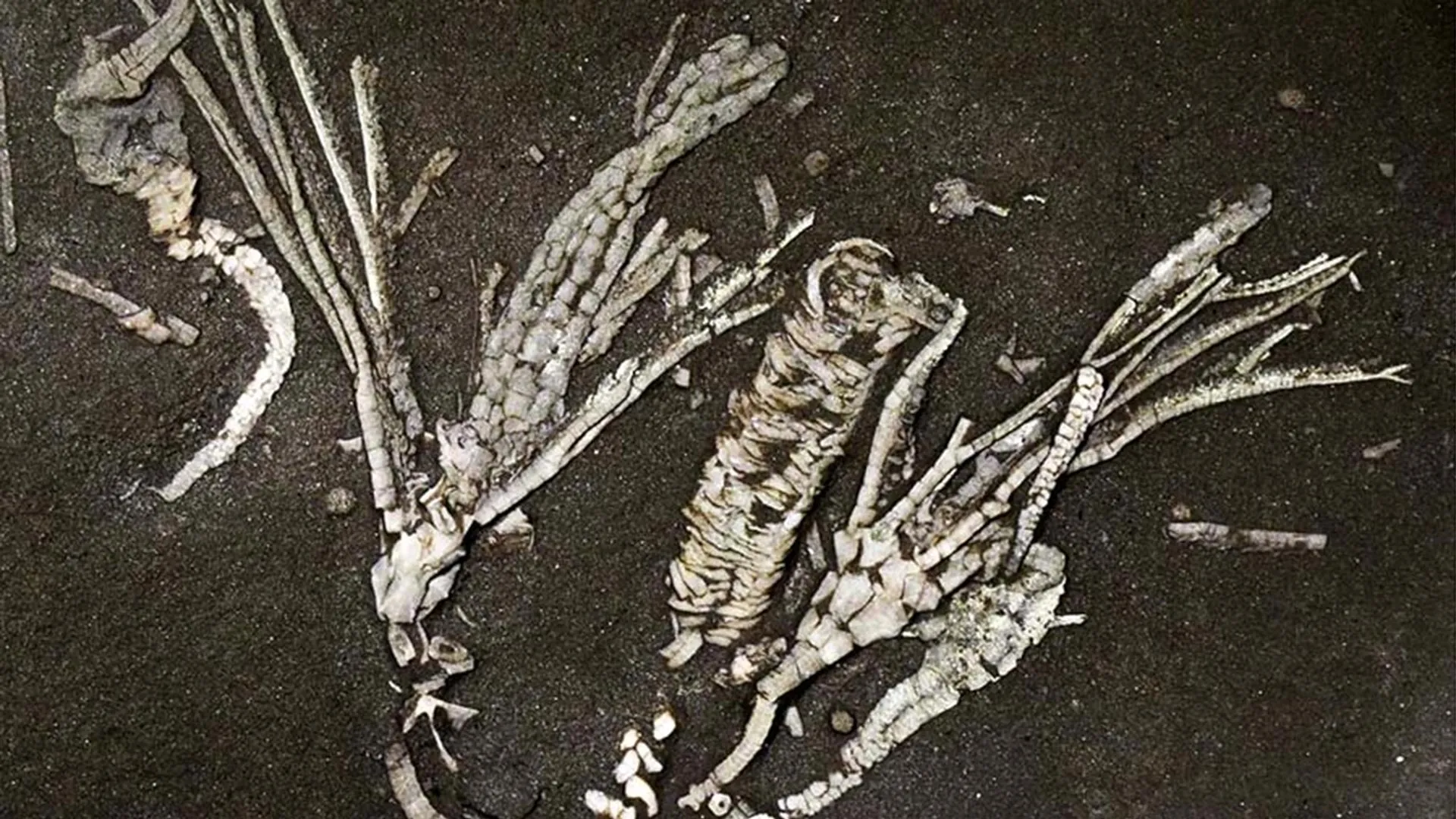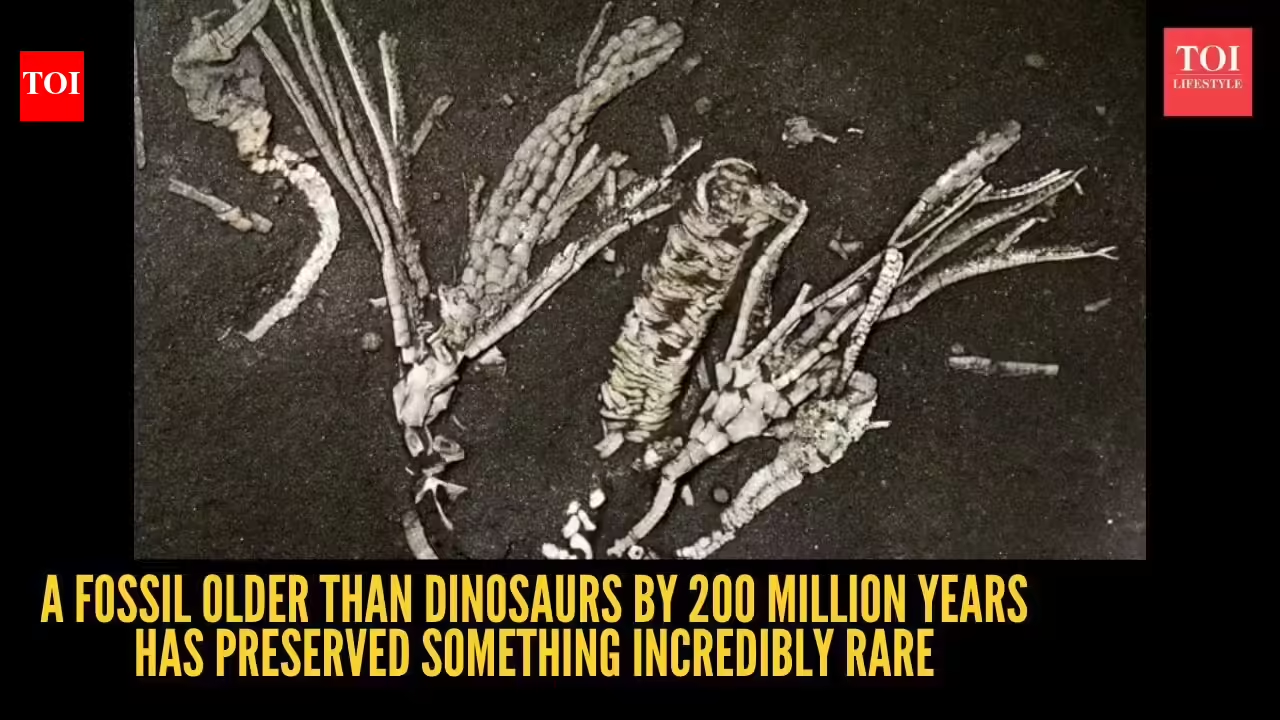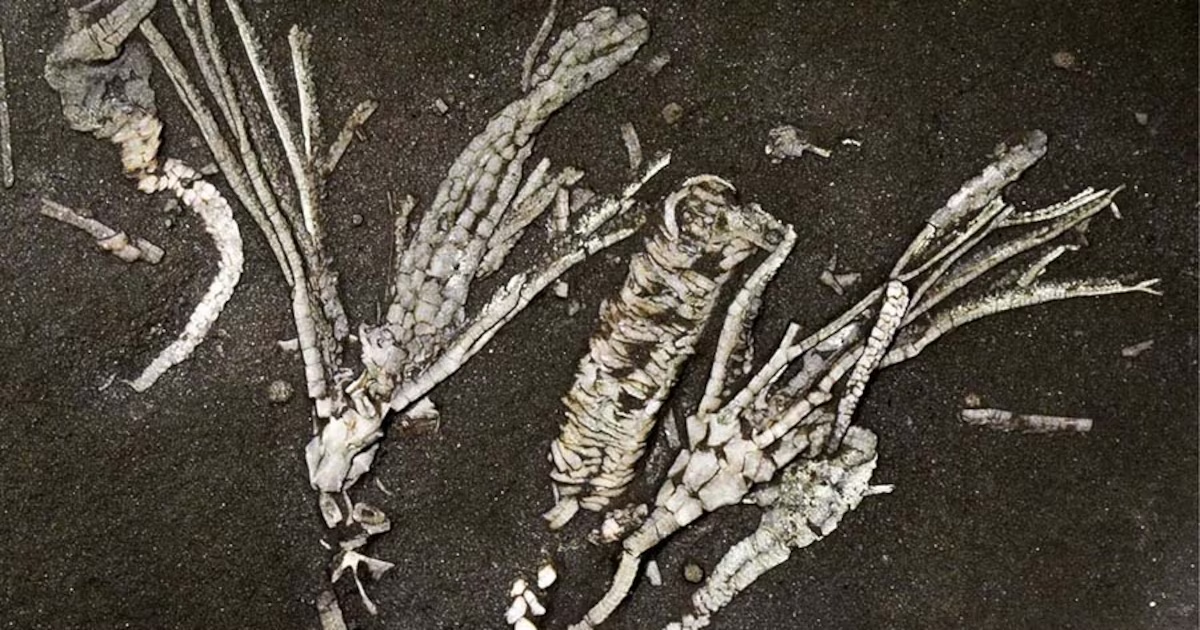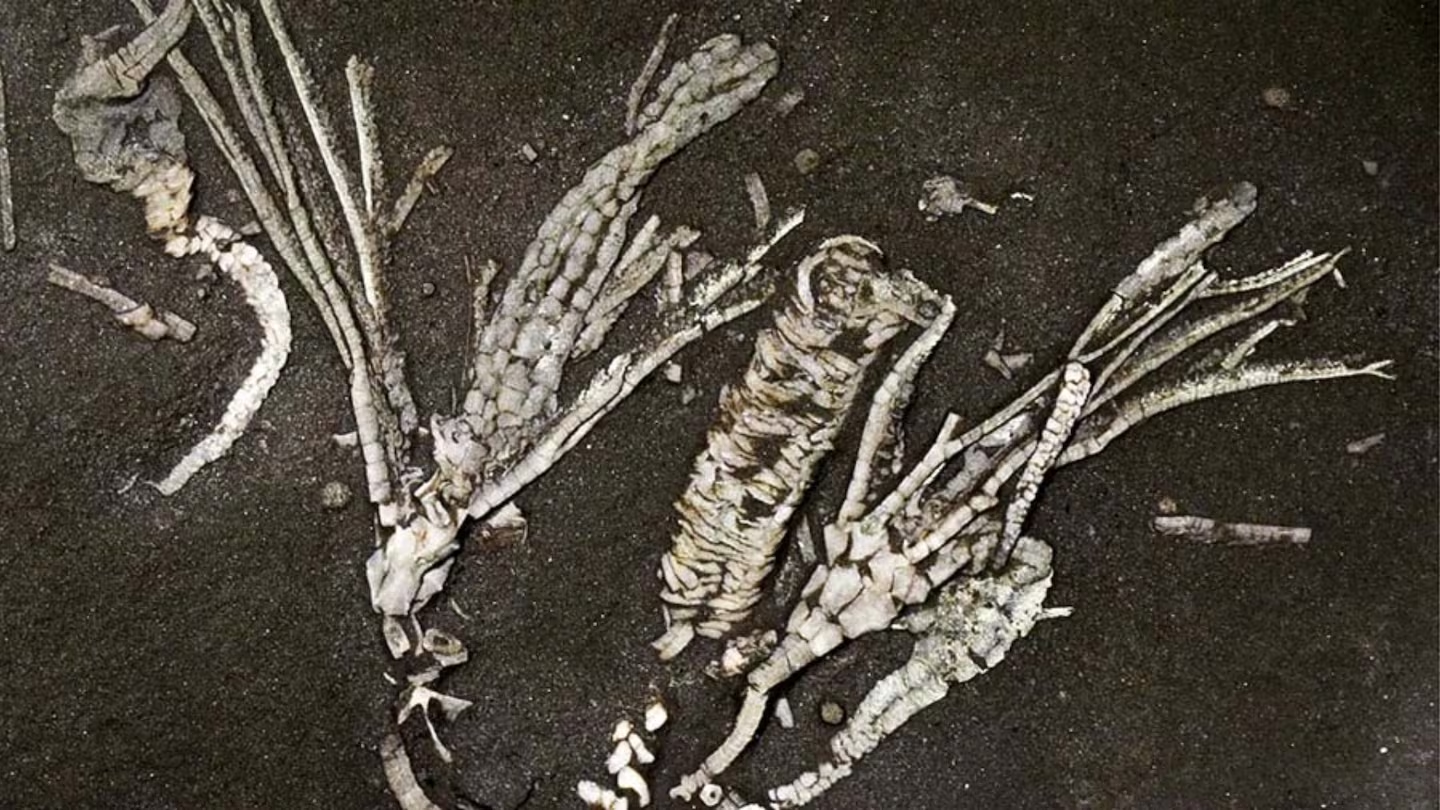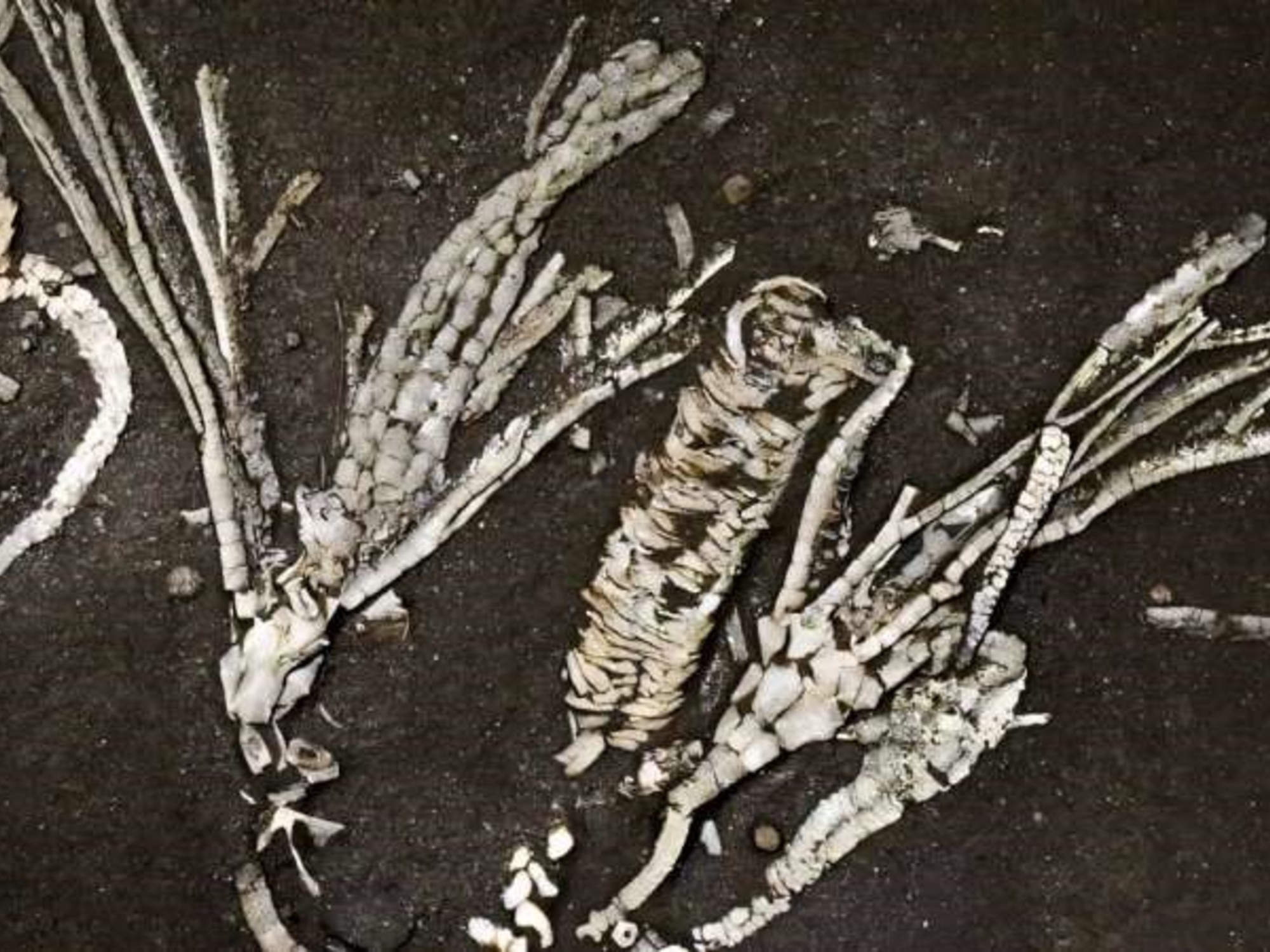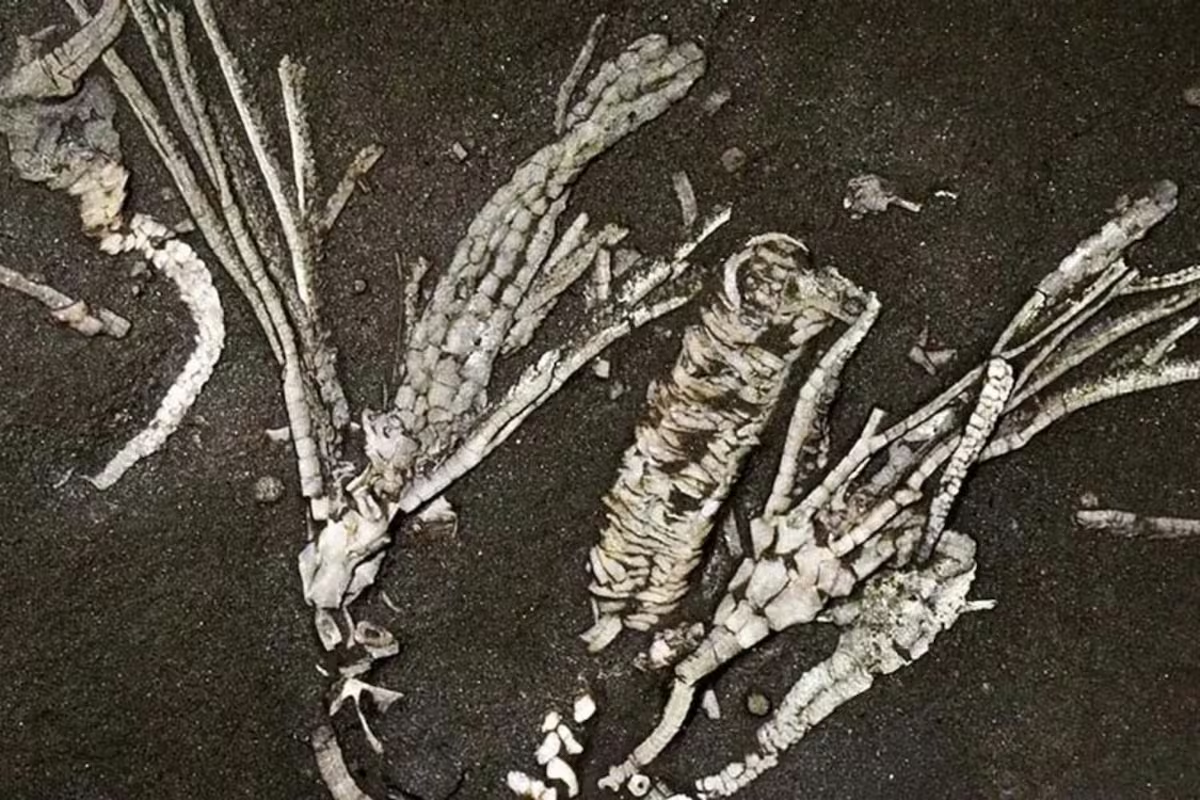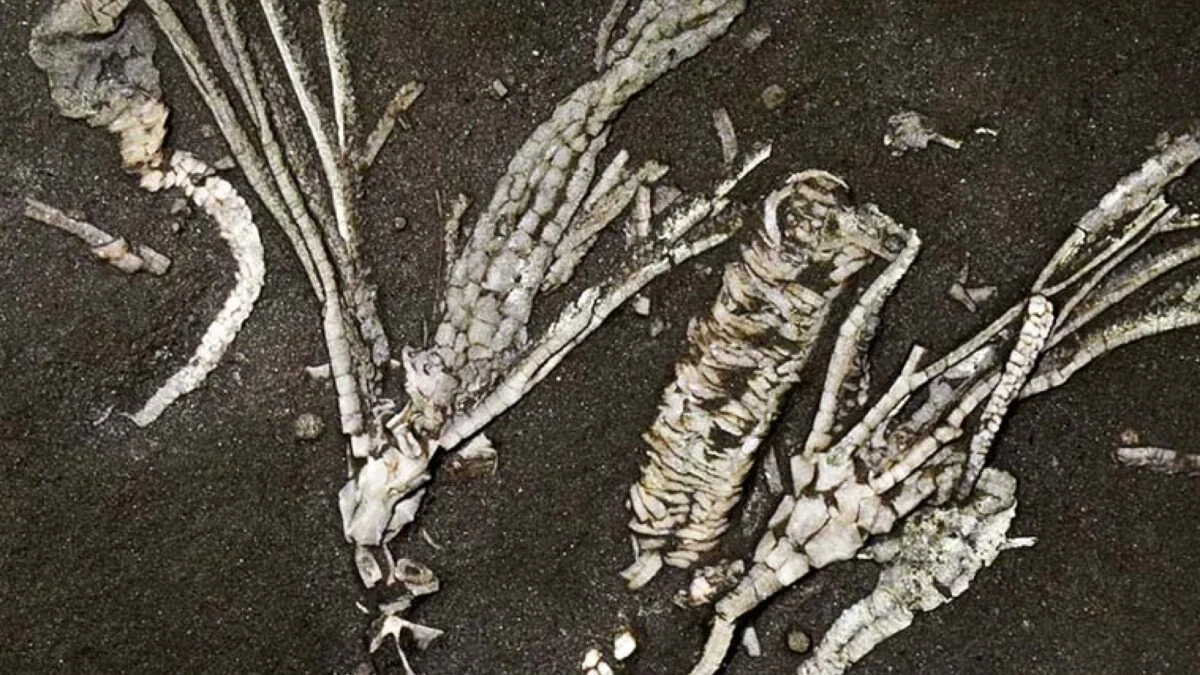
Scientists believe that Earth’s earliest life included ancient forms of crinoids, or the relatives of modern starfish. Crinoid fossils pop up by the millions, but a truly lucky discovery has found the second-ever crinoid fossil with preserved tissues. As with many big finds in paleontology, the team behind the study spotted the fossil of the crinoid Dendrocrinus simcoensis in a small, relatively unknown collection, in this case a local museum in Montreal, Quebec. The researchers discovered that the fossil dates back to around 450 million years ago, which was even older than the previous and only known example of soft tissues preserved in crinoids. The team anticipates that the fossil will provide renewed insights into marine ecosystems from long ago. A paper detailing the findings was recently published in Royal Society Open Science. A close-up photo of the fossil. Credit: Lena Cole © Cole et al., 2026 “Soft tissue preservation like this is a one-in-a-million, so it was incredibly exciting to discover such a rare and unique fossil,” Lena Cole, the study’s first author and a paleontologist at the University of Oklahoma, told Gizmodo. “Beyond the initial discovery, I find it fascinating that we can use exceptionally preserved fossils like this one to better understand how extinct crinoids fed, behaved, and interacted with each other, providing us with an amazing glimpse into the lives of these ancient sea creatures.”
Scientists Find Super-Rare Soft Tissue Fossil From 450-Million-Year-Old Sea Creature
Crinoid fossils turn up by the millions, but this is just the second time that scientists have found one with soft tissues still intact.
597 words~3 min read