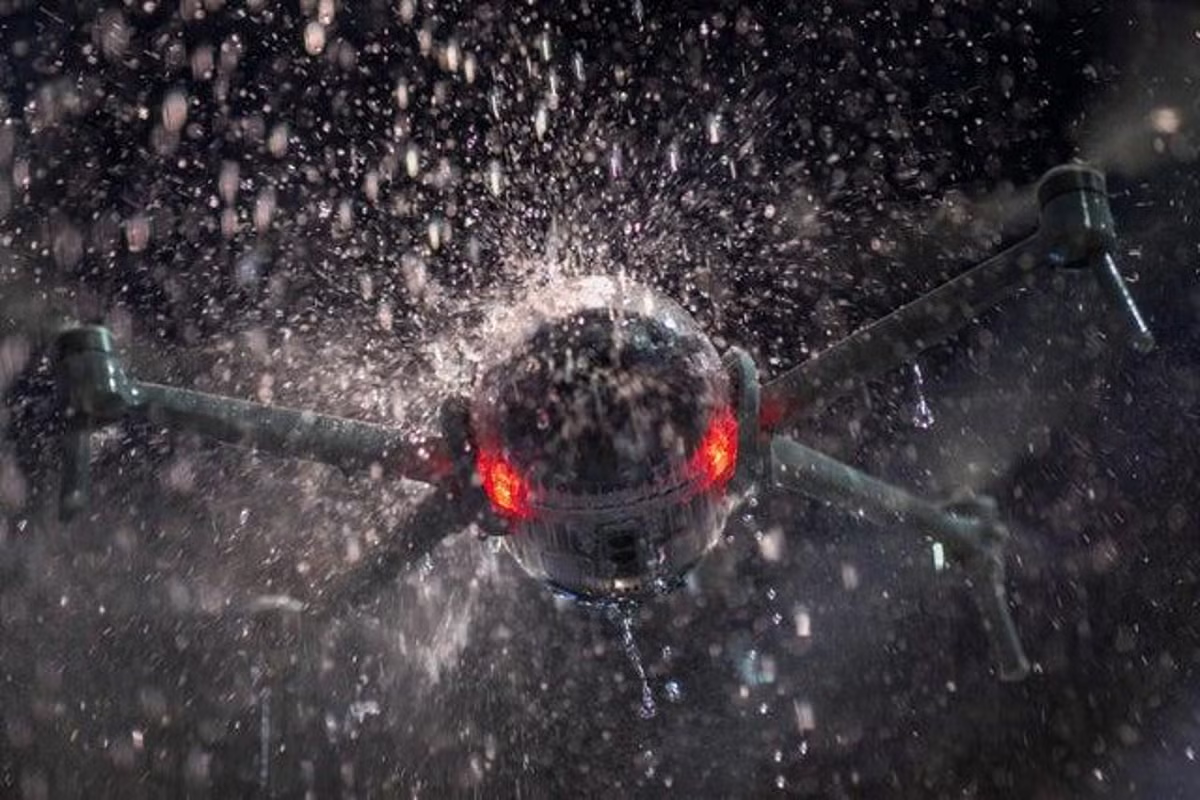
AI safety advocates have plenty of hypothetical disaster scenarios they can evoke in order to win support for their cause. But none of those have the raw emotional appeal of killer robots. For decades, we as a culture have been steeped in sci-fi depictions of intelligent machines going rogue and waging war against their human creators. Films like The Terminator and The Matrix come to mind, for example. A 2017 episode of the British TV series Black Mirror called “Metalhead” likewise envisions a nightmarish future in which humans are systematically hunted down and killed by autonomous four-legged robots (that look a lot like the famous “Spot” robot built by Boston Dynamics). The events in Frank Herbert’s Dune take place in the aftermath of a cataclysmic war between humanity and “thinking machines.” I could go on. The point is that when the Secretary General of the United Nations calls upon the international community to ban “killer robots,” that phrase is going to strike a resounding chord in the public imagination—especially when that public is already becoming wary of the current course of AI development for much more immediately tangible reasons, like increasingly steep electricity bills and the unconstrained spread of online deepfakes. On Monday, during the first-ever Global Dialogue on AI Governance in Geneva, U.N. Secretary General António Guterres called the development of AI-powered weapons “morally repugnant,” and urged the U.N.’s 193 member states to unilaterally prohibit the technology from the battlefield.
UN Secretary General Calls for Global Ban On AI ‘Killer Robots’
Others, meanwhile, argue that the US has a moral obligation to build powerful autonomous weapons systems—lest our adversaries get their first.
802 words~4 min read