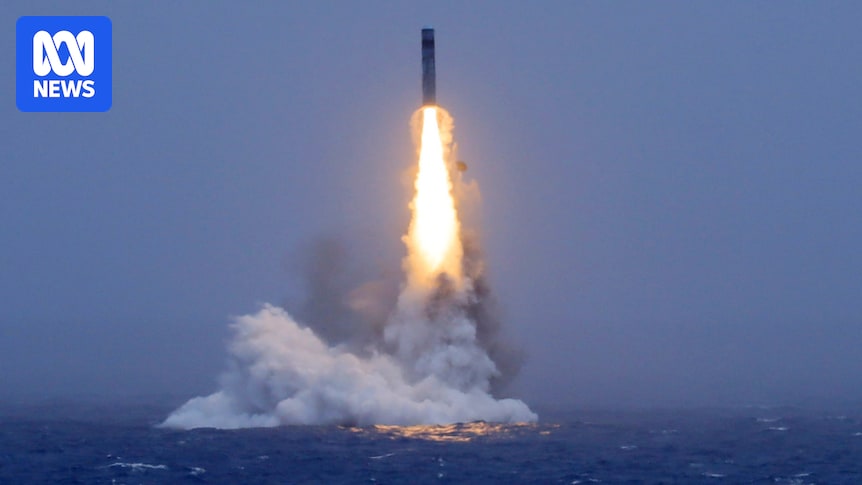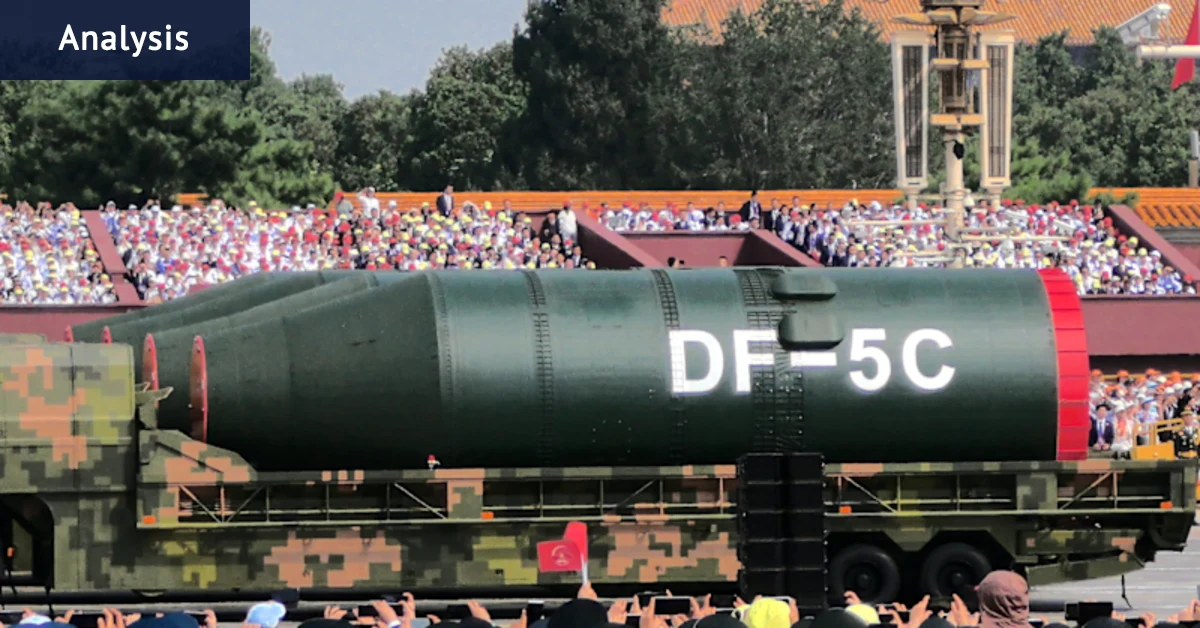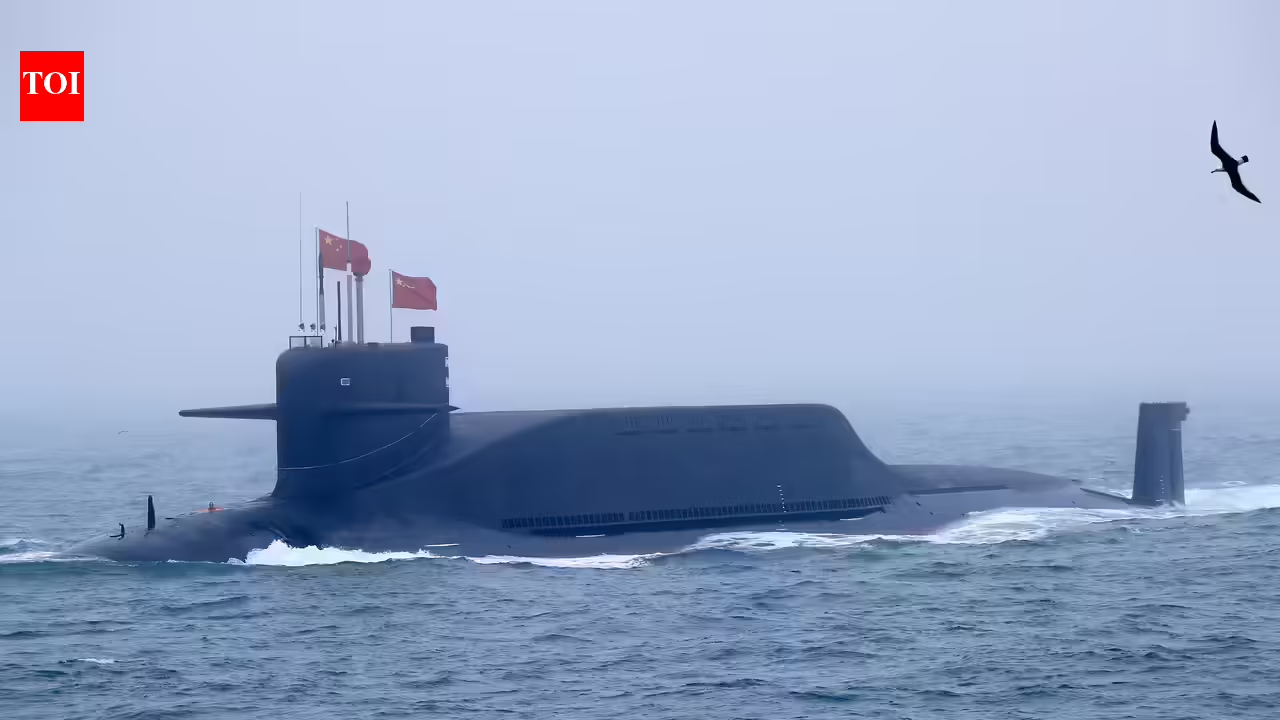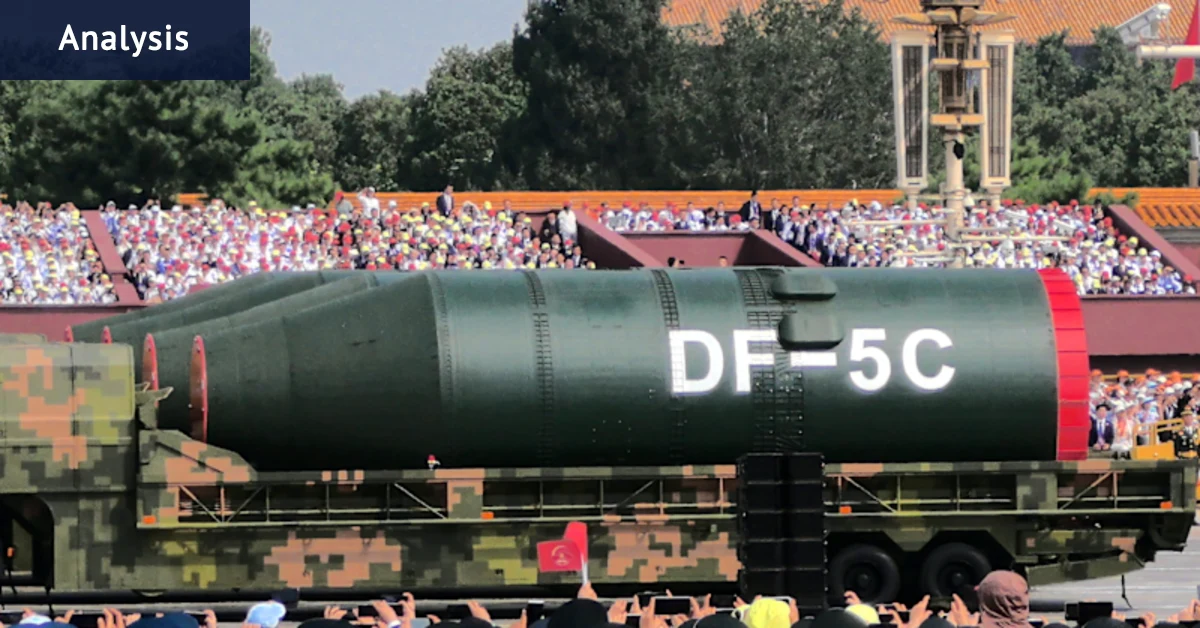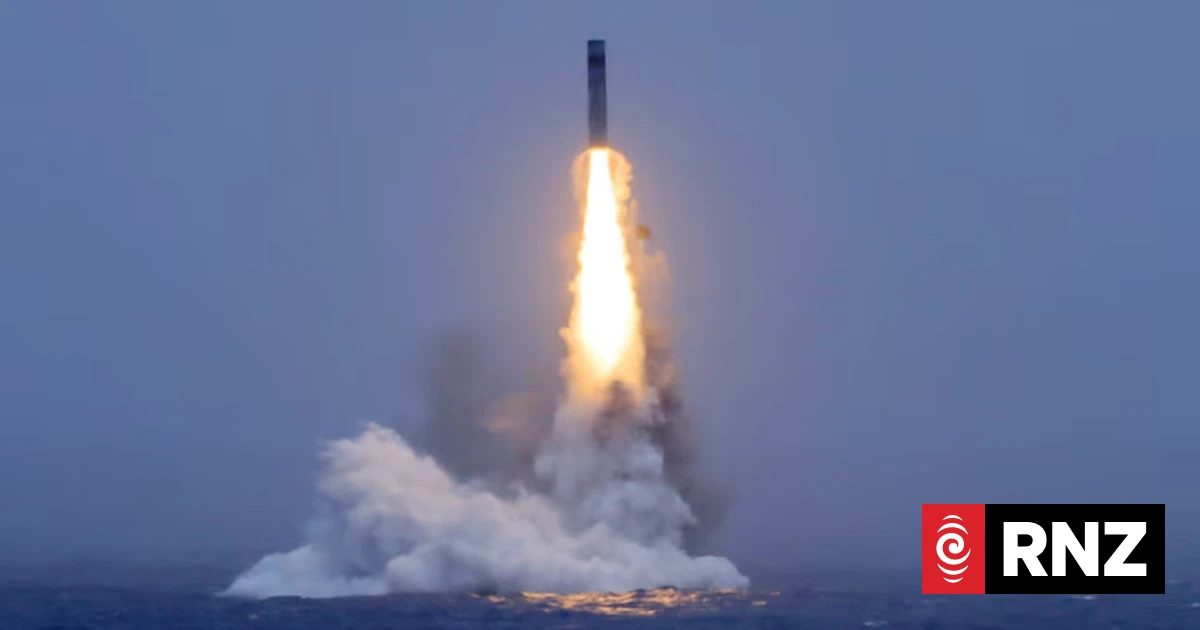
Analysis - The world's largest army has just made a massive military flex and sent a message across the globe, all without saying a word.For the first time, Beijing has fired an intercontinental ballistic missile into the waters of the Pacific from a nuclear-powered submarine.The missile carried a dummy warhead, Chinese state media said, and the exact landing location is still unknown.Overnight, it emerged that the missile had flown over multiple Pacific nations and appeared to have hit waters close to Tuvalu's Exclusive Economic Zone (EEZ).This is a region where China is increasingly trying to gain a strategic foothold, and the launch marks a history-making moment that forms part of a broader Chinese campaign to assert its geopolitical, economic and military power in Australia's backyard.China has spent the last 12 months welcoming leaders from across the world, reshaping its position in the geopolitical global order and challenging the standing of the United States.At the same time, its military ambitions in the global south have become more visible and insistent.Just last year, three Chinese warships spectacularly sailed to the edge of Australia's waters in a move that at the time, was seen as a dangerous reflection of Beijing's burgeoning military capacity.The Jiangkai-class frigate Hengyang was among the Chinese flotilla sailing east of Sydney last year.Supplied: Department of DefenceChina has with this latest test sent a warning to the Pacific: that Beijing now has the military and nuclear means to assert its dominance in the region.The last time Beijing fired a long-range missile into the Pacific was September 2024, but it was a land-based launch.This test fire, for the first time from a nuclear-powered submarine, clearly demonstrates China's rapidly advancing nuclear and military modernisation.China expanding military capacity on all frontsChina's navy surpassed the US navy's number of battle force ships in 2014, and its capacity has only expanded since then.It has modernised its air force, increased its spending on defence and boosted its ballistic missile stockpile, data from various sources shows.And China is also expanding its nuclear weapons cache faster than any other country; something it has now reminded the world about in a very public display.As of 2024, the Pentagon estimated China's nuclear warhead stockpile numbers were in the low 600s, and it predicted that arsenal would climb to more than 1,000 operational warheads by 2030.Chinese officials have yet to confirm the model and range of the missile used.But analysts in Chinese state media, where anything published has effectively been sanctioned by the government, concluded it was most likely a JL-3, which is the navy's most advanced submarine-launched ballistic missile.Military experts have estimated that type of weapon could have a range of at least 10,000 kilometres, putting Australia easily within its striking capability zone.The trajectory of a test-fired Chinese ballistic missile in the Pacific, according to the Taiwanese government.X: Joseph Wu/Government of TaiwanJust last month, foreign policy think tank the Lowy Institute produced a new report tracking the "dramatic" scale of Beijing's vast military build-up.The analysis warned that the Chinese military could already hit Australia's trade routes, subsea cables and critical infrastructure and was developing a "real and growing" ability to hit the Australian mainland with missiles.If the warhead fired by China on Monday is confirmed to have been a JL-3, this latest missile test may be evidence to back up the alarming claim.China has explicitly stated the missile was "not aimed at any specific country or target" and there is no suggestion that it was.But in an era where Beijing is more confident, unrestrained and untransparent with its intentions than any other time in recent history, countries around the Pacific may be feeling wary.And it's no surprise the rocket's ocean splash has sent waves through Australia and its neighbours, who have been quick to condemn China's actions as concerning, unwelcome and destabilising.Missile launch a sobering reminder to global southNew Zealand Foreign Affairs Minister Winston Peters also called out China's claims of the test being part of its regular military programming."We as a region should not sit by and allow such tests to become normalised or routine," he said.But there is a glaring question that follows on from the NZ foreign minister's statement: who would stand up to China in a way to challenge that?The region's most powerful traditional ally, the United States, has recently suffered reputational damage as a country that cannot be relied upon to uphold international law or global order.Several Pacific nations have also had reason to question whether the US would step up, should China advance its military ambitions even further in the region.Some may argue that it's not unusual for nuclear powers around the world to test their capabilities: the US Navy conducted four tests in September 2025 off Florida, and both Russia and India also tested submarine-launched ballistic missiles late last year.But in deciphering China's actions in this region, context is crucial.Some analysts have questioned the timing of the launch, coming on the same day an Australia-Fiji security alliance was signed to counter China's growing influence in the region.In response to the missile test, the US State Department said it had monitored the release and urged China to engage in "meaningful" arms control discussions.- ABC
With one missile, China sends world a reminder of its growing military power
Analysis - The world's largest army has just made a massive military flex and sent a message across the globe, all without saying a word.
860 words~4 min read