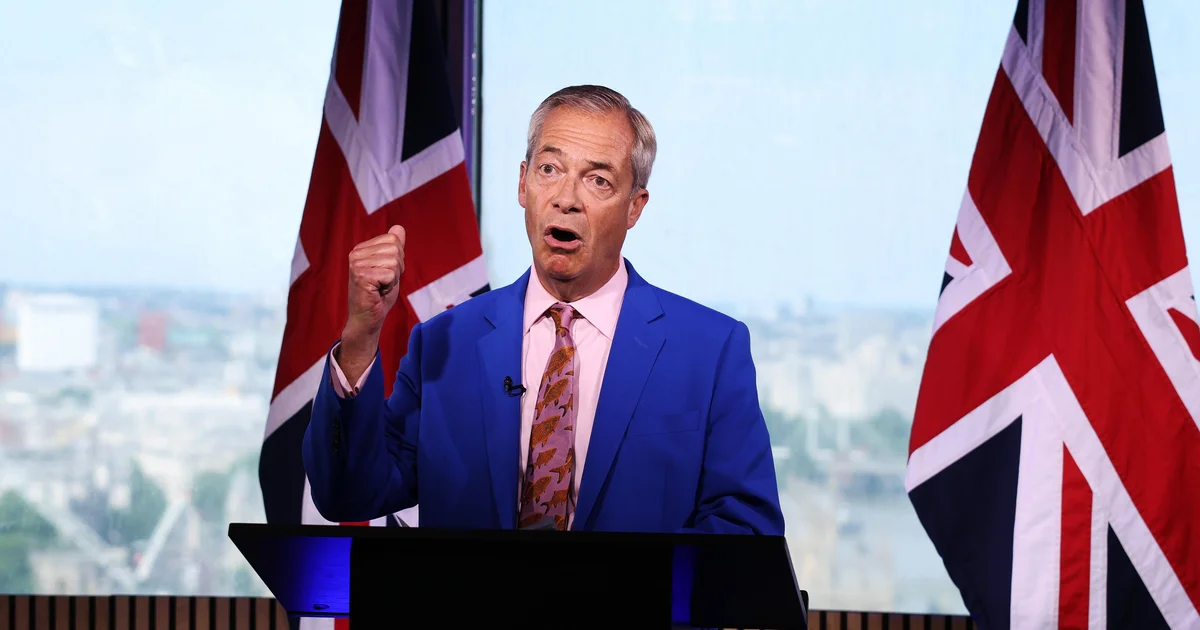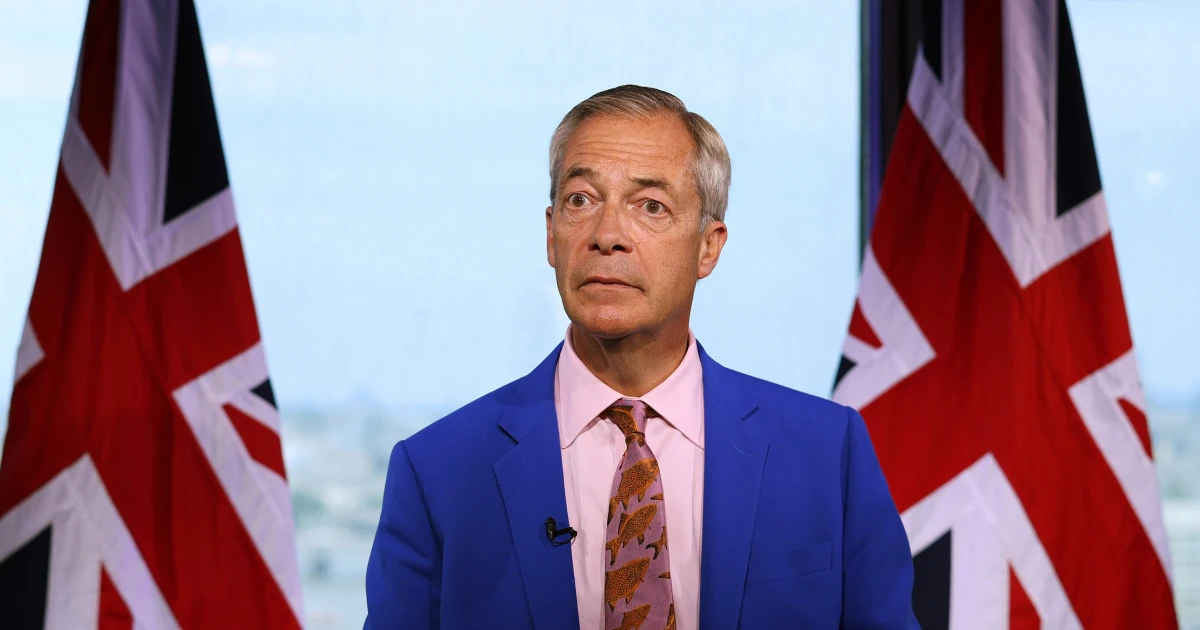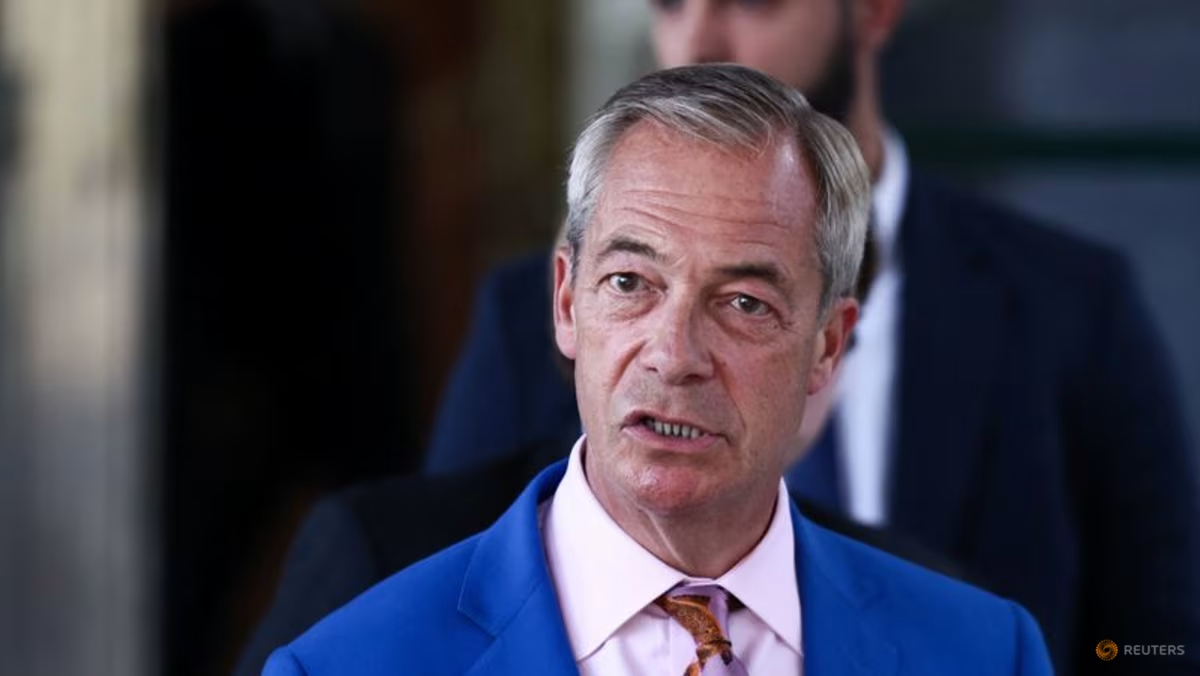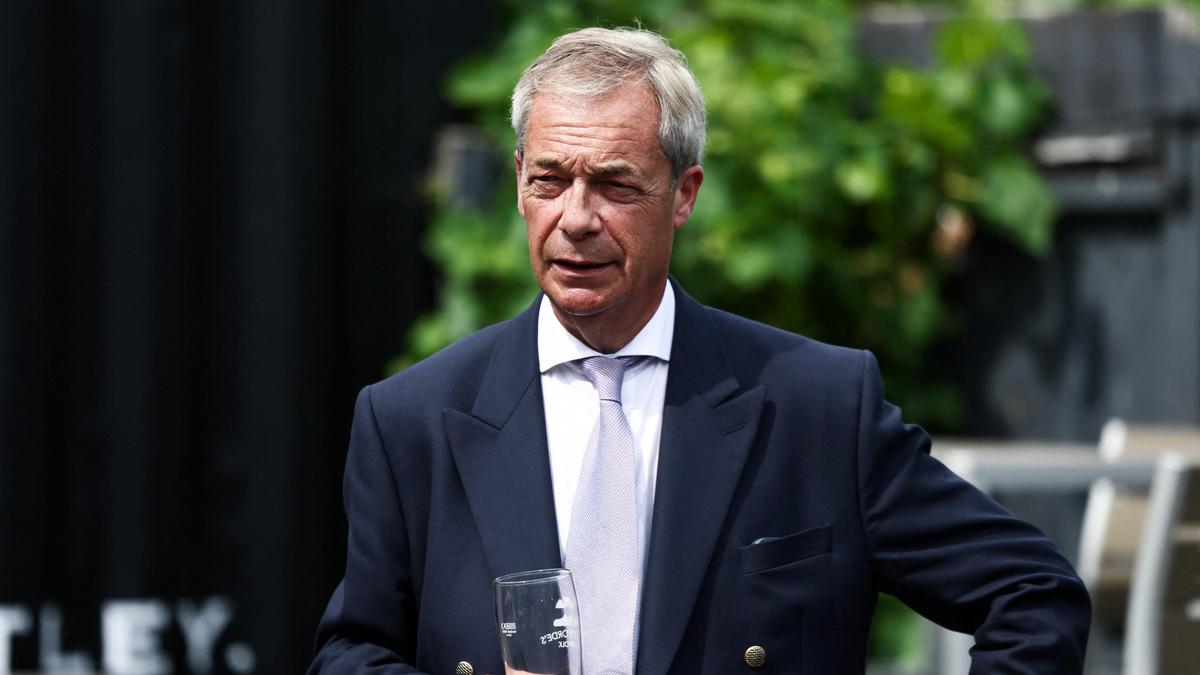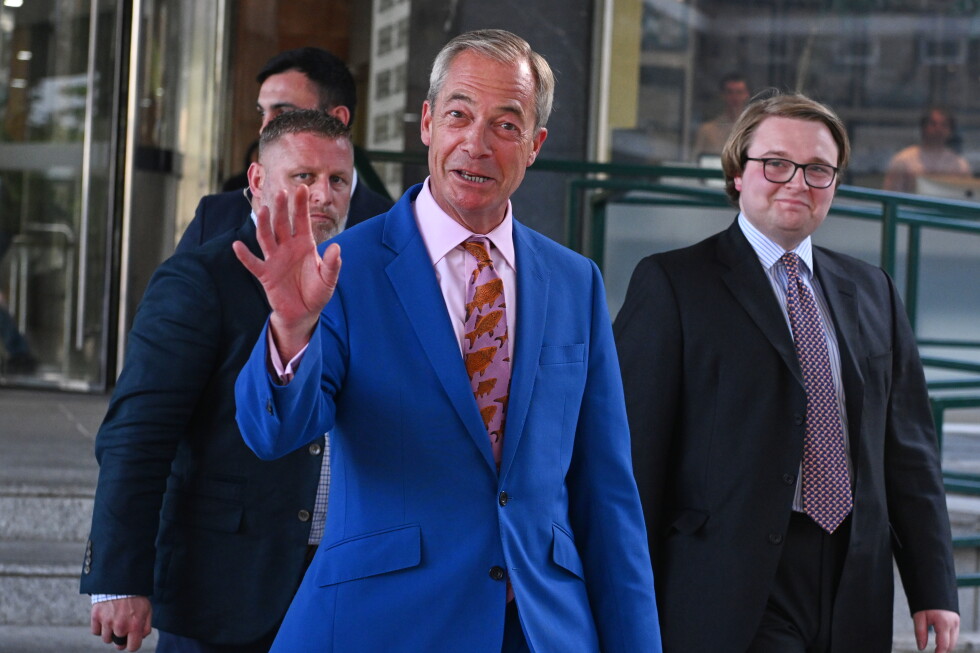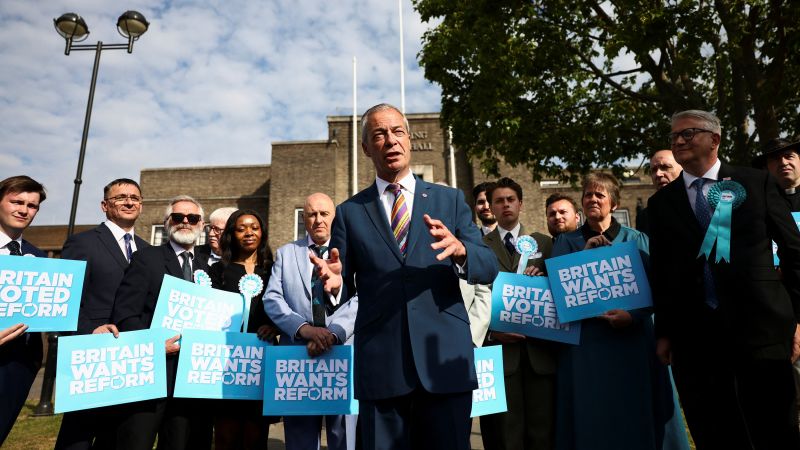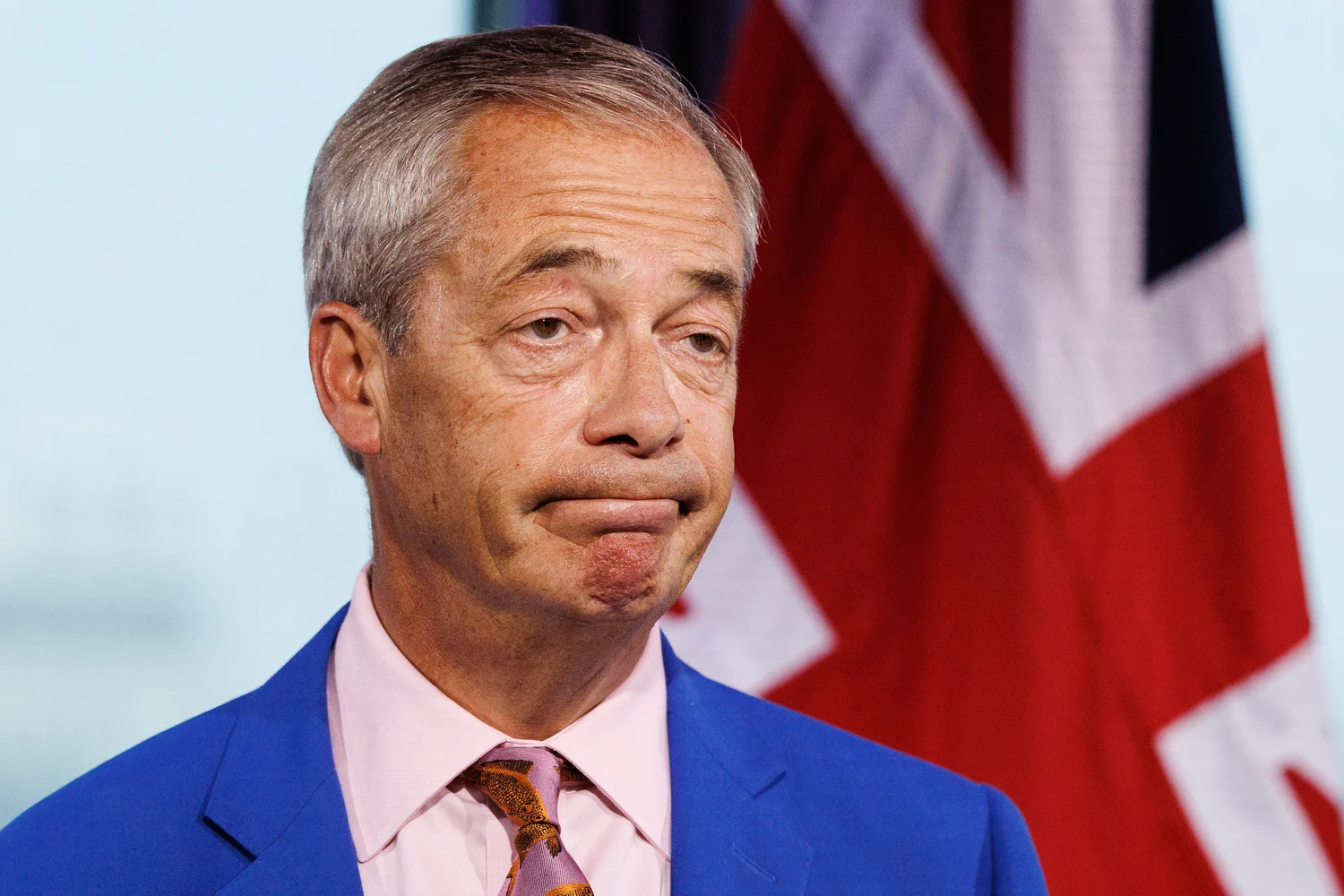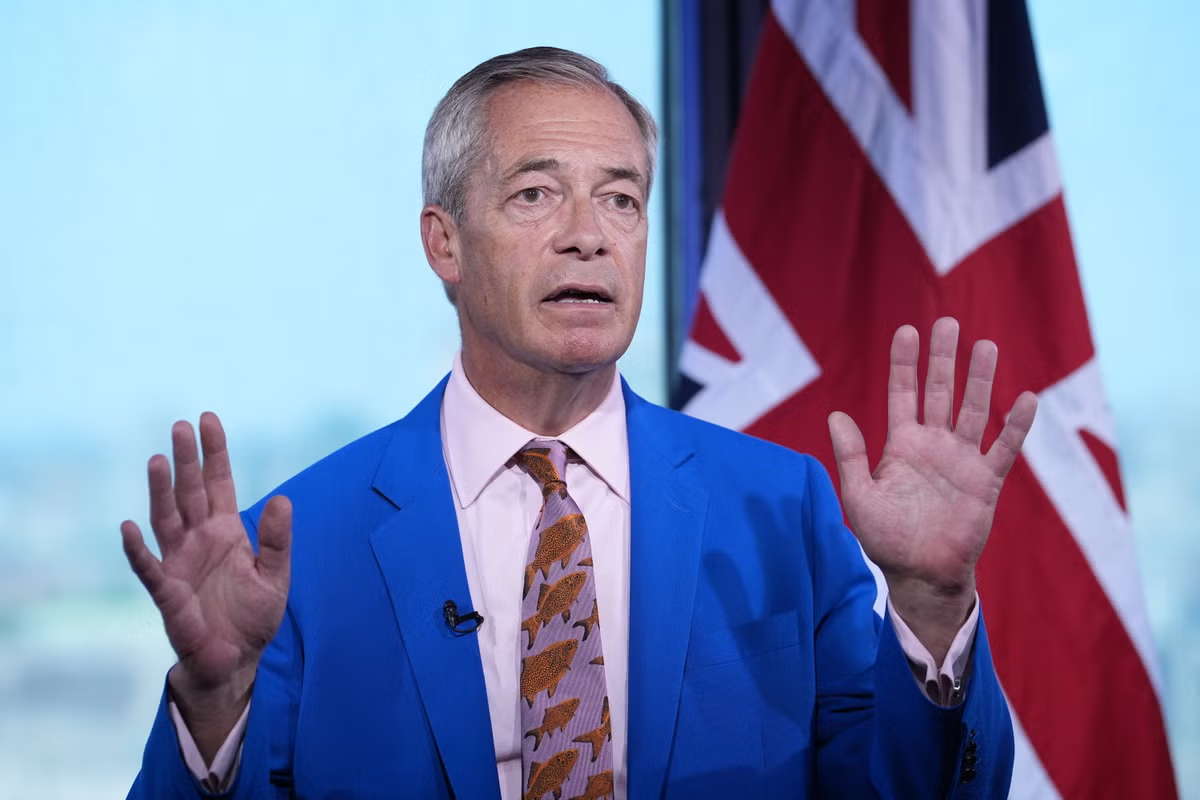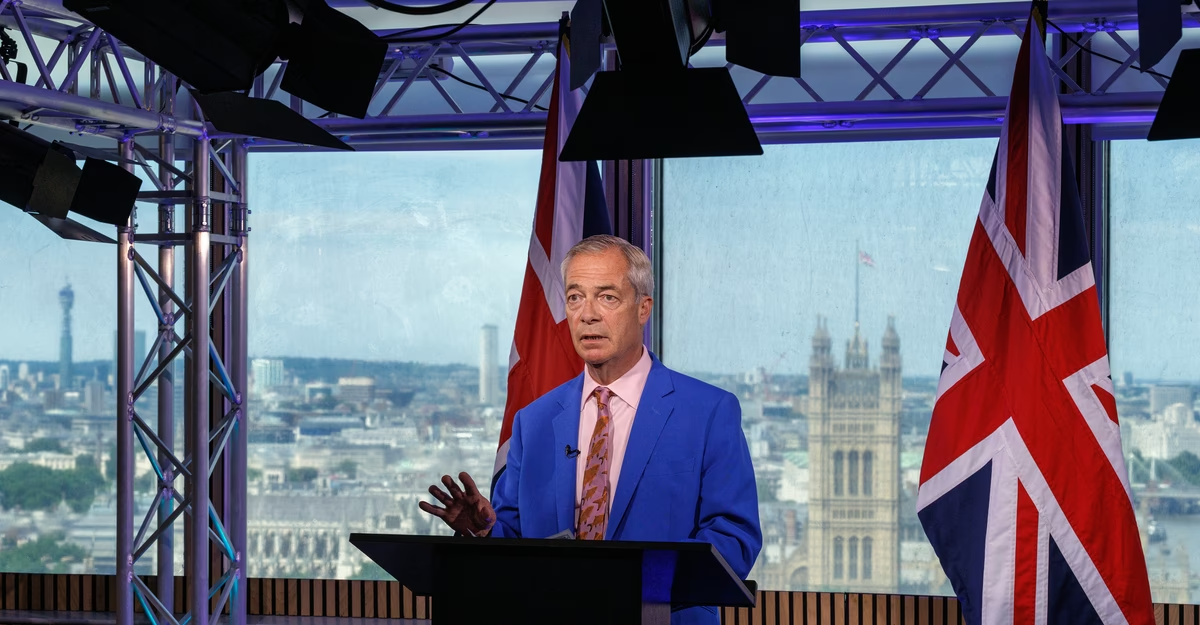
Nigel Farage is a great survivor. A decade ago, the British populist provocateur achieved his lifelong ambition—getting his country to vote itself out of the European Union. Since then, he has founded Reform UK—now Britain’s most popular party—and won a seat in Parliament after seven failed attempts. But one question won’t go away: where does he get his money from?Hoping to silence inquiries about his financial interests, the Reform leader today risked everything in a Trumpian gamble. Farage announced—in a speech full of self-pity and venom—that he would resign his parliamentary seat, forcing a special election in his constituency, the coastal town of Clacton in southeast England. Farage will run for the vacancy he created, hoping that voters will back him in what he called “a people-versus-the-establishment by-election” and “a chance to stick two fingers up to the establishment.”What Farage really wants is a mandate for corruption—or at minimum, an exemption from scrutiny over his financial affairs. This weekend, London’s Sunday Times revealed that he had accepted gifts of staff, security, and accommodation from George Cottrell, a 32-year-old cryptocurrency investor who has served jail time in the United States for wire fraud. In Reform circles, Cottrell is known as “Posh George.” He calls Farage “Daddy.” Farage did not mention Cottrell’s generosity in Parliament’s required financial disclosures, nor did he declare an earlier £5 million gift from the Thailand-based crypto billionaire Christopher Harborne in early 2024.Idrees Kahloon: Burnham is Britain’s last chance before FarageOver more than a decade of populist fury on both sides of the Atlantic, voters have revolted against mainstream parties that they see as self-serving and unresponsive to their concerns. A series of insurgent politicians, most notably Donald Trump, have capitalized on these feelings, presenting themselves as the authentic voice of the working class. But these humble tribunes of the people have tended to enrich themselves along the way. In the last few years, Farage has earned thousands promoting gold bullion, hosting a television program on a supposedly politically neutral channel, and recording personalized videos on the platform Cameo.Farage has argued that the donations he has received from wealthy patrons are purely personal—expressions of their admiration for him as the architect of Brexit, and designed to offset the threats to his safety he faces as a populist leader. “It’s an unconditional gift. I can spend it on Ferraris if I want,” he told the radio station LBC in June about Harborne’s £5 million. When the BBC asked if he would return the money, he replied: “I don’t think it’s any of your business, frankly.”In the relatively parsimonious world of British politics, Harborne’s gift was a large enough amount to prompt the government to tighten restrictions on political donations from those living abroad. It also triggered an investigation by Parliament’s ethical watchdog, which could have resulted in Farage being suspended from his seat or forced into a recall election. The investigation will now be halted for the duration of the by-election campaign. Ridiculously, Farage could in theory win his self-imposed election, return to Parliament, and then face another vote weeks later, if he is found to have broken the financial rules.Farage has not reacted to his latest scandals with his usual rhetorical skill. He was strangely absent from the campaign trail for the recent high-profile by-election in Makerfield, a northern English constituency where Reform might be expected to do well. Instead, the party ran a lackluster campaign with a mediocre candidate, and Labour’s Andy Burnham won easily, allowing him to challenge the wildly unpopular Keir Starmer for the job of prime minister. Starmer promptly bowed to the inevitable, and announced his resignation. Burnham is expected to take over as Labour leader and prime minister later this month.Now, Burnham’s first crucial weeks in charge of the country could be dominated by the Nigel Farage circus. To avoid playing into Farage’s stunt, the other major parties are refusing to run candidates against him. His main opponent may be a satirical character, Count Binface, who wears a trash can on his head.But even if the election is a hollow charade, Farage is likely to treat a win as Donald Trump did his second election victory in 2024—as a permission slip to enrich himself however he sees fit. Farage, like his patron and friend in the White House, will have many opportunities to profit if voters decide that the traditional guardrails no longer matter in political life. The people of Britain are unlikely to do as well out of the bargain.Farage was once a sunny figure in British politics, a reliable source of boozy bonhomie, dishing out soundbites to journalists with a barking laugh and a cigarette dangling from his lips. But as he has brooded over his treatment by the establishment in recent months, his persona has soured, much as Trump’s has. The Reform leader is prickly with interviewers, when he speaks to them at all.Today’s speech hit all the Trumpian notes you might expect. The reporting on his finances was a hit job, he insisted: “The establishment have now decided that they can’t beat us fairly so they’ve chosen to use foul means.” This reporting had put him in physical danger, Farage claimed—right before suggesting that the Times reporter involved was motivated by personal hatred, a statement that surely puts a target on his back. Farage complained that he had given up a lucrative job as a commodities trader to enter politics in the first place, and the Brexit campaign had left him “with very little money indeed”. So what if he had promoted financial products to his millions of social-media followers—investments that he claimed today had since doubled in value? Didn’t Britain want politicians who knew how to hustle? The changes to donation rules were like “living in a Communist country,” he said today. You could sum up the whole thing as his I Have a Crooked Dream speech. “Making money,” he declared, “is not a crime.”Conflict of interest rules exist because, very obviously, politicians have the power to influence markets and regulations in ways that businesses might find advantageous. Trump has blown through longstanding norms since returning to office. Having once declared cryptocurrency to be a “scam,” he later realized how much money he and his family could make from it. Farage has had a similar conversion to the crypto cause, and is now all-in on an industry that purports to challenge traditional banks but abounds with charlatans and con men exploiting the gullible and greedy. In 2025, Farage announced plans to pass an industry-friendly crypto bill if he becomes prime minister. He has lobbied the governor of the Bank of England not to set up a state-backed version of Bitcoin—which would be a rival to Tether, a stablecoin in which Harborne holds a large stake. Populists love crypto because they easily weave advocacy for it into a wider jeremiad against the political and financial systems.Farage and Trump also share the view that self-restraint is pointless, when so many generous souls are just begging to shower wealthy politicians with cash for entirely above-board reasons! Farage’s speech contained an odd little diversion about London’s alleged immigrant crime wave, which meant that “men can’t wear watches.” I am willing to bet that very few people in Clacton get up in the morning worrying about the safety of their Rolexes and Patek Philippes. But the tech and hedge-fund bros who constitute the right-wing populist donor base certainly do.From the July 2026 issue: How Britain became as poor as MississippiDespite his many political successes, Farage believes himself to be the victim of a cruel plot against him by the entire universe, and he wants us all to know about it. He complained (with justification) that being a politician is a risky endeavor, and that he has faced threats against his life. But his claim to be the “most physically and verbally attacked public figure or politician of modern times” will be news to the families of Jo Cox and David Amess, two members of Parliament who were killed while doing their jobs. Then again, remembering the existence of other people has never been high on Farage’s list of strengths: In 2016, a week after Cox was shot dead by a white supremacist, Farage celebrated the fact that the Brexit referendum had been won “without a single bullet being fired.”Personally, I find all his special pleading and fixation on personal grievance to be extremely unappealing. If Farage thinks that crypto investors are bankrolling him purely out of the goodness of their hearts, then he is welcome to test that theory by retiring from politics and seeing whether their donations continue. A more likely explanation is that they have looked across the Atlantic Ocean, seen what favors are available to Trump’s benefactors, and found a British Mini-Me. Even Farage seemed to gesture to this reality. “I could go out and try and make some real big money,” he said toward the end of the speech. “I could go to the USA, where I’ve got plenty of offers.” Instead, he would nobly stay in tinpot little Britain, attacked, demonized, beset on all sides by losers and haters and communists, so that the people of Clacton would have a chance to spit in his critics’ faces by returning him to Parliament.His grand gesture will be somewhat less impressive if his opposition comes not from the massed ranks of “the establishment,” but a man called Count Binface. Still, Farage will take any vindication he can get, and if he is returned to Parliament, he will wield that endorsement as a shield against future questions. If he succeeds in doing that, any more accusations of personal enrichment—just like in Trump’s America—will become a background hum, nothing special, an accepted fact of life.
Nigel Farage Wants a Mandate For Corruption
The British populist leader makes a Trumpian gamble.
1,623 words~7 min read