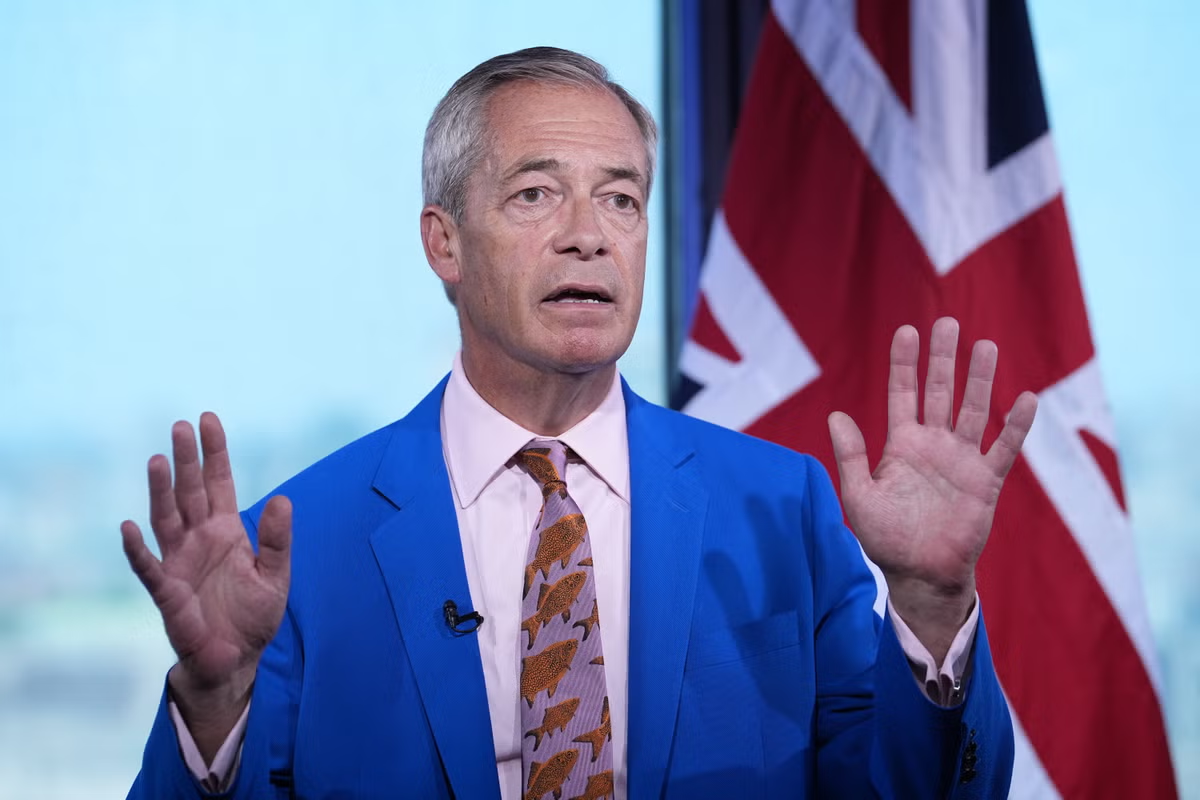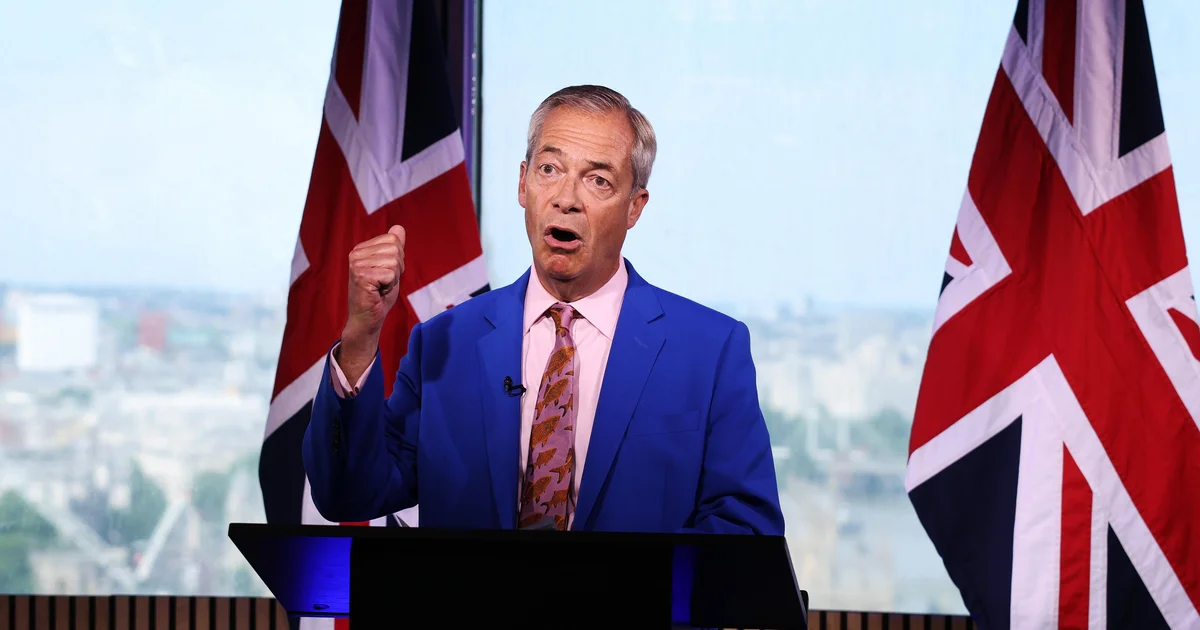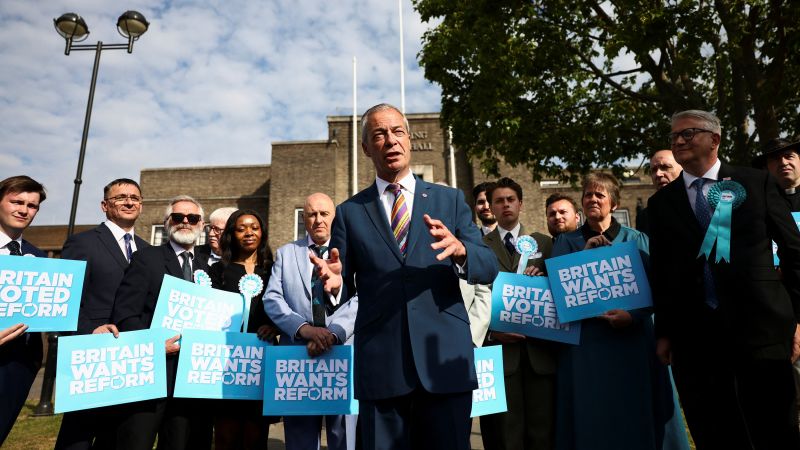
Much like his ally, US President Donald Trump, Nigel Farage has enjoyed a political career seemingly coated in Teflon, his straight-talking, combative communication style brushing off any potential scandal.
Throughout his rise to become the voice of Britain’s populist hard-right, architect of Brexit and chief anti-immigrant activist, any accusations of wrongdoing have largely glided off him. Reform UK, his populist party, leads most national opinion polls, giving it an outsized influence on British politics given that only eight of the country’s 650 lawmakers belong to the party.
But, in recent weeks, that momentum has stalled.
While Reform enjoyed huge gains in May’s local elections, which don’t affect the make-up of the national government but provide important insights into the public’s mood, translating those gains into more parliamentary seats is proving difficult for the party. It has lost two prominent by-elections this year – to the left-wing Green Party and governing center-left Labour Party respectively – and now faces a challenge from its right flank with the rise of the Restore Britain party, led by former Reform MP Rupert Lowe.
And, perhaps more importantly for a party whose political fortunes are practically inseparable from its leader’s own personal brand, Farage himself is under unprecedented scrutiny for some of his financial dealings.