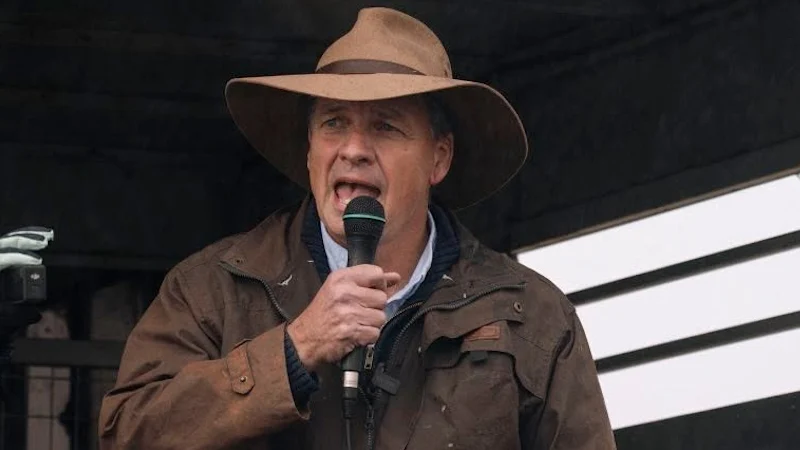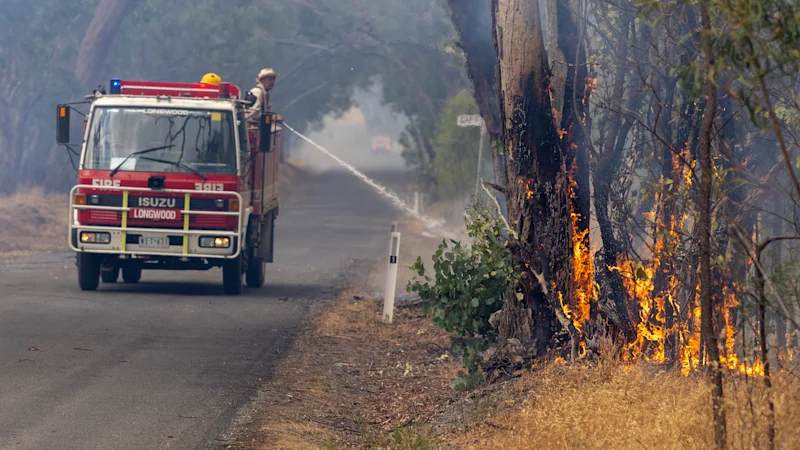
July 8, 2026 — 5:00amThe CFA warned it had received less than half the extra funding it needed in a blunt assessment of the shortcomings in the state’s firefighting capability that was later whitewashed after talks with the state government.Last month, the rural firefighting authority handed in a 33-page response to concerns raised by a parliamentary inquiry into last summer’s bushfires, only to swiftly retract it and then file an 18-page version weeks later after consultation with cabinet and departmental bureaucrats.Staffing shortages during last summer’s bushfires, including at Longwood, were a key focus of the CFA’s response to a parliamentary inquiry.Jason SouthThe original version, sent on June 4, also revealed government changes had made fire stations three to four times more expensive to build and outlined “critical gaps” in CFA staffing in areas affected by this year’s bushfires.These were among the details edited out as more than 5000 words were slashed from a sanitised version provided to the inquiry on June 30, sparking claims from the opposition that the government had censored the agency.The original document, and the government’s involvement in its alteration, can be revealed because the committee has tabled both CFA responses and related email correspondence from the past month.One of the most glaring alterations relates to ongoing funding for the CFA. In its original response, the authority said its annual funding allotments were not enough for its fleet of fire trucks, equipment and stations, and it needed to continually bid for supplementary funding in the budget.It said that between 2022 and 2025, it had submitted requests totalling $330.57 million but was approved for $117.95 million. The June 30 response removed all references to these figures, instead saying merely that the CFA “participated in the annual budget bid processes”.The revised response also removed a sentence that said the cost of delivering a fire station under the new Community Safety Building Authority was “up to 3-4 times more costly than CFA equivalent station builds”. It preserved a table outlining the increase in station building costs between 2018 and 2022.Multiple sections of the original document also paint a picture of the significant resourcing challenges facing the CFA.Some of these were preserved in the final version provided to the committee, including acknowledging frustrations with the number of staff available during last summer’s fires.“Volunteers have expressed their disappointment regarding the staff resourcing on 07 January 2026, and CFA continues to work with FRV to ensure that seconded Assistant Chief Fire Officer and Commander positions are filled,” the June 30 document said.However, the updated response stripped back criticism of the secondment model in which Fire Rescue Victoria supplies staff to assist CFA operations. The CFA initially said it was a challenge that FRV was “not consistently able to supply personnel at the levels required to meet CFA’s operational needs”.Since record keeping began in October 2020, the first response said, the CFA has had to operate with an average shortfall in operational command positions of 17.2 people a week, which “equates to a reduction in services of 11.4 per cent”.Another section of the June 4 response said on the week starting January 5, when the worst of the summer’s fires took place, the CFA had “critical gaps” across five districts, with a more than 50 per cent reduction in the number of available commanders. This included District 22, where a major bushfire at Longwood ignited, and District 2 where the significant Harcourt blaze began.“Both districts were required to immediately commence 24/7 ongoing operations with significant command resource constraints,” the document said.This level of detail was pared back in the June 30 report. However, it did concede that District 22 had been allocated five operational staff but only had two available that week.Nationals leader Danny O’Brien said there were stark differences between the original report and the final “censored” version.“The original response provided to the parliamentary committee reveals a troubling tale of waste, mismanagement and staffing shortfalls that show the CFA was hampered in its ability to fight the summer fires,” O’Brien said. “CFA volunteers and the community will be disgusted to learn that the Labor government is seeking to censor the CFA to cover its own backside.”But a government spokesperson said: “The CFA has not been censored and to say otherwise is wrong.”Correspondence released by the inquiry paints a confusing view of why the CFA’s response was altered.In a June 11 email to Emergency Management Victoria chief Dean Tighe, CFA chief executive Greg Leach said the authority did not consider its response had any content that would be subject to executive privilege.“Based on our telephone conversation, my understanding of the process from here is that the CFA’s written response has to be reviewed by DJCS [Victorian Government Solicitor’s Office] and a Cabinet Committee (listed for 20 June 2026) before it can be provided to the committee.”Leach added that he had written to the committee to say the CFA’s first document should be disregarded, including because it referenced “Cabinet and executive privilege considerations”.In a letter to the committee on Monday, Leach said the “incomplete working draft” was submitted on June 4 as an administrative error.“The working draft contained content relating to the state budget development processes including infrastructure cost modelling, fleet bids and fuel management programs, and therefore, have been excluded from the final approved version,” he said in the letter.“In addition, there were aspects of the document that contained information from various internal contributors that amounted to conjecture on matters outside CFA’s direct remit.”Responding to questions from this masthead, Leach said: “Earlier CFA inadvertently submitted a working draft relating to the questions on notice to the committee and immediately requested the document be returned.”The government spokesperson added that the CFA’s “initial draft submissions didn’t meet public sector guidelines, were provided in error and should not be used as evidence”.“We have the best-funded fire services in Australia and have increased the CFA’s funding year-on-year with a new truck rolling out at a rate of every four days and every CFA region receiving new infrastructure funding in the latest budget,” the spokesperson said.Start the day with a summary of the day’s most important and interesting stories, analysis and insights. Sign up for our Morning Edition newsletter.More:Country Fire AuthorityFor subscribersBushfiresFrom our partners
The CFA wrote 33 pages about what went wrong last summer. Then its assessment was cut in half
The CFA wrote to an inquiry into last summer’s fires about its funding and staffing concerns, only for its response to be retracted and pared back after talks with the state government.
1,035 words~5 min read