Show Caption
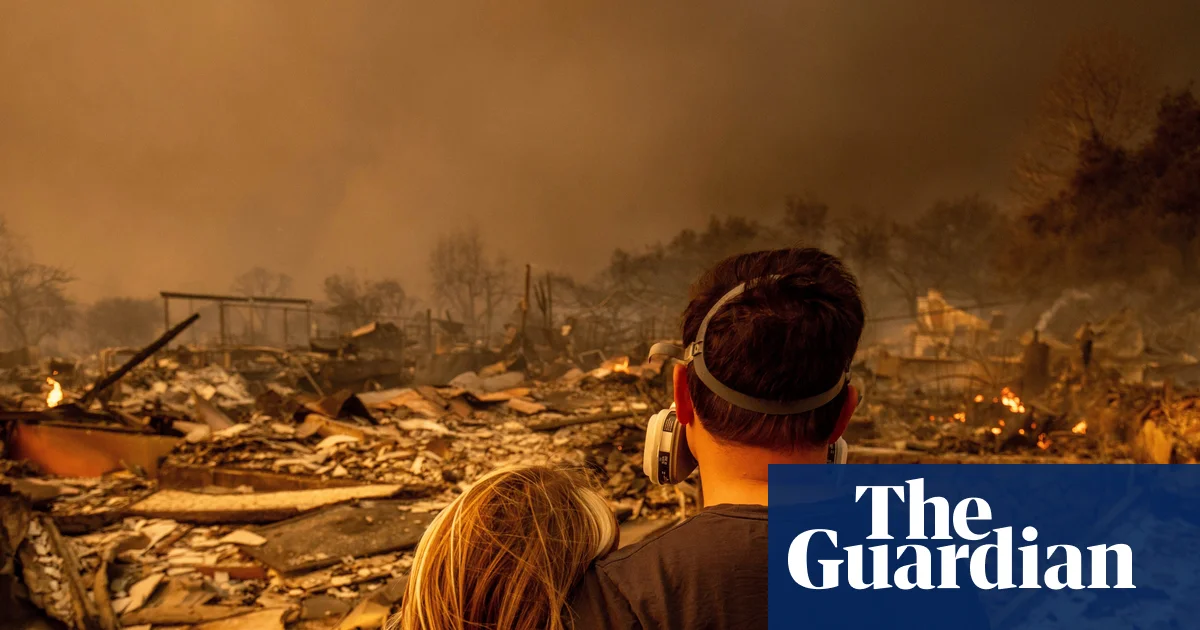
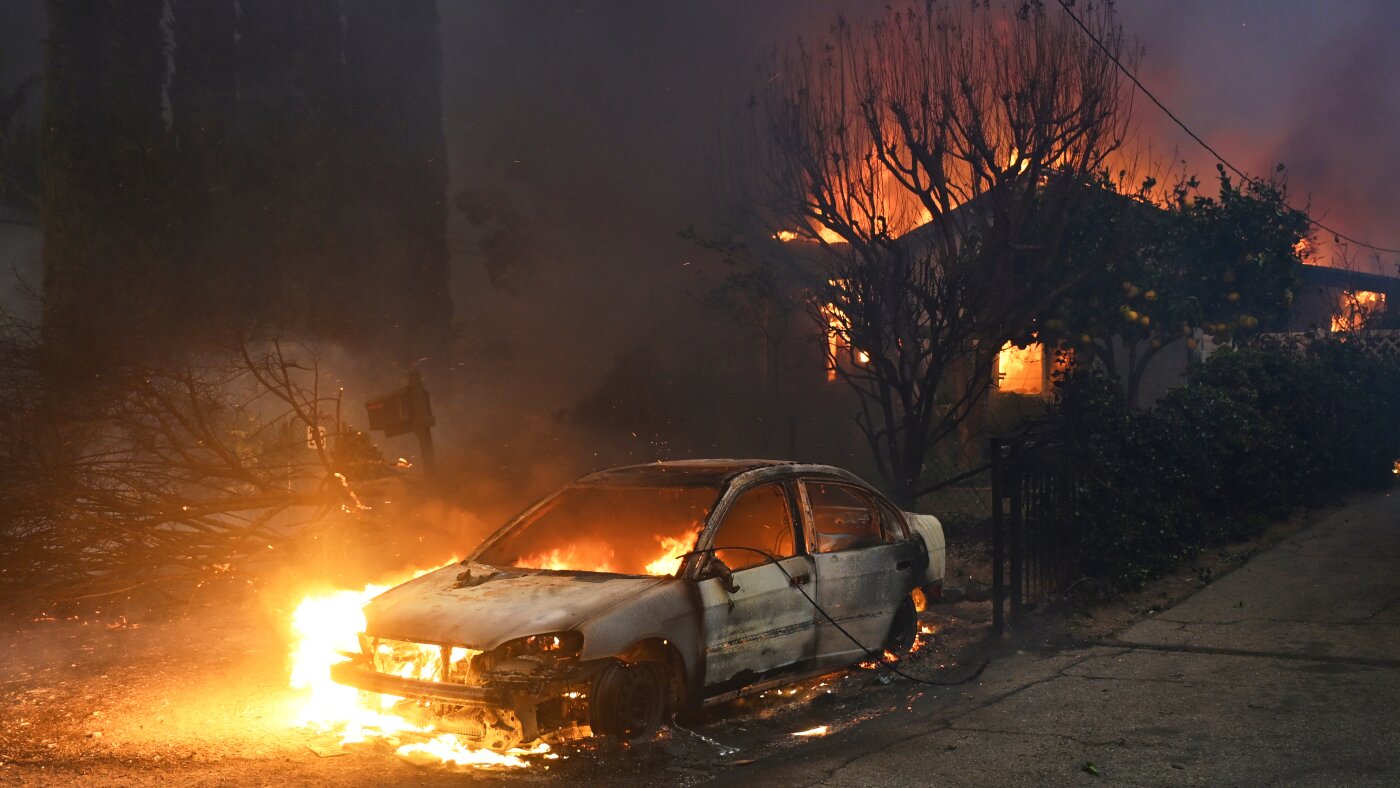
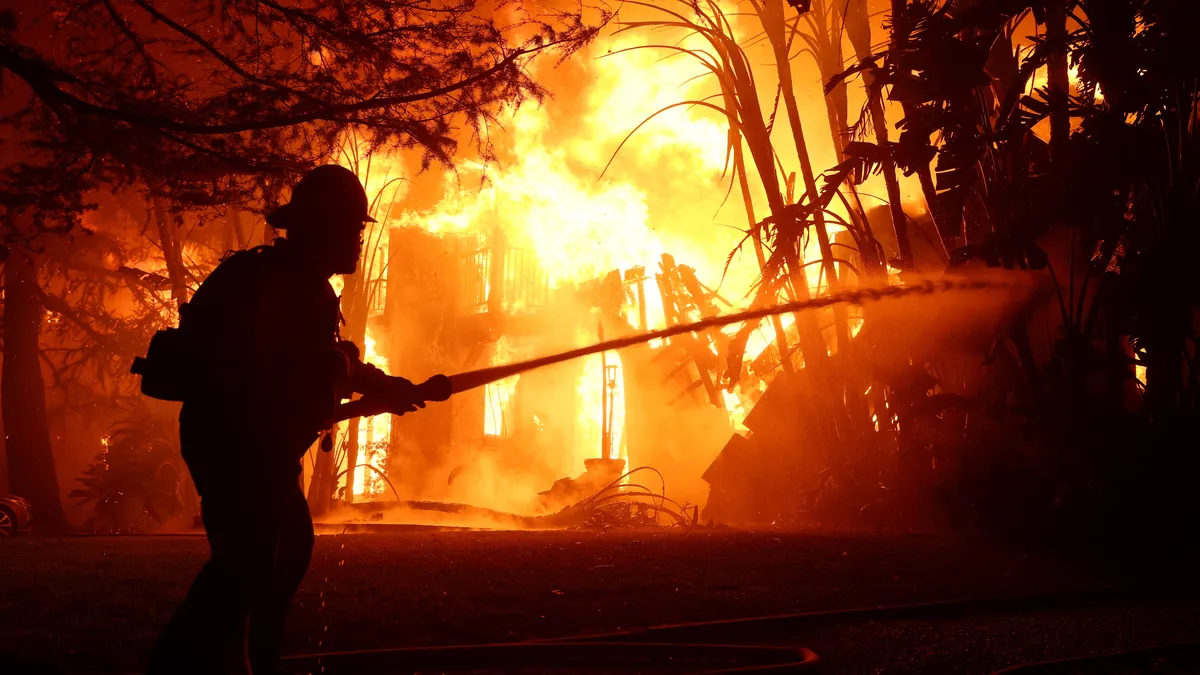
Outdated policies, gaps in communication, and staff shortages hampered the emergency response to a pair of deadly wildfires that devastated parts of Southern California earlier this year, a report commissioned by Los Angeles County officials found.The findings of the "Independent After-Action Report" were released by the Los Angeles County Board of Supervisors on Sept. 25. The 133-page report, conducted independently by the consulting firm McChrystal Group, focused on public alerts, warnings, and evacuation efforts related to the Palisades and Eaton wildfires.The report outlined a "series of weaknesses" that impeded the county’s ability to warn residents of the fast-moving blazes. The report noted that the weaknesses had varied due to "environmental conditions, community readiness, and operational complexity caused by the variables of wind, power outages, and fire behavior."Those weaknesses included outdated and inconsistent standard operating procedures that "slowed coordination efforts," the report stated. Investigators also spoke with law enforcement and emergency managers who reported "inconsistent training around wildfire evacuations."The report further found that shortages of personnel and equipment "were magnified under the extreme conditions of this incident." The staffing shortages included more than 900 vacancies at the Los Angeles Sheriff’s Department, an agency tasked with managing fires and maintaining essential public safety services countywide, the report added.The Palisades and Eaton wildfires erupted on Jan. 7 and spread by record winds that carried the flames to working-class neighborhoods and luxury, cliffside mansions — destroying thousands of homes. The blazes torched nearly 60 square miles of land, an area about the size of Miami, and have been tied to at least 31 deaths, though a study suggests the death toll could be much higher.A report released in late July said the wildfires are among the costliest in U.S. history, racking up a combined $65 billion in losses. The cause of the fires is still under investigation.Alerting the public about the wildfiresThe report analyzed over 150,000 alert and evacuation data records, minute-by-minute GPS tracking of responding units, community feedback, and interviews with emergency responders.Los Angeles County issued 32 evacuation warnings and 19 evacuation orders for the Palisades Fire, along with 58 warnings and 100 orders for the Eaton Fire, according to the report. In total, nearly 250,000 residents had been under evacuation warnings or orders.The report found that county policies and protocols on evacuation alerts were "outdated, unclear, and contradictory, and do not clearly spell out roles and responsibilities for issuing the directives," according to its major findings and recommendations.The report noted that there was a gap in the transition between the county's old alert and notification system and the new system. The county had replaced its notification system in November 2024, and only four emergency management staff members had received training on the new system before the wildfires hit.The report also detailed the slow alert process, in which evacuation zones had to be communicated through multiple emergency management departments and personnel before being sent through the notification system. There was, however, an improvement in the process as the new system took about 20 to 30 minutes to send alerts, while the old system previously took between 30 and 60 minutes.Though the transitional gap did not appear to cause significant issues during the wildfires, the report recommended additional training and changes in the system to simplify the coordination of alerts.The report further advised the county to provide consistent public education on evacuation protocols and alert systems due to many notification methods requiring the public to opt in or sign up for alerts. Residents who were not registered for the alert system or other methods never received evacuation messages.Other factors that may have contributed to residents not receiving any alerts included "limited cellular coverage in the Santa Monica Mountains and San Gabriel Mountains, [public safety power shutoffs] shutting down the power of commercial cell towers that would have transmitted the messages, downed power lines, or signal strength degradation due to heavy smoke from the fires," according to the report.Staffing shortages, resource constraintsThe report noted that the "catastrophic nature" of the fires would have strained fully staffed emergency departments, and responding agencies were already facing staffing shortages and resource constraints.These constraints included an under-resourced emergency management office operating with a staffing level "fundamentally inadequate for Los Angeles County's complex emergency management needs," according to the report. Other challenges included a high number of vacancies in the sheriff’s department, a shortage of patrol vehicles, and aging equipment, such as a 38-year-old dispatch system.Additionally, the report found that first responders and incident commanders could not consistently share real-time information because of unreliable cellular connectivity. It also cited inconsistent field reporting methods and the use of various unconnected platforms.The report added that emergency response personnel and resources were further challenged by other blazes that erupted in the region around the same time as the Palisades and Eaton fires.“While frontline responders acted decisively and, in many cases, heroically, in the face of extraordinary conditions, the events underscored the need for clearer policies, stronger training, integrated tools, and improved public communication,” the report states.Conditions and locations of wildfires impacted evacuationsThe report also noted how "systemic issues did not manifest uniformly" across the Palisades and Eaton wildfires due to the differences in environmental conditions and community preparedness."The Palisades Fire, which ignited during daylight hours in a community familiar with wildfire risk, benefited from strong interagency coordination, pre-positioned resources, and tested evacuation strategies," the report stated."In contrast, the Eaton Fire broke out at night amid extreme wind and power outages," the report continued. "The fire occurred in an area of the county not accustomed to wildfire risks in their neighborhoods and without the benefit of aerial surveillance and fire suppression."In the Palisades Fire, the report said the Los Angeles County Sheriff's Department began its own evacuation efforts, and deputies were deployed door-to-door while also using a public address system to urge communities to evacuate.Units, which included the sheriff's department and other agencies, were then deployed to respond to the Eaton Fire, according to the report. But a shortage of sheriff’s department vehicles hindered the response across all impacted neighborhoods near the Eaton Fire.“Vulnerable populations, especially older residents who were not monitoring alerts due to a digital divide and possible mobility challenges, faced increased risks of delayed evacuation,” the report states.Report did not look into 'wrongdoing or assign blame'The report stated that the independent investigation was not intended to look into any "wrongdoing or assign blame," but to provide actionable recommendations to improve future emergency response efforts.The Los Angeles County Board of Supervisors said it is scheduled to discuss and review the report at a public meeting on Sept. 30.During a news conference on Sept. 25, Los Angeles County Supervisor Lindsey Horvath said it was clear the county needed to clarify protocols for evacuations and alerts, improve the alert process, conduct more training, and invest in resources."Above all, we must act. This report gives us a road map, but this is not the end," Horvath said at the news conference. "This is the beginning of a constant evolution and how we keep Angelinos safe through lessons learned and improvement, through best practices."