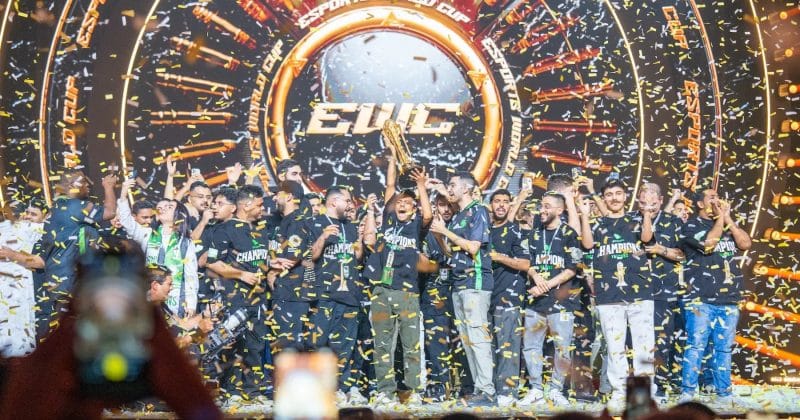
The Esports World Cup 2026 is currently the biggest stage in competitive gaming, and the money involved is starting to look less like a niche tournament and more like a professional sports league. The overall event carries a $75 million total prize pool across multiple game titles, with the Dota 2 section alone offering $2 million. Those numbers have attracted cryptocurrency sponsorships to the festival, reinforcing a trend that’s been building for years: crypto and esports are increasingly sharing the same economic orbit.
One of the early storylines from the Dota 2 bracket came on July 7, when Peruvian midlaner DarkMago led his team PlayTime to a 1-1 draw against Team Liquid in a best-of-two Group B series. For context, Team Liquid is one of the most storied organizations in Dota 2 history. PlayTime clawing back to split the series is roughly the competitive equivalent of a mid-table club holding Real Madrid to a draw at the Bernabeu.
Why crypto keeps showing up at esports events
The EWC 2026 has attracted cryptocurrency sponsorships to the broader festival, though no specific tokens or protocols have been publicly tied to the Dota 2 portion of the event. That distinction matters. Esports prize pools have ballooned over the past decade, and that growth has created real financial plumbing problems. Prize distribution across international borders, currency conversion for players in developing regions, and instant settlement are all pain points that blockchain rails can theoretically solve. When you’re paying out $75 million across dozens of countries, the traditional banking system isn’t exactly known for its speed or cost-efficiency.