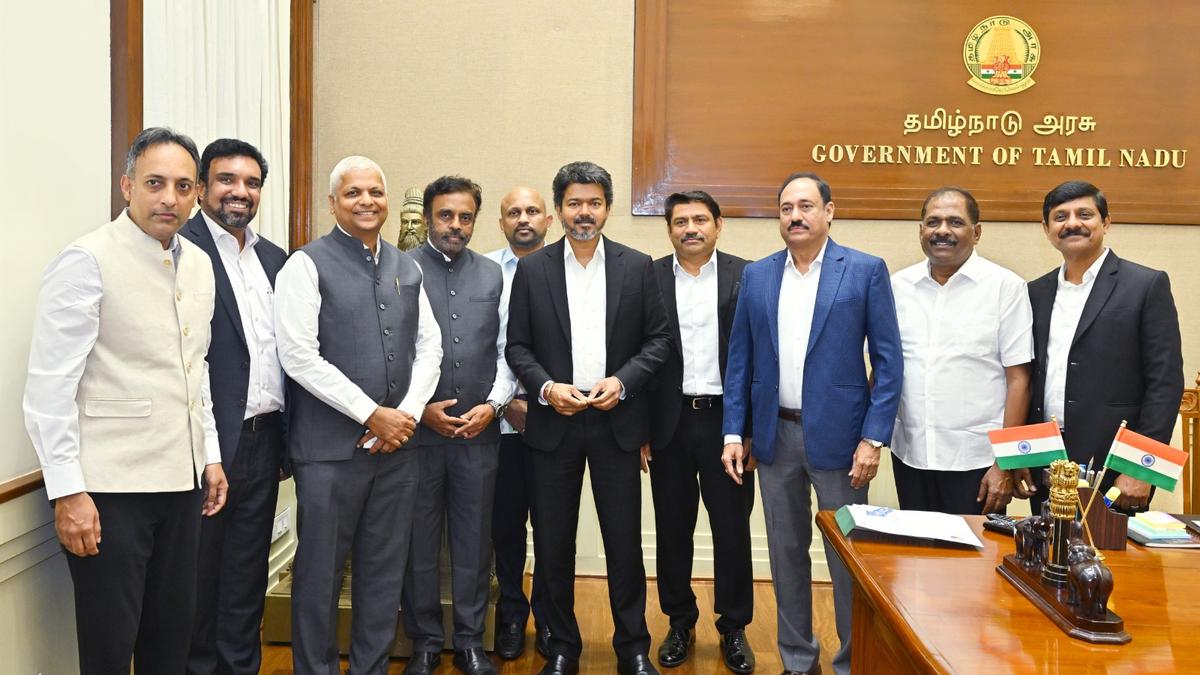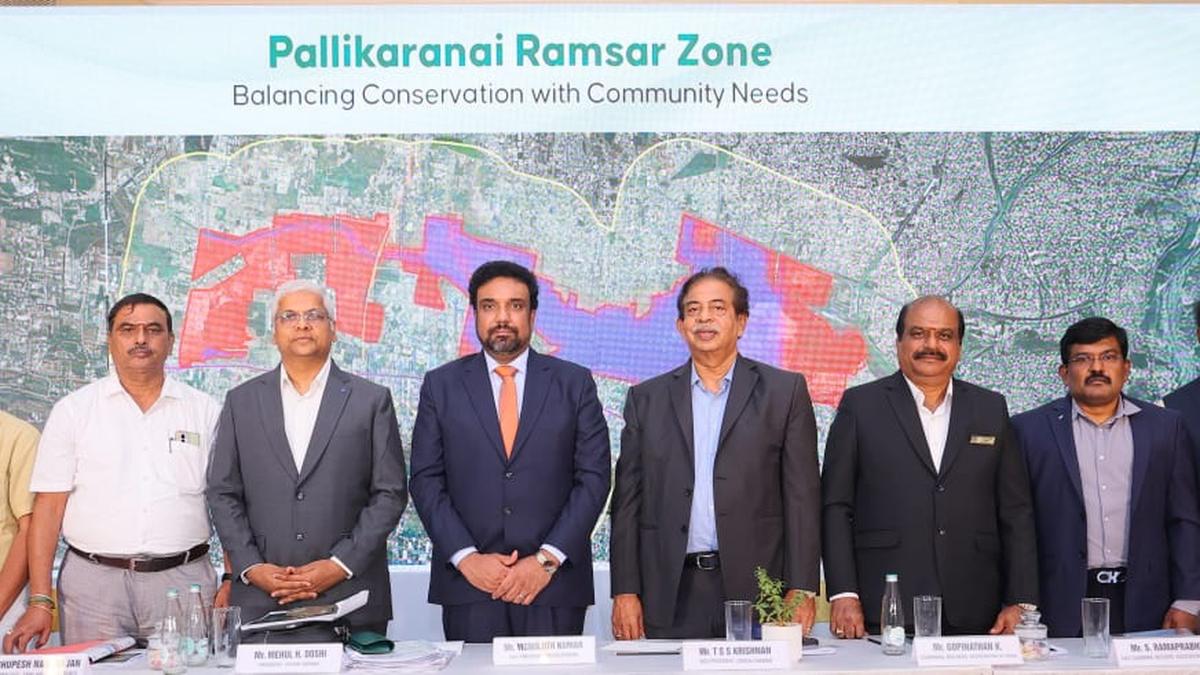
CREDAI Chennai urged the State government to withdraw the planning restriction until the wetland’s extent and influence zone are scientifically delineated.
| Photo Credit: Special arrangement
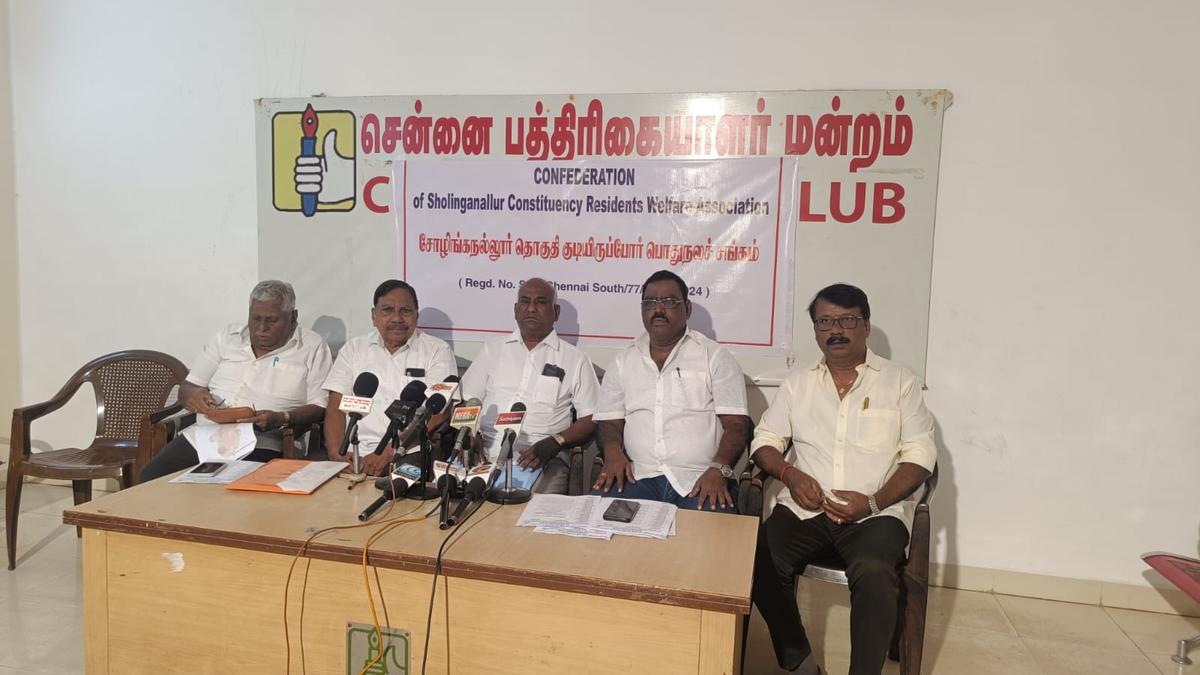
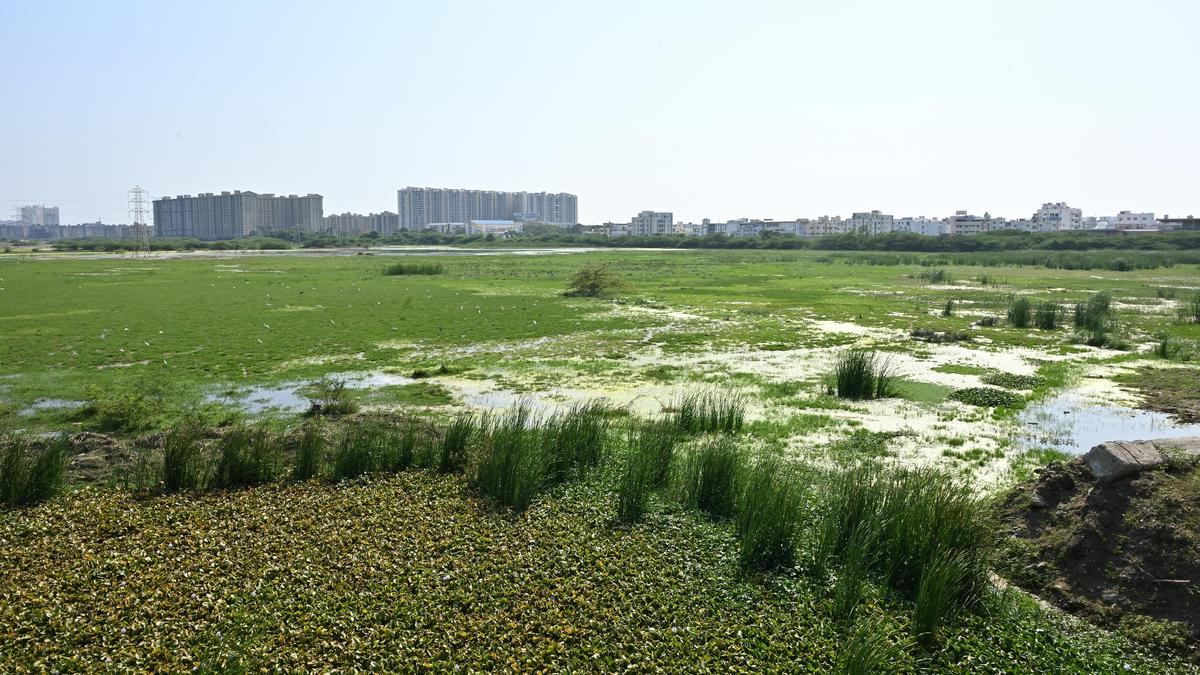
The Confederation of Real Estate Developers’ Associations of India (CREDAI), Chennai chapter, on Tuesday urged the Tamil Nadu government to review the planning freeze imposed around the Pallikaranai Ramsar Site, contending that the uniform 1-km zone of influence has affected approvals for housing, infrastructure, and commercial projects across large parts of south Chennai.Addressing the media, CREDAI office-bearers alleged that the restrictions affected over 1 lakh patta holders and could impact business activity worth more than ₹51,700 crore. The association said it supported conservation of the Pallikaranai marshland, but the development restrictions should be based on scientific studies and implemented after the process prescribed under the Wetlands (Conservation and Management) Rules, 2017, was completed.According to CREDAI, the 698-hectare Pallikaranai Swamp Reserve Forest, notified under the Tamil Nadu Forest Act in 2007, has long been protected. The present dispute concerns an additional 550 hectares included when the marsh was designated a Ramsar Site in 2022 and the subsequent 1-km zone of influence around the wetland.Existing residential areas, including Sholinganallur, Velachery, and Thoraipakkam, have government offices, hospitals, educational institutions, Metro Rail corridors, and parts of the Old Mahabalipuram Road (OMR) information technology (IT) corridor fall under this area. The additional 550-hectare area has not yet been fully identified through survey-number demarcation or “ground truthing”, and public consultation and final notification are still pending, CREDAI alleged.Following the National Green Tribunal’s directions in September 2025, the Chennai Metropolitan Development Authority (CMDA) issued an order that temporarily halted planning approvals within the zone of influence area until an Integrated Management Plan (IMP) is prepared. However, the Wetlands Rules necessitate identifying the wetland boundary, delineating a site-specific zone of influence, and preparing the IMP before development restrictions are finalised, the association said.According to them, the draft IMP by Care Earth Trust recommended determining Pallikaranai’s influence zone based on inlet and outlet channels and satellite wetlands due to the area’s high urbanisation. The office-bearers said the zone of influence around a wetland ought to be determined through hydrological studies, drainage patterns, topography, adjoining land use, and field verification, rather than a fixed 1-km buffer.“Many landowners have been unable to obtain planning approvals, complete house construction, or secure loans against their property. OMR is the most significant and fast-growing corridor, not just in Chennai, but the entirety of Tamil Nadu. Now, development is stalled,” Viswajith Kumar, vice-president, CREDAI Chennai.CREDAI Chennai urged the State to withdraw the 1-km planning restriction until the wetland’s extent and influence zone are scientifically delineated, complete ‘ground-truthing’ and studies, finalise and notify the IMP after public consultation, and continue processing existing planning approvals, renewals, and loan applications in the already urbanised areas. Published - July 07, 2026 11:57 pm IST