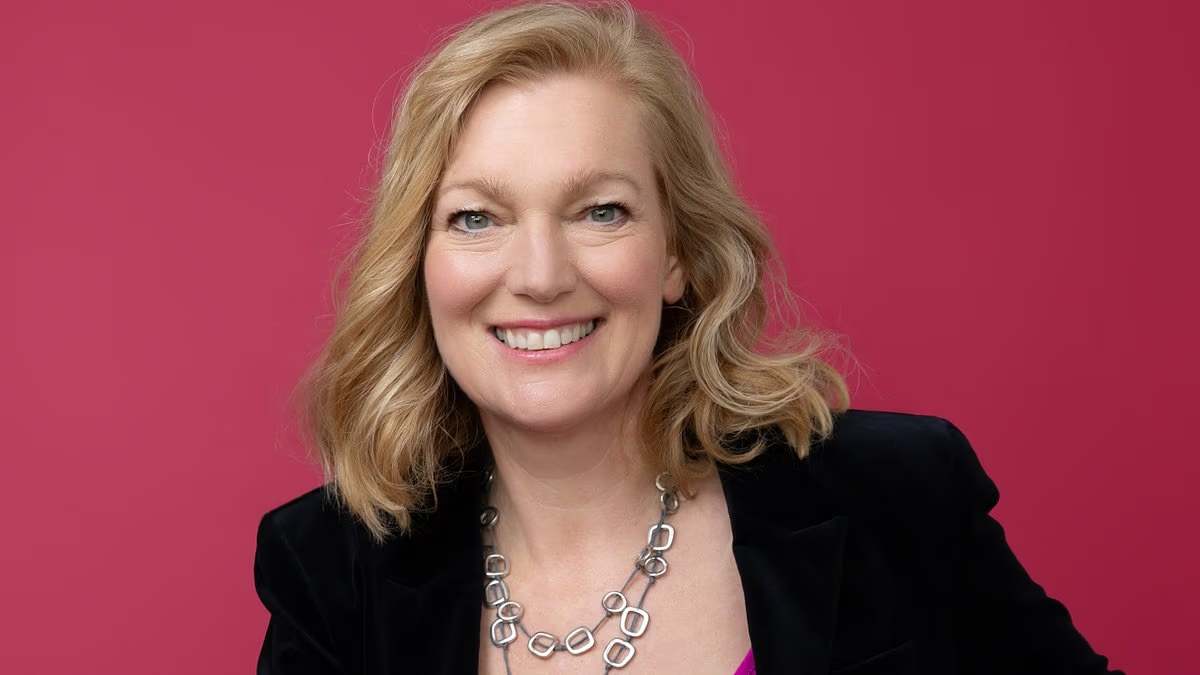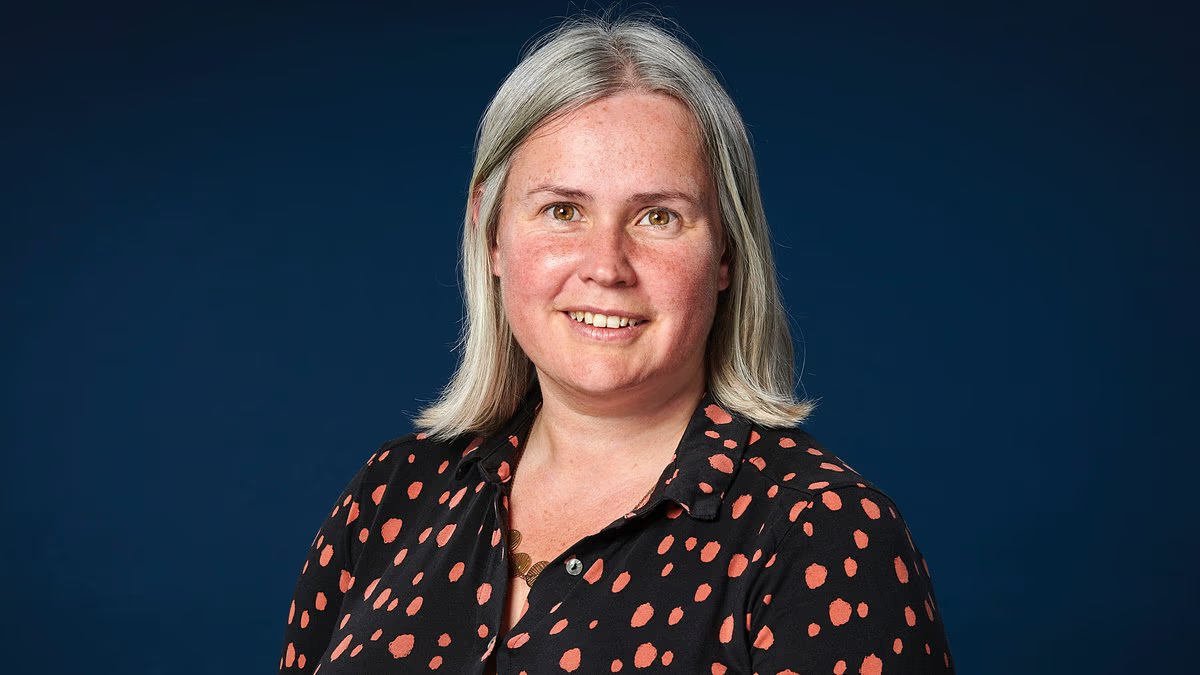
On January 1 I resolved that this was the year I would use the knowledge I’d accumulated over years of writing about personal finance to make some free cash. Six months on, I’ve made £3,066, without spending a penny of my own money.I did this by taking up 26 offers and deals from banks, building societies and DIY investment platforms.There are huge rewards to be snapped up from switching banks or opening new accounts. A range of ‘switching bonus’ offers have become available over the past six months, with high street banks offering as much as £300.So far, I’ve opened ten different cash Isas and a similar number of savings and current accounts, joined six different share trading apps and even applied for a couple of credit cards.Each time I opened something new I was awarded free shares or a cash gift just for signing up, and in many cases I was able to increase this by referring my husband and friends to do the same. This earned us both an extra cash bonus on top of the signing up incentive.As the free money rolled in, I put it straight into my stocks and shares Isa and often closed the accounts immediately. In total, I made £2,785.57 and this has grown by a further £280.43 thanks to investment returns on the stock market.All the offers I’ve used had one thing in common: my cash was never at risk at any point, and I haven’t had to compromise on the interest I was earning on it. Even better, almost all of my ‘winnings’ are tax free as they aren’t counted as income or interest earned from a bank.While it didn’t cost me any money, I found you have to be willing to set 15 minutes aside each day to make sure you don’t miss out on any new deals. Finding and chasing these deals takes a lot of organisation. You’ll need to open a large number of accounts, buy and sell individual shares and hand over referral codes to friends Rosie Murray-West has made £2,785.57, which has grown by a further £280.43 thanks to investment returns on the stock marketYou don’t need to be a financial expert to do it, but you will need to be organised because each offer requires you to jump through a large number of hoops, and despite the Current Account Switching Service’s claim that switching accounts is ‘simple, reliable and stress free’, my experience has been that you have to have a lot of patience to get the payoff.So here’s exactly how I did it, what I learned along the way and how you can get started too.Find an account to house your winningsFirst, I wanted to have a bank account just to house my winnings so that I could track how much I had made – seeing the balance rise is motivating and encourages me to keep going.I opted for one with online bank Monzo because it allowed me to invest £1 each time I transferred money into its stocks and shares Isa.I started by opening a bank account with the company and received £10 for doing so via a referral code from a friend. I opened my account on my laptop within five minutes by inputting personal information, such as my passport details and my home address.Then, I used my new log in to open a stocks and shares Isa with the bank and received another £10 for free as a welcome bonus.By referring my husband to do the same, he and I received another £10 each. This gave me a £30 boost right from the off.I made a pact with myself – whether the stock market is up or down, I would invest any money I made. Like many, I find investment painful when the market falls. While some offer a virtually instant payout, other deals will take some time, and you’ll need to jump through hoops You can make £50 instantly by opening a bank account with Chase Bank with a referral code from a friendBut psychologically, it’s easier to see my Isa go down when the balance hasn’t cost me anything, so this switching saga has made me braver.So far, I’ve put money in when the stock markets tumbled due to the Iran conflict as well as at times when the stock market was riding high.It’s all invested in Monzo’s ‘adventurous’ fund, which is a MyMap multi-asset fund with a 0.14 pc fee, meaning my money is invested in stocks and bonds from around the world. This has paid off – at the time of writing, my total pot is up 9.49 pc and has made £280.43 in investment growth.With my core account set up, my next move was to find bank and investment apps offering easy bonuses.My biggest win was with Interactive Investor, where I earned £400. I first got £200 for transferring my Self Invested Personal Pension from Hargreaves Lansdown, which I have had for a long time and was happy to move as the platform had recently upped its fees. I received another £200 by referring my husband for a savings account.Aside from cash bonuses, I’ve also managed to bag free shares over the past six months. DIY investment platforms offer you a range of free shares when you open accounts and transfer money into them. By taking up these offers, I was given free shares in Rolls-Royce, Berkshire Hathaway and PayPal, all of which I immediately sold and added the profits to my Monzo fund.While some offer a virtually instant payout, other deals will take some time, and you’ll need to jump through hoops. Usually, you’ll need to be a new customer to get the cash so not all deals will be suitable for everyone. Meanwhile, some deals will ask you to transfer a specific sum of money into your new account for a short amount of time, so for these you will need to have instant-access savings available. For example, when I opened an account with Monument, I had to transfer £10,000 to get the £30 bonus – but since the bonus was paid within 24 hours, I could soon pay the money back into my flexible Isa.At times, the process has been stressful. Cashback sites have failed to track transactions, which usually happens because of privacy settings or ad blockers on a device or internet browser. I’ve also had to ask companies why they’ve forgotten to honour their own offers, but in the vast majority of cases, as long as you follow the instructions, the money comes in as expected. If it doesn’t, I found that an email to customer services sorts it out quickly.Hunt for top dealsFinding deals takes a bit of research, but fortunately most of the work has been done for you by journalists and keen savers who post about their findings online.You can find a list of the best bank accounts and signing bonuses on This is Money.Social media sites, such as Reddit and Facebook, can also be useful sources of information.Supersavers who are pouncing on referral codes and seek out all the sign-up deals often write about their findings.They widely refer to the earnings as ‘beer money’ – a little bit extra to spend at the pub on a Friday night. You can visit the Beer Money UK community on Reddit, where posters put up the deals they’ve found each day.You’ll also find tips on independent comparison website Scrimpr.Keep a spreadsheetUse a spreadsheet to help you keep track and mark every deal you’ve got in progress, the steps you need to follow, plus any dates when bonuses should become payable.That way you won’t forget about any of the money you’re making or money that has been moved into any of these accounts to fulfil an offer.The spreadsheet will also help you when you’re doing your tax return. Most referral bonuses and cashback does not need to be declared to the taxman, but certain items, such as the Nationwide Fairer Share bonus, are counted as bank interest and are part of your savings income, so it’s important to understand the tax treatment of each deal.Set your goal and a time limitFinding and chasing these deals takes a lot of organisation. You’ll need to open a large number of accounts, buy and sell individual shares and hand over referral codes to friends in the hope that they will do the same. You’ll also need to use cashback sites and wait for the offers you’ve signed up for to track.My goal, when I started, was to make £10 a day and I don’t usually bother with deals that make less than £10 in profit. You might feel that £10 is too low to bother with and only look at deals that will make you £50 or more.I decided early on that if I could make money at this rate on 15 minutes ‘work’ a day, it would be worth the extra effort – so I set this as my time limit.
I made more than £3,000 for FREE in 6 months. Here's how you can do it
On January 1 I resolved that this was the year I would use the knowledge I'd accumulated over years of writing about personal finance to make some free cash.
2,384 words~11 min read