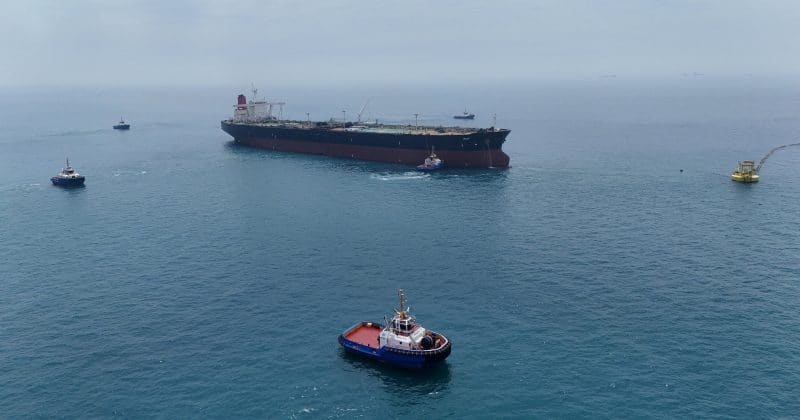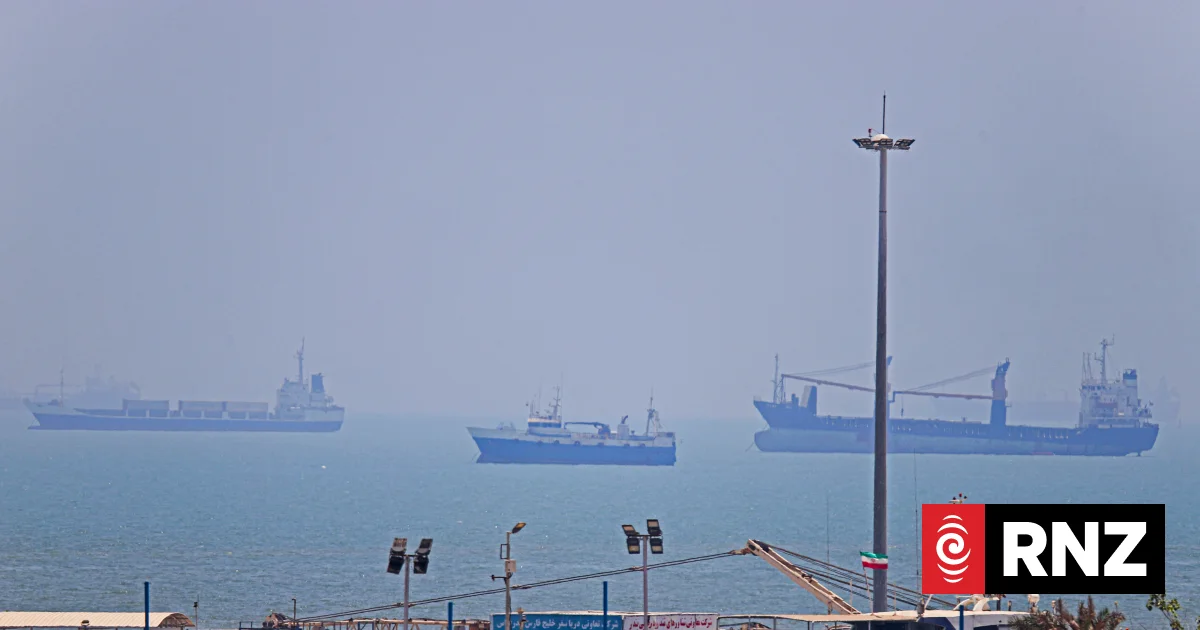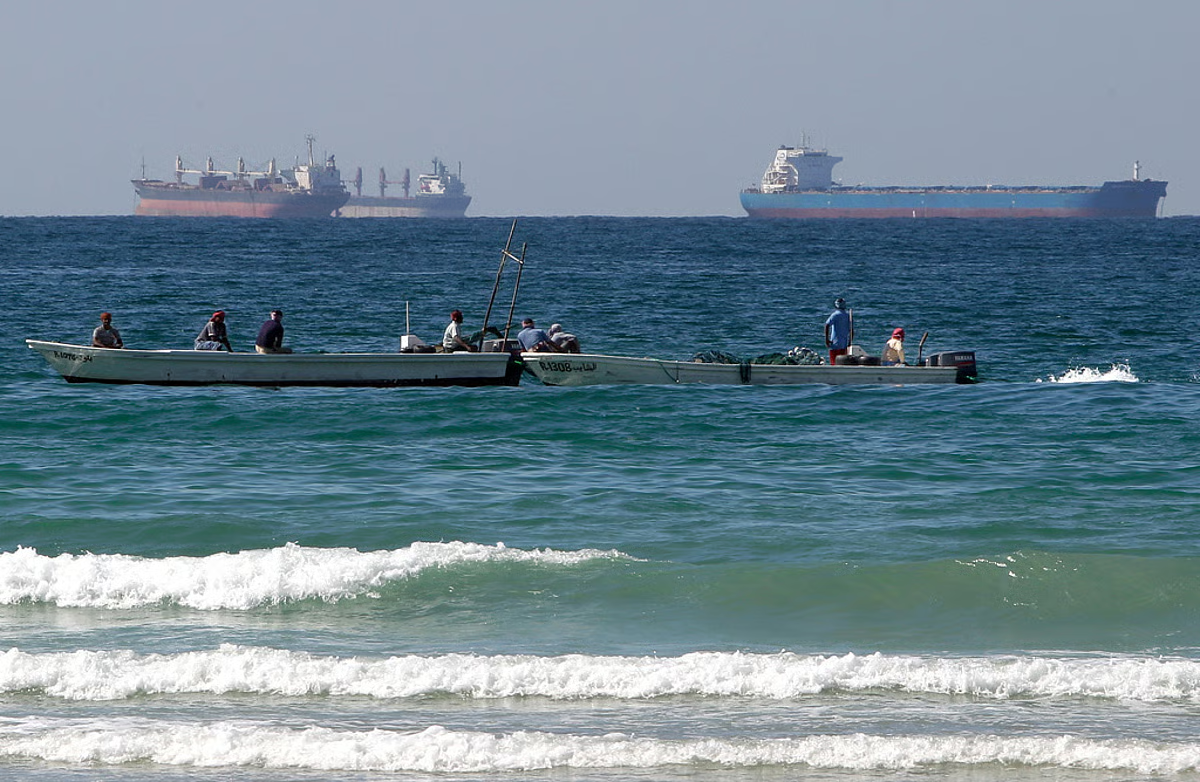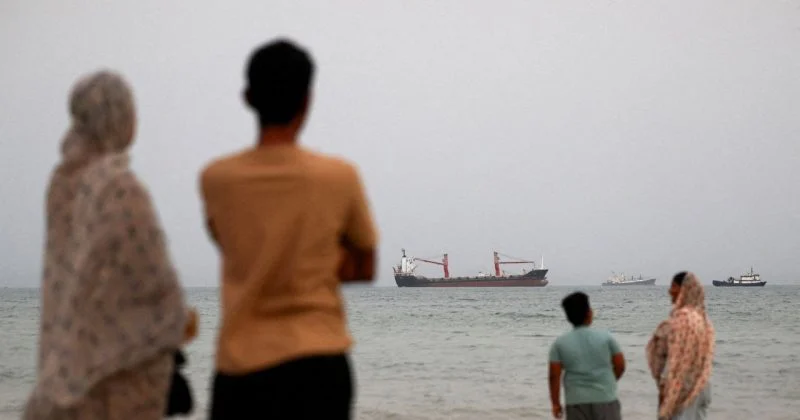
- Saudi national oil company Saudi Aramco (TADAWUL:2222) has slashed its official selling prices for Asian-bound cargoes in August by a whopping $11 per barrel, almost double the expected cut.- Marking the first time since 2020 that Saudi barrels in Asia trade at discounts to regional benchmarks, Aramco’s drastic price cut brings its flagship Arab Light $1.50 per barrel below Oman/Dubai.- Chinese demand for Saudi barrels is yet to recover after nominations for June collapsed to just 14 million barrels (470,000 b/d), the lowest reading on record, whilst flows to the United States have dried up completely.- Faced with plunging European demand, Saudi Aramco dropped its formula prices by an even more formidable $15 per barrel, marking the largest monthly OSP reduction for both Asia and Europe since at least 2000.- Saudi Arabia is taking its time to bring back all its idled production capacity – even though Aramco restarted loadings in the Gulf port of Ras Tanura, flows are relatively low around 1 million b/d in July to date, well below the pre-war rate of 6 million b/d. Market Movers- UK oil major BP (NYSE:BP) has agreed to sell its non-operated stakes in 10 licenses associated with Canada’s offshore Bay du Nord project to Norwegian state oil firm Equinor (NYSE:EQNR), without disclosing the terms of the deal. - US oil major Chevron (NYSE:CVX) signed a heads of agreement with Iraq’s upstream giant Basrah Oil Co. to study two alternative crude export pipelines, Basrah-Ceyhan and Basrah-Baniyas, that would allow Iraqi production to bypass the Strait of Hormuz.- Italy’s national oil company ENI (BIT:ENI) is buying a 25% stake in the Chilean lithium project developed by US startup Energy Exploration Technologies for $225 million, marking another oil major entry into lithium. - London-based energy major Shell (LON:SHEL) has signed a deal to sell its 50% stake in the Na Kika oil platform in the US Gulf of Mexico to a consortium of offshore specialists, Talos Energy (NYSE:TALO) and Ridgewood Energy, for a consideration of $1.7 billion. Tuesday, July 07, 2026Two drone strikes on ships surreptitiously transiting the Strait of Hormuz and oil prices have suddenly rediscovered the geopolitical risk premium, with ICE Brent touching $74 per barrel again. At the same time, physical oil markets feel extremely weak, even if that malaise might be temporary on the back of millions of barrels of stranded Gulf crude seeking its way out of the intermittent war zone.OPEC+ Rubberstamps Another Production Hike. Seven core OPEC+ members have decided to hike their crude oil production targets for August 2026 by another 188,000 b/d, leaving just 188,000 b/d of voluntary cuts in place, presumably to be approved at the next meeting scheduled August 2.US SPRs Collapse to 43-Year Low. According to data from the US Department of Energy, inventories of crude oil held in the US Strategic Petroleum Reserve dipped by another 6.2 million barrels in the week ending July 3 to reach 319.5 million barrels, the lowest level since April 1983.Seoul Charges Oil Refiners with Price Collusion. The prosecutor’s office of South Korea has formally charged four oil refiners – HD Hyundai Oilbank, SK Energy, S-Oil and GS Caltex – with colluding on fuel prices, claiming that their anti-competitive actions have caused harm of up to $17 billion.IEA Flags Decline in Global Gas Demand. The International Energy Agency expects global natural gas consumption to fall by 0.5% in 2026, equivalent to a 20 bcm year-on-year drop and marking the third annual decline this decade after 2020 and 2022, as high LNG prices lead to demand destruction.Germany Doubles Down on Gas Storage. The German government has decided to create a state-controlled emergency reserve of natural gas, planning to boost stored gas volumes by nearly 10% of current capacity in the country, requiring $1.7 billion with the injection expected in 2027-2028.Iran Clears Floating Storage on US Waiver. The Trump administration’s two-month waiver on Iranian crude and product exports has allowed Tehran to clear half of its existing floating storage, with idling barrels in Southeast Asia dropping to just 24 million barrels, down 50% from a month ago.Qatari LNG Ship Is About to Explode. Al Rekayyat, an LNG carrier owned by QatarEnergy and targeted by (presumably) Iranian drones on June 7 some 7 nautical miles from the Omani coast, is reportedly at risk of exploding due to a fire in its engine room following the crew’s evacuation.CATL Brings Bad News for Lithium Prices. China’s leading battery manufacturer CATL (SHE:300750) was granted a safety production permit for its key Jianxiawo mine after an 11-month-long suspension in production, signaling Beijing’s readiness to send lithium prices lower and limit imports.Riyadh Eyes East-West Pipeline Expansion. Saudi Arabia is considering expanding the capacity of the 7 million b/d East-West pipeline to accommodate more domestic crude production from the Persian Gulf and possible also flows from neighboring countries, de-risking flows from ongoing Hormuz risks.Cuba Collapses Under the Weight of Blackouts. Cuban authorities have been struggling to restore electricity across the Caribbean nation after a nationwide Monday blackout – the third in 2026 to date – left nearly 10 million people in the dark overnight amidst severe US sanctions on imports.Iraq Ramps Up Production in the South. Iraq has brought three of its key upstream assets in the southern Basrah region – West Qurna 1, Rumaila and Artawi – to full capacity, seeking to bring production closer to the 4 million b/d threshold as quickly as possible to boost budget revenue.Israel Doubles Down on East Mediterranean Gas. Israel has launched its fifth licensing round to boost offshore production of natural gas in the Eastern Mediterranean, buoyed by the Israel-Lebanon maritime demarcation deal, with Tel Aviv eyeing another 400 bcm yet to be discovered.Russia’s Largest Refinery Halted After Attack. The 400,000 b/d Omsk refinery, Russia’s largest by nameplate capacity, has temporarily halted operations after a Ukrainian drone attack earlier this week, with media reports suggesting that a 180,000 b/d distillation unit had been damaged.Software Glitch Puts Congo’s Cobalt at Risk. Major exporters of cobalt in the Democratic Republic of Congo risk losing some of their H1 2026 quotas after the country’s customs platform has been blocking the registration of export declarations since July 1, impacting some 20,000 metric tonnes.By Tom Kool for Oilprice.comMore Top Reads From Oilprice.comTrump Targets California Again In SpaceX FeudColombia's Oil and Gas Reserves Keep ShrinkingLargest Data Center Project Ever Proposed Is Officially Dead
Geopolitical Risk Returns as Drone Strikes Hit Hormuz Shipping | OilPrice.com
Drone strikes in the Strait of Hormuz lifted oil prices as geopolitical risks resurfaced, even as weak physical crude markets continue to weigh on sentiment.
1,061 words~5 min read