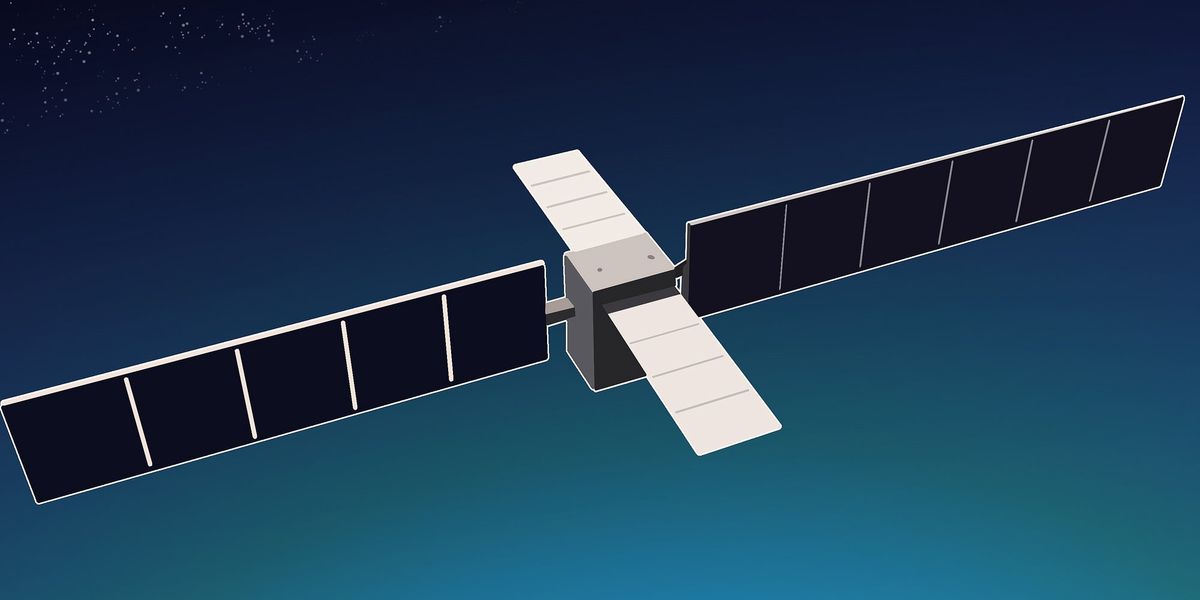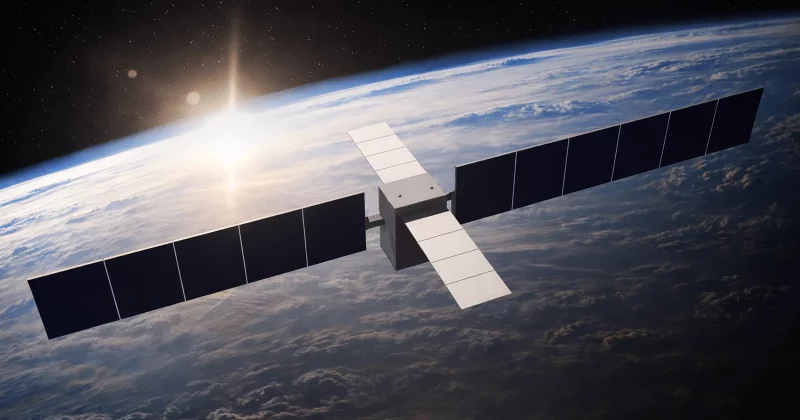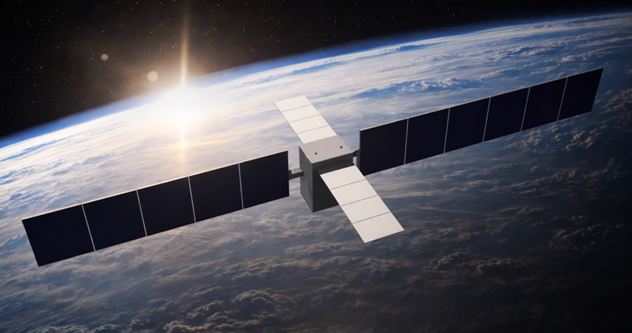
Orbital Compute Inc. has filed with US regulators to launch hundreds of thousands of satellites in the coming years.The five-month-old space startup, which emerged from stealth last month with a $5 million pre-seed round, filed with the Federal Communications Commission (FCC) for up to 100,000 orbital data center (ODC) satellites, cumulatively capable of 10GW of computing power.“Global AI compute demand is growing exponentially, but terrestrial data center expansion is constrained by power availability, grid interconnection timelines, and cooling water scarcity,” wrote Euwyn Poon, CEO of Orbital, who wrote the application. “Space-based data centers powered by solar energy represent a sustainable, scalable solution that complements terrestrial infrastructure without competing for scarce grid resources.”In the application’s Exhibit A, Poon said the "near-absolute-zero thermal environment of space” allowed for passive radiative cooling and “eliminat[es] the [need for] energy-intensive cooling infrastructure required by terrestrial data centers.” The company later mentioned, however, the need to build 100-meter radiators for each satellite.Orbital says its satellites will be capable of 100kW compute in a low Earth orbit (LEO) altitude of 500-850 kilometers (311 to 528 miles) in discrete near-circular orbital shells with a width of up to 50km (31 miles), where they will orbit for seven years apiece. Each spacecraft will possess solar arrays and radiators spanning around 100 meters, creating a mass between 1.5-2.5 metric tons.The application states the constellation will “rely” on third-party constellations, naming Starlink and Amazon, for relaying data through optical inter-satellite links (ISLs), and that Orbital satellites will not conduct daily ground communications via radio frequency or optical means. The application requests use of Ka-band spectrum solely as backup for telemetry, tracking, and command (TT&C) operations, insisting the result would represent negligible demand on shared spectrum resources.Orbital’s pathfinder demonstrator is set for 2027 and will launch a prototype integrated with Nvidia’s Blackwell chip to test GPU operation, radiation tolerance, thermal performance, and data downlink. Poon stated the demonstrator would be “maybe one one-hundredth the size” of the Orbital-1 satellites it is planning.The company has previously stated that these later generations of satellites will be able to integrate Nvidia’s Space-1 Vera Rubin module.The application contained a nine-page orbital debris assessment report (ODAR) committing to the disposal of derelicts within five years and a 0.001 percent explosion and conjunction probability. In the event of uncontrolled satellite loss, Orbital estimates a 25-year uncontrolled re-entry timeline. It also promised to coordinate with NASA regarding transit through orbital altitudes occupied by the International Space Station, the Tiangong Space Station, and any other inhabited spacecraft.Poon rose to prominence founding Spin, an e-scooter company that he sold to Ford in 2017. He explained to the press the similarities between the e-scooter and deep tech space industries: "I come from the micro mobility industry, building infrastructure for cities, and at the outset of that, we had several companies very reminiscent of what’s happening now trying to build out large [satellite] fleets — and in our case now large constellations.”The entrepreneur went on to cite his part in overseeing iterative design improvements at Spin that resulted in the implementation of a swappable battery that allowed for a leap forward in keeping the wheels spinning.“An orbital data center is a relatively simple system at its core,” he said. “The complexity is all launch. The rest of it is first principles physics and manufacturing. I mean solar panels, radiators and electronics — the added complexity is that you’re operating in a vacuum and … there’s radiation you need to shield against, but solvable.”Since the beginning of the year, various experts, including Sam Altman, have suggested the “Silicon Valley promoter class” was overstating the feasibility of orbital data centers.
Orbital files for 100,000 space data satellites for 10GW compute constellation
Application claims space's passive radiative cooling power eliminates need for cooling tech
605 words~3 min read