Hey — I'm Sergii, I run ConnectiveOne (an AI-powered comms platform) and co-founded Evergreen, a dev shop out of Kyiv. I want to walk through, in actual technical detail, how we rebuilt our SDLC around AI agents — not the "we added Copilot" version of this story, the version where it took us over a year, we broke things, and we ended up with a setup that other engineers might actually find useful to steal from.
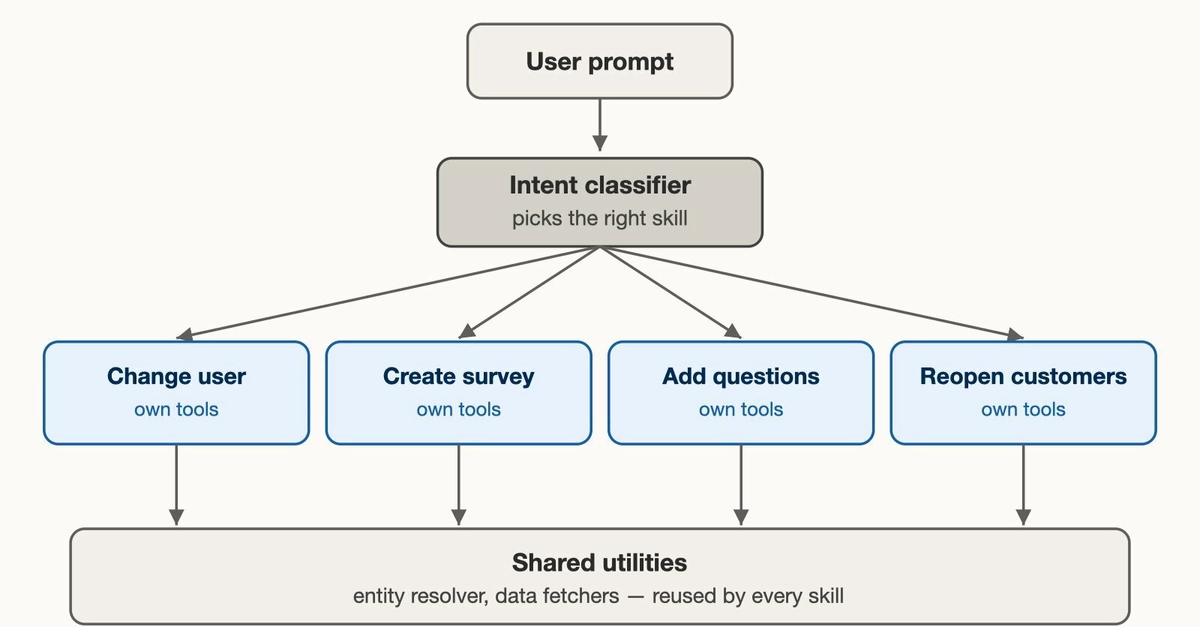
TL;DR: giving a coding assistant unlimited scope and just chatting with it doesn't scale past a certain point. Giving it a narrow role, a written spec of its boundaries, and a quality gate before a human ever sees the diff — that scales. This post is the "how," with the actual structure we use.
The problem, concretely
If you've used Claude Code or Cursor for more than a few weeks, you've probably hit this: you git clone, you start asking it things — "why is this erroring," "can you refactor this," "how do I wire this up" — and for the first few sessions it's magic. Then context starts leaking. It re-derives your architecture every session. It doesn't remember the convention you told it about three days ago. Token costs climb. And the output quality becomes a function of how well you phrased the prompt that particular morning, not a property of your codebase or your process.