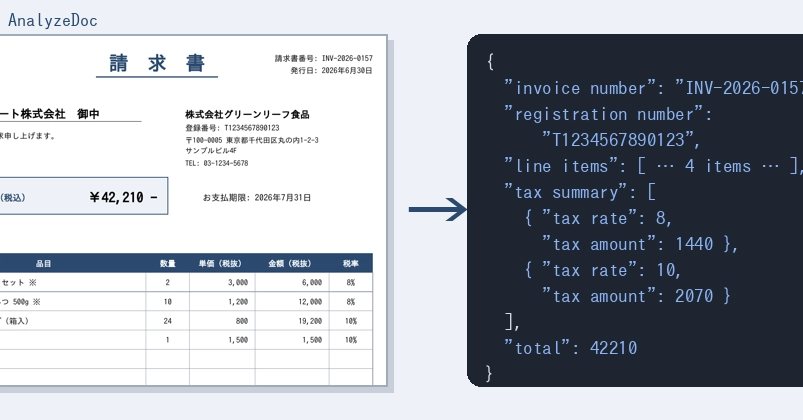
Japan's qualified invoice system requires every invoice to carry a registration number (a "T" followed by 13 digits) and a per-rate tax breakdown — 8% reduced rate for food, 10% standard, frequently mixed on the same document. That makes Japanese invoices a nice stress test for structured extraction: non-Latin text, full-width characters, honorific suffixes, kanji-formatted dates, and two tax rates whose arithmetic has to reconcile to the yen.
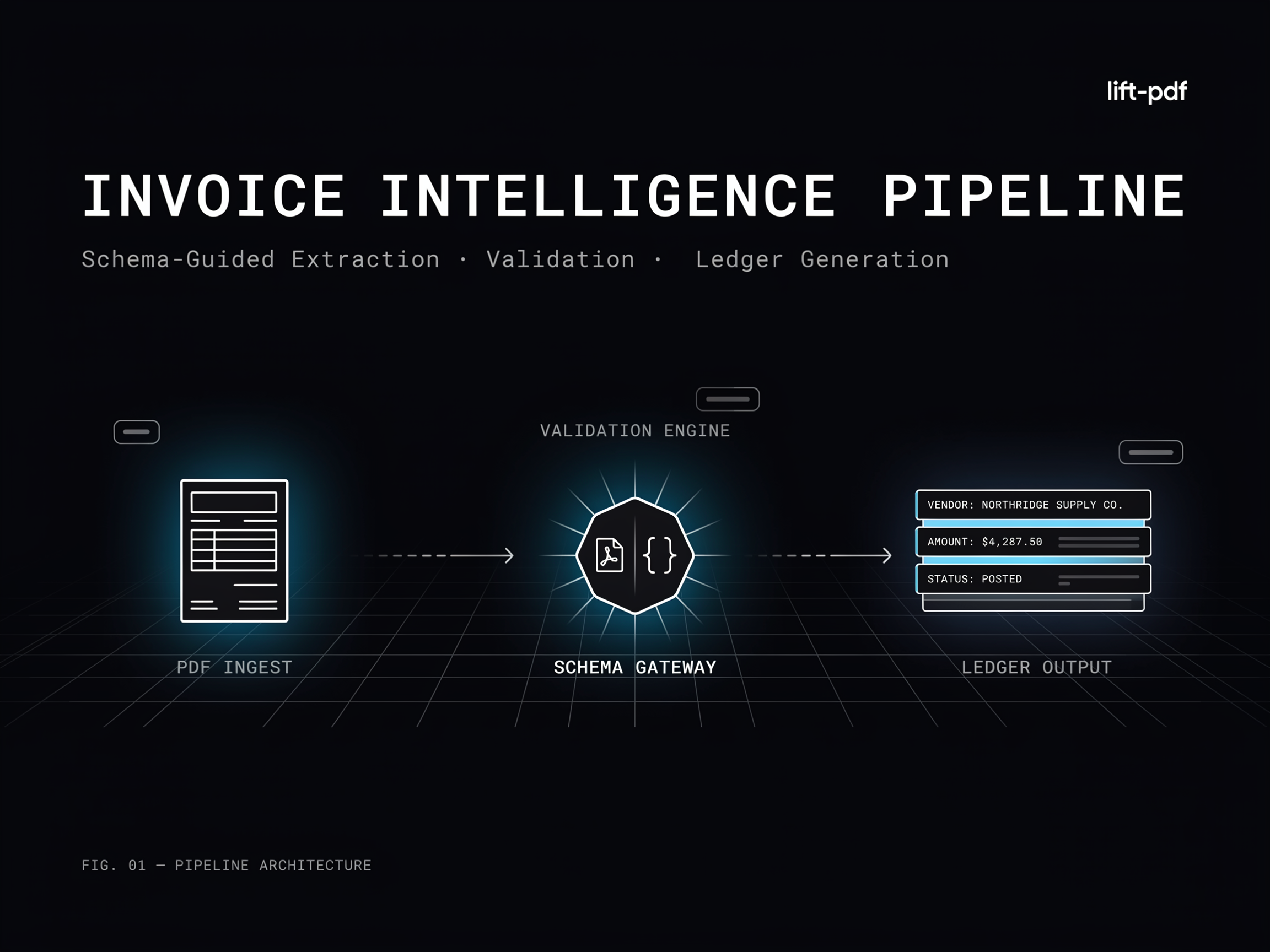
This post runs one through AnalyzeDoc (LDX hub) — PDF, JPEG, or PNG in, structured JSON out — and looks closely at what came back. The part worth your time isn't that it works. It's how the schema is defined, and what that definition quietly controls.
There is no JSON Schema. You hand the API an example of the output you want, and the example is compiled into the schema.
The document
A fictional qualified invoice, one page (sample PDF in the repo). Four line items: two food items at the 8% reduced rate (marked ※, as the law requires), two at 10%. Registration number, per-rate tax summary, bank details, a payment deadline. Total: ¥42,210.