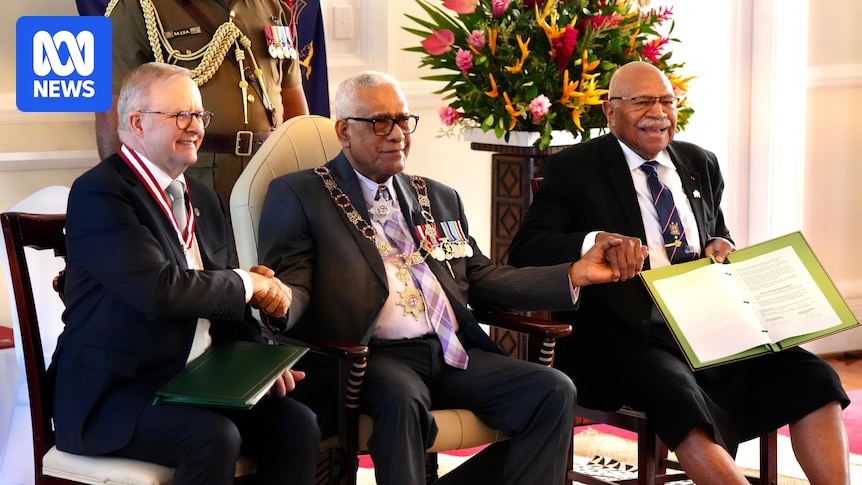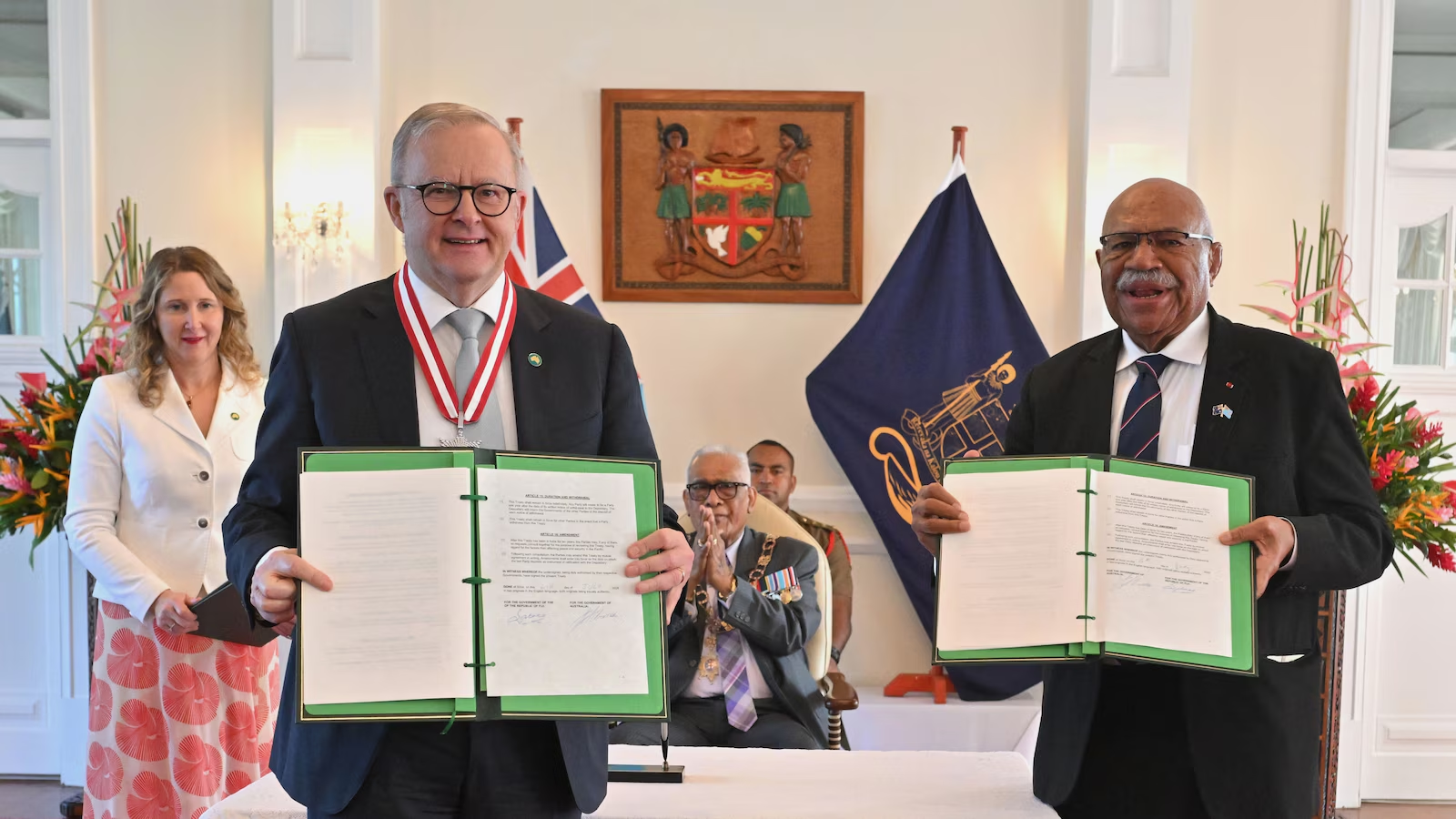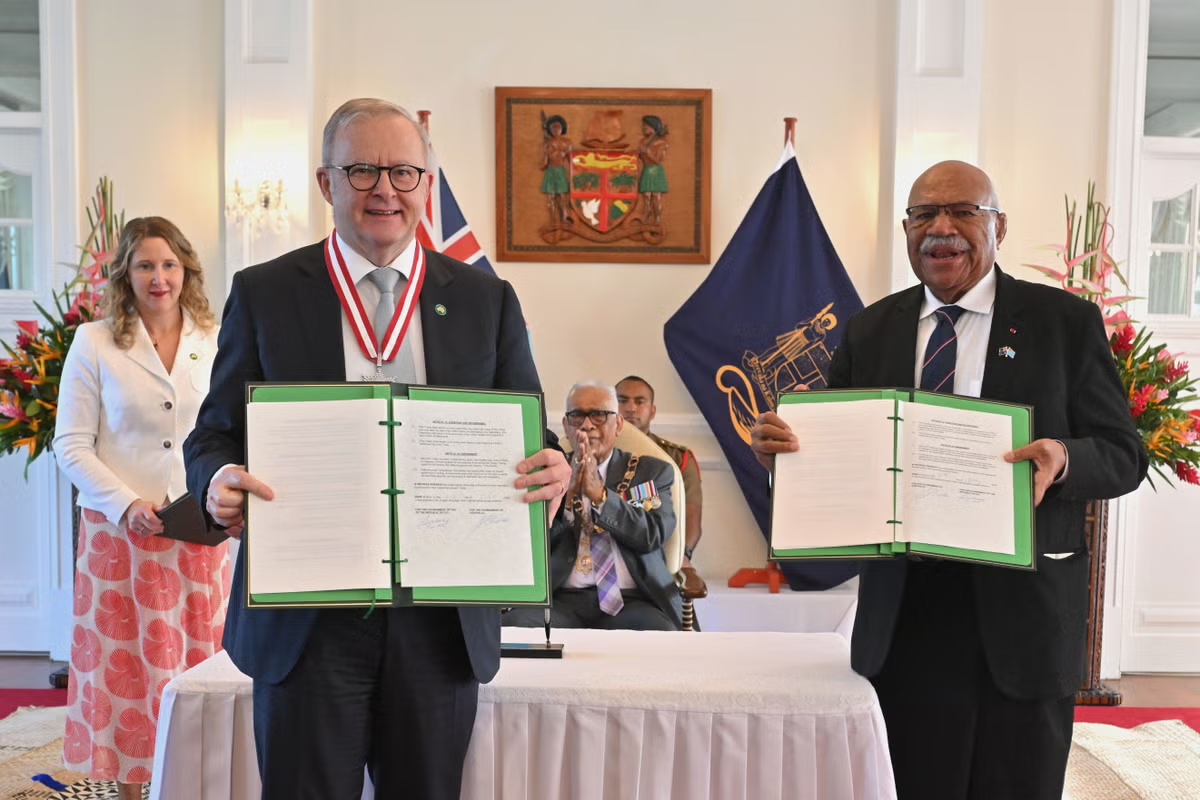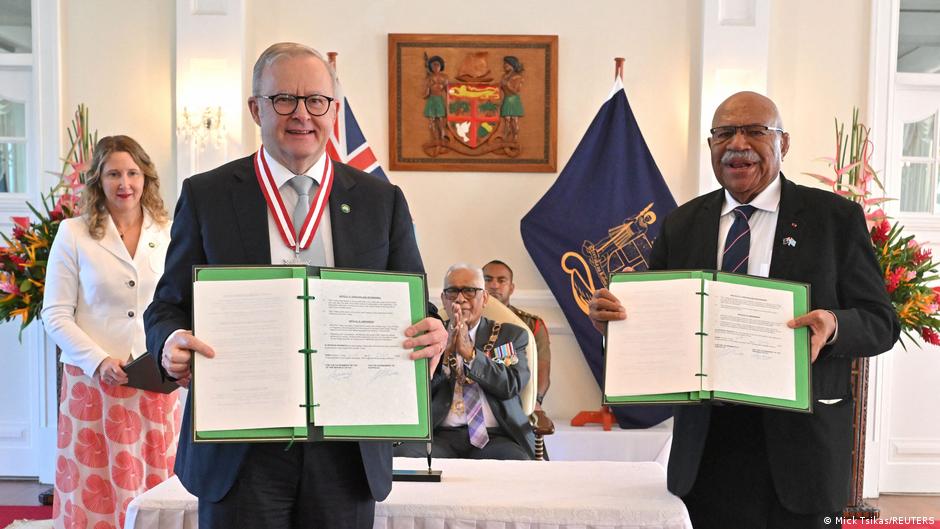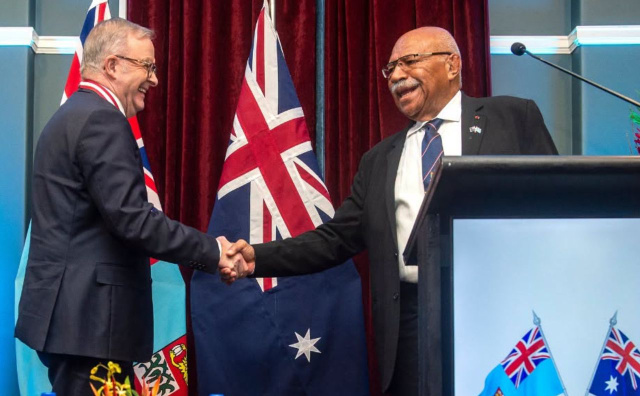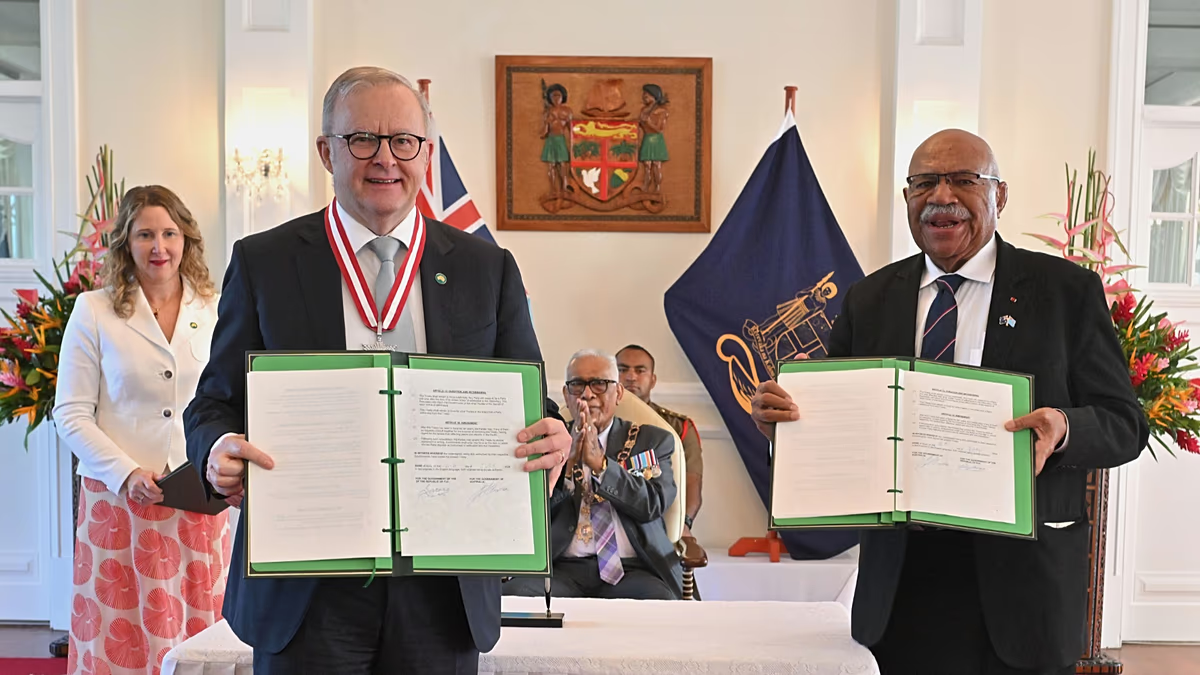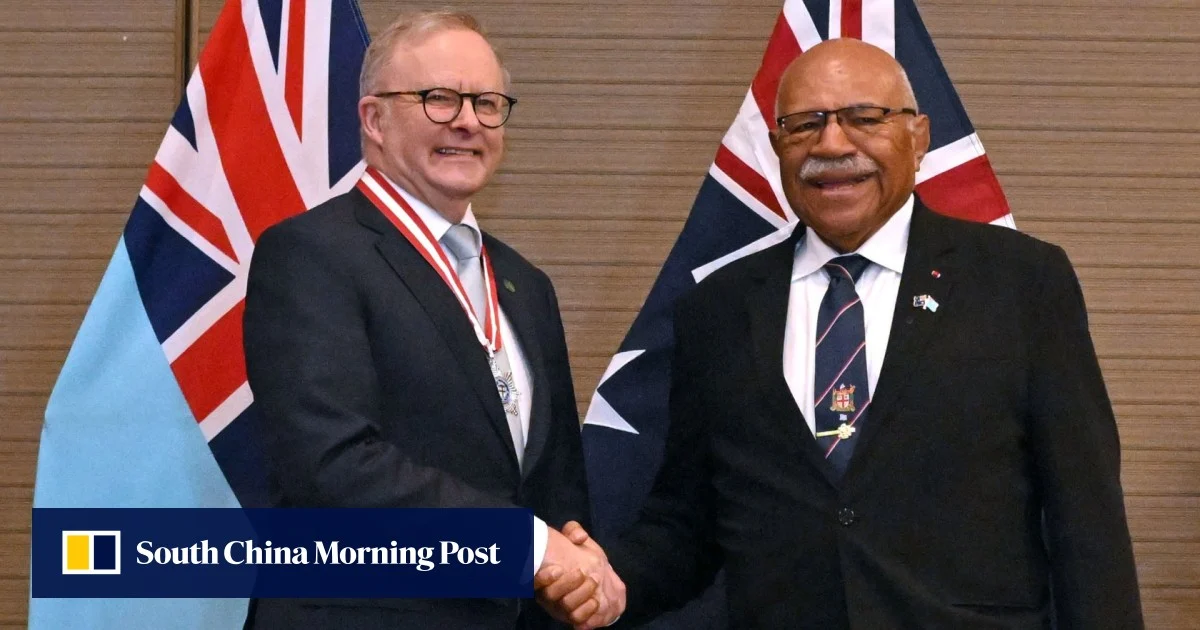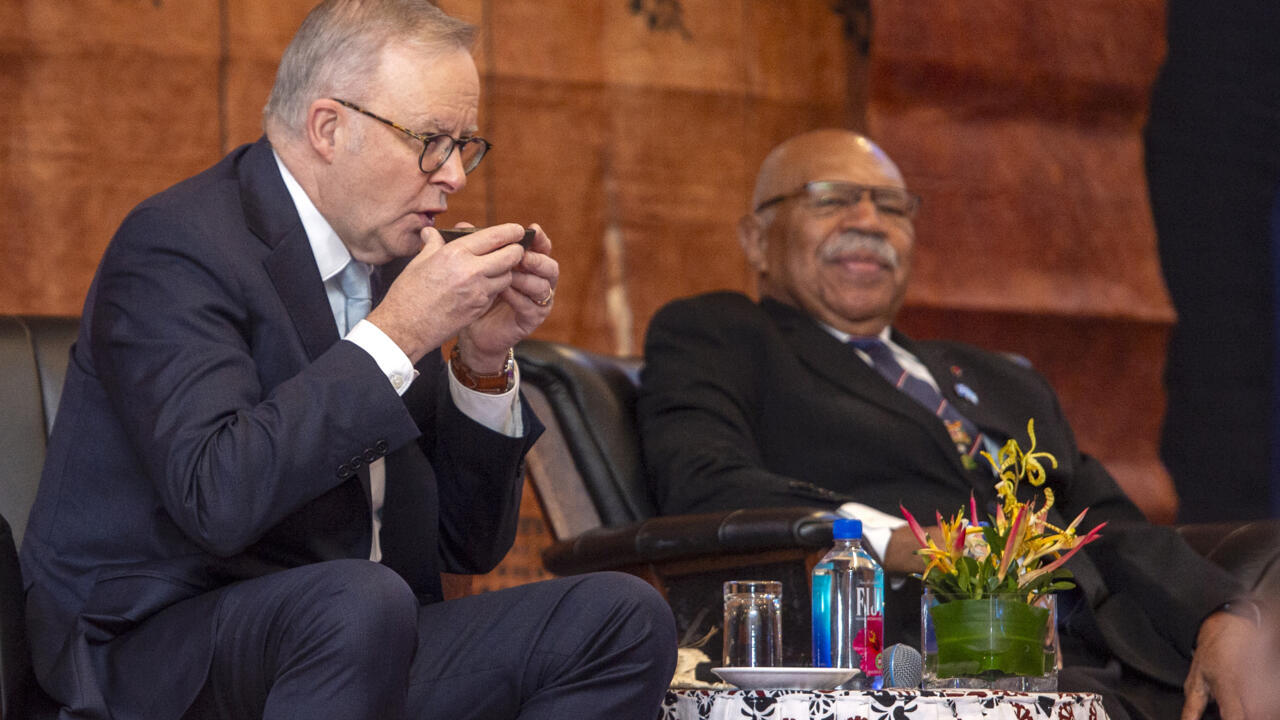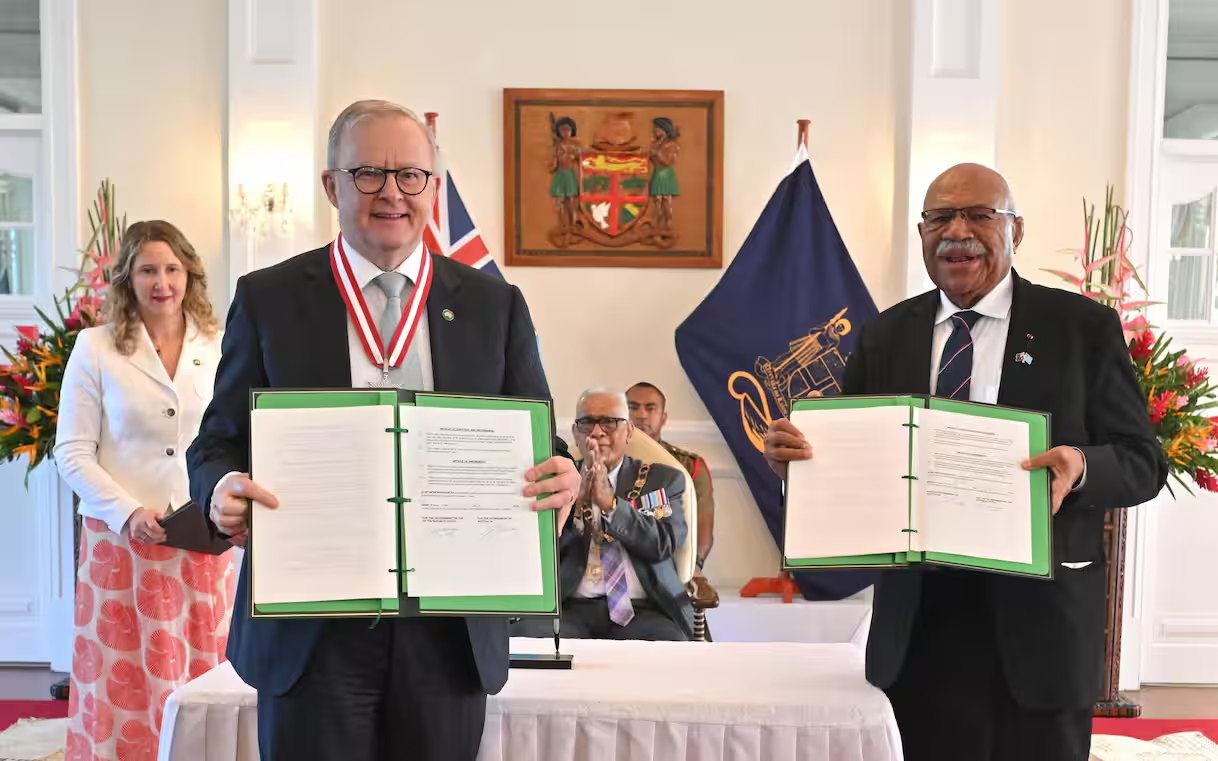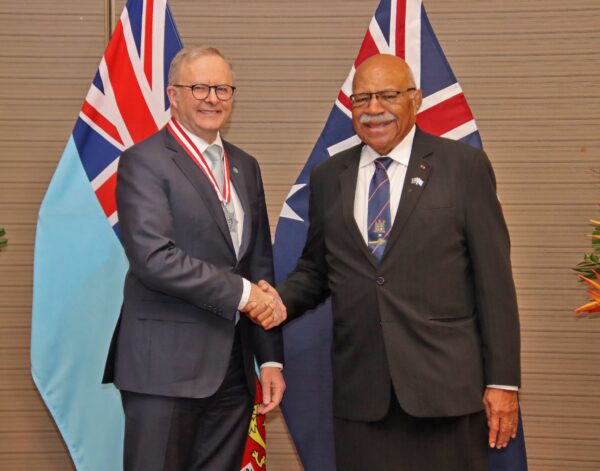
In the Fijian capital of Suva this week, Australian Prime Minister Anthony Albanese and his Fijian counterpart, Sitiveni Rabuka, signed two new security agreements. The agreements form part of a period of hyperactive diplomacy by Canberra in the Pacific, which has also included a series of new partnerships with Tuvalu, Nauru, Papua New Guinea (PNG), and Vanuatu.
The first agreement with Fiji was the Vuvale Union, an expansion of the Vuvale Partnership signed in 2023. This new union moves to a more permanent framework for collaboration, with stronger commitments to economic integration, workforce mobility, education, skills development, and investment. It establishes new initiatives such as the Vuvale Skills Hub and expanded training and labor mobility pathways, which demonstrate a shift from simply encouraging cooperation to creating the institutions that support it. The Union also establishes closer day-to-day collaboration between government agencies, making the relationship more deeply embedded than the consultation-based approach of the partnership.
Yet it was the second agreement signed in Suva that has the potential to be the more consequential. The new Ocean of Peace Alliance, also known as the Veitacini Treaty, is both a defense pact and a broader statement about the future of Pacific regional security. Primarily driven by Rabuka, the treaty is not limited to Fiji and Australia; it is open to accession by other Pacific Island countries.