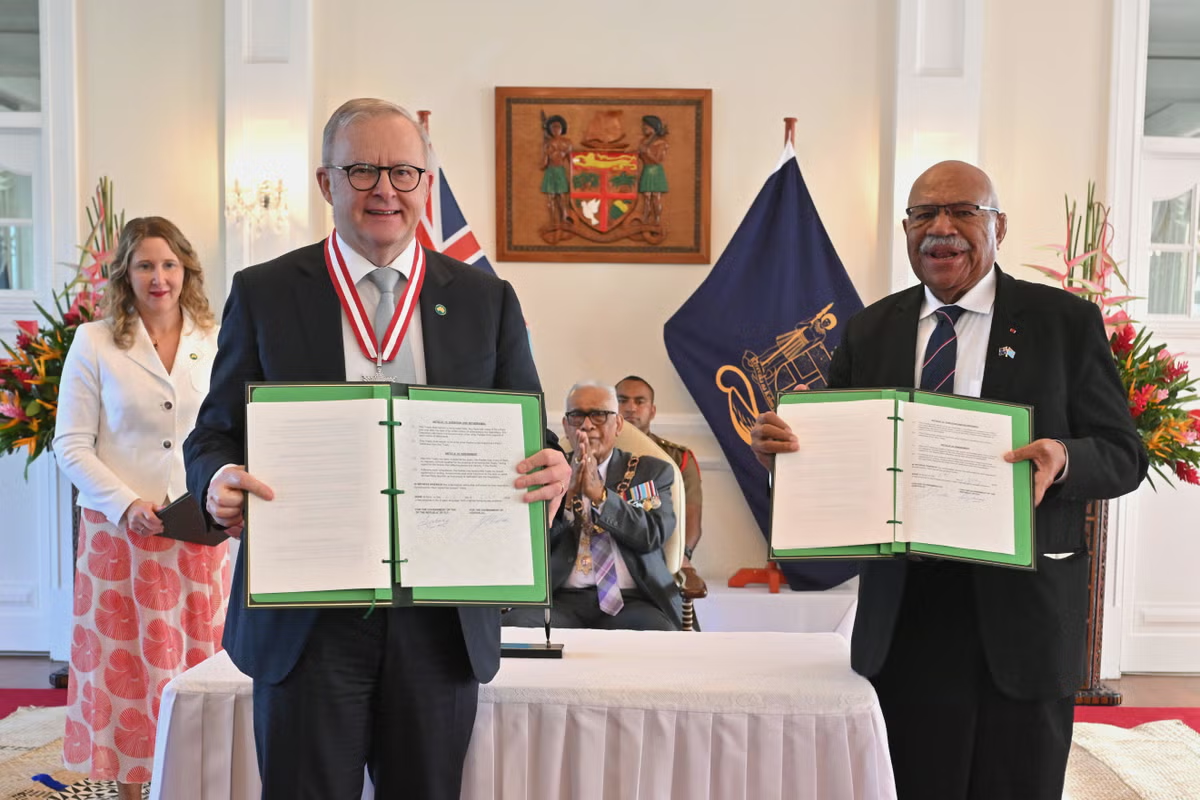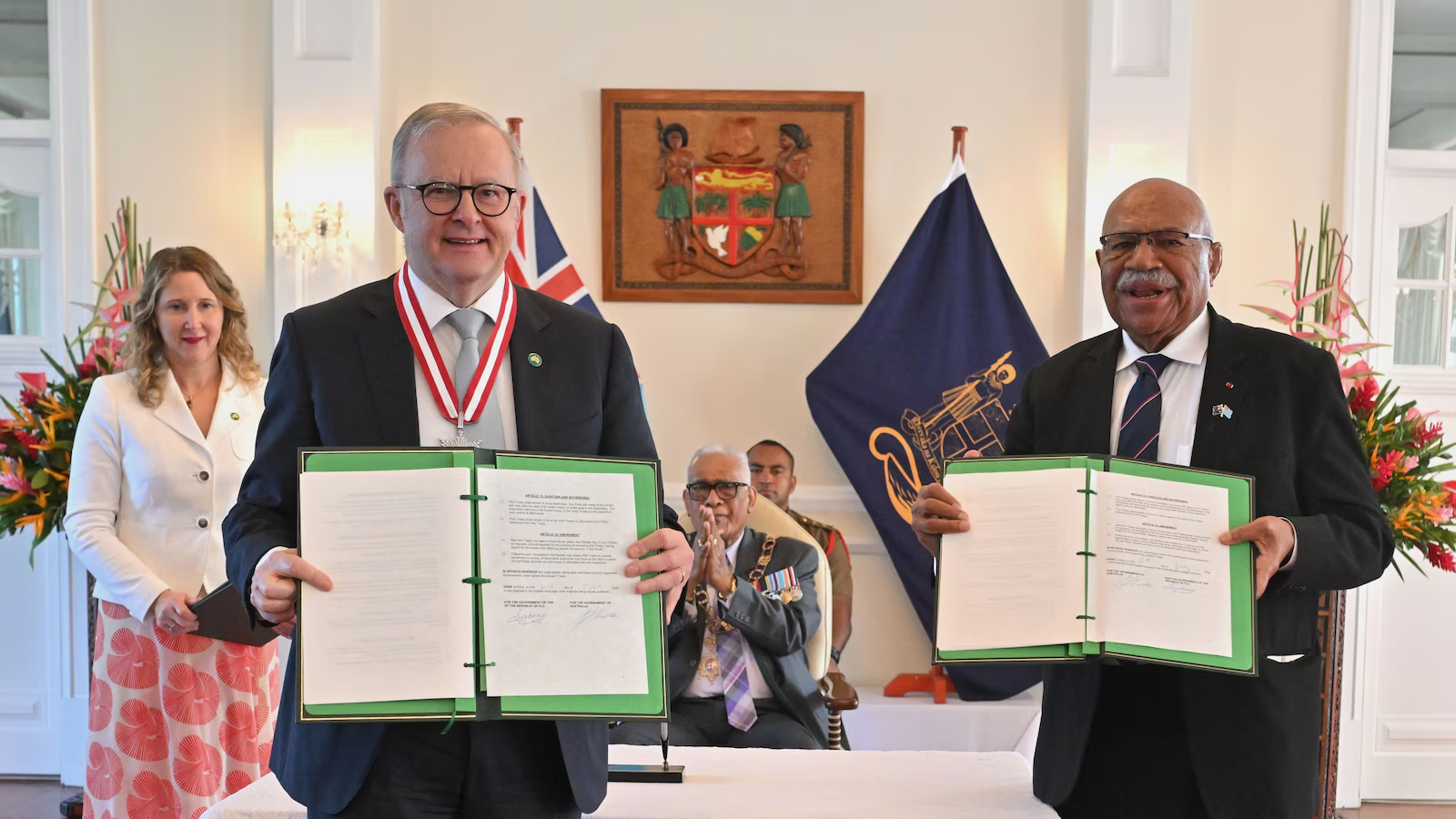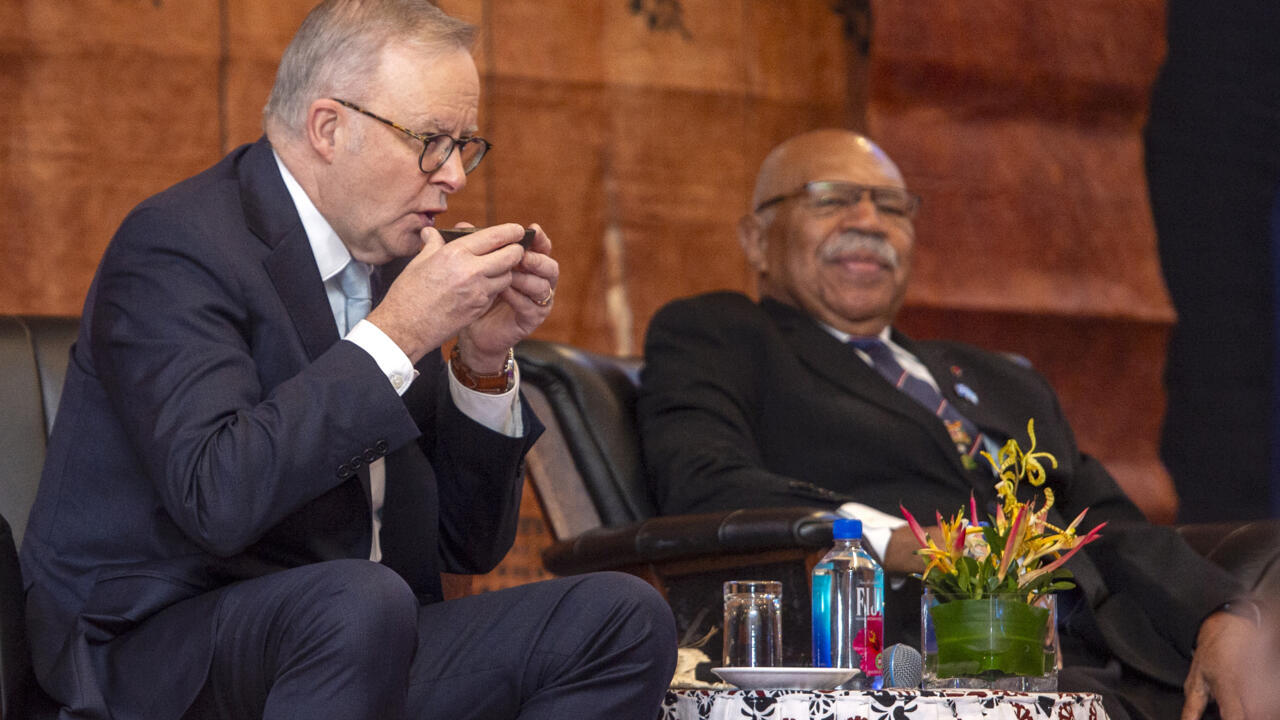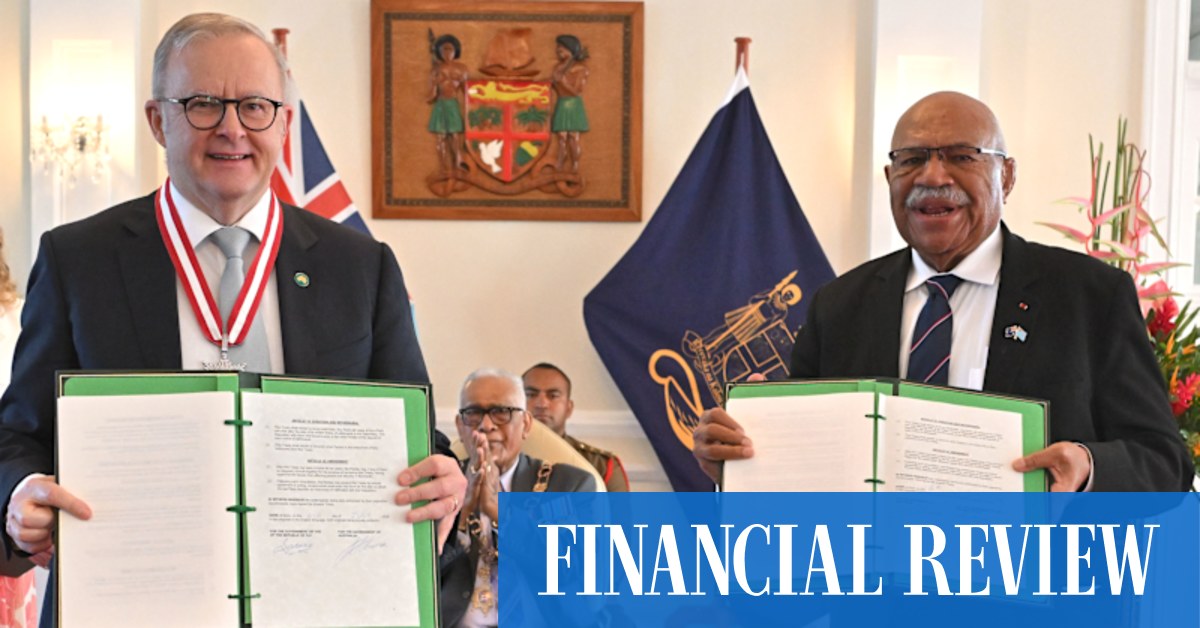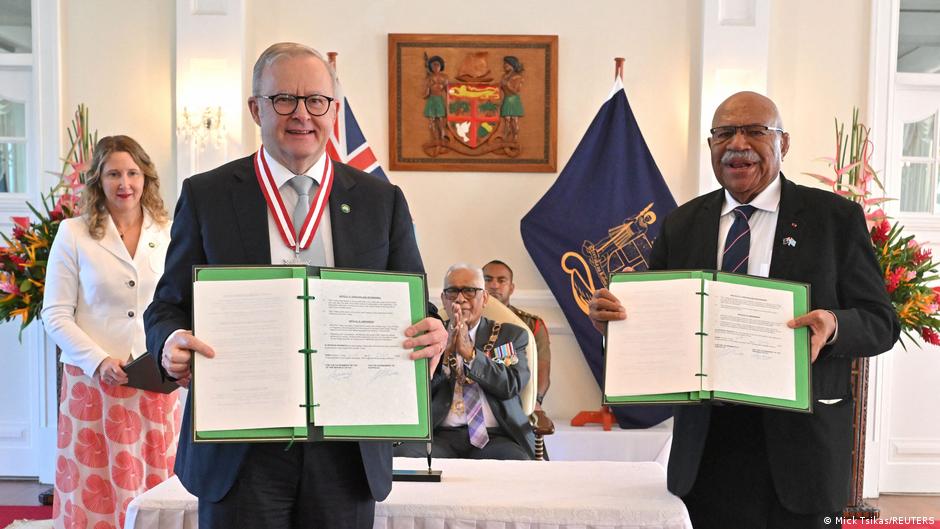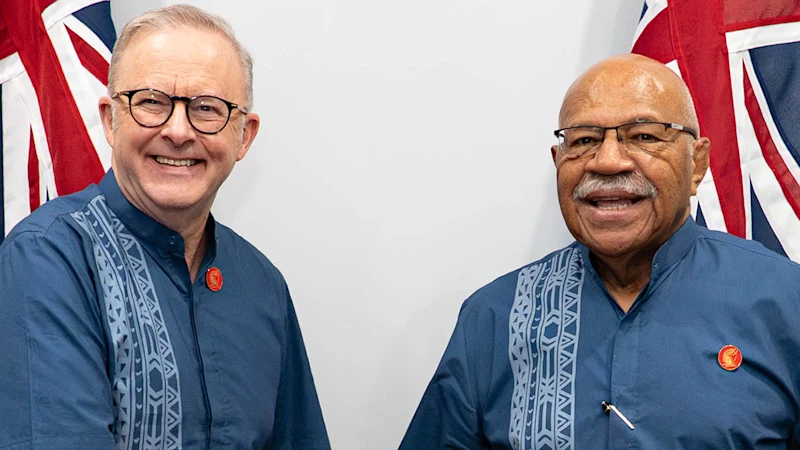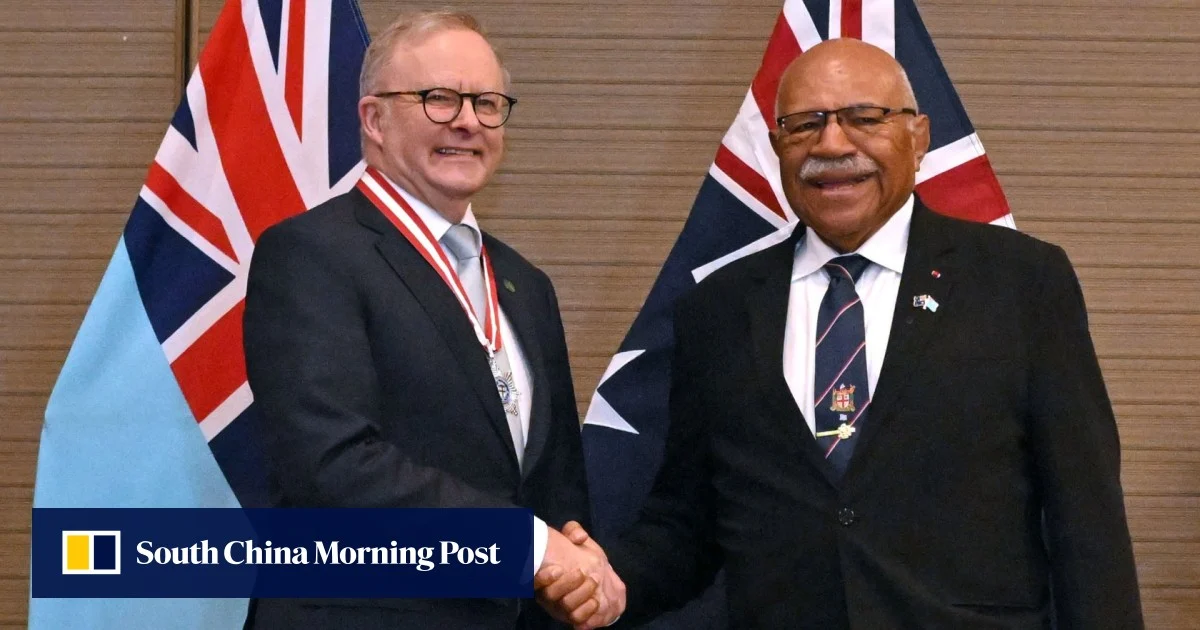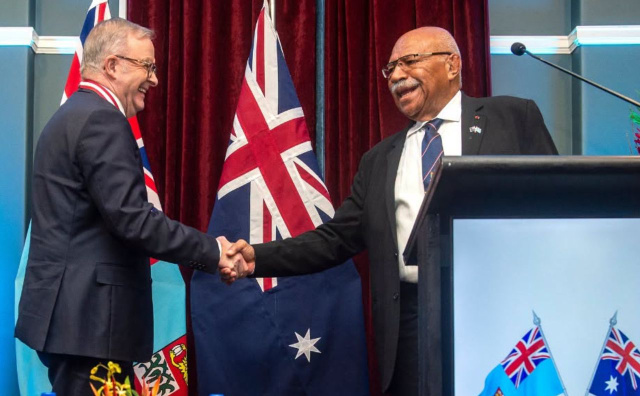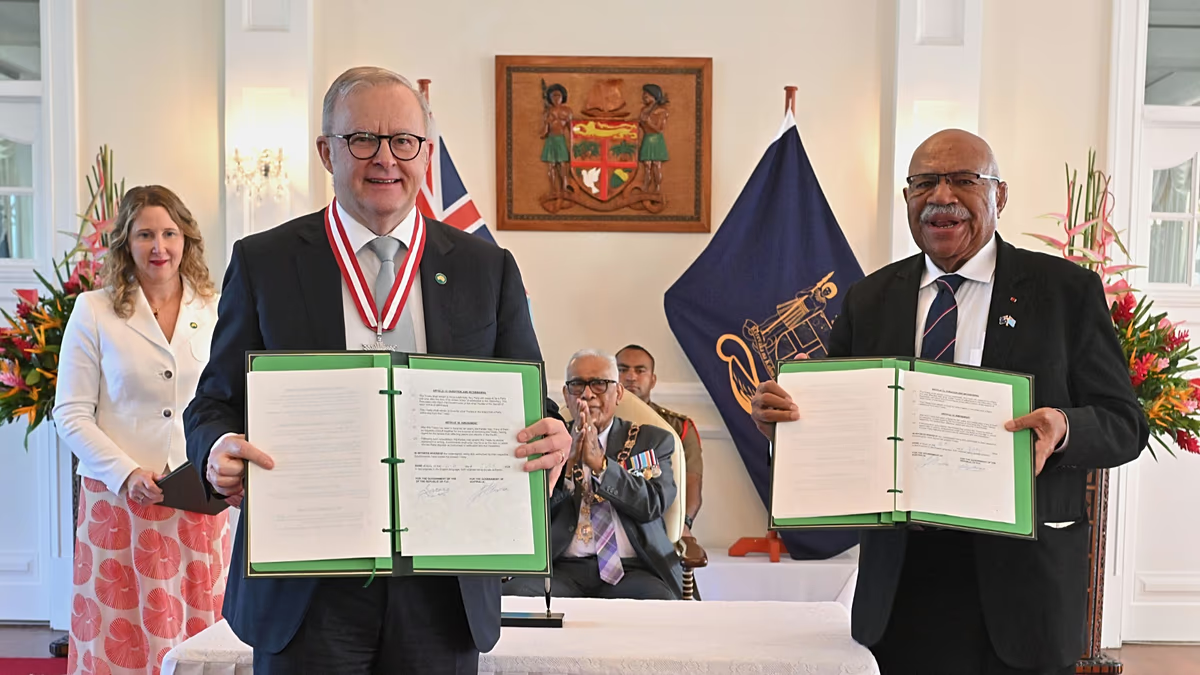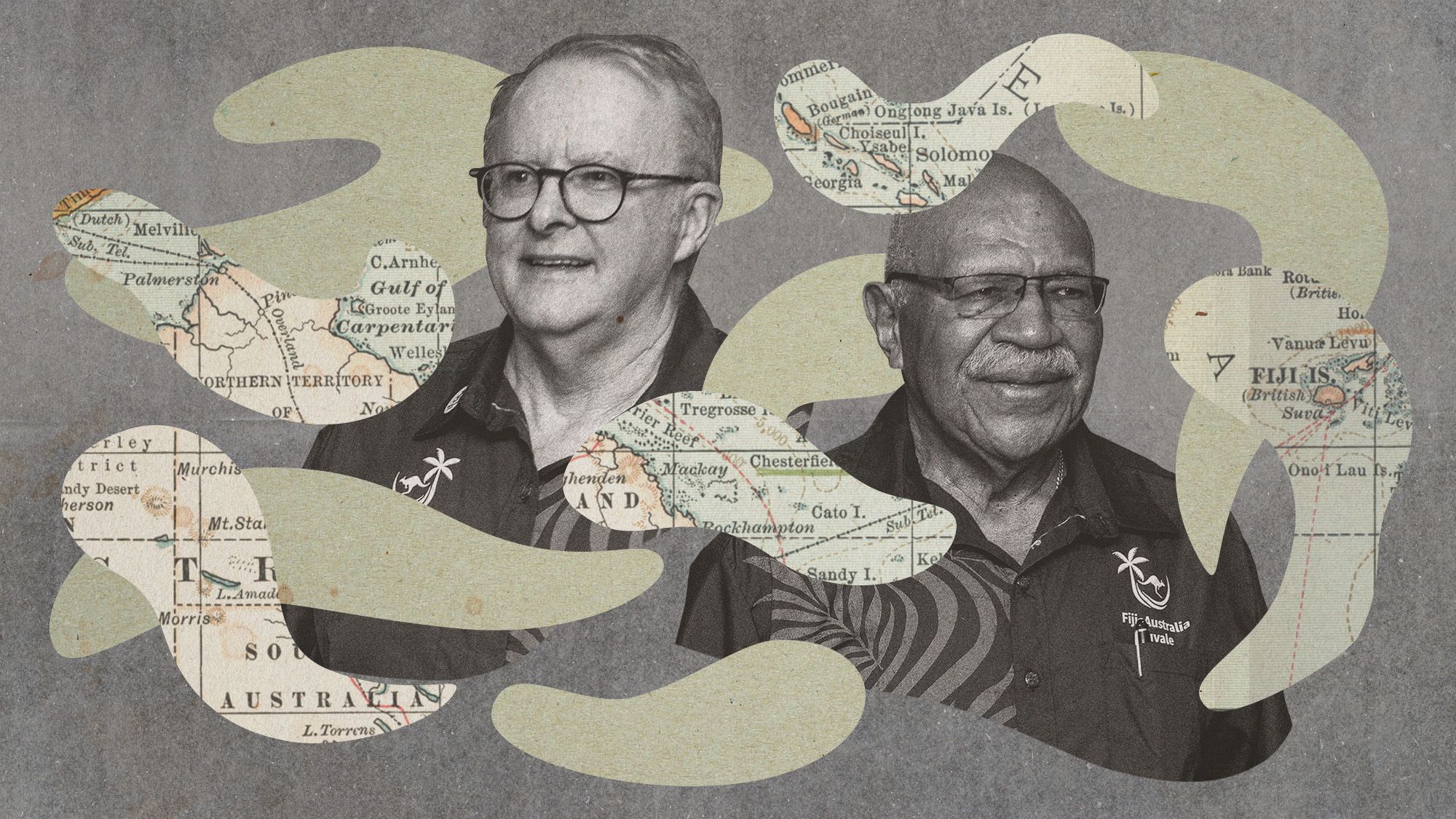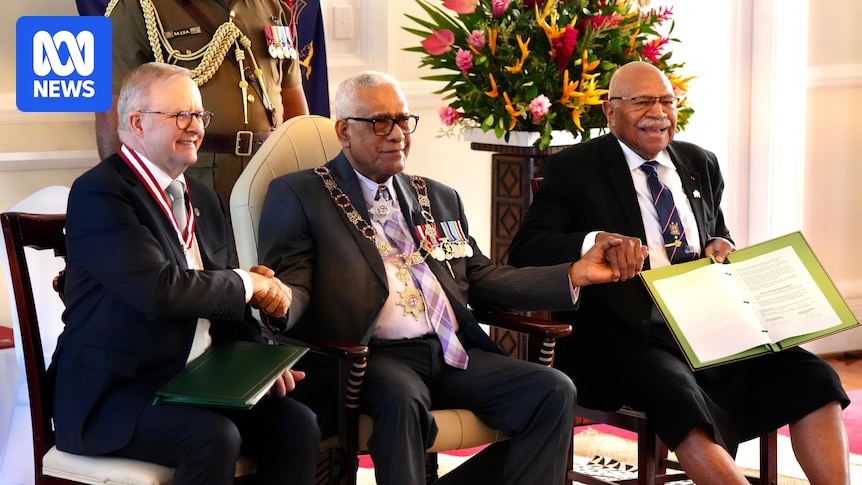
Australia and Fiji have struck a new defence alliance, on top of the "Vuvale Union" security and development pact, in a major development which could reshape the Pacific's strategic landscape.Prime ministers Anthony Albanese and Sitiveni Rabuka have signed the Vuvale Union as well as the Ocean of Peace Alliance in a ceremony in Fiji's capital, Suva.The treaty would be backed by Australian government spending of more than $1 billion over a decade on measures against transnational crime, as well as education, health and infrastructure in Fiji, Mr Albanese said."The significance of this agreement cannot be underestimated for what it means for our two great nations, and we are both stronger because of it," Mr Albanese said at a press conference in Fiji."The Ocean of Peace Alliance introduces a mutual defence obligation and there's no higher obligation than to come to each other's aid at a time of need."Under the Ocean of Peace treaty, the countries will consult on whether any measures should be taken in relation to a "security-related development that threatens the sovereignty, peace or stability" of either party.Sitiveni Rabuka signed the "Ocean of Peace" alliance in Suva with Anthony Albanese. (ABC News: Simon Beardsell)The Ocean of Peace treaty contains an article on mutual defence, saying each party recognised that an armed attack on either country within the Pacific "would be dangerous to each other's peace and security" and that each "would act to meet the common danger, in accordance with its domestic processes".It is also open for other Pacific nations to join the alliance if they are "in a position to further the purposes and principles of this treaty and to contribute to the security of the Pacific".Mr Rabuka said he was sure that other Pacific leaders were waiting to join the alliance."The more, the stronger, the better," he told journalists.Anthony Albanese arrived in Fiji on Sunday at the start of his Pacific trip. (AAP Image: Mick Tsikas)Mr Albanese kicked off a frenetic week of regional diplomacy on Sunday which will see him meet four Pacific leaders and Indian Prime Minister Narendra Modi in the space of just four days.The prime minister landed in Fiji's capital, Suva, yesterday evening, to sign the Vuvale Union and Ocean of Peace treaty with Mr Rabuka just a week after the government finally landed the Nakamal Agreement with Vanuatu.Fiji's defence minister, Pio Tikoduadua, earlier declined to lay out the exact wording in the document, but told the ABC that the treaty would represent a "step up" from current defence arrangements, and that Australia and Fiji had agreed to work together to meet common threats.He pointed out Australia and Fiji were "already collaborating and consulting on the war on drugs, especially in intelligence sharing and using (Australian) defence assets."Fiji's Prime Minister Sitiveni Rabuka (R) shakes hands with his Australian counterpart Anthony Albanese upon the latter's arrival in Nadi on March 15, 2023. (AFP: Leon Lord)In May, Mr Rabuka said the Vuvale Union pact "recognises our interests are intertwined and decisions taken by one affect the other" and affirms the two countries will "act together as is necessary to face common challenges".Both sides have also flagged that Australia will ramp up security and development support for Fiji under the pact, with Mr Rabuka saying it would "set a bold plan for greater integration" and create "new economic opportunities and linkages" between the countries.Anthony Albanese received a guard of honour upon his arrival in Suva. (AAP Image: Mick Tsikas)After signing the new treaty in Fiji, Mr Albanese will make a lightning quick stop in Solomon Islands tomorrow to attend the country's Independence Day celebrations, and hold a brief meeting with its Prime Minister Matthew Wale.Last month Australia and Solomon Islands announced they would kickstart negotiations on a new treaty, as the government continues to wage a fierce battle with China for influence in the Pacific nation.The two leaders are also likely to discuss Mr Wale's push for a regional security pact as the Solomon Islands prime minister continues to press the case for the idea.On Wednesday, Mr Albanese will meet PNG Prime Minister James Marape and Tonga's prime minister, Lord Fakafanua, in Brisbane.Mr Albanese and Mr Marape are expected to celebrate the Pukpuk Treaty between the two countries entering into force, nine months after it was signed.All three leaders are also expected to sign agreements laying out how they will spend about $200 million allocated for grassroots rugby league in the region under the PNG NRL deal, before watching Wednesday night's State of Origin decider at Lang Park.The burst of diplomacy comes as the federal government continues to pour huge energy, and substantial resources, into its "permanent contest" with China in the Pacific.Foreign Minister Penny Wong said Australia was "working hard to make transformational breakthroughs" in the Pacific, which the senator said would "shape a peaceful, stable and prosperous region".After his bout of Pacific diplomacy, Mr Albanese will meet his Indian counterpart in Melbourne.Anthony Albanese will meet with Narendra Modi in Melbourne. (Supplied)The two countries are set to sign agreements to bolster defence and security cooperation, as well as finalise arrangements designed to facilitate uranium exports from Australia to India, an issue which has previously stirred domestic political controversy in Australia.New Delhi has flagged it wants to diversify supplies in order to support its expanding nuclear power program.Mr Albanese is also set to join Mr Modi at a massive gathering of the Australian Indian community, which is set to draw thousands of people to Marvel Stadium in Melbourne.Yesterday, the Australian Federal Police declined to confirm reports that it was investigating an apparent online death threat against Mr Modi on social media connected to the event.An Australian government spokesperson said it "places the highest priority on protecting the safety and security of visiting dignitaries" and that "threats towards high-level visitors will be subject to investigation by relevant law enforcement agencies".
Australia enters new alliance with Fiji, and more Pacific nations could join
Australia and Fiji strike a new defence alliance in a major development that could reshape the Pacific's strategic landscape.
974 words~4 min read