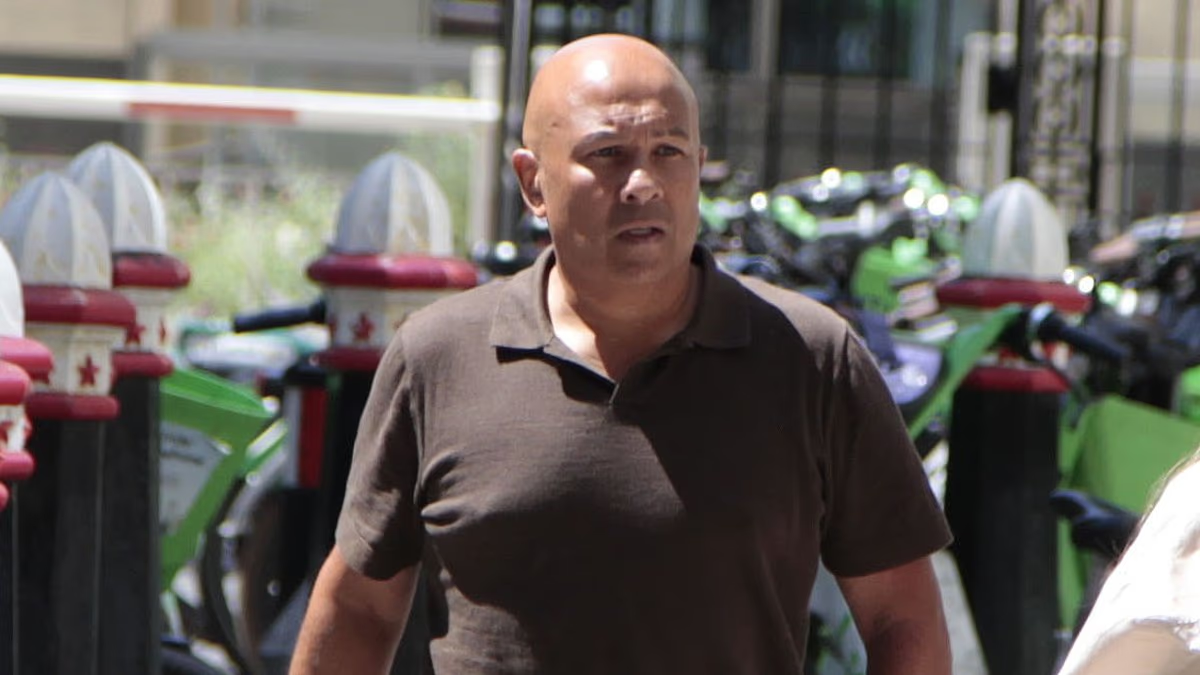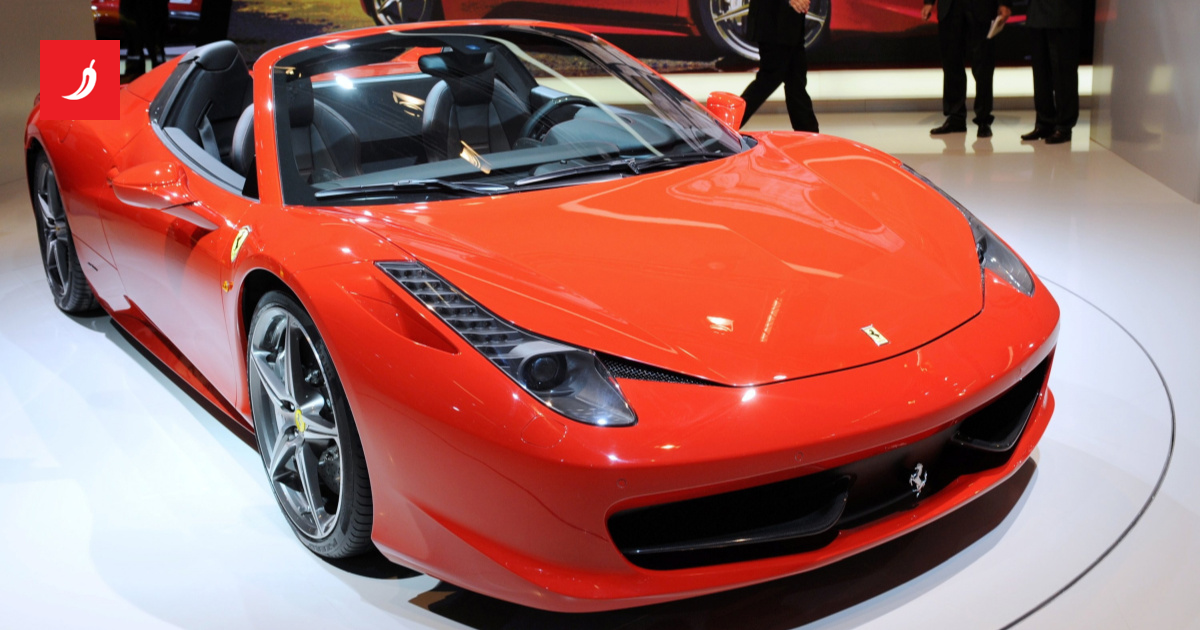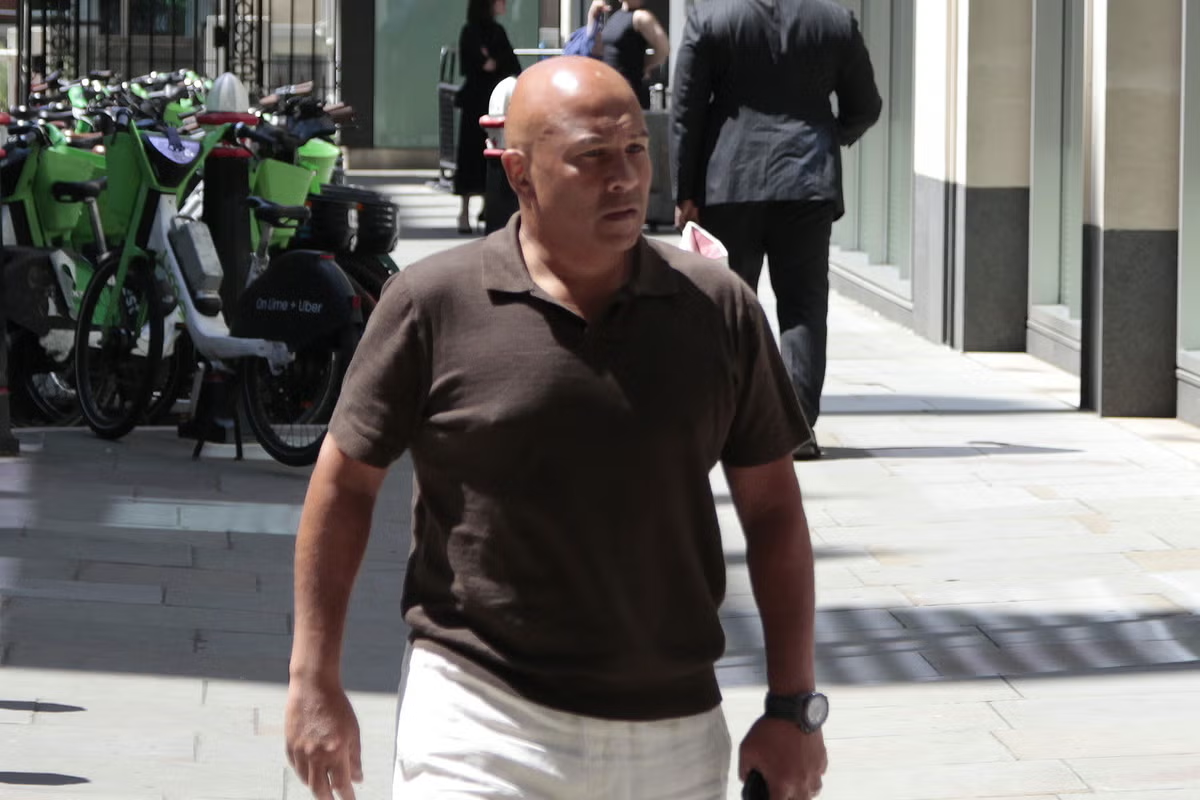
A top UK banker who spent 14 months in a Hong Kong prison after fatally running over a security guard is seeking to sue Ferrari for millions, claiming that the brakes failed on his supercar.Robert Ebert was earning millions as head of equities for the Asia Pacific region at Deutsche Bank when he ran over Ku Lap-chi while driving to work in June 2015.Mr Ebert claimed that it was an accident and his Ferrari 458 Spider’s brakes had failed, but a Ferrari employee gave expert evidence in court that brake failure was “impossible”.The London-born banker was convicted of causing death by dangerous driving and sentenced to 22 months in prison, of which he served 14 months. He was then deported upon release.He is now looking to sue the Italian supercar maker for millions of pounds, saying that thousands of Ferraris – including his own car – were subsequently recalled due to similar braking problems to that he claimed to have suffered.On Tuesday, he launched a pre-action bid in the High Court in London to force Ferrari to release documents that he said will help him “to ascertain exactly what knowledge Ferrari had in relation to these issues” at the time of his trial, “with a view to bringing a claim against Ferrari”.A Ferrari 458 supercar, 2012 edition (Supplied by Champion News)Setting out his case before Mrs Justice O'Farrell, his barrister Andrew Butler KC said: “Mr Ebert, a British citizen then 48 years old, was a successful banker working in Hong Kong.“On June 9 2015, he was driving his Ferrari 458 Spider to his place of work when he lost control of it. His car left the road and collided with...a security guard called Mr Ku Lap-chi, who tragically died as a result of the accident.“Despite maintaining from the outset that the brakes on the 458 had failed, Mr Ebert was charged in Hong Kong with causing death by dangerous driving“Ferrari sent a representative to trial, a Mr Martino Casolari, to give evidence for the prosecution. The tenor of Mr Casolari's evidence was that what Mr Ebert described experiencing with the brakes of the 458 was scientifically impossible, given the sophistication of the Ferrari's braking system.“Mr Ebert was convicted and sentenced to 22 months in prison in Hong Kong, serving 14 months. Mr Casolari's evidence was a significant factor in the conviction.”He was later deported to the UK on release, the barrister said.“This would have been an appalling episode in anyone's life, but for Mr Ebert it was particularly costly. He was at that point dead of equities for the Asia Pacific region at Deutsche Bank and co-global head of equity sales.“He was earning between $2.5 and $5m per annum and had been promoted to a role in which he would have earned between $6m and $7m. The role he was inexorably progressing towards commanded a salary of between $8m and $11m.“As a result of the conviction, he lost that position and indeed his employment as a whole.”Robert Ebert was head of equities trading at Deutsche Bank at the time of the crashThe ex-banker is now earning around £80,000 a year running his own financial service firm in the UK, but is “hampered in this by the fact that because of his conviction he is refused entry into several countries, including Hong Kong, the US, Canada, where his wife's family reside, Australia and New Zealand, where many of his own family are domiciled,” said the barrister.“Even at the time of Mr Ebert's conviction, there was, unbeknown to him, traffic on the Ferrari chat sites questioning the efficacy of the brakes on models such as the 458.“In October 2021, Ferrari recalled certain models of vehicle including the 458 in the US as the result of a perceived fault in their braking systems.“Then critically in 2022 they recalled over 2,000 vehicles in China, the recall covering the 458 and extending to vehicles imported between March 2010 and March 2019, again because of a perceived fault in their braking systems. The announcement referred to 'a brake reservoir fluid cap which may not vent properly'.“Mr Ebert's vehicle was produced in February 2012 and so was one of those recalled.“The purpose of this pre-action disclosure application is for Mr Ebert to ascertain exactly what knowledge Ferrari had in relation to these issues at the time of Mr Ebert's trial, with a view to bringing a claim against Ferrari.”Tim Otty KC, for Ferrari, however told the judge that the supercar firm is resisting the application. He claimed the former banker was trying to bypass the proper legal procedure and that any applications for disclosure of evidence ought to be made in either Hong Kong or Italy, not London.“The proposed claim arises from a fatal traffic accident in which Mr Ebert was involved in Hong Kong on 9 June 2015 whilst driving a Ferrari 458 Spider,” he said.“Mr Ebert’s evidence in his criminal trial was that the accident was caused by a brake failure in the vehicle. A Ferrari employee, Mr Martino Casolari, gave evidence at the trial, at the request of the Hong Kong police, in relation to the vehicle’s braking system.“The court did not accept Mr Ebert’s evidence. He was convicted and incarcerated for 14 months.“Some years later, in October 2021, Ferrari issued a recall for certain classes of vehicle, including the class of Mr Ebert’s Vehicle, for brake-related defects.“Mr Ebert alleges that the same brake-related defects caused the accident, that Ferrari knew or should have known of these alleged defects, and that Mr Casolari gave evidence at the trial which was false, misleading and/or negligent, leading ultimately to Mr Ebert’s conviction and various alleged consequential losses.“Ferrari denies that the recall had any relevance to the accident or Mr Ebert’s conviction.“By the pre-action disclosure application, Mr Ebert seeks disclosure of various categories of document which are said to be relevant to Ferrari’s state of knowledge at the material time as to the alleged brake defects, which, on Mr Ebert’s case, caused the accident.“The pre-action disclosure application represents an improper attempt to circumvent the letter of request procedure, which is the appropriate mechanism by which to obtain documents held abroad by a foreign respondent in accordance with the principles of international comity.“The more appropriate course would be for Mr Ebert to issue proceedings and seek disclosure in either Hong Kong or Italy.”The hearing continues.
Top banker jailed for fatal crash bids to sue Ferrari for millions over brake failure
Robert Ebert was head of equities trading at Deutsche Bank when he ran over a security guard
1,057 words~5 min read