An Iran-linked advanced persistent threat (APT) actor has been using a modular command-and-control (C&C) framework in recent attacks targeting organizations in Israel, Check Point reports.
Tracked as Cavern Manticore, the APT focuses on government entities and IT providers, and appears linked to Iran’s MOIS (Ministry of Intelligence and Security), with possible ties to the OilRig subgroup Lyceum (also known as Hexane and SiameseKitten).
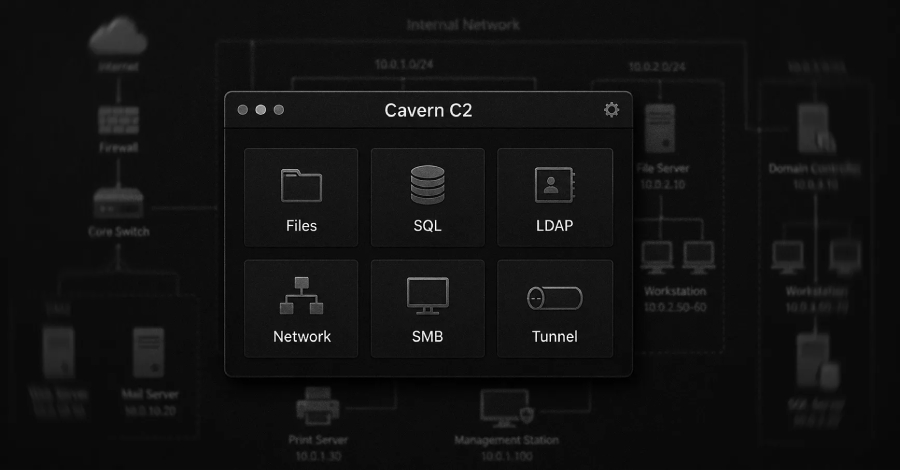
Cavern Manticore’s C&C framework includes an adaptable toolset built using .NET, with various compilation formats used across components, used as an anti-analysis layer.
“This is not obfuscation in the traditional sense; there is no packer, no control-flow flattening, and no string encryption anywhere in the framework. Instead, the compilation format itself becomes the anti-analysis layer, since each of the three formats has to be reversed with a different toolchain and a different workflow, and the analyst has to context-switch between them across components,” Check Point notes.
The components are used as agents and modules, separating core communication functionality from post-compromise capabilities and allowing the attackers to tailor deployments per-victim and extend their access to the compromised environments.