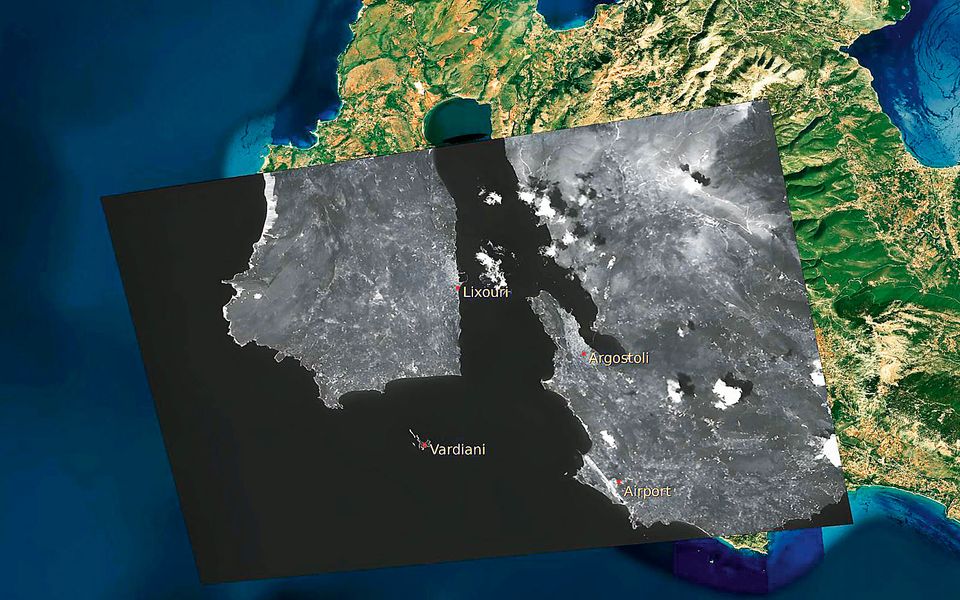
Greece has received the first high-resolution satellite image from the first Greek optical satellite sent into orbit last month.
The image was taken by the ERMIS 3 nanosatellite, developed by the Department of Aerospace Science and Technology (AST) at the University of Athens, on June 25 from an altitude of 500 kilometers, and depicts the Ionian island of Kefalonia, in western Greece.
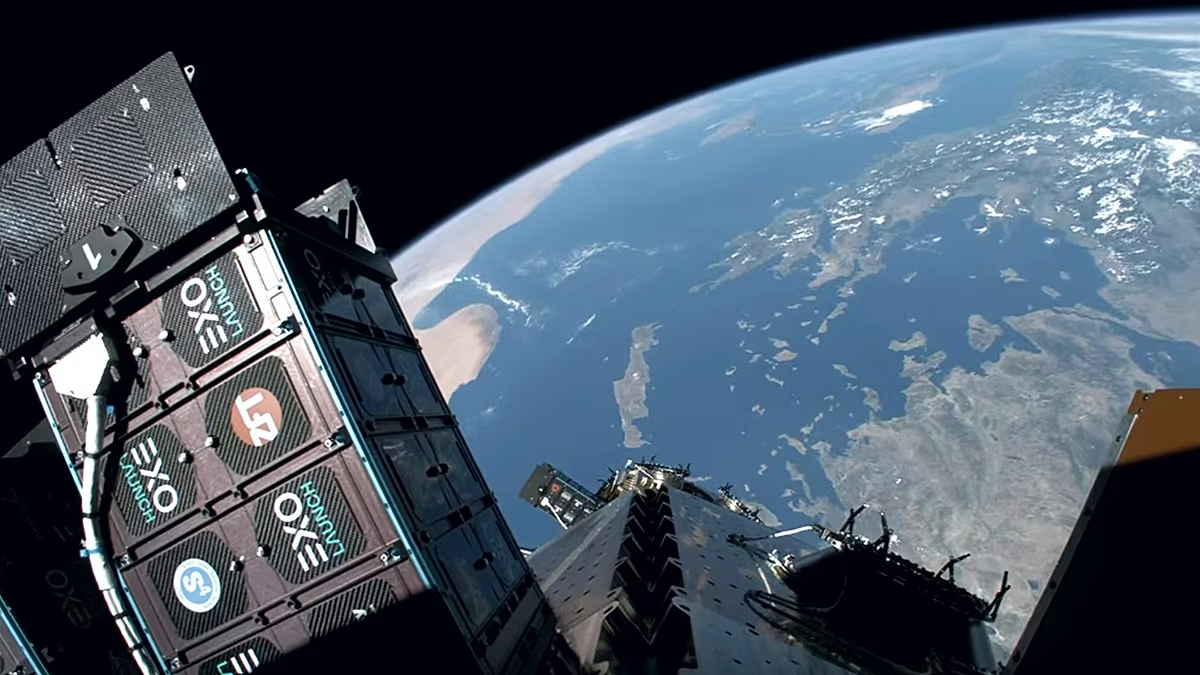
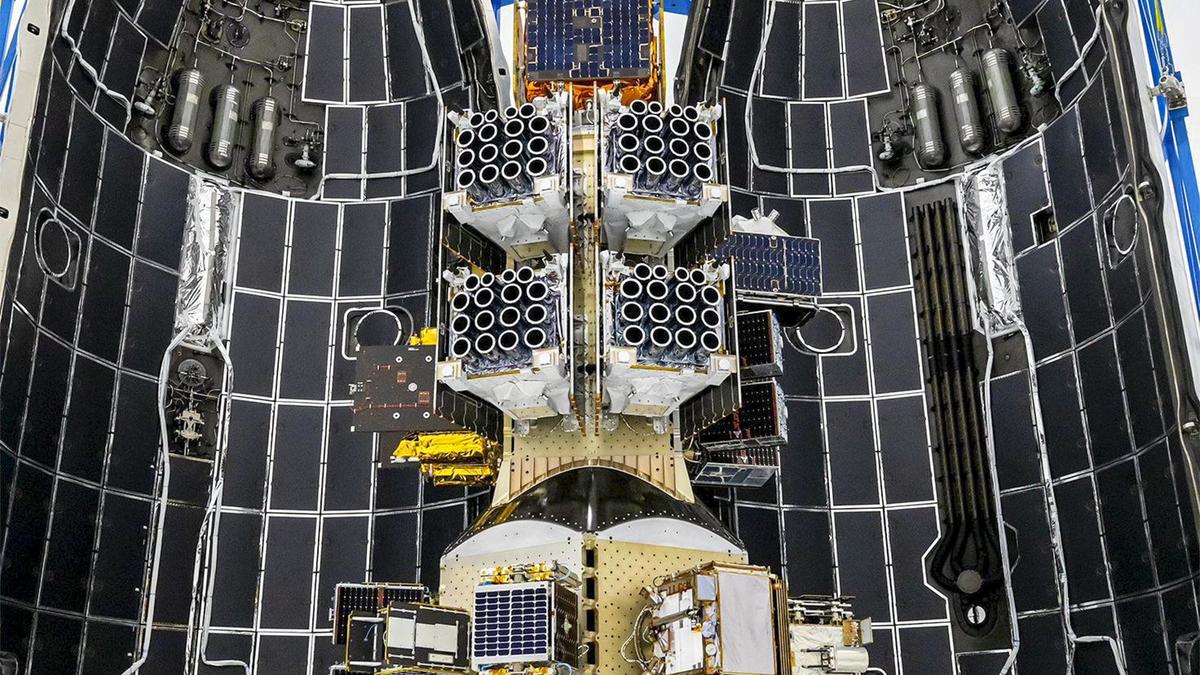
“The three ERMIS 1-3 nanosatellites were launched in the early hours of March 30 from Vandenberg Air Force Base in California, aboard SpaceX’s reusable Falcon-9 rocket,” says Department Chair and Aerospace Professor, Vaios Lappas, who watched the launch.
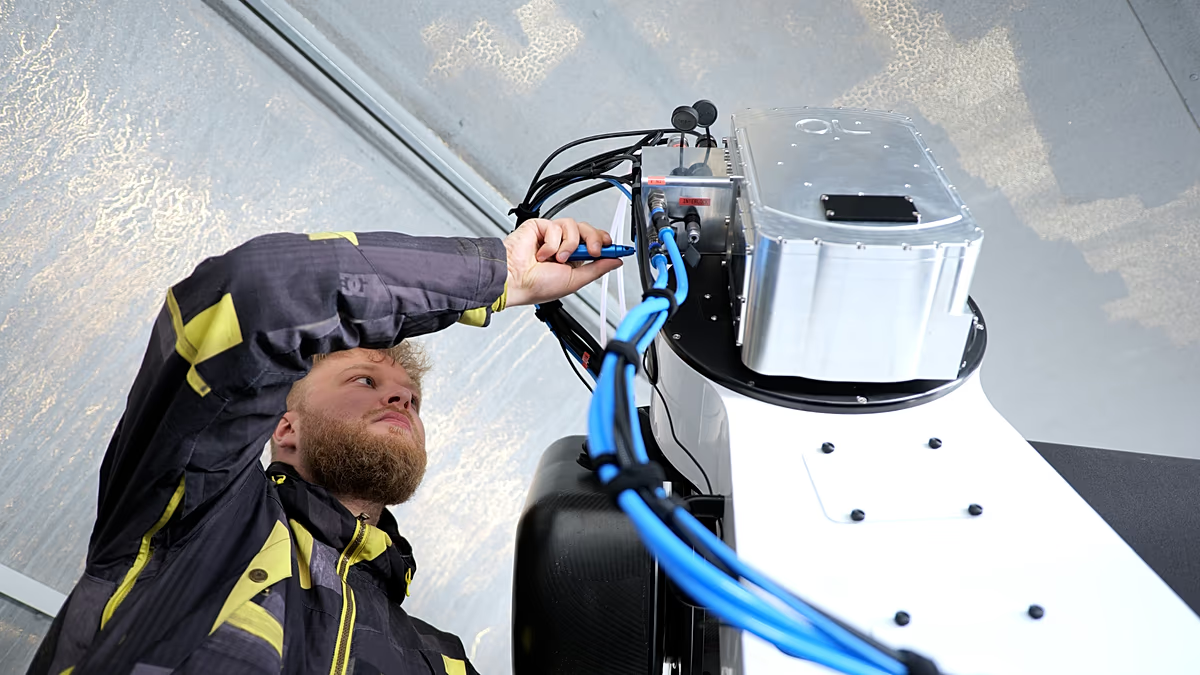
The three nanosatellites are specialized in 5G/IoT telecommunications, inter-satellite connectivity, Earth observation with hyperspectral remote sensing and carry technologies that have been developed purely in Greece. As NKUA professor Antonis Paschalis says, “our satellites are all made in Greece, from the screws to the last line of code, which gives us great potential for strategic and national autonomy.”
The Hermes 1, Hermes 2 and Hermes 3 satellites were built in 18 months by a team of 47 scientists under the supervision of the European Space Agency. Each weighs about 10 kilograms.