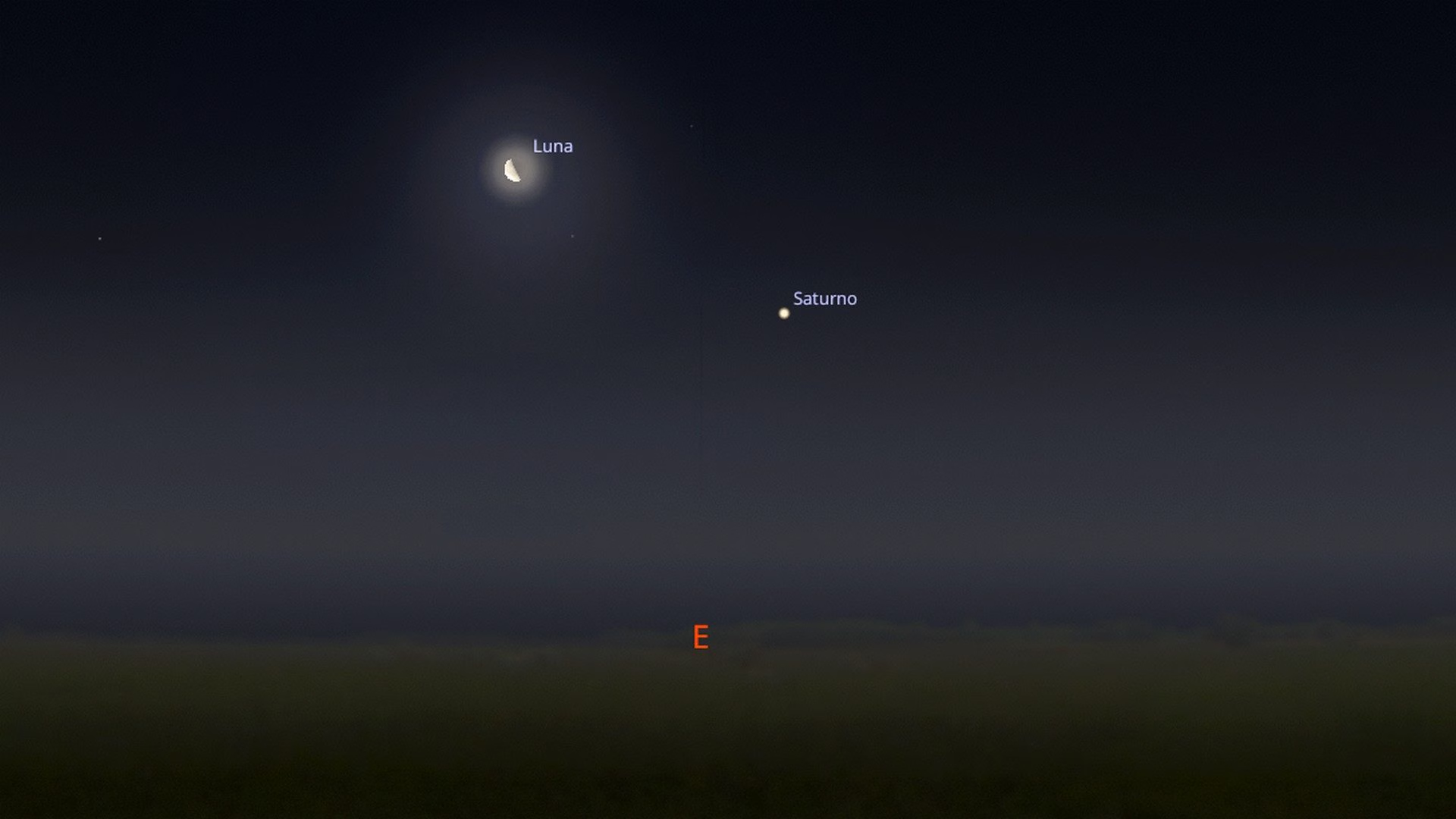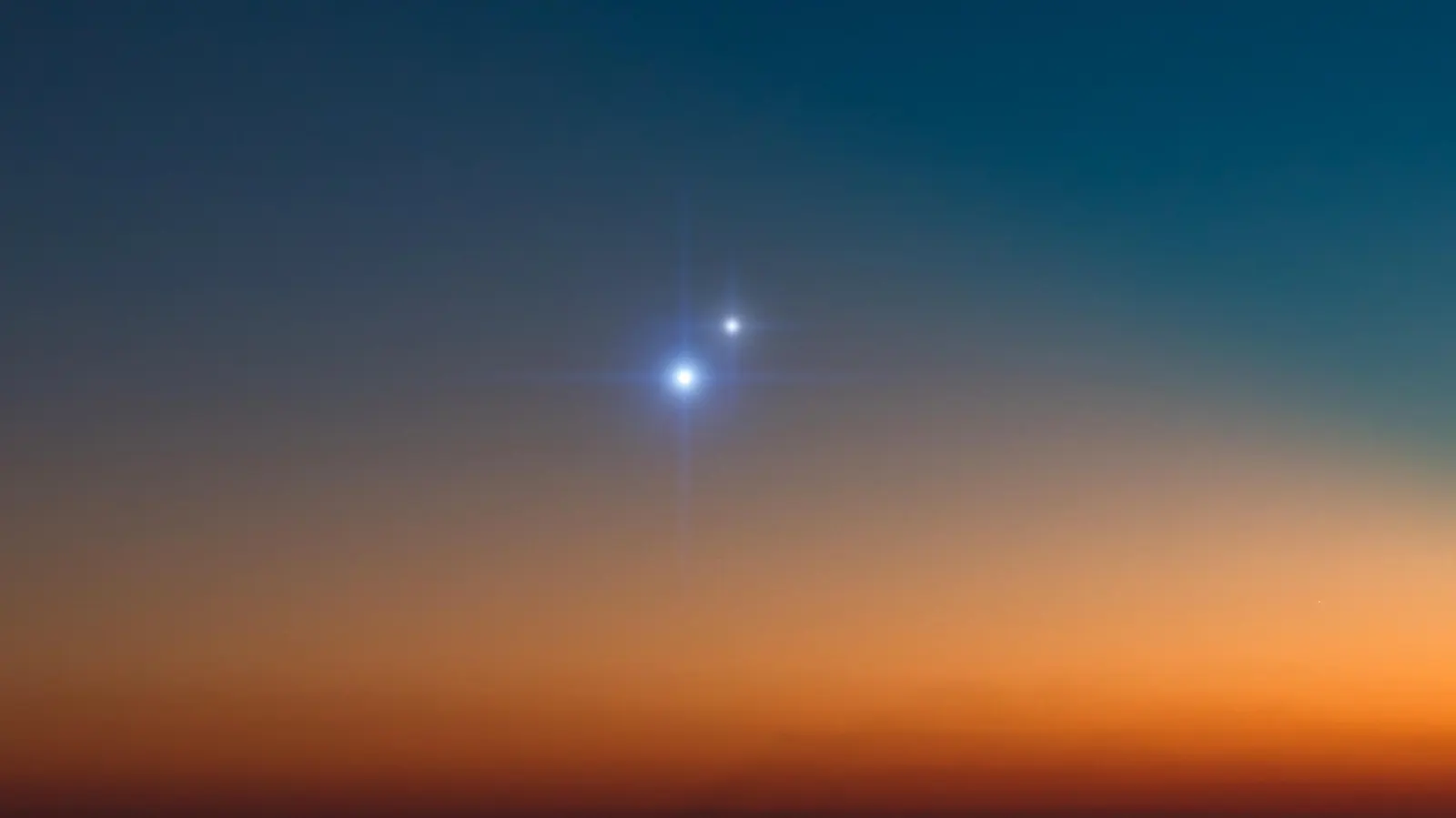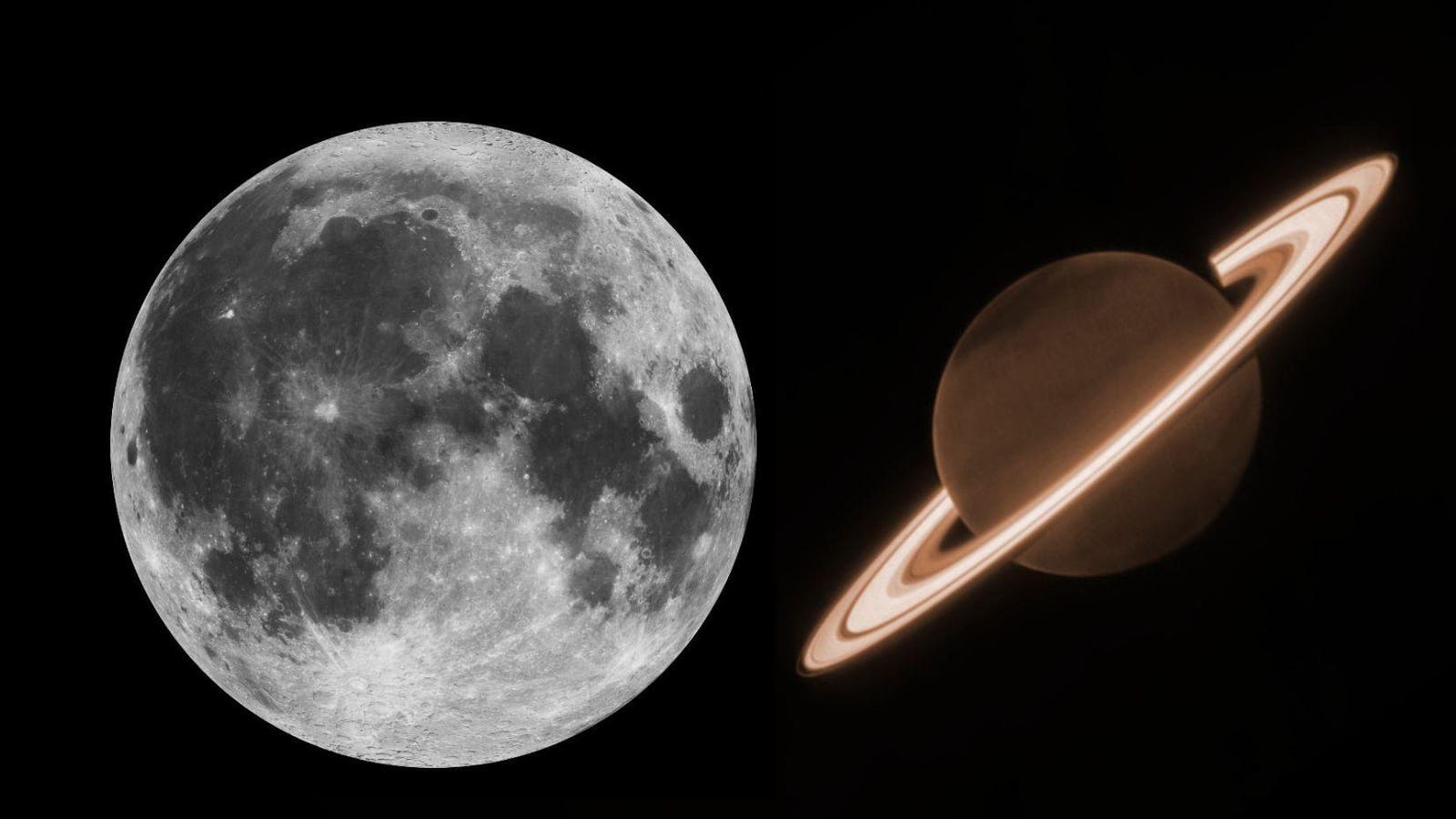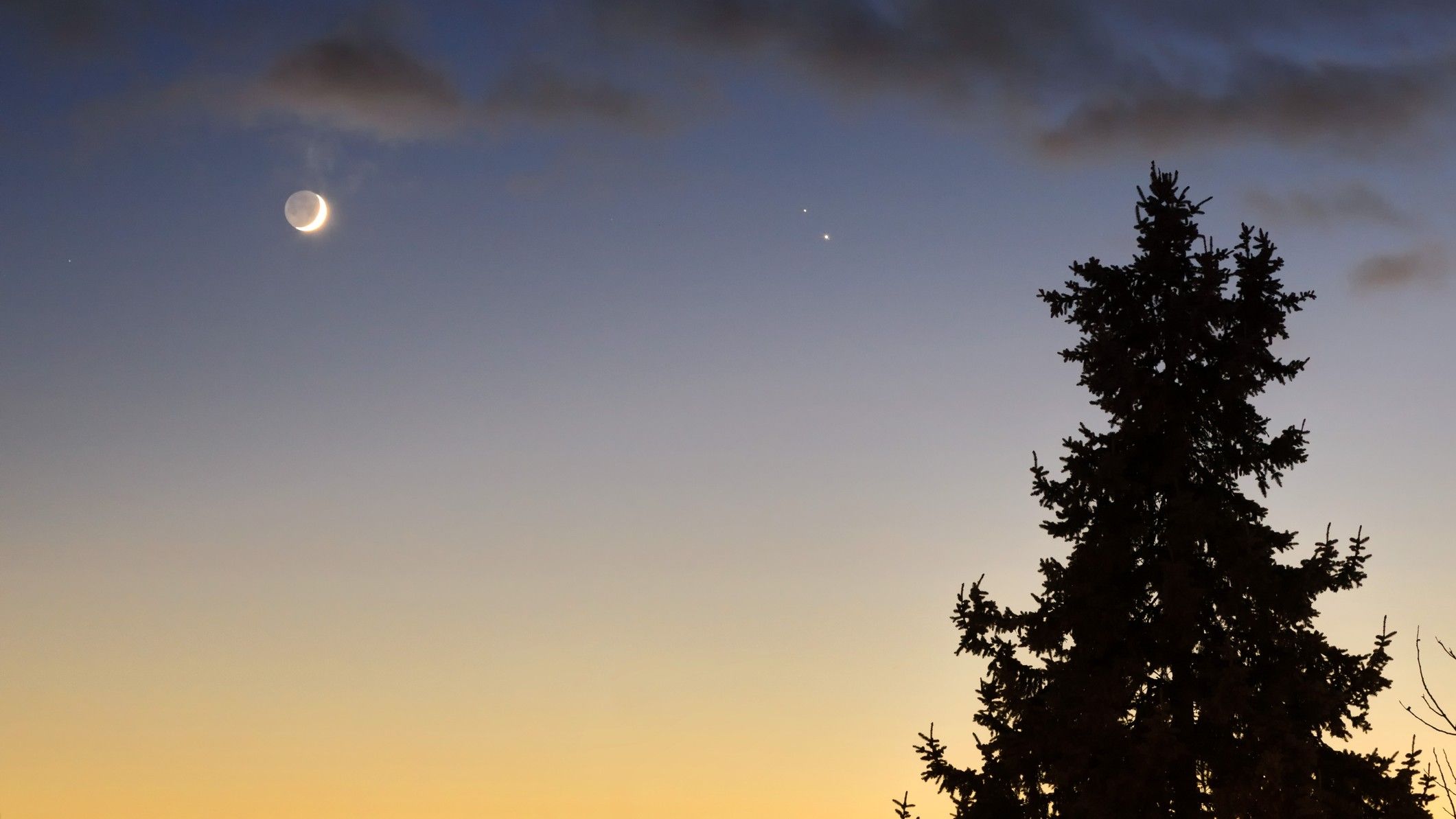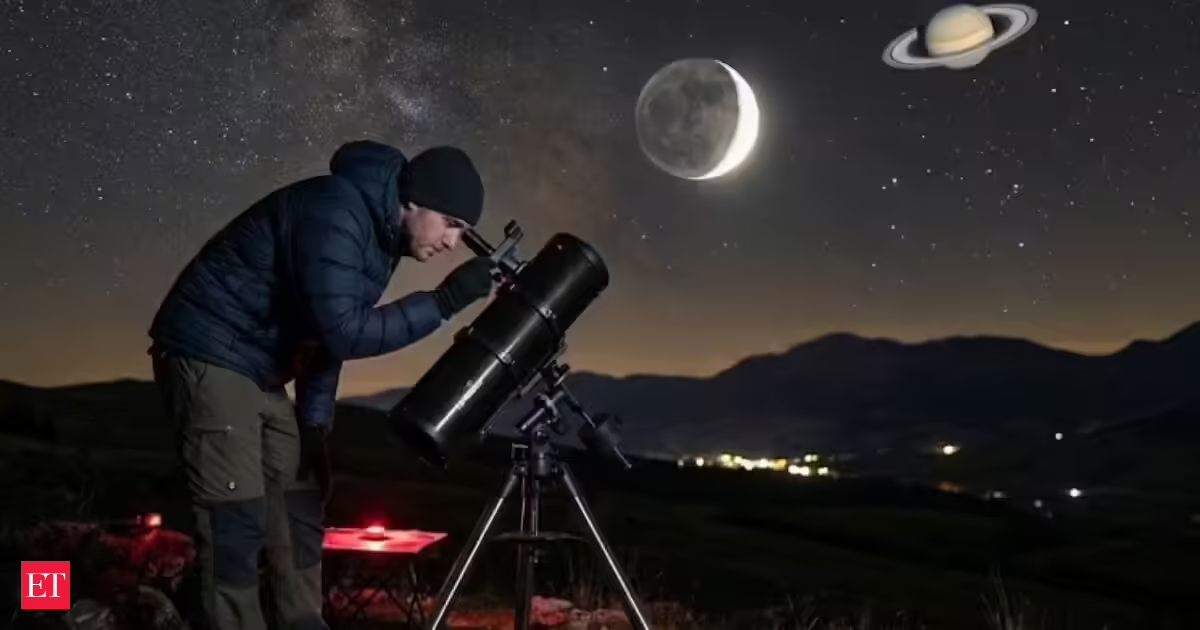
A Moon-Saturn conjunction will take place on July 7, 2026, offering skywatchers an opportunity to see the Moon and Saturn appear together in the night sky. Although the two objects will not be physically close, they will appear to meet from Earth's perspective. The event will be visible without special equipment, making it accessible to both amateur astronomers and casual stargazers. Conjunction timings The exact conjunction will occur at 5:49 pm EDT on July 7. In India, it will take place at 3:19 am IST on July 8. The best time to observe the event will be during the early morning hours before sunrise, after the Moon and Saturn have risen above the eastern or south-eastern horizon. Where will it be visible? The conjunction will be visible across much of the world wherever skies remain clear. It can be observed from India, the United States, Canada, most of Europe, the United Kingdom, Australia, New Zealand, large parts of Asia, Africa and South America. Viewing times will vary depending on the observer's location. How will the conjunction occur? The conjunction will take place at 21:49 UTC on July 7, when the Moon will pass about 6°39′ north of Saturn. Both celestial objects will be positioned in the constellation Pisces. The meeting is only an apparent alignment as seen from Earth. In reality, the Moon and Saturn will remain separated by more than a billion kilometres in space. How close will they appear? The Moon and Saturn will appear close enough to be easily noticed, but they will still be separated by about 6.65 degrees in the sky, roughly 13 times the apparent width of a full Moon. The pairing will be visible to the naked eye under clear skies. However, the two objects will not fit within the same field of view of most telescopes or binoculars. Why is the event significant? The conjunction will present a view of two contrasting celestial bodies, with the Moon as Earth's natural satellite and Saturn as the Solar System's second-largest planet, known for its prominent rings. Such conjunctions occur several times each year because the Moon moves rapidly across the sky. Each event allows astronomers to observe the changing positions of celestial objects, while the bright Moon can also make it easier for observers to locate the much fainter Saturn in the night sky.
Moon-Saturn conjunction 2026 on July 7: Best time and places to watch the Moon and Saturn together
Skywatchers can witness a Moon-Saturn conjunction on July 7, 2026. This celestial event will be visible across much of the world with clear skies. The Moon will appear to pass north of Saturn in the constellation Pisces. This alignment is an apparent one and will be easily noticeable to the naked eye. Such conjunctions offer opportunities to observe changing positions of celestial objects.
390 words~2 min read