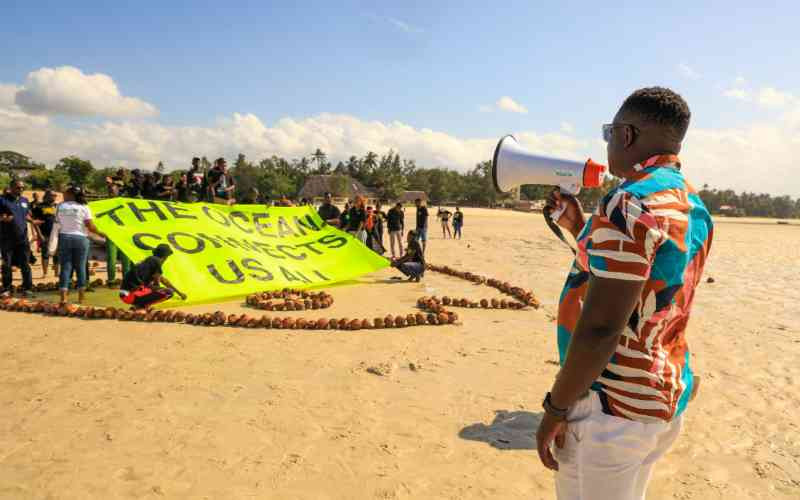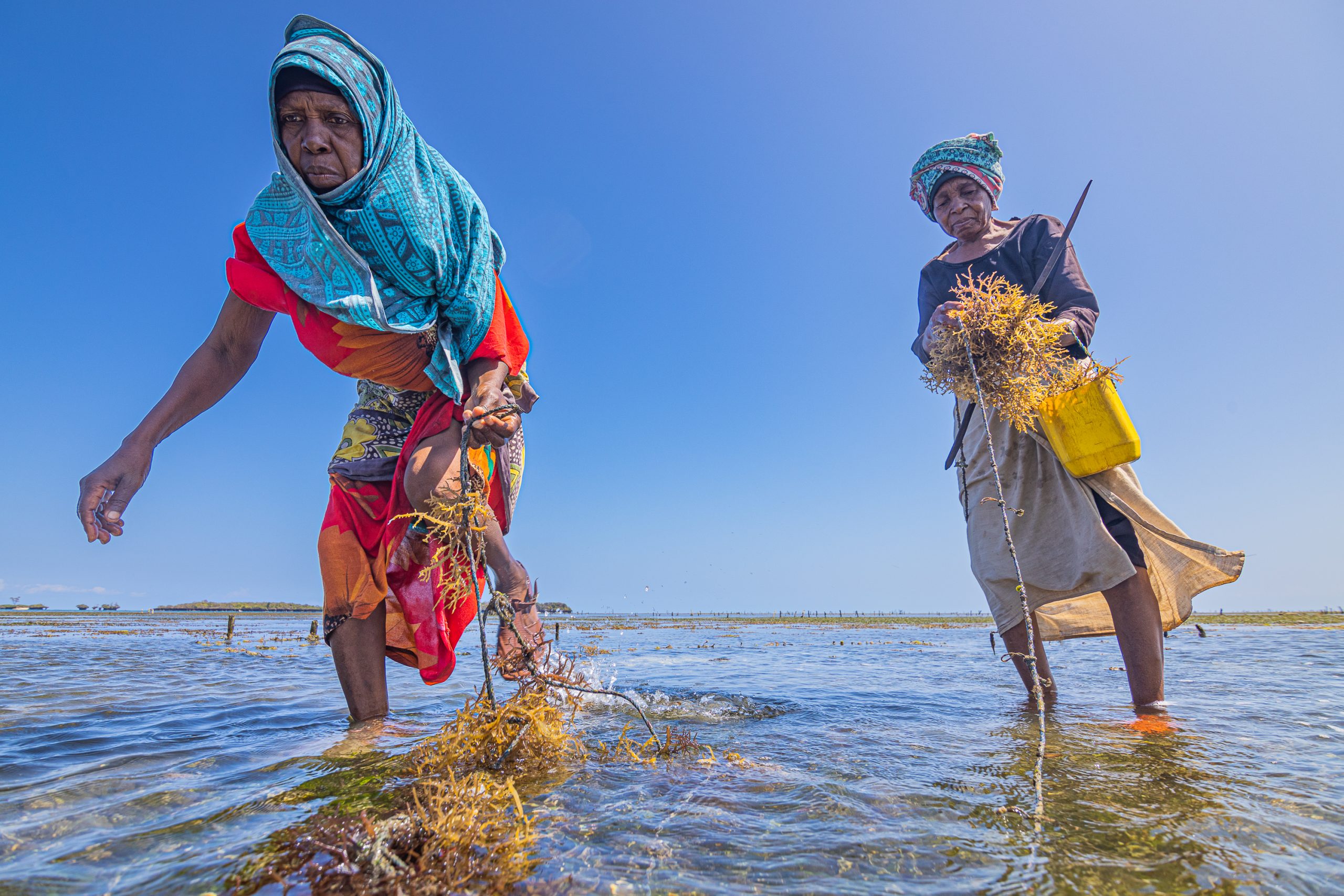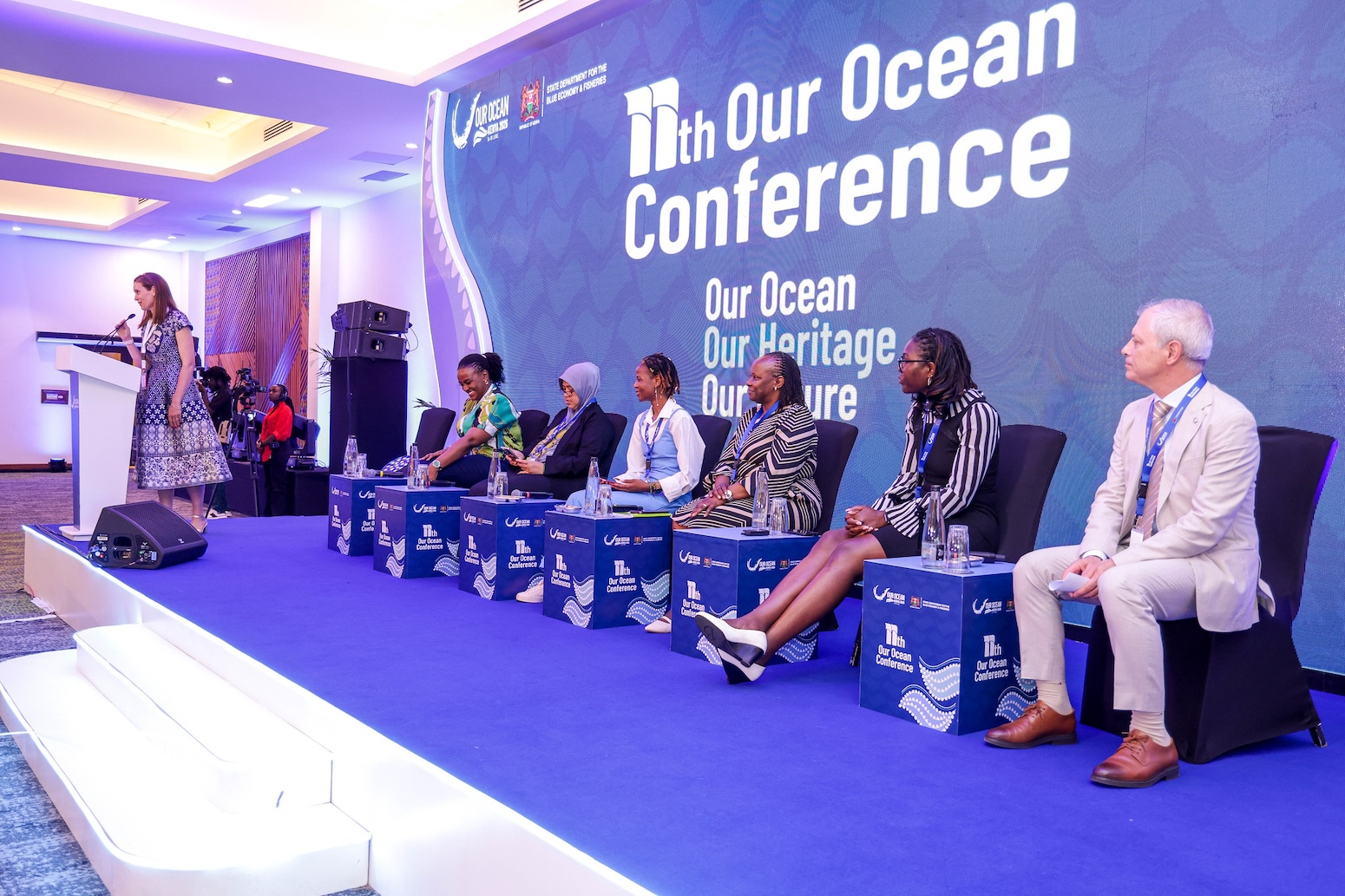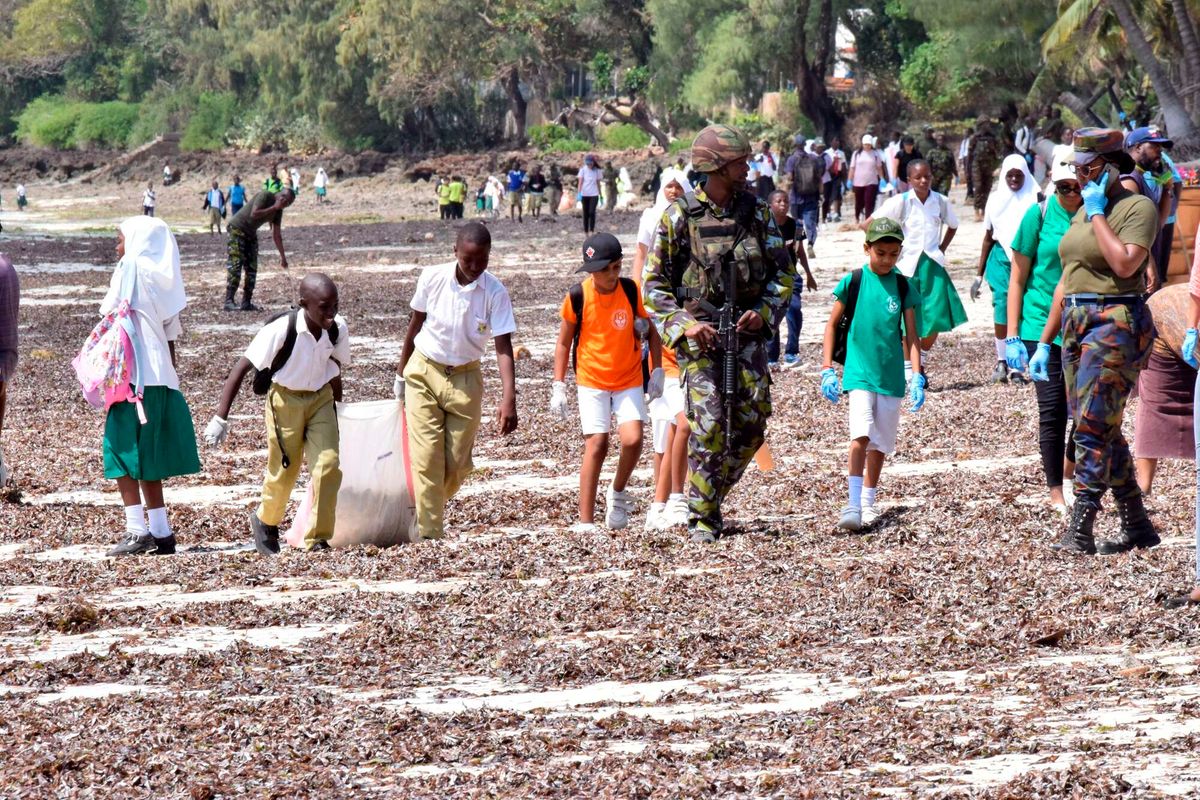
Kenya formally launched the National Plastic Action Partnership (NPAP) in collaboration with the Global Plastic Action Partnership (GPAP), an initiative of the World Economic Forum, at the Our Ocean conference held in Mombasa.Plastic pollution is a pressing threat to Kenya’s marine ecosystems, fisheries and coastal livelihoods, driven by poor or non-existent waste management on land, along the coast and at sea.The initiative seeks to accelerate the transition to a circular plastics economy, which aims to reduce plastic pollution, valorize materials traditionally considered ‘waste’ and generate economic opportunities in the process.Mongabay spoke to Clemence Schmid, Director, Global Plastic Action Partnership (GPAP), on the sidelines of the Mombasa conference to understand what the collaborative effort is trying to achieve in Kenya.
During the 11th Our Ocean Conference held in the coastal city of Mombasa, the Kenyan government, together with the World Economic Forum’s Global Plastic Action Partnership (GPAP) and UNDP Kenya, formally launched the Kenya National Plastic Action Partnership (NPAP Kenya).
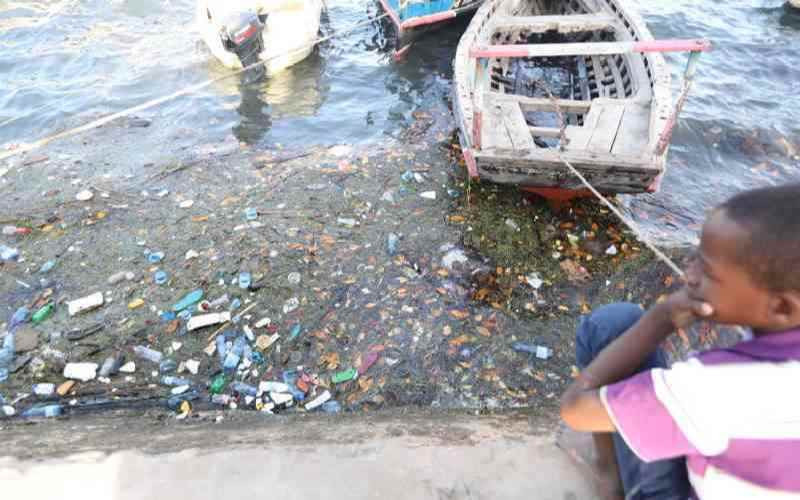
At least 14 million tons of plastic end up in the ocean every year making up 80% of all marine debris found in surface waters and deep-sea sediments.