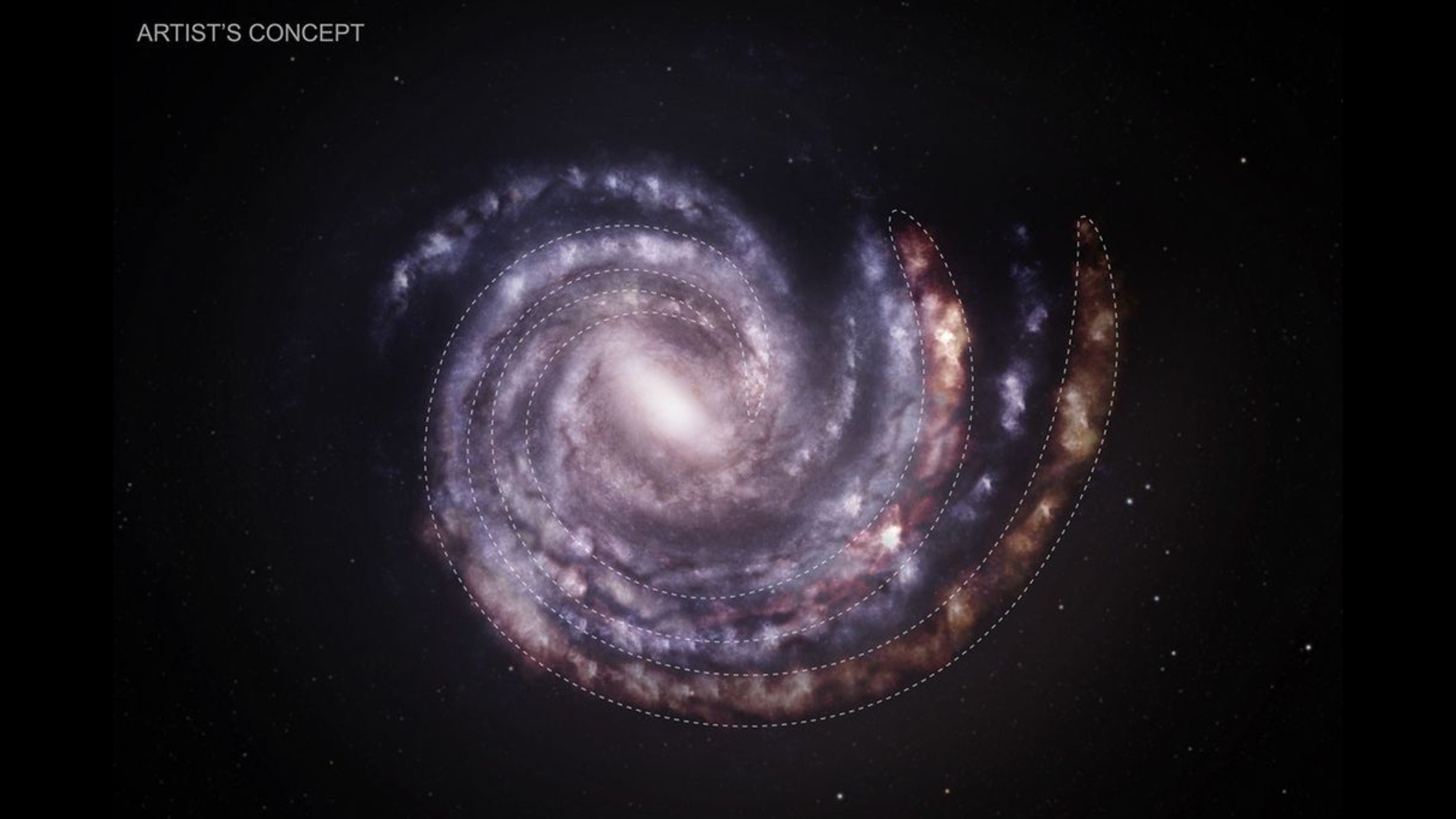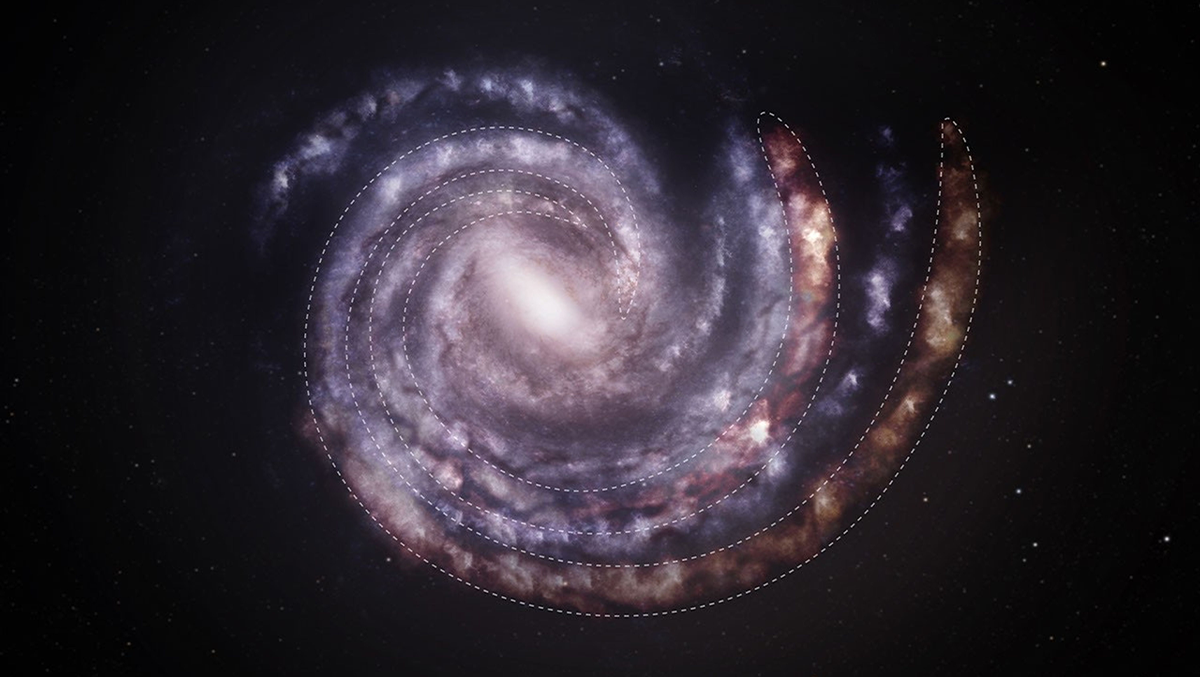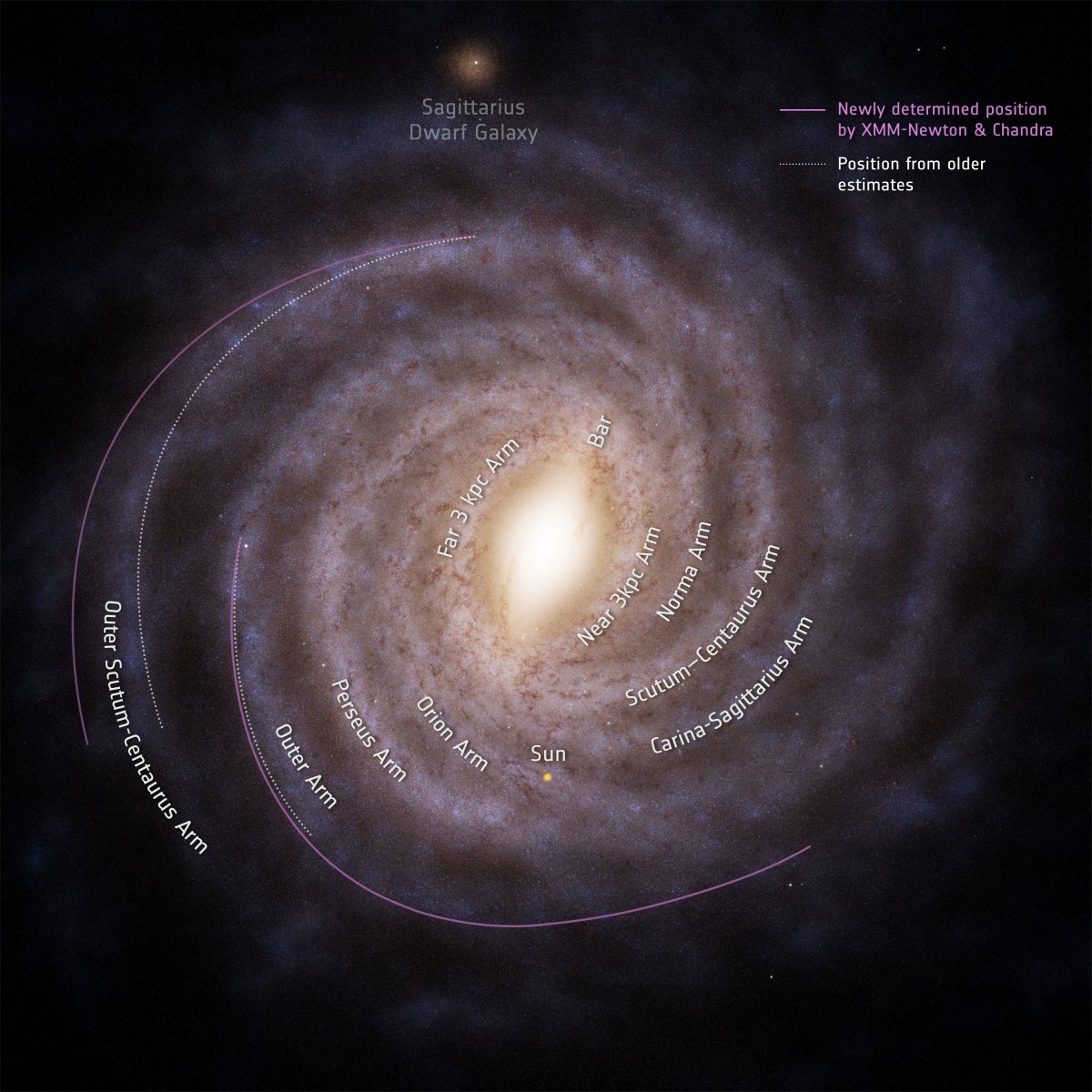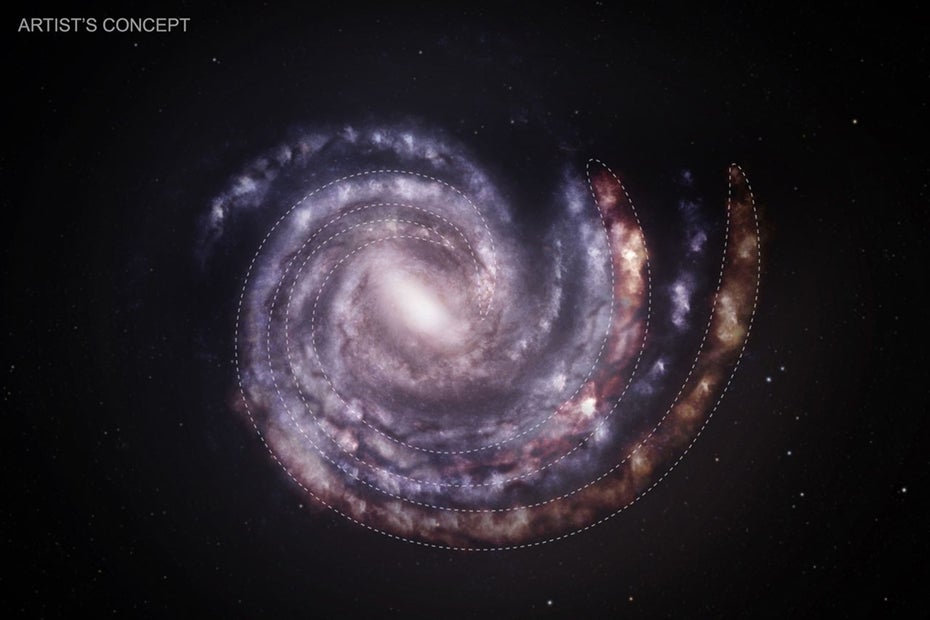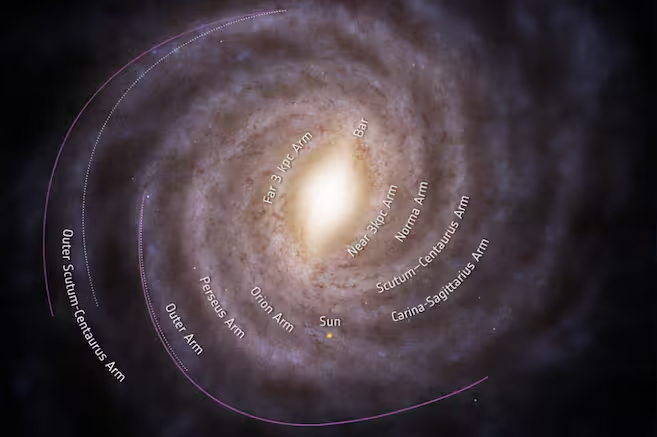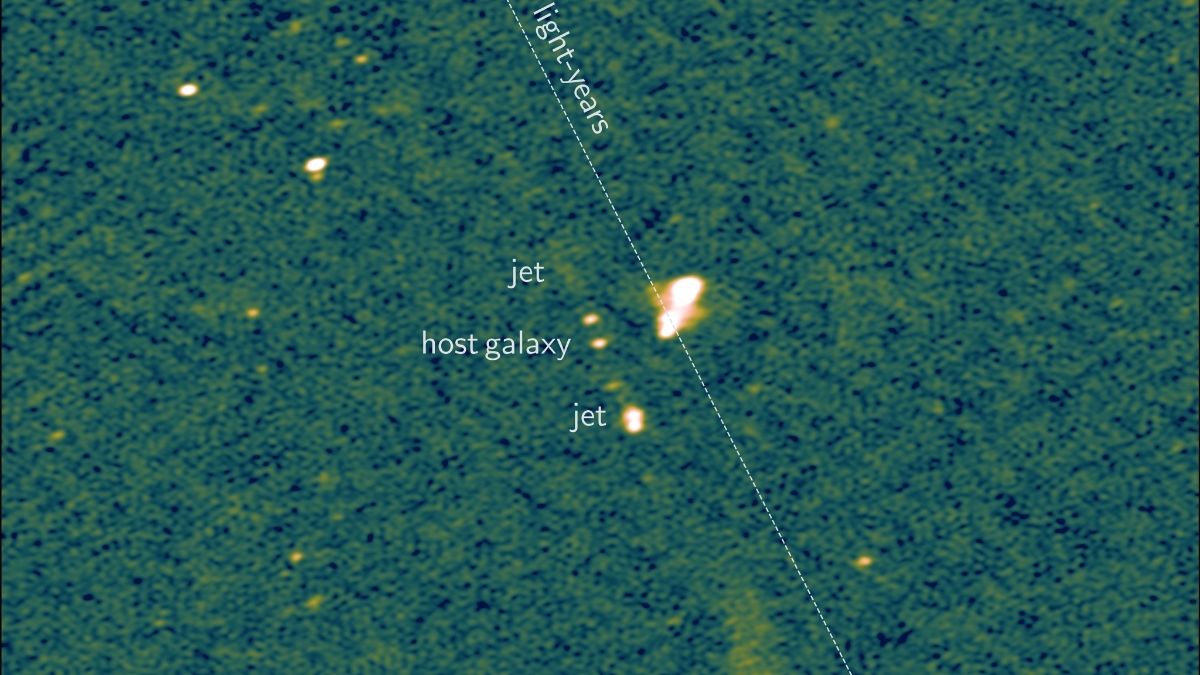
By observing light from the most powerful explosions in the universe bouncing off dust clouds in the Milky Way’s spiral arms, astronomers have found that our galaxy may extend farther than previously thought, potentially changing estimates of its mass and structure. Using data from NASA’s Chandra X-ray Observatory and the European Space Agency’s XMM-Newton, a team of researchers made precise measurements of distances to dust clouds in the Milky Way’s spiral arms. The results, published in the Astronomy & Astrophysics journal, revealed that the outer spiral arms in the Milky Way are about 10% more distant than astronomers previously thought. “The differences are small, but any revision of these distances is important because they are so fundamental for understanding our galaxy,” Ilaria Fornasiero, a PhD student in a joint program between Scuola Universitaria Superiore IUSS Pavia and the University of Trento in Italy and co-author of the new study, said in a statement.
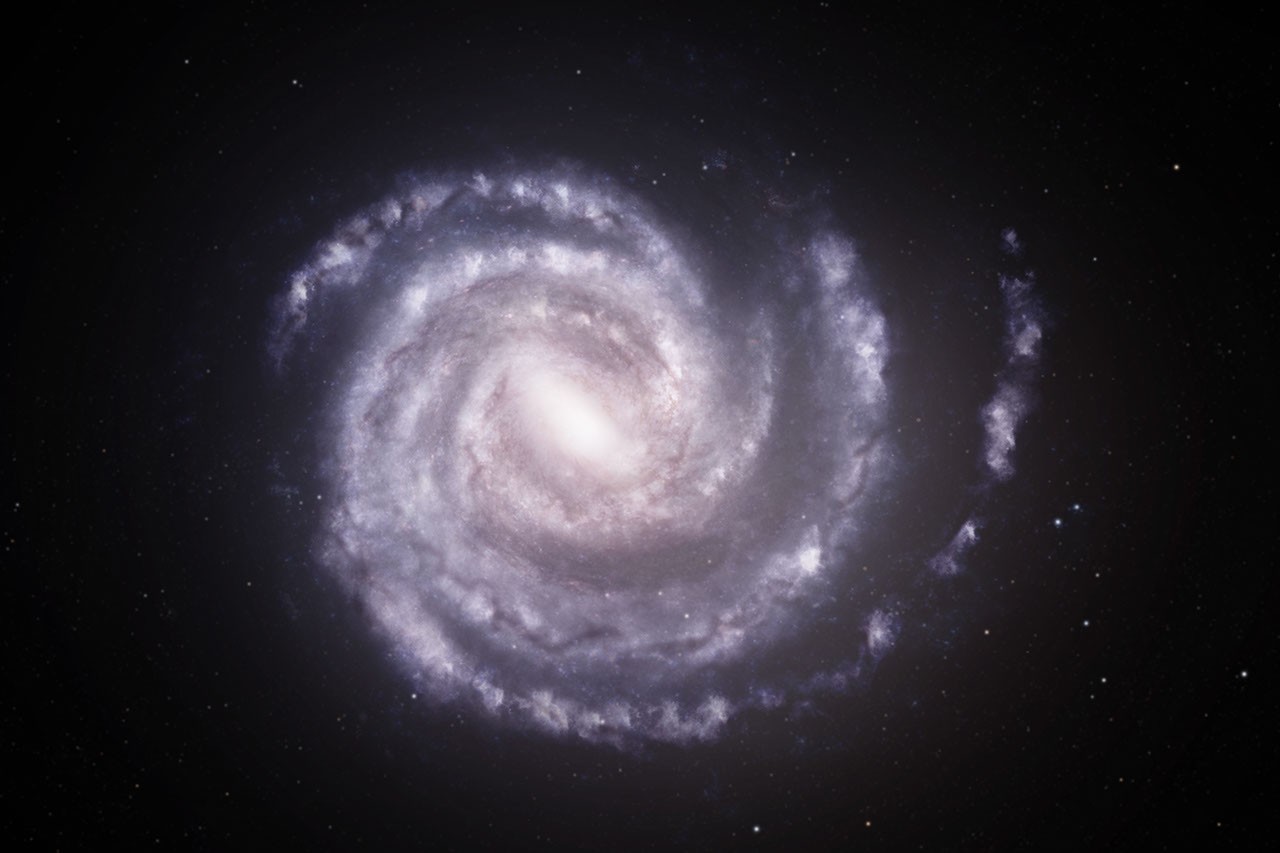
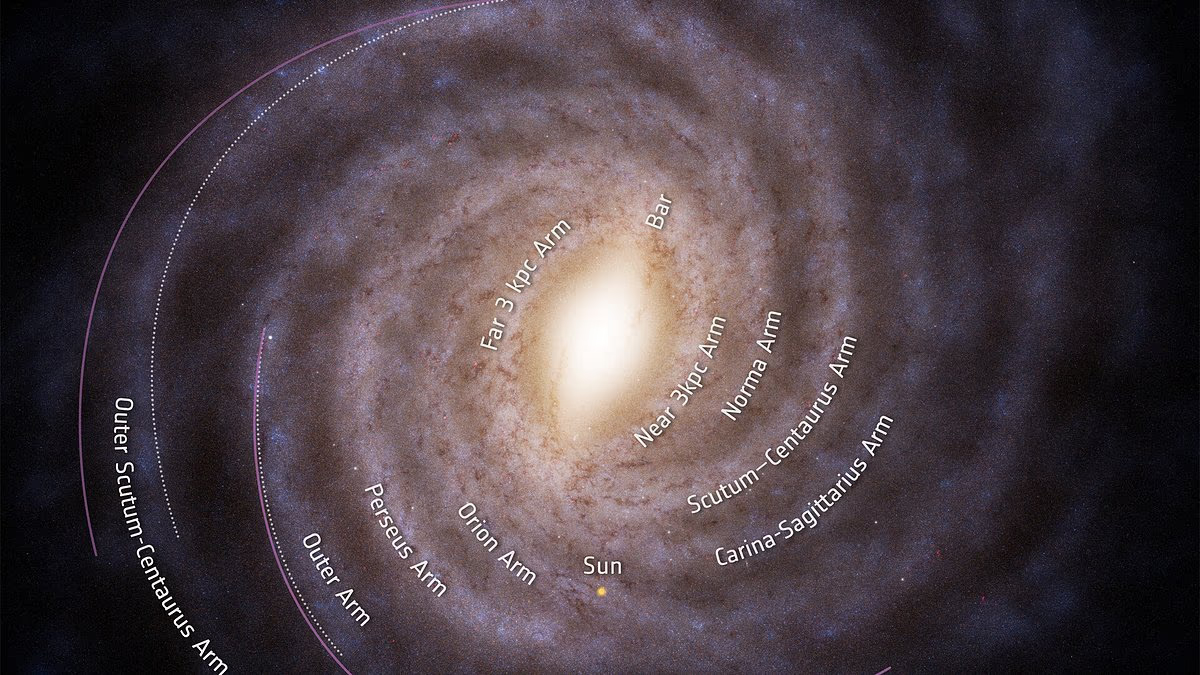
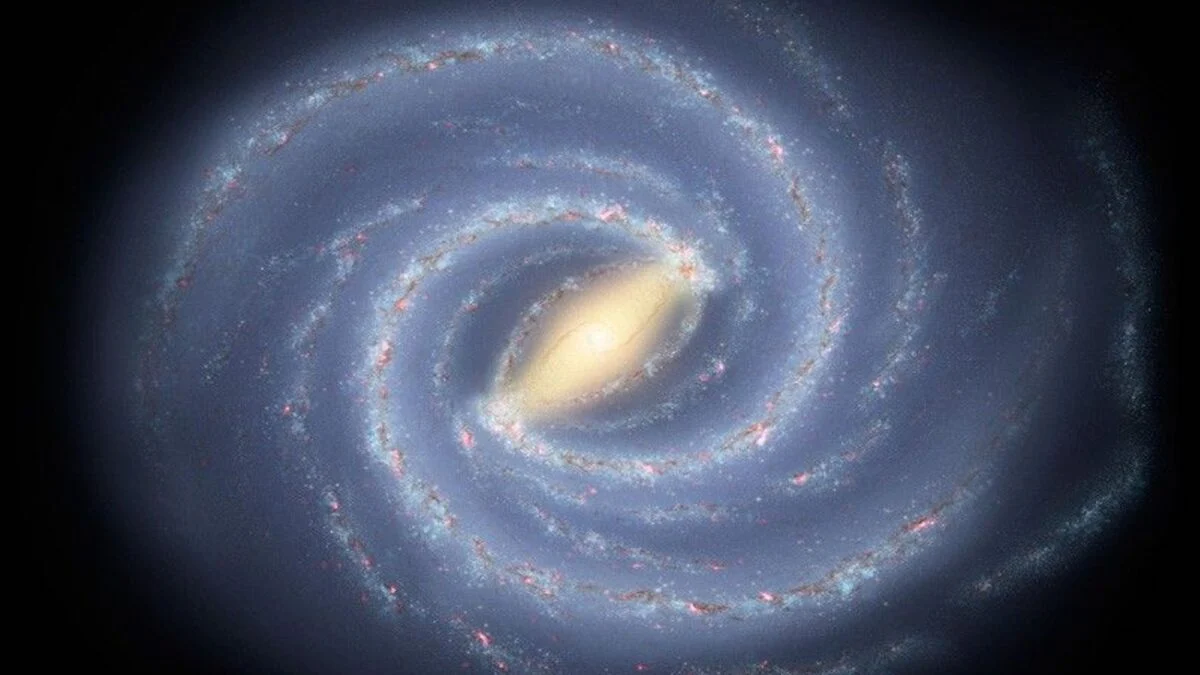
Arms stretched wide The Milky Way stretches about 100,000 light-years wide, containing 100 to 400 billion stars. Its spiral structure is dominated by whimsical arms wrapping off the ends of a central bar of stars at its heart. Our solar system is located on one of the galaxy’s spiral arms about halfway from the center.