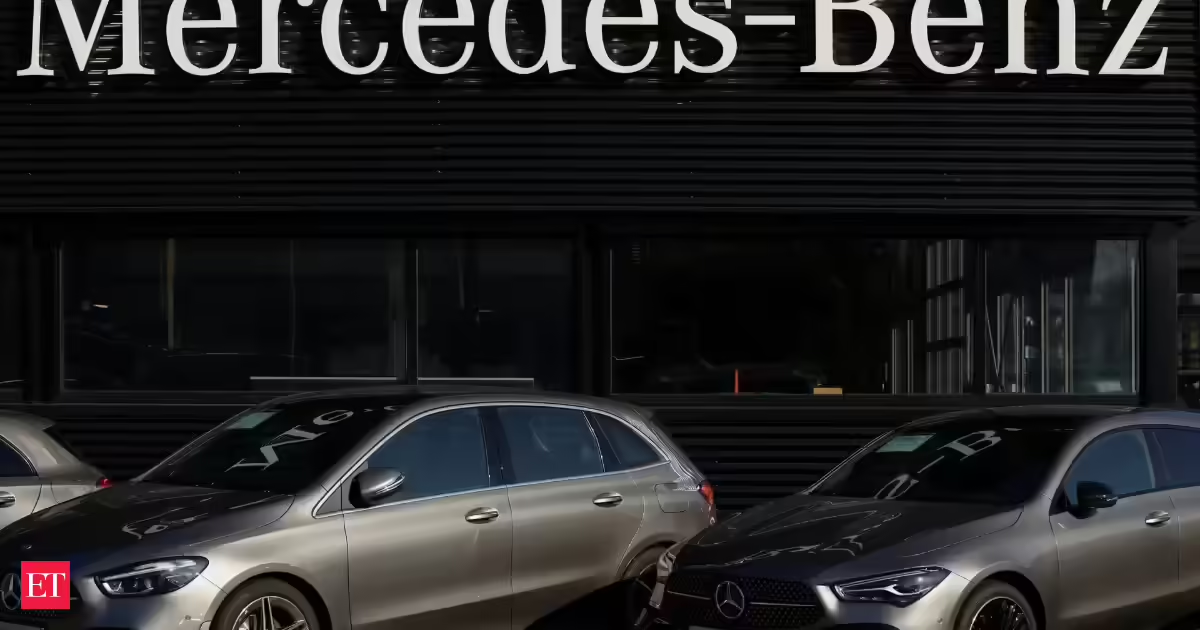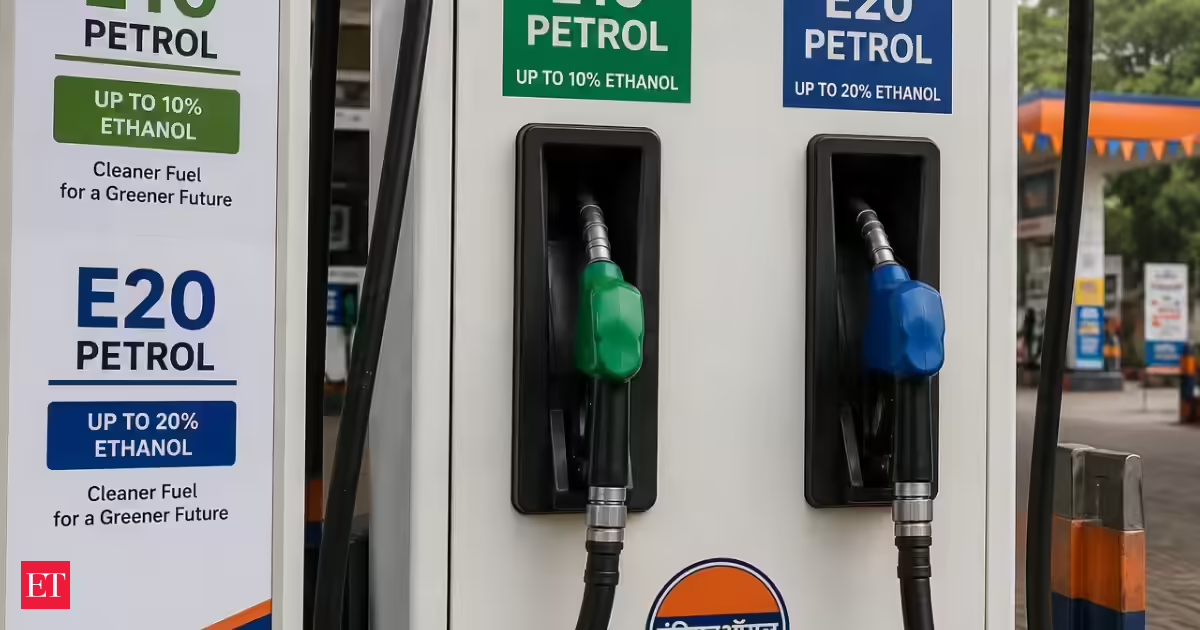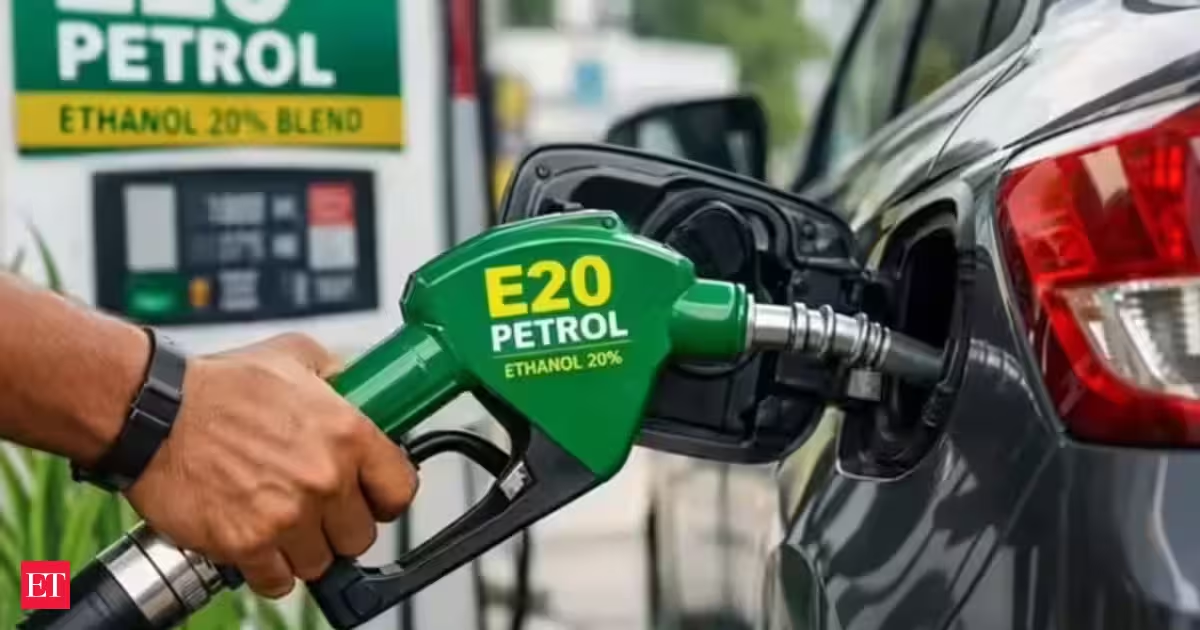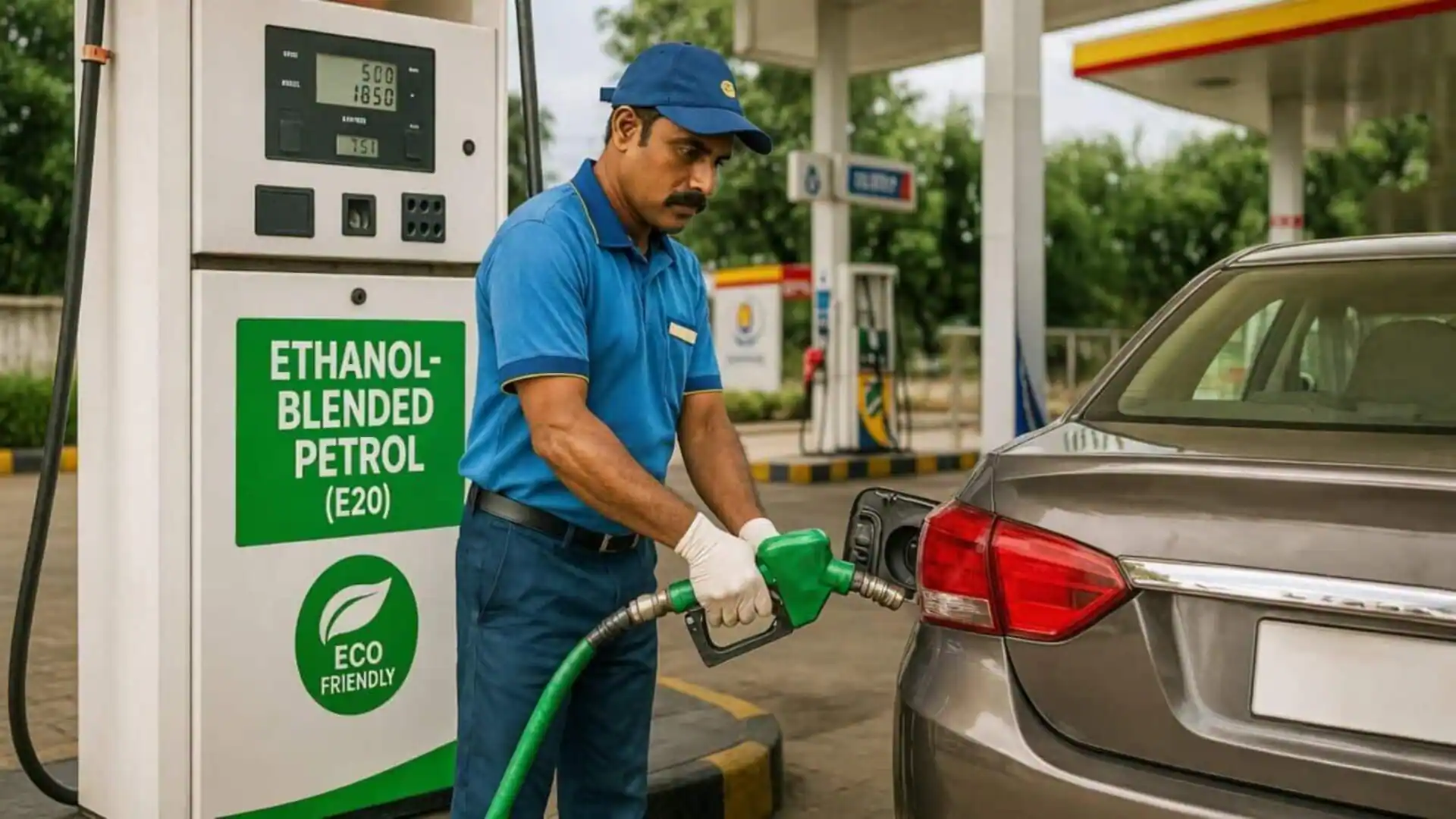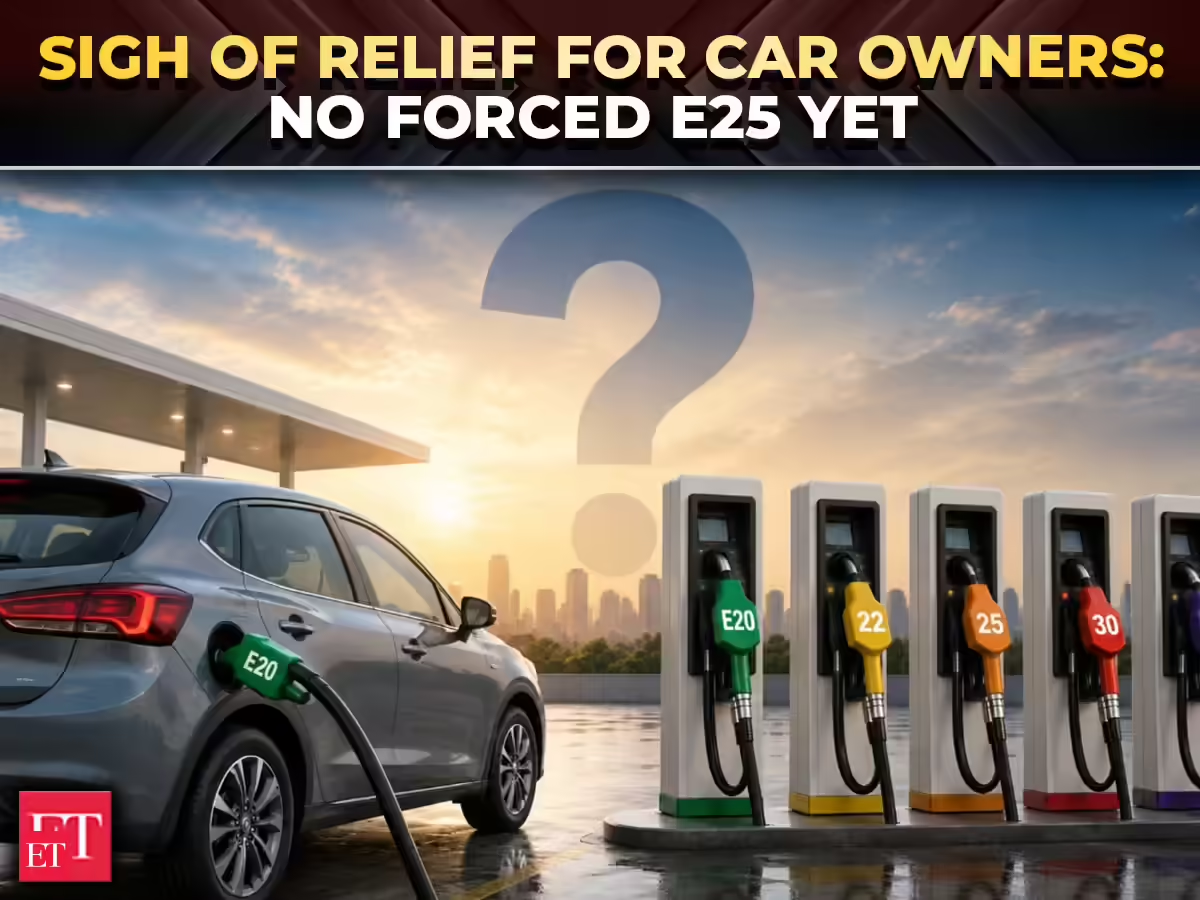
As India recalibrates its proposed transition to E25 petrol after concerns over vehicle compatibility during the E20 rollout, Mercedes-Benz India Managing Director and CEO Santosh Iyer believes policymakers must now focus on managing the country’s existing vehicle fleet alongside introducing higher ethanol blends.India’s proposed transition to E25 petrol has entered a new phase after the government opted for a slower, calibrated rollout following concerns over vehicle compatibility during the E20 transition. The comments come as Mercedes-Benz India enters the second half from a position of strength. The company reported a record first-half retail performance of 9,768 vehicles, is carrying a pending order book of around 2,000 vehicles—equivalent to about one-fifth of its H1 sales—and is preparing to implement a 1-2 per cent price increase to offset currency volatility and rising input costs. Against this backdrop, businessline spoke to Mercedes-Benz India Managing Director and CEO Santosh Iyer. Edited excerpts:The government has slowed the proposed rollout of E25 after concerns emerged during the E20 transition. Has India’s challenge now shifted from engineering new vehicles to managing the country’s existing vehicle fleet?There is a lot of anxiety among customers, but in our case there is no reason to worry. Our cars are compliant, our latest products are already E25-ready and our new vehicles meet the required emission standards.The bigger question is what happens to the older set of vehicles already on the road. If the government has the aspiration for higher ethanol blending, it should also create a roadmap that allows different fuel grades so customers can choose fuel suited to their vehicles. Different fuel grades could also have different pricing structures. As manufacturers, we will comply with whatever guidelines are notified, provided we are given reasonable timelines.There is also concern around compatibility, replacement parts and fuel-system issues in older vehicles.We shouldn’t mix up new vehicles with older ones. If a vehicle has been certified to run on E20, it should run on E20 and remain fully covered under warranty. I don’t see any risk with new cars. The questions are more relevant for vehicles sold before the transition because technology differs across manufacturers. Some of the anxiety in the market is also being amplified by fuel adulteration rather than the fuel itself.Mercedes today offers petrol, diesel, plug-in hybrids and battery electric vehicles. Does that reinforce your view that customers, not mandates, should determine the pace of the powertrain transition?Absolutely. We have diesel, petrol, plug-in hybrids and EVs because we believe the customer should decide the pace of transformation. If customers want EVs, we are ready. The new CLA was sold out immediately after launch and almost 25 per cent of our top-end portfolio is already electric, showing customers are willing to shift when the right products are available.At the same time, government policy influences adoption. In Telangana, our EV share was around 10 per cent before incentives were withdrawn. It dropped to 2-3 per cent and returned to 15-20 per cent after the benefits were restored. Ultimately, the market should decide.India’s luxury car market continues to grow, although at a slower pace than the overall passenger vehicle industry. What structural changes are you seeing?The luxury market is likely to grow around 10 per cent this year, taking the industry from around 52,000-53,000 vehicles last year to about 56,000-57,000 vehicles. Whether it crosses 60,000 units remains uncertain.The market is also becoming more segmented. Around 30 per cent is now in the entry segment below ₹55 lakh, while almost 60 per cent lies in the core segment between ₹55 lakh and ₹1.4 crore. Mercedes derives only around 12-15 per cent of its volumes from the entry segment because we are focused on the core and top-end markets.Discounting has returned in parts of the luxury market. How do you view the trend?The heavy discounting is largely confined to the ₹50-55 lakh entry-luxury segment, where customers are more price sensitive. We have consciously chosen not to participate aggressively because our strategy is based on value rather than volume.We have already retailed 9,768 vehicles in the first half, almost 28 per cent of them from our top-end portfolio, and continue to carry an order book of around 2,000 vehicles. That gives us confidence that customers continue to value the product and the brand rather than simply the price.Having seen record first half of current year, How do you see the second half of the year?We remain cautiously optimistic because consumer demand continues to be healthy and our product launches have been well received. The biggest challenge is currency volatility. We had hoped to revise prices from July 1, but delayed the decision when the euro softened to around 106. It has since moved back to around 109, which means we will have to take a 1-2 per cent price increase, most likely in phases during July or early August. Input costs are also rising.Even so, we continue to expect growth for both the industry and Mercedes-Benz India because the underlying demand remains strong.
If India wants higher Ethanol blending, it needs a roadmap for older cars: Mercedes-Benz India MD Santosh Iyer
Mercedes-Benz India’s MD emphasizes the need for a roadmap to support ethanol blending while managing older vehicle compatibility.
826 words~4 min read