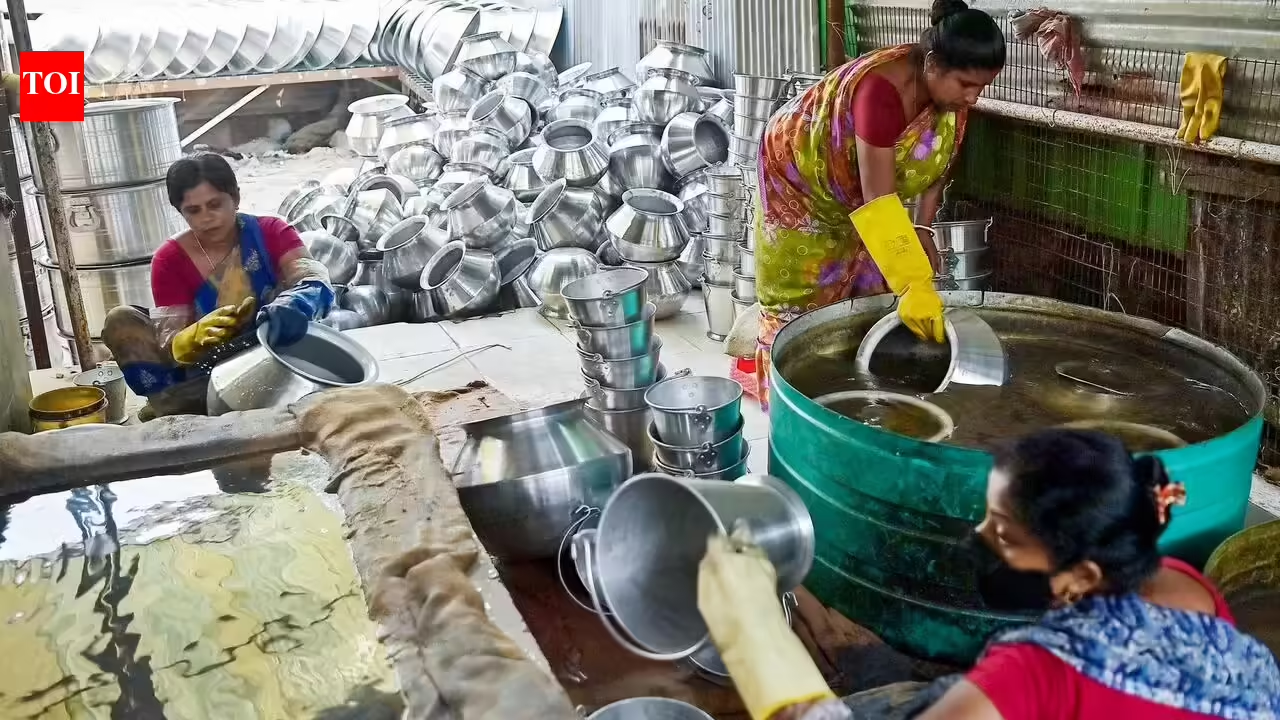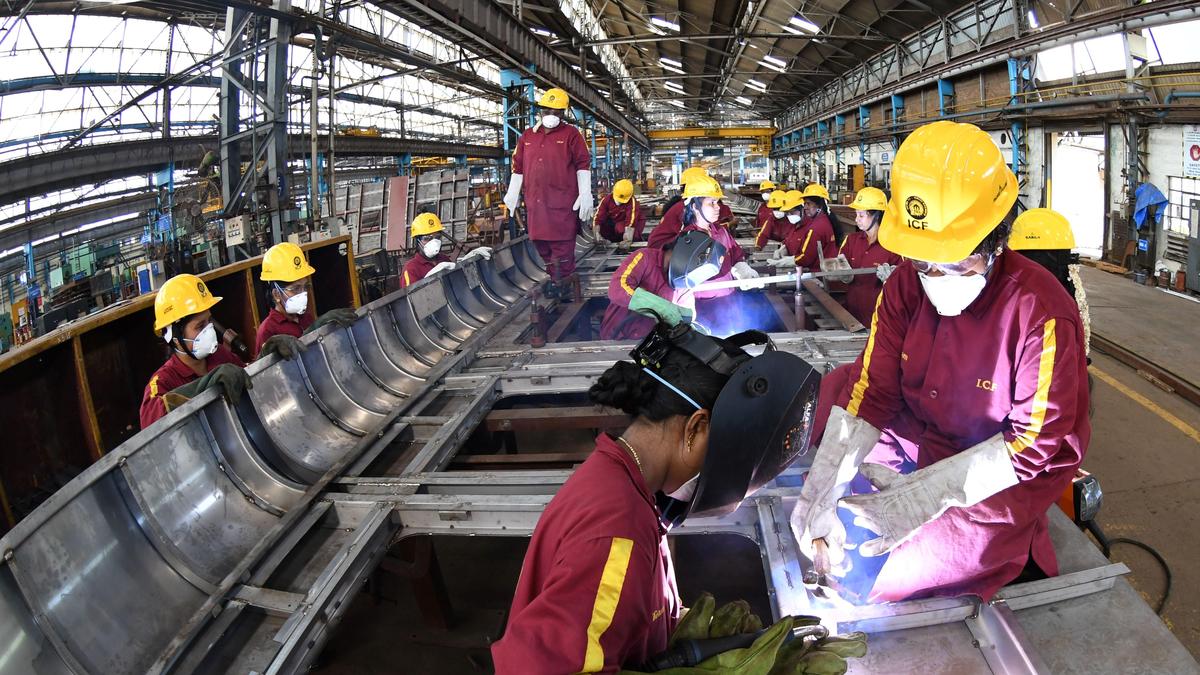
India's journey towards becoming a developed economy cannot be achieved unless women entrepreneurs become equal participants in enterprise creation, employment generation and economic growth. Across villages, towns and cities, women are building businesses in manufacturing, retail trade, services, agriculture and allied activities. Many of them are also solving local problems through practical innovation, whether in production, services, climate-conscious practices, digital adoption or community-based business models, despite facing barriers of finance, mobility, markets, family permission, responsibilities and social expectations. In our experience, I have seen that when women receive the right combination of entrepreneurship training, mentoring, market access, formal finance, and prevention of biased approach being women, they are able to build resilient enterprise, create job and strengthen their local economies. Working women (Pixabay/Representative)Supporting women entrepreneurs is, therefore, not merely a social responsibility but also a measure for supplementing family income besides exploring their basic inbuilt talent. It is a serious economic strategy for India’s next phase of growth.The numbers make the case clear. As of early 2026, more than 3.39 crore women-led enterprises were registered on the Udyam portal, accounting for nearly 38% of all registered MSMEs in the country. BYST-supported women entrepreneurs have built resilient businesses. Real examples include Priyanka Chavan of Satara, who expanded a small salon into a beauty academy with ₹60 lakh annual turnover and trains women professionals, and Balimidi Aruna of Andhra Pradesh, who built a traditional sweets enterprise employing 15 women after mentoring and finance support. These stories demonstrate how mentoring, innovation, and access to finance translate into employment generation and sustainable enterprise growth. BYST has supported over 51,000 entrepreneurs, including 35% women, generating over 25 lakh employment opportunities.Yet, scale has not automatically translated into equal access to growth capital. India's MSME sector continues to face an addressable credit gap of around ₹30 lakh crore, and women-owned MSMEs remain among the most underserved. Formal credit to women-led MSMEs continues to account for only a small share of overall MSME lending, even though women entrepreneurs represent a large and growing segment of India’s enterprise base. This is not merely a financing gap; it is a growth gap. If women entrepreneurs are supported with timely credit, mentoring, market access and business guidance, they can expand faster, create more jobs and strengthen local economies.National data shows the scale of the opportunity. Our own survey shows how the bank finance challenge is experienced by women entrepreneurs on the ground. Our study, conducted among 450 women entrepreneurs across Delhi-NCR, Chennai and Pune, found that 85% faced difficulties in obtaining loans from public sector banks, while 60% struggled to access critical financial services, such as bank loans, savings accounts, insurance, payment services, and credit or working-capital facilities. These findings underline an important reality: The challenge is often not the absence of entrepreneurial ambition or business viability, but the absence of accessible financial resources. Many women entrepreneurs continue to face documentation hurdles, limited collateral ownership, low financial awareness and hesitation within formal lending systems. Addressing these barriers must be a national priority if India wants women-led enterprises to move from survival to scale. This is where mentoring becomes critical over the past three decades, we have seen that access to finance alone is not enough Entrepreneurs they also need steady guidance to understand business planning, compliance, customer acquisition, cash-flow management and growth. Since its inception in 1992, BYST has counselled over one million young people, helped establish more than 18,000 enterprises, facilitated nearly ₹ 980 crore in collateral-free bank loans, and enabled entrepreneurs to create around 5 lakh jobs while generating approximately ₹ 10,000 crore in economic value. For women entrepreneurs, this support ecosystem is especially important. BYST has created more than 6500 women entrepreneurs which forms more than 35% share. Their average loan size of ₹5 lakhs with six times sales turnover and ten times job creations. It has proved that the any new business enterprise can easily survive under the able guidance of an experienced mentor from diversified field as the success rate 99% approx. Many are first-generation business owners who may have the ability and ambition to grow, but lack access to networks, market exposure and confidence-building mentorship. When finance is combined with sustained mentoring, women-led enterprises are better prepared to move from survival to scale.Women entrepreneurs also need support beyond credit as digital literacy and technology use, financial management, market linkages, branding, and e-commerce adoption are becoming essential for business competitiveness. Many women-owned enterprises remain concentrated in micro-scale operations not because of lack of ambition but because they have limited access to professional networks and growth opportunities This is where public-private partnerships can play an important role. When skill development, mentoring, digital readiness and market access are brought together in a structured way, women entrepreneurs are better equipped to build sustainable businesses and create employment within their communities.We have also seen that when women build successful businesses, it helps more than just the business E.g. families earn a steadier income, children get better education, and people can plan with more confidence. In rural India, women-led micro-enterprises can also create livelihood opportunities within communities and reduce the pressure on migration to urban areas in search of work. This makes women’s entrepreneurship an important pathway for balanced regional growth. When women entrepreneurs are supported at the last mile, economic growth does not remain concentrated in large cities and reduces income inequalities. and begin to reach families, communities and local economies that are often outside the mainstream growth story.The policy ecosystem has become more supportive over the years through initiatives such as Udyam Registration, PSB 59 Minutes Loan Portal, Mudra loans, Startup India, Stand-Up India, ONDC e-marketplace and India’s Digital Public Infrastructure. These have helped bring many entrepreneurs closer to formal systems however, the next phase must focus on women entrepreneurs to use these systems to grow their enterprises. Access to finance has to move beyond asset ownership and loan eligibility which require more flexible credit assessment without any collateral security requirement, mentoring-linked lending models, and stronger partnerships between banks, fintechs, development institutions and civil society organisations. Women often have business discipline, repayment intent, community trust and the ability to scale with the right guidance, something leveraged decades back by SHGs/ JLGs. India stands at an important inflection point as our demographic strength, digital infrastructure and entrepreneurial aspiration can together create a more competitive and inclusive economy. Women entrepreneurs must be an integral part of this transformation. Every woman who builds an enterprise creates more than a business livelihood, strengthens her family’s economic security, becomes a role model for others and contributes to her local community. (The views expressed are personal)This article is authored by Lakshmi Venkataraman Venkatesan, founding and managing trustee, Bharatiya Yuva Shakti Trust.
Empowered women entrepreneurs can stimulate growth
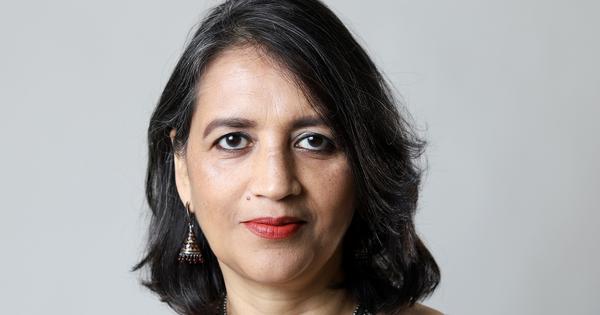
This article is authored by Lakshmi Venkataraman Venkatesan, founding and managing trustee, Bharatiya Yuva Shakti Trust.
1,116 words~5 min read