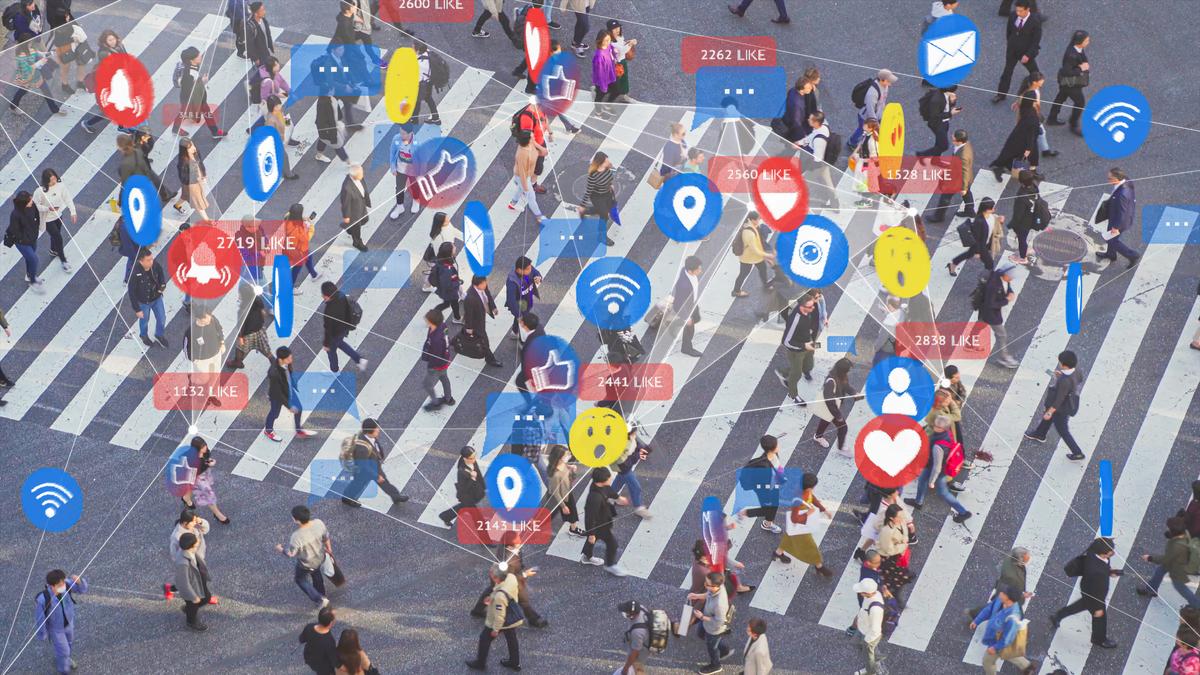
Yes, we’ve all heard the warnings: social media is making us too dependent on the virtual world, we share too much, and privacy is becoming a thing of the past. If you’re expecting another sermon on the dangers of the internet, this isn’t it.Instead, let’s look at the mechanics. Using practical facts, recent studies, and a bit of data science, let’s find out how social media turns our digital footprints into surprisingly accurate predictions.Do they hear you?You casually mention wanting new sneakers to a friend, and a few hours later, your feed is full of shoe ads. Coincidence? Is your phone secretly recording your conversations?Probably not.The truth is both less creepy and far more impressive: social media networks don’t need to listen to your voice because your digital habits already tell them a surprising amount about you. Every reel you watch, every post you like, every account you follow, and even the exact number of seconds you pause while scrolling leaves behind a tiny digital clue.On their own, these clues seem meaningless. But when an algorithm pieces millions of them together, they reveal distinct patterns. Because humans are creatures of habit, algorithms don’t have to read our thoughts — they simply learn our patterns and make educated guesses based on our digital footprints.Interconnected webYour digital footprints don’t stay in one app.Think about how you navigate the internet. You likely use a single Google account to sign into YouTube, Gmail, Maps and Chrome. Similarly, you might use a social media profile to quickly log into mobile games or shopping apps.This creates a hidden bridge between entirely different platforms. For example, if you spend an afternoon searching for trekking shoes on Google, watch a hiking vlog on YouTube, and then open Instagram, you may suddenly see ads for backpacks.The apps aren’t reading your mind. Instead, websites and apps often use common tracking tools, such as cookies and tracking pixels, to help advertising networks understand your interests across different services. The internet is much more interconnected than it appears. Location is another surprisingly powerful clue. You may never post where you are, but your phone’s GPS, IP address and even nearby Wi-Fi networks can often reveal your city, neighbourhood, or the places you visit regularly.That’s why someone travelling to Goa might suddenly start seeing ads for beach resorts, water sports, or nearby restaurants. To an algorithm, your location isn’t just a place on a map, it’s another hint about what you might be interested in right now.
Social media and how they know you
Discover how social media algorithms use your digital footprints to predict your interests and personalize your online experience.
1,005 words~5 min read