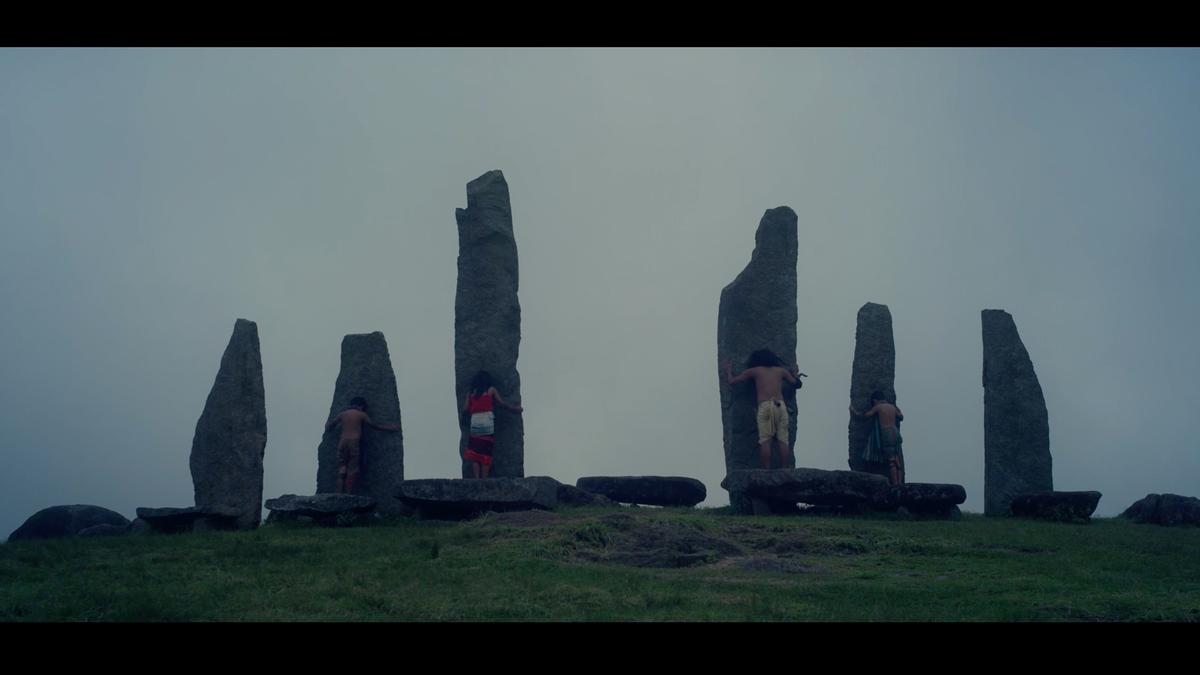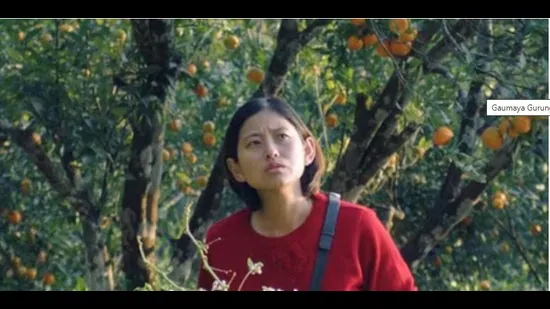
On watching the film in Siliguri, being struck by the momo metaphor, and ruminating on gender and ideas of belonging and home The difference between ‘house’ and ‘home’ has been broadcast into our consciousness by postcolonial theorists for nearly half a century now. But there’s no direction to be found from theorists about, say, the difference between ‘home’ and ‘homestay’. In northern Bengal, where I’ve spent most of my life, both words are used as if they were Bangla or Nepali words, like ‘delete’ and ‘Google’. Sixty-five years after A House for Mr Biswas, we have Tribeny Rai’s debut film, which could have had the title A Homestay for Bishnu. But it’s called Shape of Momo instead. The Nepali title is significantly different, neither translation nor shadow – it’s called Chhora Jesto, like a boy; the anger that might have propelled the film is held in the Nepali title. I register the missing article in the title – it must be deliberate, this eschewing of the specificity of the article, whether ‘the’ or ‘a’.Gaumaya Gurung in Shape of Momo (Film still)A scene from Shape of Momo (Film still)What exactly is this shape of a momo? There could be as many as a dozen, but in the Himalayan region, where the film is set, two are usually favoured – the half-moon, almost like a ‘C’, and the pouch-like shape, the stuffing inside sealed with an ‘O’. The difference between the open-mouthed – open-hearted and open-minded – shape of the crescent-shaped momo and the closed reservoir-shape of the pouch momo is recognisable to those who favour one over the other. I think it is this difference that gives Shape of Momo its energy and its politics. Both kinds of momo are shown in the film – being cooked, eaten, savoured, discussed, turned into jokes, and gradually into metaphor.Who are the people shaping and eating momo?Bishnu, a young girl, returns from Delhi to her village in Sikkim. In her house is her widowed mother and pregnant sister. The film begins with Bishnu reading a poem she’s written about her Sikkimese mountain village to a group of people that has gathered in her house. Phrases float about, but because it’s so early in the film, we’re not allowed to be sure, neither about author nor about intention. Watching it in a half-filled theatre in Siliguri, perhaps the only Bengali with an inbuilt Wordsworth identification kit among a largely Nepali audience, I strained to hold on to the words of Bishnu’s writing, now being read aloud for her neighbours and relatives. This could be Wordsworth writing a travel brochure – I tried to gag the thought. Bishnu confirmed my suspicion soon – she was laughing at herself, at the stock tourism phrases she had used.We – and her sister – will soon learn that Bishnu has come back for good. She’s left her job in Delhi, and is thinking of setting up a homestay in the village. A return-of-the-native arc. It is easy to identify the returning native. She is impatient with fear that comes from being a woman in such a setting, she is restless to change things, she protests, she argues, she cites rules, she protects her mother from being cheated by the men who work for her. When the local MLA’s son, who’s building a luxurious homestay nearby, tells her that smoking doesn’t suit women, she takes the cigarette from him and tells him that they can share a smoke. It might seem that she’s permanently cross with the world she’s returned to. Her mother uses an expression that sets up a binary – ‘this is not Delhi’.Things must remain as they always have – like the mountains. All Bishnu wants is to run her life and imagined homestay to a more gender-equal order. That resistance, sometimes childish, as when she carries a gas cylinder up the hill after a spat with a male house help, sometimes argumentative, as when bargaining for the right price for the oranges in her mother’s garden, sometimes quibbling, as with her mother and sister, sometimes theoretical, as when she briefly imagines her life with the man wooing her, the man who is building a homestay.Director Tribeny Rai (Courtesy SRFTI website)Unlike the perfectly shaped momos made by the women around her, the shape of Bishnu’s momo is amoebic, not modular. Neither ‘C’ nor ‘O’, it’s an in-between, shaped by the impress of the moment, not a readymade mould version of tradition. That is also perhaps why the article has been dropped from the title of the film. It is as if one must show obeisance to only one kind of history – like the wind gives leeward and windward sides to mountains, so it must on us, those who are raised by the hills; ‘Delhi’, too, leaves its impress on its residents. Bishnu’s inability to give the momo a shape like her mother’s or sister’s is undoubtedly a metaphor. The momo is the staple food of the exiled, the Tibetans who carried its form to their new country and changed the filling to suit the local palate and produce. Bishnu refuses to become that momo – adaptable, accommodative, still retaining its essential form.Naipaul’s Biswas succeeds in getting himself a house, whatever its deficiencies. (I can’t resist pointing out this coincidence – ‘Mohun’ and ‘Bishnu’ are both names or incarnations of Krishna; as if it’s Krishna’s fate to never find a home or homestay.) With everyone around her turning hostile, Bishnu decides that neither home nor homestay will keep her in her village anymore. The film began with an advertisement for the place she was returning to – it was a public rhetoric of seduction and entrancement. It ends with another piece of writing, this time a letter from Bishnu to her mother.The addressee has changed from the unknown stranger, to which the advert-like poem is meant to be a bait, to the mother who must make sense of her daughter’s departure from a handwritten letter. Arrival, homestay; departure, home-leaving. ‘Maya’, the most beautiful word for love among all the languages I know, with which Bishnu signs her letter, also means ‘illusion’.So many of us return to our home towns, only to be forced to leave again, disillusioned and homeless, shapeless.Sumana Roy is a poet and writer.
Shape of Momo: of home staying and leaving
On watching the film in Siliguri, being struck by the momo metaphor, and ruminating on gender and ideas of belonging and home
1,049 words~5 min read