“This road will lead all the way to Taipei,” the taxi driver told me as we drove across a huge bridge leaving the mainland of China’s southeastern Fujian province to head to the small island of Pingtan. The Beijing-Taipei Highway is the road’s official name, and despite ending at this small fishing island, on Chinese map apps, it shows the road crossing the sea all the way to Taiwan. In many ways, this bridge-that-doesn’t-exist serves as a metaphor for the island I was about to visit.
Unlike other islands along Fujian’s coast, Pingtan is more than just a few sleepy fishing villages. It is touted by China’s tourism industry as “the closest point to Taiwan” and is covered in monuments – like the bridge – to an eventual reunification with the self-administered island that China claims as part of its territory.
Pingtan saw a strong military presence through much of the Cold War era, when the Chinese Nationalists who fled to Taiwan sought to retake the mainland. When tensions thawed and the two sides began dialogue in the early 1990s, Pingtan rebranded itself as a key link in cross-strait business, much of which current geopolitics has brought to a halt.
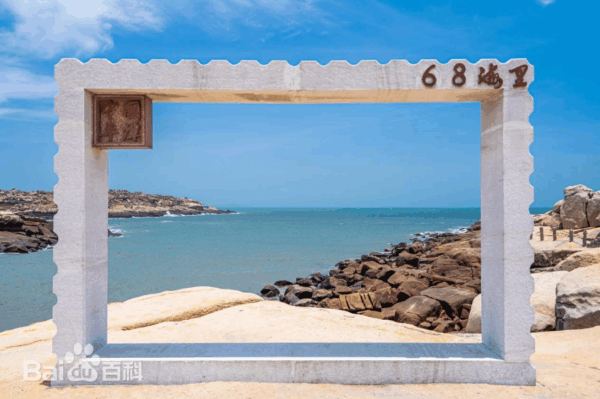
68 Nautical Miles
My first stop was the 68 Nautical Mile Scenic Spot. From here – as the name suggests – it’s only 68 nautical miles to Taiwan. Near the tourist spot’s busy parking lot is a large military barracks. Next to a sign forbidding tourists from photographing any military installations, another sign asked Tesla drivers not to park their vehicles too close – presumably due to a fear that American-made vehicles may be compromised.