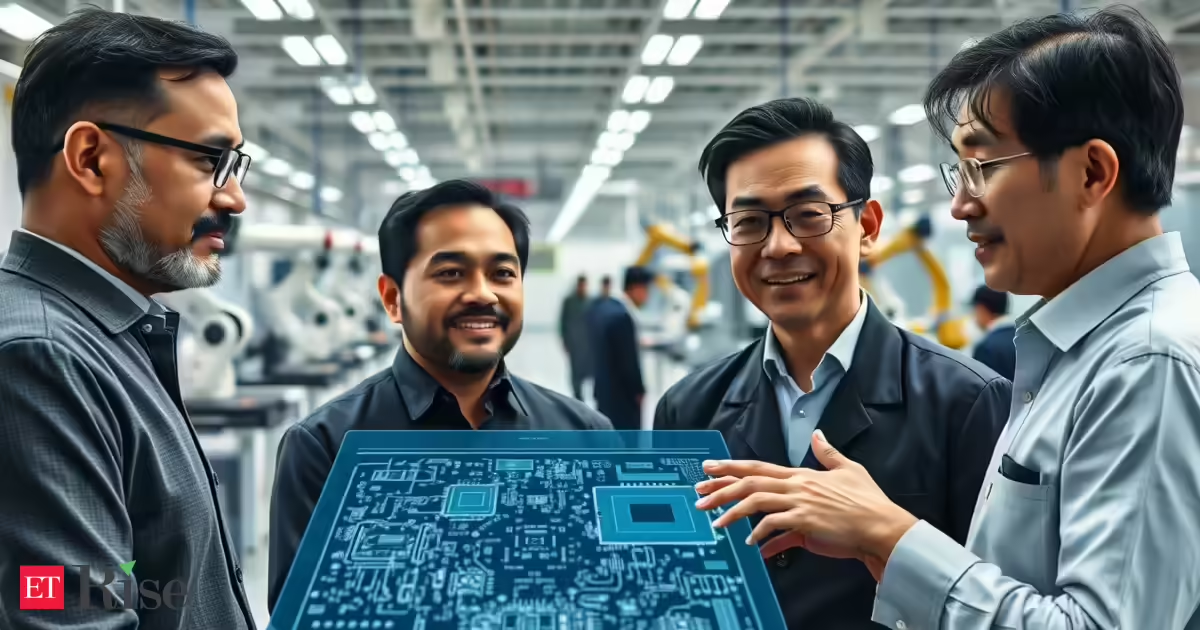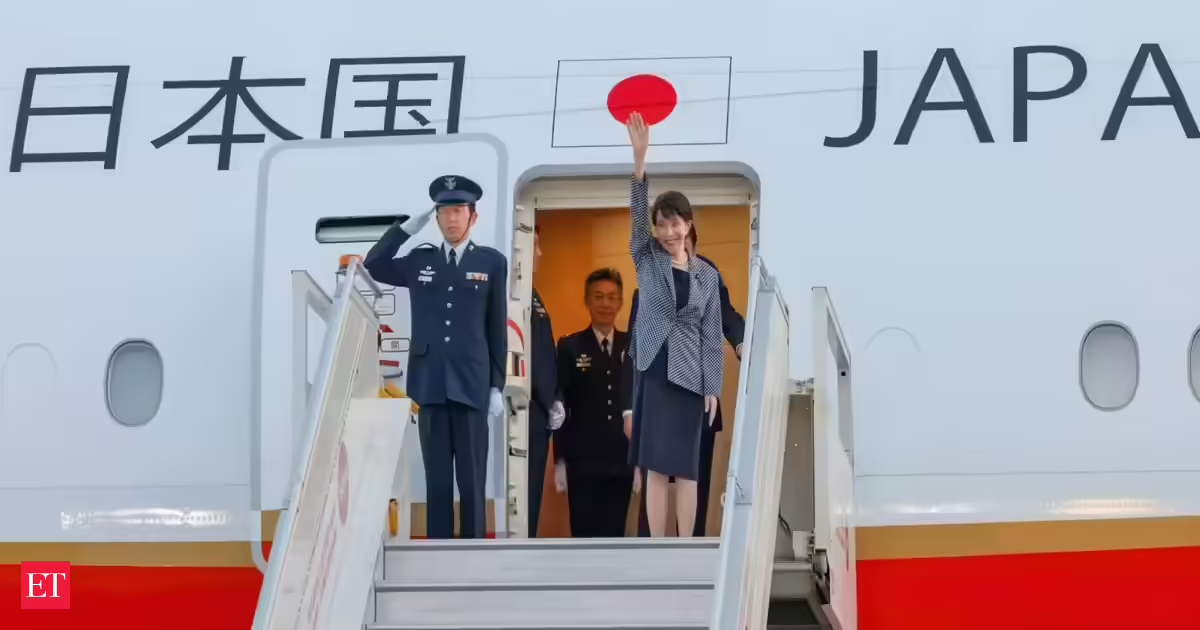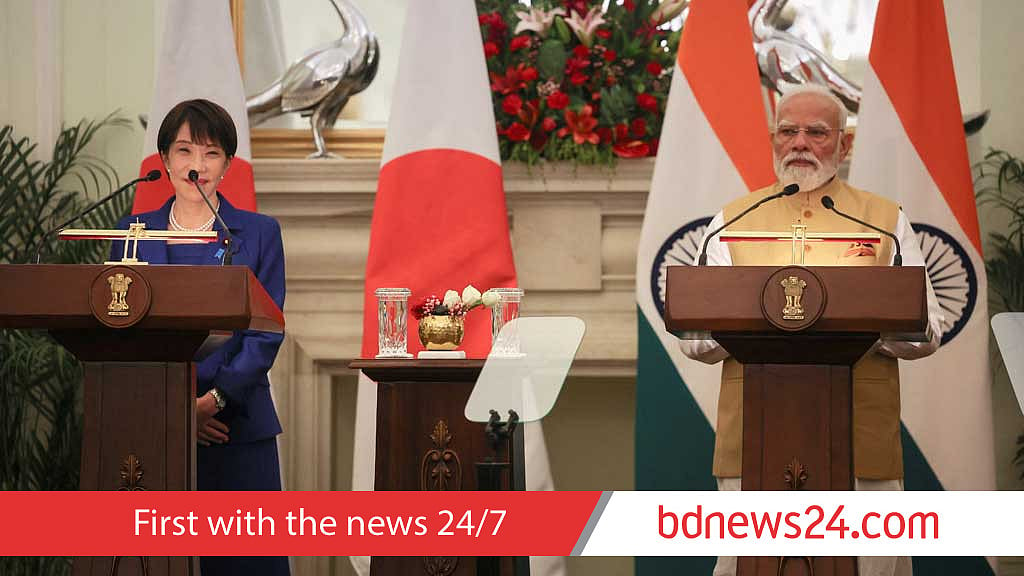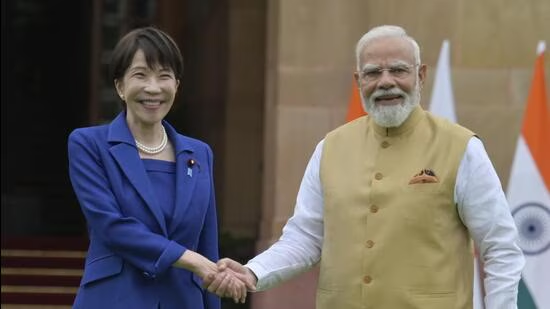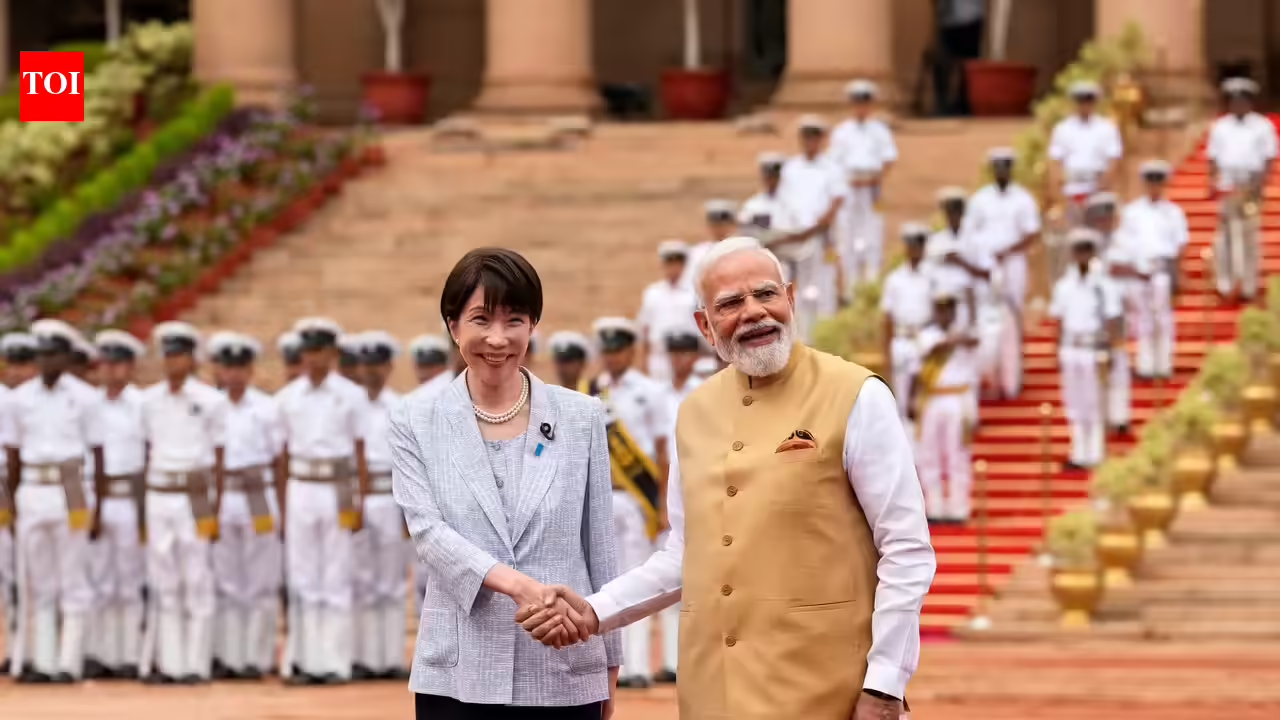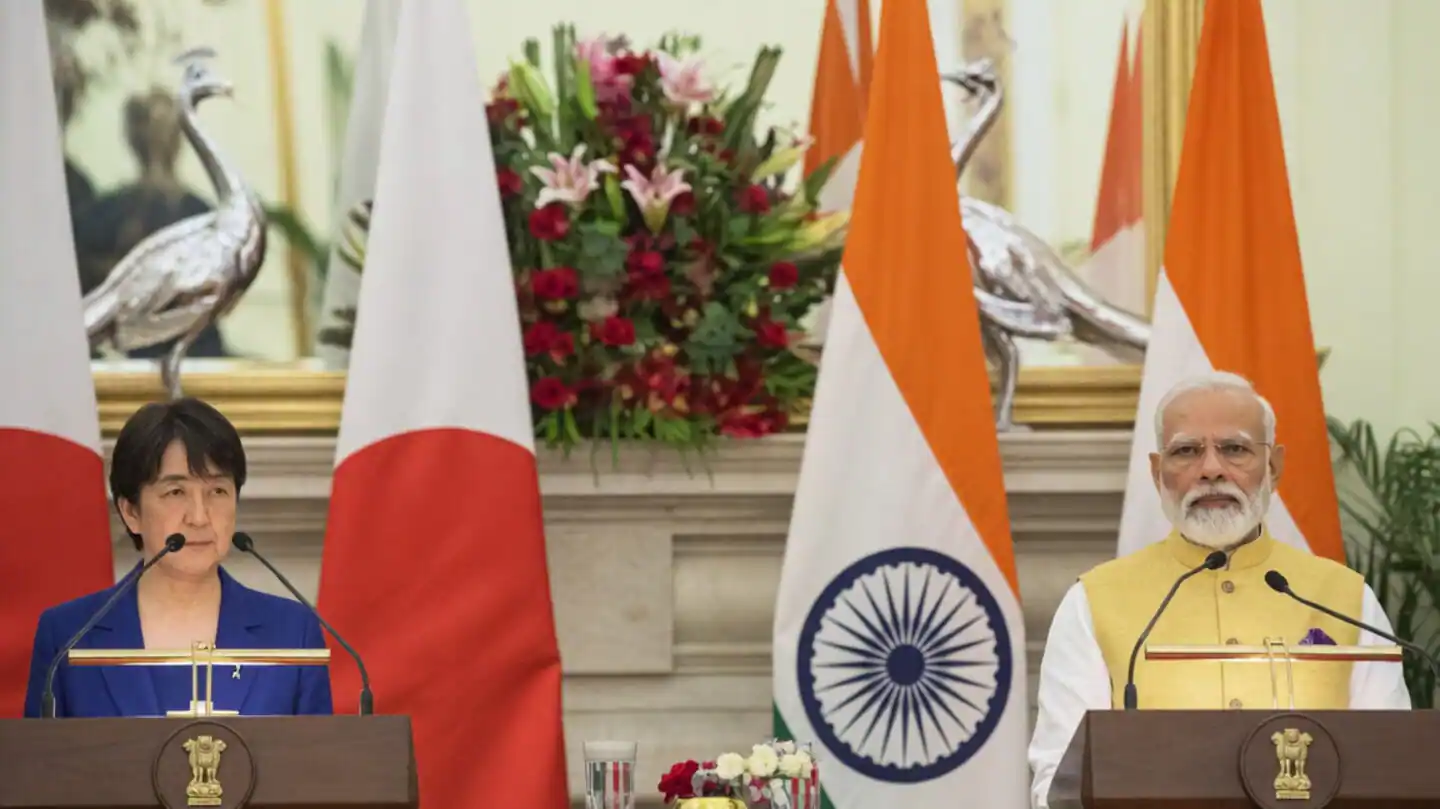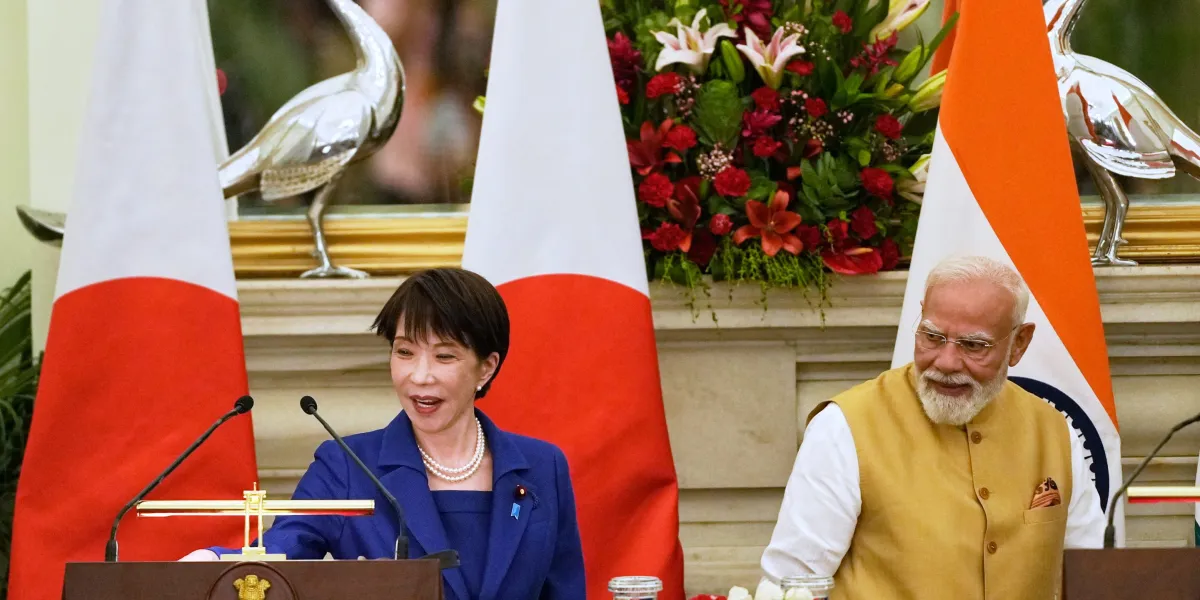
Japanese Prime Minister Sanae Takaichi's three-day visit to India from July 1-3 for the 16th India-Japan Annual Summit has renewed focus on expanding bilateral cooperation beyond strategic and government-led initiatives, with greater emphasis on industry partnerships.In Japan, over 3.36 million small and medium-sized enterprises (SMEs) account for 99.7% of all businesses and around 70% of total employment, according to a World Economic Forum analysis. Experts believe closer collaboration between Indian and Japanese MSMEs could unlock significant opportunities, particularly in electronics, computer software, and digital services, where Japanese technological expertise complements India’s scale. The opportunity assumes greater significance as India's electronics manufacturing and IT services ecosystem, valued at well over $300 billion annually, continues to emerge as a key pillar of economic growth and one of the country’s largest contributors to employment and exports.Against this backdrop, The Economic Times Digital spoke to Gurmeet Singh, Executive Director of the Electronics and Computer Software Export Promotion Council (ESC India), an industry body representing electronics, IT, and software exporters, including numerous MSMEs. Singh discussed the challenges facing Indian exporters and the policy measures needed to strengthen partnerships between Indian and Japanese businesses. Edited excerpts:ET: Japanese PM Sanae Takaichi recently concluded her India visit, where both countries reiterated their commitment to strengthening economic ties. From ESC India’s perspective, what new opportunities does this create for Indian MSMEs, particularly in electronics and IT exports? Gurmeet Singh (GS): There are many sectors well-suited for partnerships between India and Japan at both the government and private-sector levels. As an organisation focused on the Information and Communication Technology (ICT) sector, I observe that the two countries have been collaborating in software development, electronics hardware, AI integration, cybersecurity, semiconductor manufacturing, and cloud computing.In software development, India’s large companies, such as Tata Consultancy Services (TCS), Wipro, and HCL Technologies, already have a significant presence in Japan. Likewise, Indian companies are leveraging Japan’s strengths in precision engineering and hardware. Bilateral technology trade between the two countries is estimated at $27 billion annually.MSMEs also contribute meaningfully to this partnership through custom software development, AI integration, IT consulting, and business process outsourcing (BPO), although their participation is largely as vendors.Importantly, both governments have created enabling frameworks to promote trade and investment in the ICT sector. These include the India-Japan Digital Partnership launched in 2018, semiconductor supply chain initiatives, and the recently announced India-Japan Year of Technology Programme for 2025-26.ET: The 16th India-Japan Annual Summit has once again brought technology and supply chain cooperation into focus. Which segments of India’s electronics and IT industry stand to gain the most from collaborating with Japanese companies?GS: Japan has always been a role model for India’s technology ecosystem. The relationship has remained dynamic, cordial, and comprehensive and has gained further momentum with the formation of the Quad involving India, the US, Australia, and Japan. Several collaborative initiatives are already underway under this framework. However, there is scope to expand cooperation through joint R&D programmes, development of world-class hardware parks in India and creation of third-country ICT manufacturing hubs across regions, such as SAARC, Latin America, and Africa. Such initiatives can strengthen the economic partnership between India and Japan while enhancing their competitiveness against countries such as China.ET: While the recent visit by the Japanese PM is expected to give fresh momentum to bilateral economic engagement, what are the biggest policy and business bottlenecks that need to be addressed to enable stronger partnerships between Indian and Japanese MSMEs?GS: In both India and Japan, MSMEs are not just economic contributors but the backbone of industry and employment. In Japan, SMEs account for over 99% of all enterprises and employ nearly 70% of the workforce. In India, around 60 million registered MSMEs contribute nearly 30% to GDP and 46% to exports, while playing a critical role in innovation, manufacturing, and employment.While large Japanese companies are well known in India, the same cannot be said about Japanese MSMEs. The exposure of MSMEs on both sides remains limited, particularly in the ICT sector. This gap needs to be bridged by creating institutions that can handhold enterprises and facilitate partnerships.In software exports, issues such as withholding tax on software development and licensing also pose challenges. Human capital exchange presents another significant opportunity. The new skill mobility initiative, which aims to place 50,000 Indian professionals in Japan over the next five years, can create new avenues for Indian ICT companies. However, India will need to significantly strengthen both the capacity and quality of technical training to meet Japanese industry standards.Pilot programmes in manufacturing hubs, such as Ludhiana, are already integrating Japanese precision manufacturing practices with India’s local capabilities, although such efforts need to be scaled up.Advanced manufacturing and mobility also remain key areas of cooperation. Beyond the Mumbai-Ahmedabad bullet train project, which has MSMEs integrated into its supply and maintenance chain, joint ventures such as Escorts-Kubota demonstrate how cross-border partnerships can scale in sectors like agritech and machinery. Similarly, the adoption of robotics, AI, and digital technologies under the Digital Partnership framework is helping MSMEs modernise faster.ET: For Indian MSMEs, how important are quality certification and compliance for accessing the Japanese market?GS: Quality certification and regulatory compliance are critical for Indian MSMEs seeking to enter the Japanese market. Indian companies often struggle to meet Japan’s stringent quality standards, while Japanese SMEs find India’s regulatory framework complex. Language barriers, intellectual property concerns, and lengthy certification processes also slow partnerships.Both governments and industry bodies recognise these challenges and are working towards solutions through faster approvals, shared IP frameworks, and co-funding mechanisms.ET: How can Japanese firms help Indian companies with technology transfer and process discipline?GS: Japanese companies are already supporting Indian firms, particularly MSMEs, in improving operational efficiency through waste reduction, process optimisation, AI, robotics, and automation. For sectors such as ICT, construction, and advanced manufacturing, internationally recognised certifications such as ISO have become increasingly important in attracting global customers and improving export competitiveness. ET: For MSMEs, what policy support is needed to convert business and trade interests into actual business contracts? GS: Greater awareness of the Japanese market, its business culture, and commercial practices are essential for Indian MSMEs. Language remains a significant barrier. Several years ago, ESC conducted Japanese language proficiency programmes for young Indian engineering graduates, which also covered business etiquette and cultural practices. Similar initiatives, along with broader awareness programmes, should be revived and expanded.ET: Is financing still a bottleneck for building export-ready capabilities?GS: Yes, financing continues to be a challenge. Japanese companies can help Indian MSMEs access funding from Japanese financial institutions at competitive interest rates. There are also innovative financial instruments available in Japan, including swap and reverse swap arrangements, that Indian companies can leverage to strengthen their export capabilities.ET: Which regions are most suitable for India-Japan partnerships in other countries?GS: India-Japan cooperation should not remain limited to bilateral trade. JETRO has already proposed a framework for India and Japan to jointly target African markets by combining Japanese technology and capital with Indian skills and execution capabilities. The same model can also be replicated across SAARC countries and Latin America.
Stronger India-Japan MSME collaboration can boost electronics, software exports: ESC India
The bilateral partnership can unlock opportunities for MSMEs in AI, electronics, software exports, and semiconductors, says Gurmeet Singh, Executive Director of ESC India.
1,168 words~5 min read