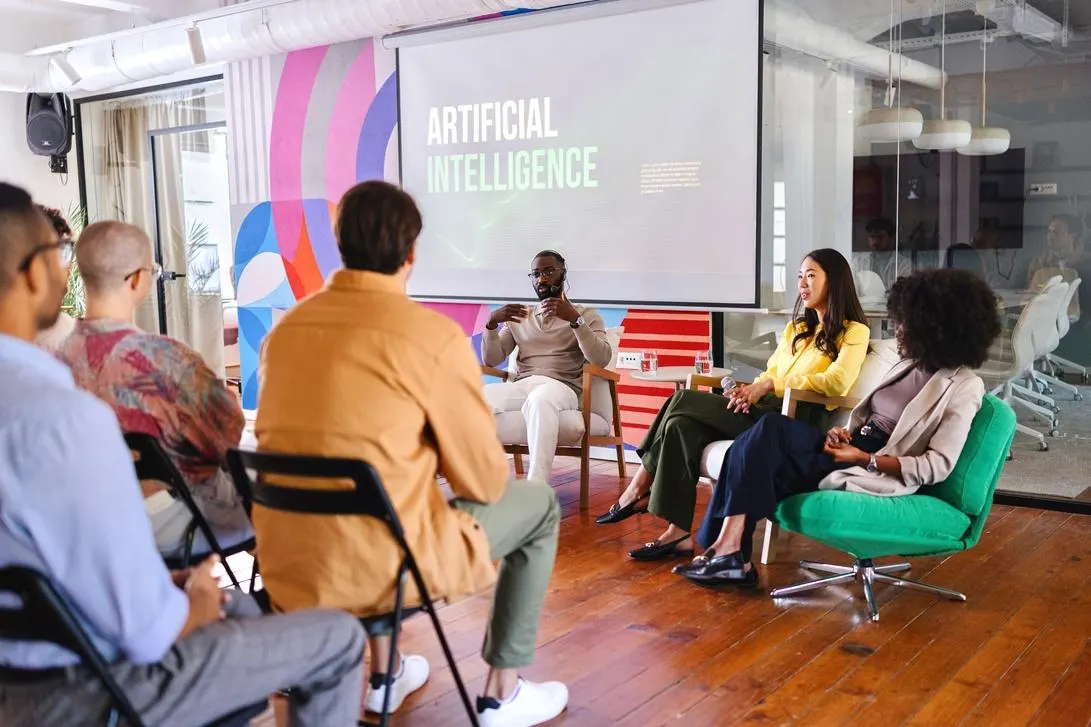
AI adoption will only succeed if employees understand, trust and feel empowered to use the technology responsibly.Adobe StockAI can transform a business, but only if people are ready to use it.Many organizations are investing heavily in AI tools, platforms and technical expertise, yet the biggest barrier to adoption is often cultural rather than technological. If employees are confused, anxious or unsure about how AI fits into their work, even the best technology will struggle to deliver meaningful value.Culture shapes how people respond to change. It determines whether they experiment or retreat, whether they trust new tools or resist them, and whether AI becomes a source of innovation or another source of workplace anxiety.This is why building an AI-positive culture matters. It means creating an environment where people can learn, ask questions, test new ideas and use AI responsibly, with clear guardrails and a shared understanding of why it matters.Here are five steps that can help companies get started on the right foot.1. Implement An AI Policy When businesses rush into adopting AI tools before establishing clear rules around using them, it creates uncertainty among the workforce as well as serious business risks. An effective AI policy provides a framework that makes all the other steps here possible, and if a business doesn’t have one, it should get it done by yesterday. The trick is to strike the right balance by enabling experimentation while putting guardrails in place around data protection, accountability and human oversight. And take care not only to communicate what the rules are, but why the rules are, and how they support the organization’s overall vision for AI. 2. Foster AI LiteracyThe potential for what can be achieved with AI is so vast that everyone from the C-suite to the shop floor should have an understanding of what it means for their role. As well as a grasp of practicalities like prompting and reviewing AI output, an overview of the tools available to them, and an awareness of the risks. Fostering AI literacy means empowering a workforce to make educated decisions about where it can create value and where it should be reigned in. As a less prescriptive alternative to mandating training, this can be done by creating opportunities for employees to explore AI and share what they learn with their peers.3. Establish A Responsible AI Committee This one is about making sure everyone feels like their voice is valued and their opinions on how and why AI is used are taken into account. Ideally, it should include people from as many areas of the business as possible, including leadership, operational staff, IT, HR and front-line customer-facing employees. This ensures as many perspectives as possible are represented when important decisions around AI safety and responsibility are made. It also builds trust and reinforces the fact that when it comes to AI, everyone is a stakeholder. 4. Encourage Responsible Experimentation I firmly believe that the AI projects that will prove to be the most valuable and transformational won’t start in boardrooms or data science labs. Often, they will come from those who aren’t technology experts but simply have good ideas they weren’t able to action until AI gave them the tools. This is why it’s critical for companies to create environments where people feel that they have permission to experiment and even play with AI and data. Of course, this should always be informed by an AI-literate understanding of what might be possible, with policies and guardrails to keep them safe. But encouraging employees to explore for themselves will lead to fresh thinking and innovation. 5. Address Fears, Don’t Ignore ThemSome people think AI might cause the end of the world. Others think it will create bias and unfairness when used irresponsibly. And others are just worried it’s going to take their jobs. However true any of this is (and none of it’s impossible, according to those who should know), one thing that’s certain is that it can be scary. For a lot of people, concern is an entirely natural response, and if companies ignore them, they’ll lose their trust. Instead, they should use the opportunity to have honest conversations about how AI will affect lives. And how there will always be a need for human skills machines can’t match, like big-picture strategy, interpersonal skills and true creativity. Next StepsCulture, unlike technology, can't simply be hot-swapped overnight and can’t be driven top-down by policy alone. Managing this change requires clear communication, empathic leadership and a willingness to make sure everyone's on board for the journey. Setting guardrails, fostering understanding, encouraging experimentation and engaging with concerns are all ways to create a culture where AI is treated as an opportunity rather than a threat.
5 Ways To Build An AI-Positive Workplace Before Fear Takes Over
Here are five practical steps business leaders can take to build an AI-positive corporate culture that encourages innovation while addressing risk, fear and uncertainty.
784 words~4 min read