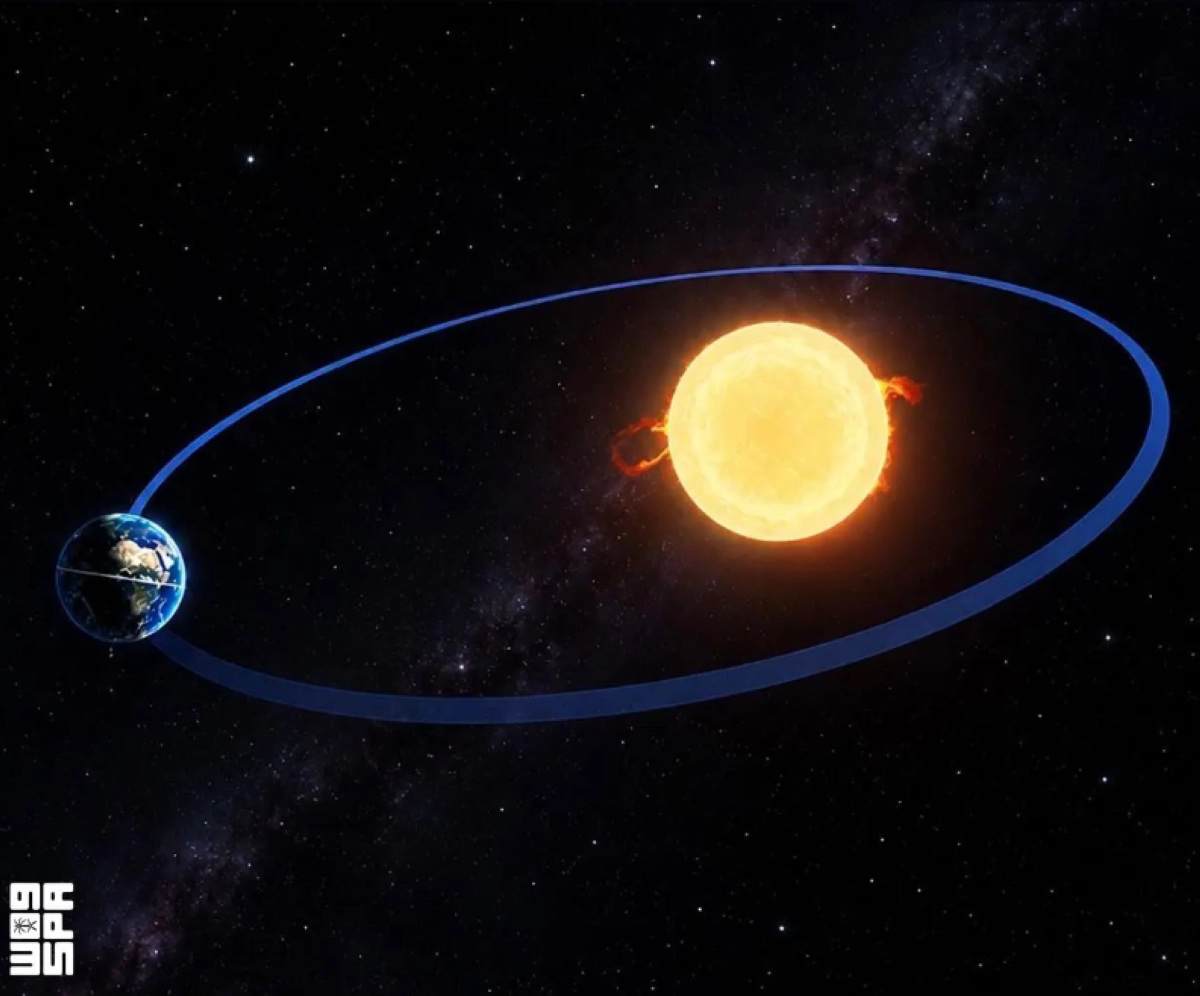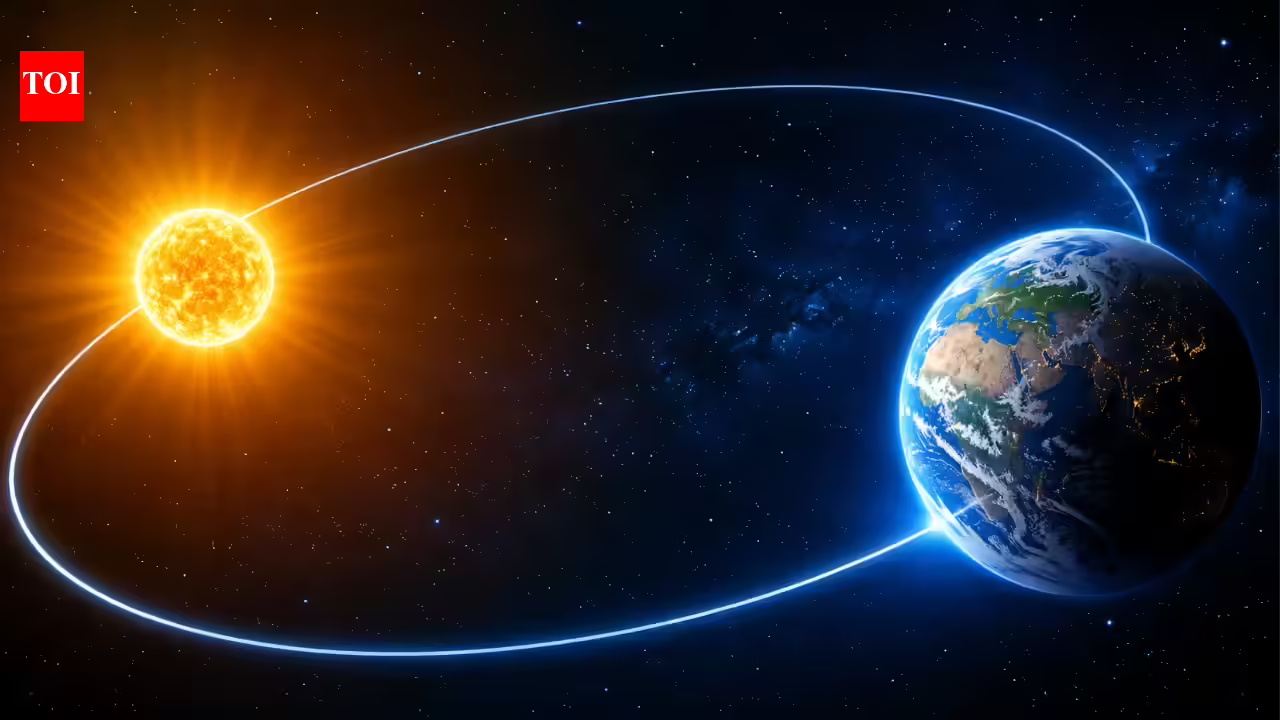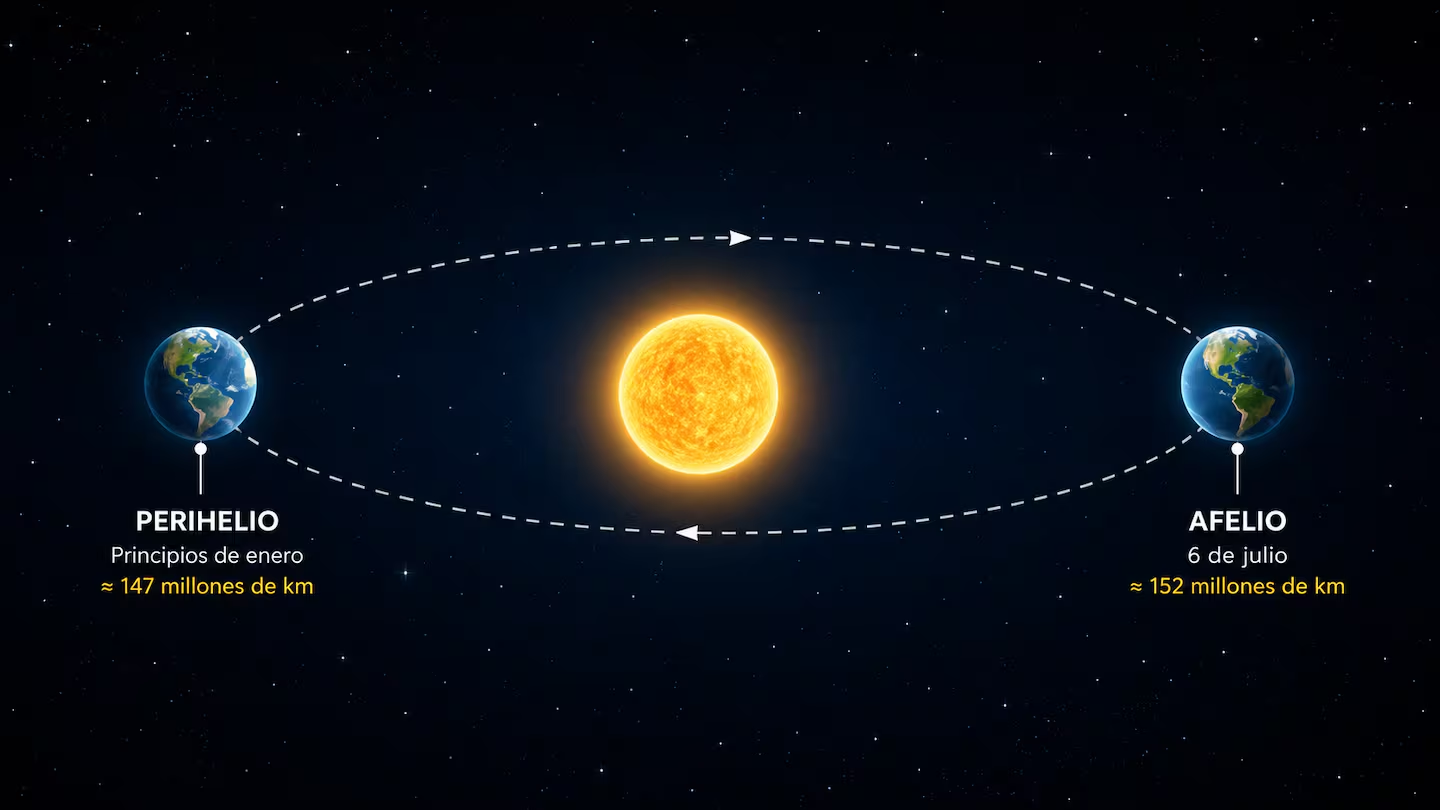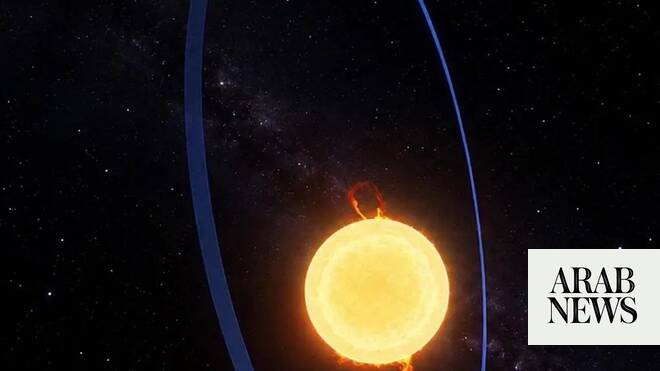
JEDDAH: Earth reached its annual aphelion on Monday, passing the farthest point in its orbit around the Sun at a distance of about 152 million kilometers, in a regular astronomical event that scientists say reinforces that the changing seasons are driven by the planet’s axial tilt rather than its distance from the Sun.
The event, which occurred at 8:30 p.m. Makkah time, was reported separately by the Saudi Press Agency (SPA), citing the Jeddah Astronomy Society and the Noor Astronomy Society.
Majed Abu Zahra, director of the Jeddah Astronomy Society, said Earth’s greater distance from the Sun during aphelion does not result in cooler temperatures because seasonal changes are caused by the approximately 23.4-degree tilt of Earth’s rotational axis.
During the Northern Hemisphere’s summer, that tilt allows the Sun’s rays to strike the region more directly despite the planet being at its most distant point from the Sun.
Abu Zahra explained that Earth’s orbit is elliptical, causing its distance from the Sun to vary by about five million kilometers over the course of a year. As a result, the Sun appears slightly smaller at aphelion than at perihelion, although the difference is too small to be seen with the naked eye.