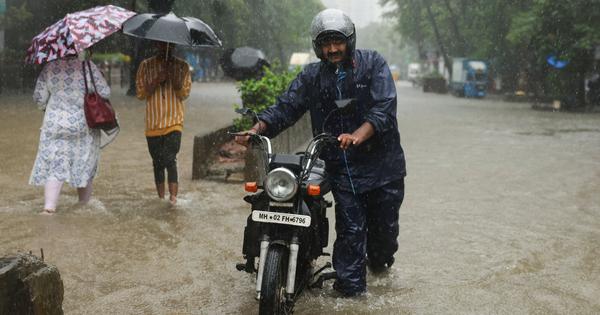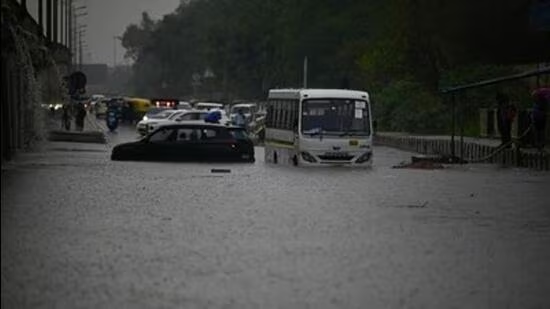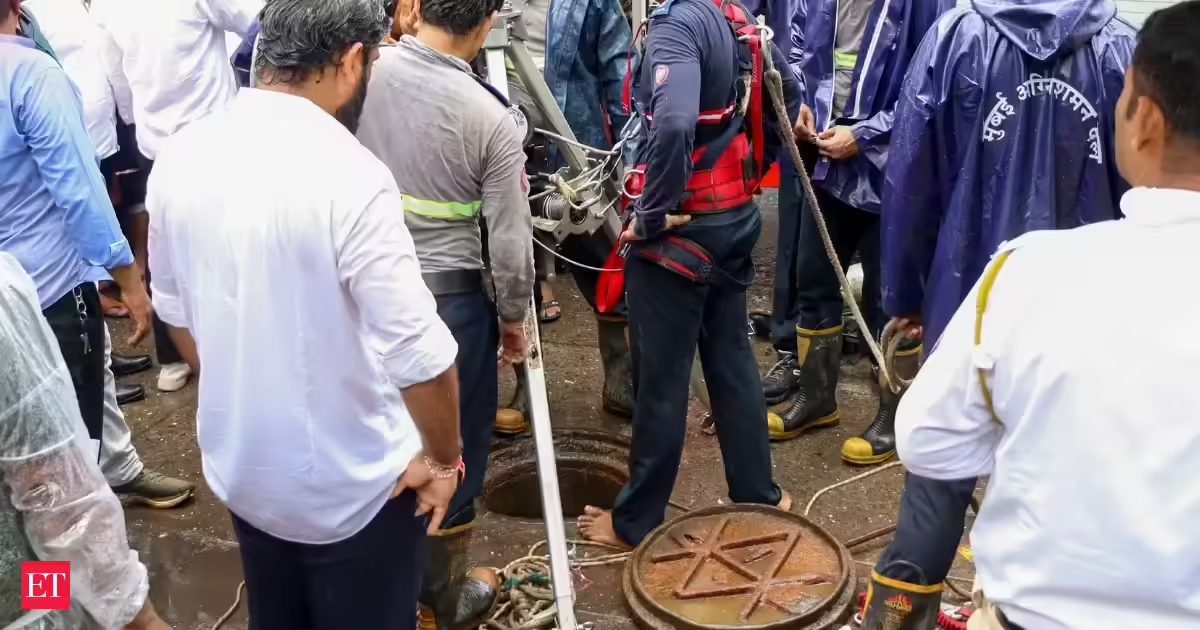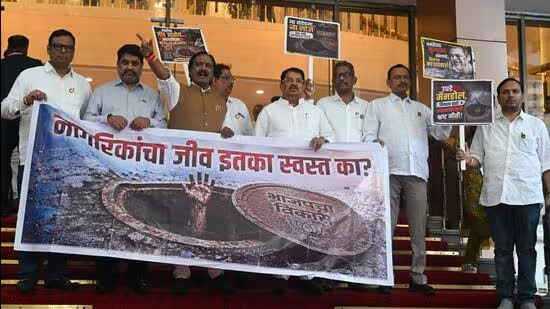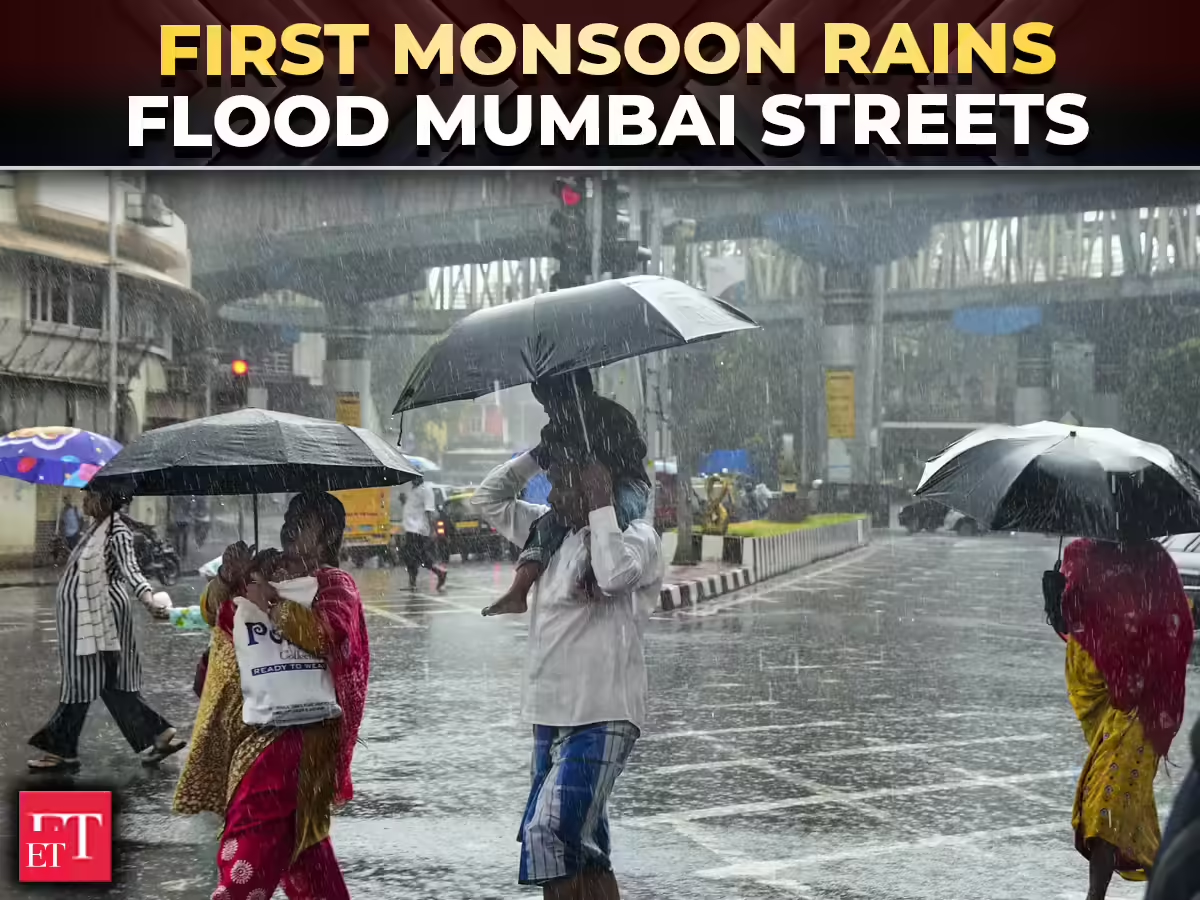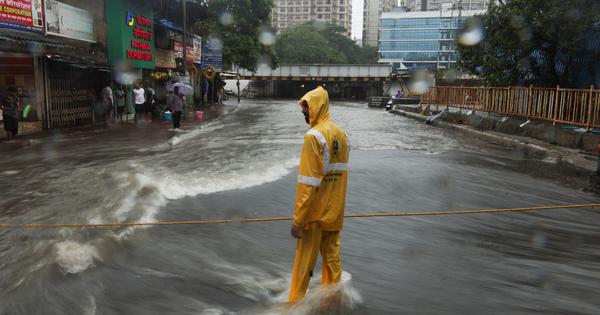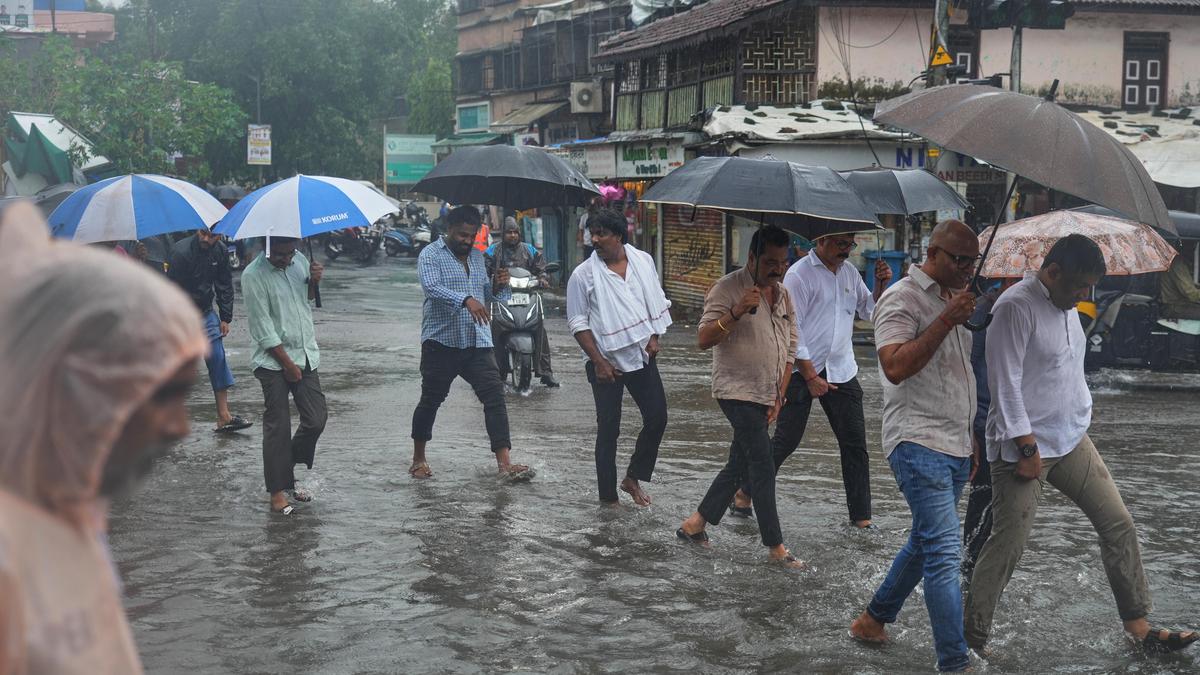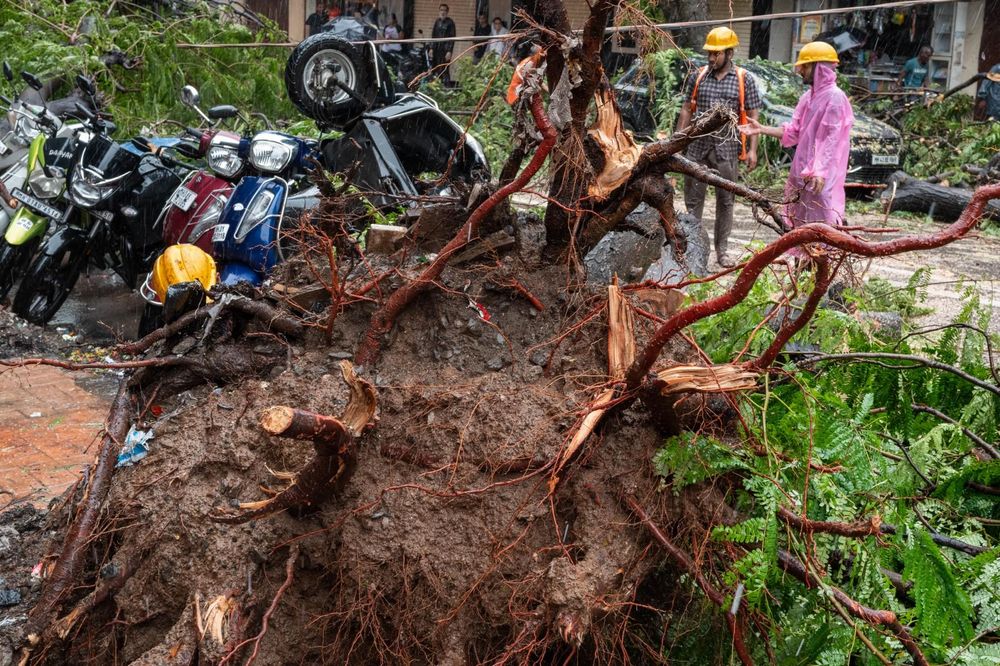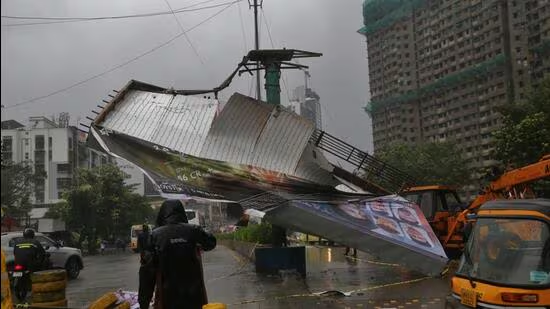
From people falling into open manholes and being crushed under collapsing trees to buildings giving way, flooded roads and infrastructure failures disrupting lives, Mumbai’s monsoon has once again turned everyday life into a gamble where every step feels uncertain. As the city grapples with yet another season of preventable tragedies, HT asked citizens, activists and urban experts two pertinent questions: Why is Mumbai in such a mess? And what is the one thing authorities must fix now?Thane, India - July -06, 2026: Thane district has been placed under a heavy rainfall alert. On Monday morning, due to strong winds, a hoarding erected on the road divider at Pokhran Road No. 2 in Thane collapsed., no one was injured in the incident ,in Thane ,in Mumbai, India, on, Monday, July -06, 2026. ( photo by Praful Gangurde / Hindustan Times ) (praful Gangurde)Stalin DayanandDirector, VanashaktiWhy is the city in a mess?Stalin Dayanand believes Mumbai’s recurring civic crises stem from years of poor governance, corruption and a complete lack of accountability. “The city has been treated as a cash cow for money-making projects rather than a place where people live,” he says. According to him, agencies such as the BMC, PWD and MMRDA continue to function in silos, with little coordination or ownership. Even within the BMC, departments often work independently, leading to confusion over responsibility. He cites tree falls as an example, where the Tree Authority is blamed despite having little real decision-making power. “No one is accountable because no single agency takes responsibility for the city as a whole,” he says. Without coordinated planning and transparent governance, Dayanand believes Mumbai will continue to lurch from one avoidable civic crisis to another.One thing I’d tell the authorities“Appoint a single nodal authority with the power to coordinate every major civic project in Mumbai and make that agency accountable. Departments must work together instead of in isolation, and citizens should be involved in decision-making. Treat Mumbai as one living city—not as disconnected departments working independently. Every civic project should be planned scientifically, with all concerned departments working together before execution. Only then will Mumbai have a governance system that is accountable to its people.”Dhaval ShahCo-founder, Lokhandwala Oshiwara Citizens AssociationWhy is the city in a mess?Dhaval Shah says Mumbai’s infrastructure has failed to keep pace with its rapid redevelopment and growing population. While high-rises continue to transform neighbourhoods, civic infrastructure has not been upgraded to match the increased demand. He says the city’s storm-water drainage system urgently needs strengthening to cope with heavier rainfall, but the same lack of planning extends to roads and other public services. Shah also blames poor coordination among government agencies, which results in freshly concretised roads being repeatedly dug up for utility works. “Infrastructure is being built in pieces instead of as one integrated system,” he says. The absence of long-term planning, he argues, has left Mumbai spending public money on repairing the same assets instead of creating durable infrastructure.One thing I’d tell the authorities“I’d urge the authorities to stop planning projects in silos and start thinking long term. Every department must sit together before work begins so roads are not repeatedly dug up after being repaired. Infrastructure should be designed to meet the city’s future needs, not just today’s demands. I would also extend the defect liability period for roads, footpaths and bridges to at least seven years, so contractors are held accountable for the quality of their work. If they know they will have to bear the cost of repairs, they will think twice before taking shortcuts. Better planning, stronger accountability and coordination are the only way Mumbai can break this cycle of wasteful spending and crumbling infrastructure.”Prakash PaddikalPresident, Hillside Residents’ Welfare Association (HIRWA), MulundWhy is the city in a mess?Prakash Paddikal believes Mumbai’s civic decline is closely linked to the disappearance of meaningful engagement between residents and the administration. He says Advanced Locality Management (ALM) groups once enabled citizens to regularly meet ward officers and deputy municipal commissioners to discuss civic issues, review progress and ensure accountability. Those meetings have now stopped, leaving residents with little option beyond writing letters that often go unanswered. “An important bridge between citizens and the administration has been broken,” he says. Paddikal also feels that public participation has weakened over the years, allowing civic authorities to function without sustained scrutiny. According to him, rebuilding trust between citizens and the administration is essential if governance is to improve.One thing I’d tell the authorities“My message is simple: don’t allow redevelopment to outpace infrastructure. Before approving another high-rise, ask whether there is enough water supply, road capacity, gardens, schools, hospitals and other public amenities to support the additional population. Redevelopment cannot happen in isolation. Every new project must be backed by matching investment in civic infrastructure so that existing services are not pushed beyond their limits. Growth is welcome, but it has to be planned. Otherwise, we are only creating bigger civic problems for future generations.”Urich KamathCo-convenor, Mumbai North Central District ForumWhy is the city in a mess?Urich Kamath says Mumbai’s grievance redressal system has failed to deliver meaningful accountability. While the BMC encourages citizens to register complaints through platforms such as MARG, he claims many people receive only automated responses while serious civic issues remain unresolved. According to him, authorities often project routine civic work carried out after complaints as major achievements, even as larger concerns continue to linger. Kamath alleges that several life-and-death issues remain pending despite repeated follow-ups by residents. “Closing complaints on paper is not the same as solving problems on the ground,” he says. For him, the city’s biggest challenge is ensuring that public grievances result in lasting solutions rather than cosmetic action.One thing I’d tell the authorities“Give Mumbai its footpaths back. Every pedestrian has the right to walk safely without being forced onto busy roads because pavements are encroached upon, dug up or poorly maintained. Implement the BMC’s own ‘Pedestrian First’ policy in letter and spirit instead of keeping it on paper. Safe, continuous and obstruction-free footpaths will encourage more people to walk, improve access to public transport and even ease traffic congestion. A truly world-class city is one where people can walk safely before they are expected to drive comfortably.”Mandeep Singh MakkarFounder, Chandivali Citizens Welfare AssociationWhy is the city in a mess?Mandeep Singh Makkar attributes Mumbai’s civic decline largely to entrenched corruption within the administration. Despite the BMC’s massive annual budget, he says citizens see little improvement in basic infrastructure and public services. According to him, corruption at multiple levels prevents public money from translating into visible development, while a nexus between politicians and bureaucrats has weakened governance. Makkar also alleges that citizens are often forced to pay bribes even for routine civic services that should be provided as a matter of right. “When corruption becomes part of the system, governance suffers and citizens lose faith,” he says. Unless transparency and accountability improve, he believes Mumbai’s civic problems will continue to worsen.One thing I’d tell the authorities“Fix Mumbai’s garbage management system, especially in slum areas where organised waste collection is still inadequate. Every locality deserves an efficient and reliable system for disposing of waste. Garbage dumped into drains and nullahs eventually chokes the storm-water network, leading to flooding during every heavy spell of rain. Better waste management will not only reduce waterlogging but also improve public health by preventing the spread of malaria, dengue and other vector-borne diseases. A cleaner city is also a safer and more resilient city.”Rohit JoshiConvenor-president, Yeoor Environmental SocietyWhy is the city in a mess?Rohit Joshi believes poor planning and misplaced priorities have left Mumbai and Thane struggling with avoidable civic problems. He argues that governments continue to invest in expensive mega projects while neglecting everyday public transport and basic infrastructure. Overcrowded railways, inadequate bus services and poor last-mile connectivity force more people to use private vehicles, worsening congestion. He also questions housing projects that continue to rely on tanker water instead of assured municipal supply. “If societies spend crores every year on tanker water, that is a planning failure,” he says. Joshi believes development has increasingly ignored both environmental sustainability and the everyday needs of citizens.One thing I’d tell the authorities“Please start planning cities around people’s daily needs instead of expensive mega projects. Invest in practical solutions like better bus services, dedicated bus corridors and seamless last-mile connectivity before spending thousands of crores on projects that don’t solve everyday problems. At the same time, stop treating forests as vacant land for development. They are our lungs and our water source. Every infrastructure project should undergo careful environmental scrutiny. Development and conservation are not opposing ideas—they must go hand in hand if cities are to remain liveable in the long term.”One small suggestion before you upload: I’d tweak the headline slightly to “Mumbai is falling apart. But where’s the accountability?” The pause created by “But” makes it read more like a classic newspaper Page Lead. I genuinely think that’s the strongest version. And for what it’s worth, I think this package has turned into something readers will stop and read.
Mumbai is falling apart: Where’s the accountability?
As the city grapples with yet another season of preventable tragedies, HT asked citizens, activists and urban experts two pertinent questions: Why is Mumbai in such a mess? And what is the one thing authorities must fix now? | Mumbai news
1,508 words~7 min read