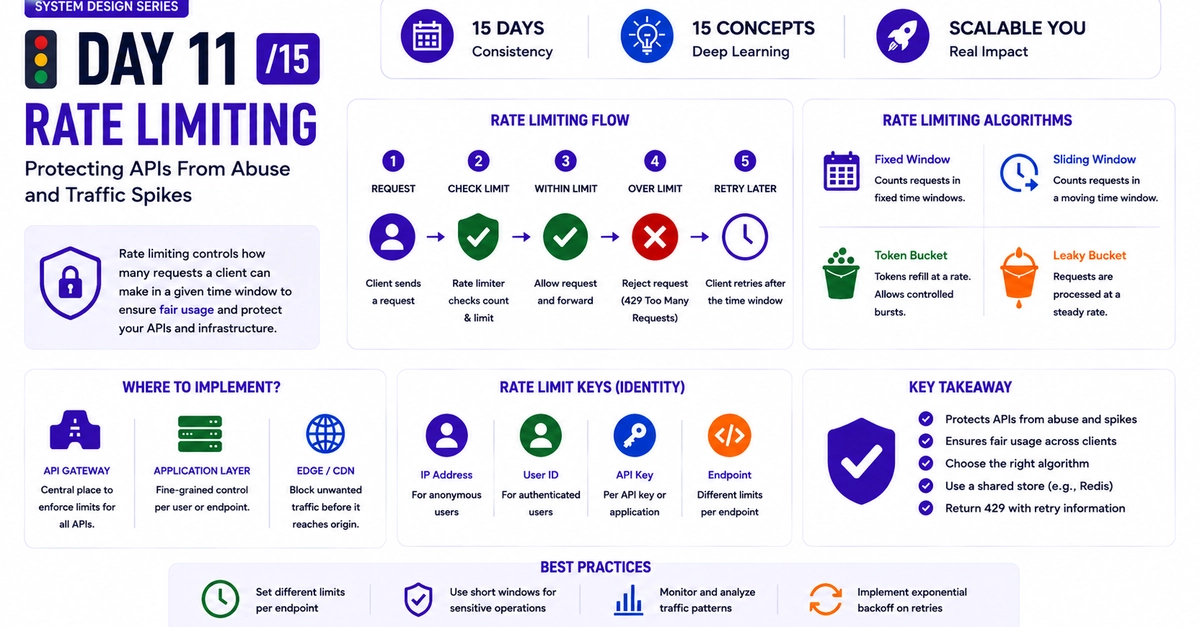
An API with no rate limit is an API waiting to be hammered. A careless script stuck in a retry loop, a scraper with no backoff, or a client with a bug in its polling logic can all send hundreds of requests a second — and without a limit in place, your server tries to handle every single one. Rate limiting fixes this: it caps how many requests a client can make in a given window of time, and rejects anything past that cap before it reaches your application logic.
This tutorial adds rate limiting to a small Flask API using Upstash, a managed Redis service with a generous free tier. By the end, every route in the API will enforce a request limit per client, and clients who go over it will get a clear 429 Too Many Requests response instead of silently overwhelming your server.
The mental model you'll walk away with: you don't have to let bad actors or careless clients hammer your API into the ground. A Redis counter and a few lines of Python are enough to enforce a limit.
What you need before starting
Before you start, gather the following: