The Scraping Burst Vulnerability
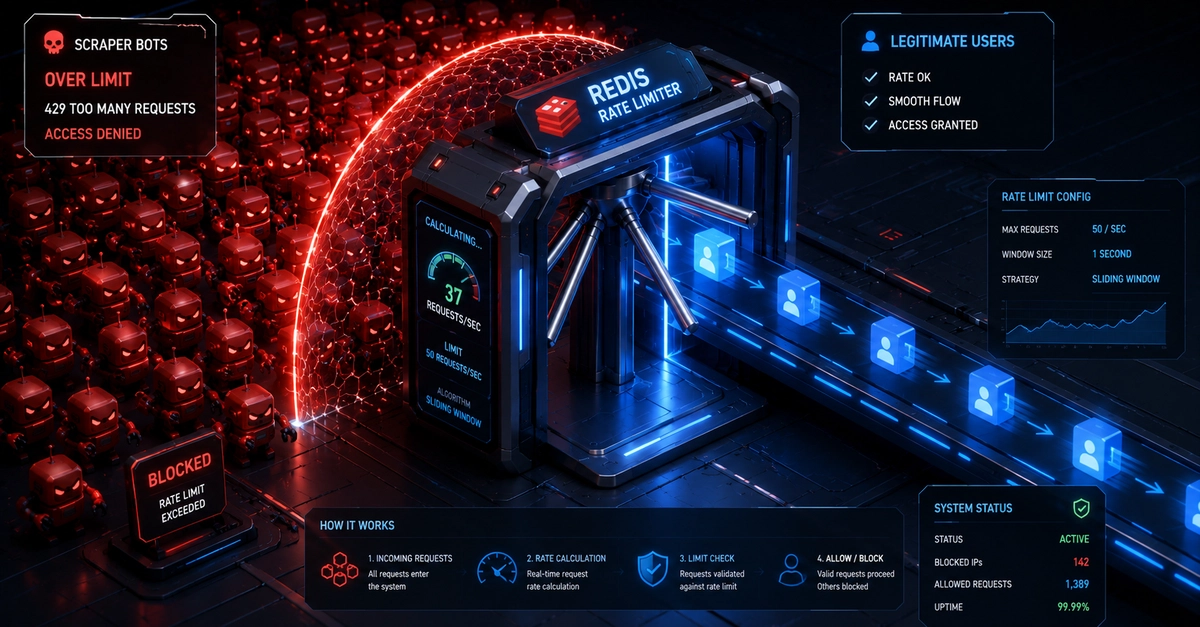
When you expose a valuable B2B SaaS API at Smart Tech Devs, you aren't just serving legitimate clients. You are constantly fending off aggressive data scrapers, rogue internal scripts, and micro-DDoS attacks. A client's poorly written cron job can accidentally fire 5,000 requests per second at your /api/reports endpoint, instantly saturating your database connection pool and taking your platform offline for everyone else.
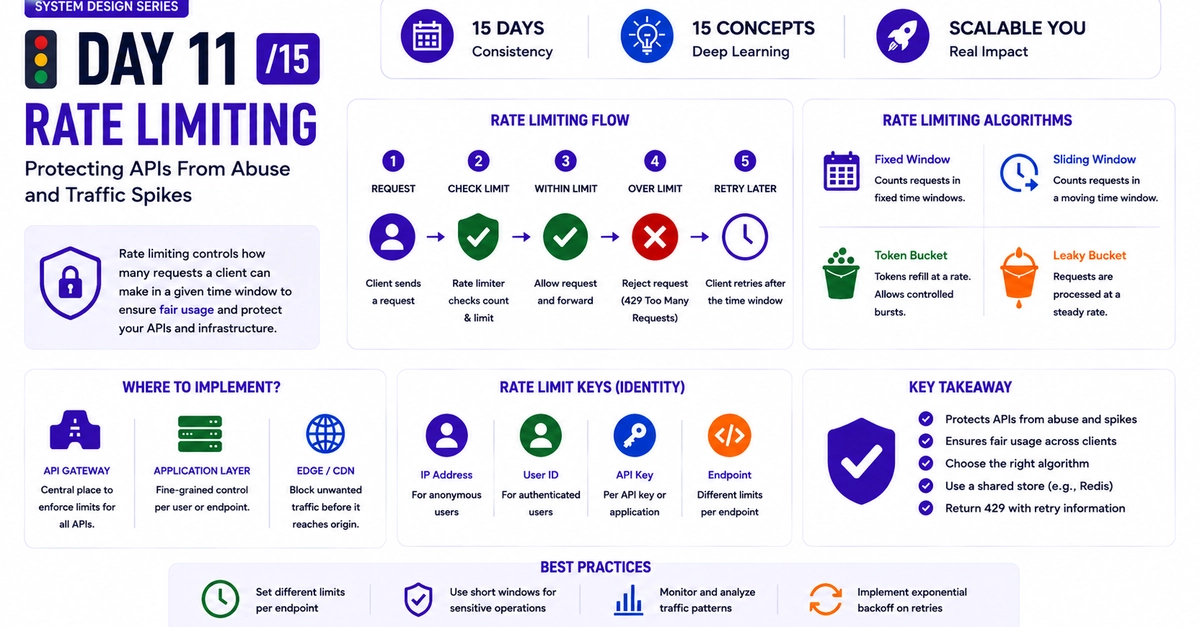
Basic "Fixed Window" rate limiting often fails to protect you. If you limit a user to 100 requests per minute, a bot can send 100 requests at 0:59, and another 100 requests at 1:01. That is 200 requests in 2 seconds, effectively bypassing your limits and crashing your servers. To secure your perimeter, you must implement Sliding Window Rate Limiting backed by Redis.
The Solution: In-Memory Throttling
You cannot use a relational database to track rate limits; the write-overhead of tracking every single API request will crash the database itself. You must use an in-memory datastore like Redis. Laravel’s native RateLimiter facade, when paired with the Redis cache driver, automatically utilizes an advanced sliding window algorithm to ensure bursts are mathematically impossible.