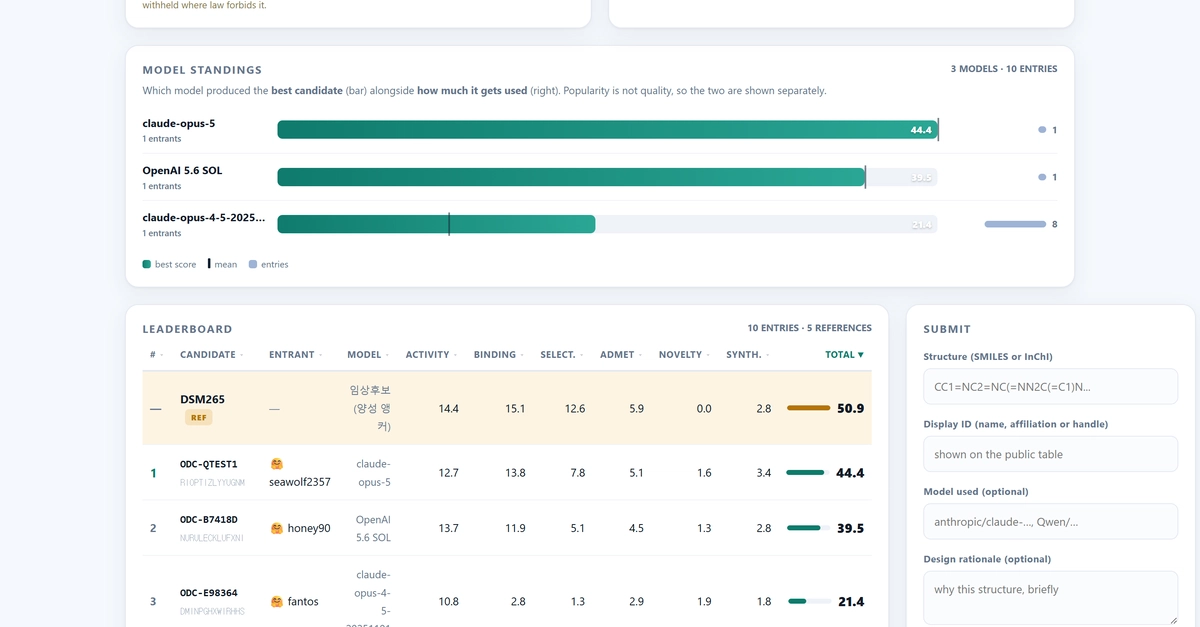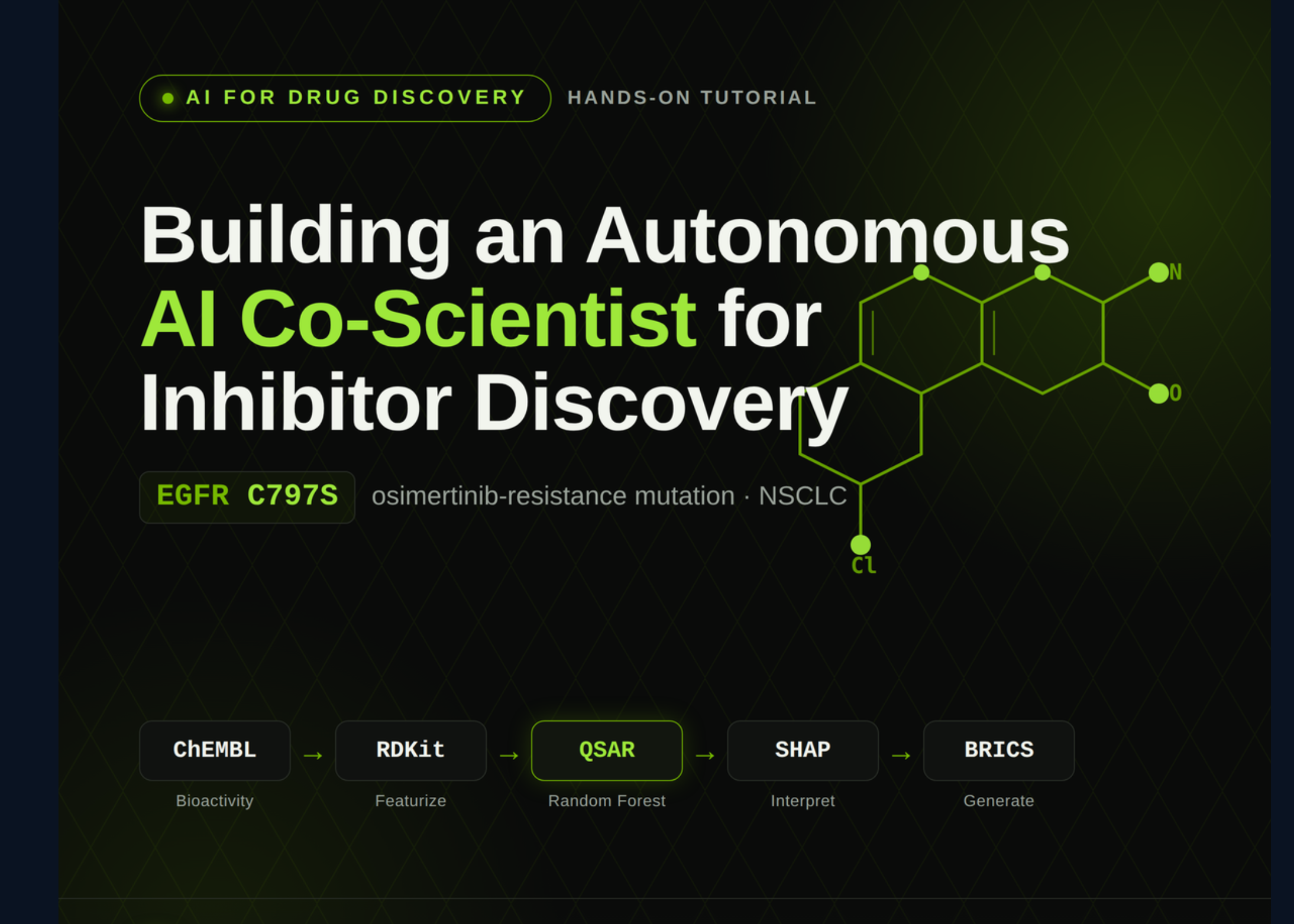
In this tutorial, we build an end-to-end autonomous AI co-scientist workflow for next-generation EGFR inhibitor discovery, focusing on the C797S osimertinib-resistance mutation in non-small cell lung cancer. We start by resolving the biological target through ChEMBL and UniProt, then mine curated EGFR IC50 bioactivity records and convert them into a clean pIC50 modeling dataset. We use RDKit to standardize molecules, remove salts, aggregate replicate measurements, compute Morgan fingerprints, extract physicochemical descriptors, and analyze scaffold diversity so that our model learns from chemically meaningful representations rather than raw strings. From there, we train a scaffold-split Random Forest QSAR model, evaluate its ability to generalize to unseen chemotypes, interpret potency-driving features with SHAP or model importances, and visualize influential molecular substructures. Finally, we move beyond prediction into generative design by recombining BRICS fragments from potent drug-like actives, scoring the resulting virtual analogs across potency, drug-likeness, synthesizability, novelty, and developability gates, and cross-checking the shortlisted candidates against PubChem.
Building a Scaffold-Split Random Forest QSAR Co-Scientist for EGFR Inhibitor Discovery Using ChEMBL, RDKit, SHAP, and BRICS
Build an autonomous AI co-scientist that mines ChEMBL bioactivity, trains an RDKit-based QSAR model, and designs novel EGFR C797S
3,098 words~14 min read