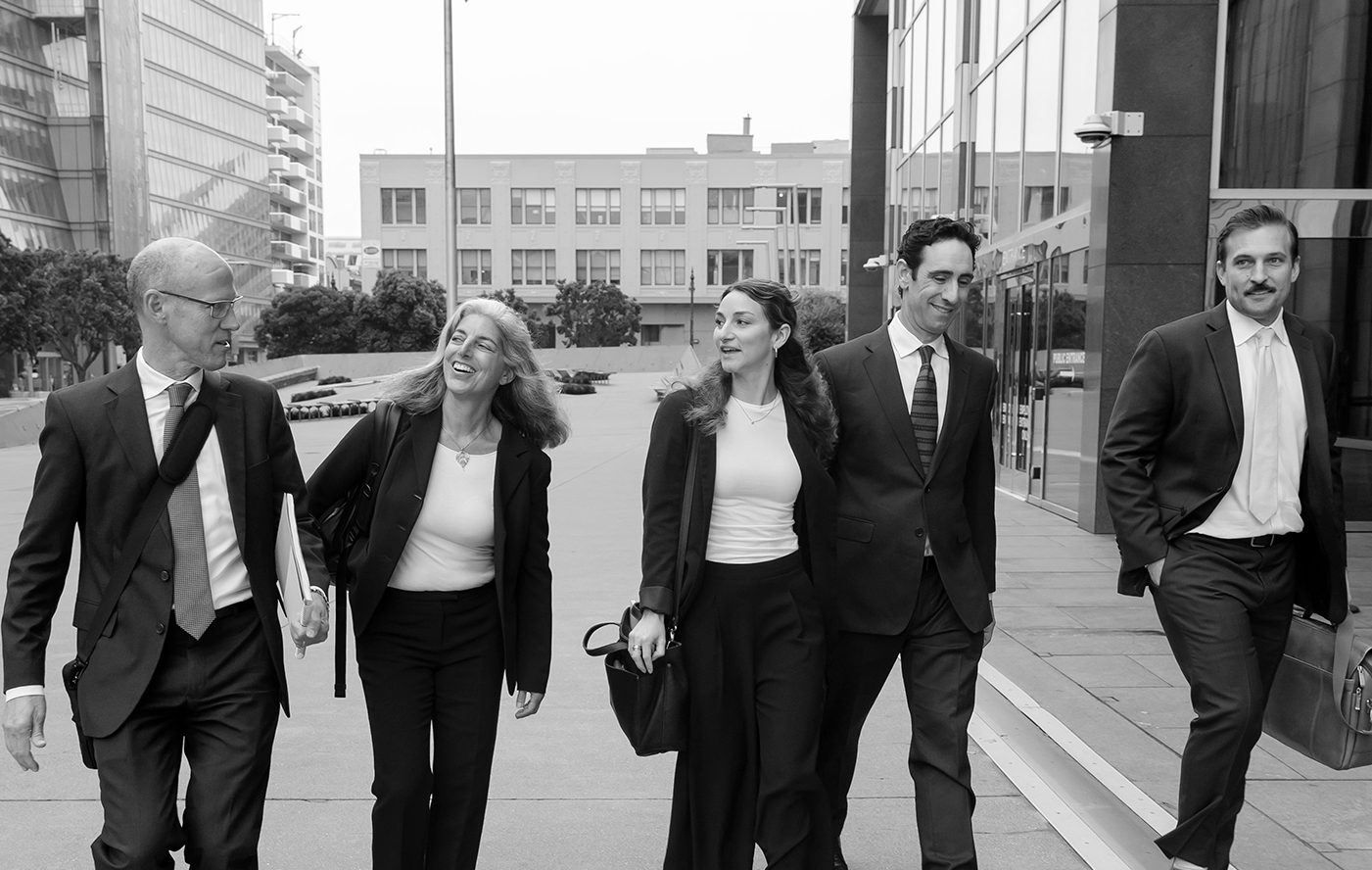
By Gwyneth K. Shaw
In the opening weeks of the second Trump administration, as federal agencies abruptly slashed grant funding for research — jeopardizing critical scholarship and striking at a crucial funding source for colleges and universities — Clinical Professor Claudia Polsky ’96 waited for someone to step up and fight back.
From her perspective, the terminations were clearly arbitrary and a blatant violation of the Administrative Procedure Act. And some, such as diversity, equity, and inclusion- (DEI) related grant cancellations, also seemed to violate the First Amendment. But as the spring went on, and several universities and multiple law firms signed big-dollar settlements with the administration, there was no large-scale action to force the federal government to resume the grant funding.
Polsky, the founding director of Berkeley Law’s Environmental Law Clinic, has been a litigator for 30 years. The solution was obvious, she reasoned — and if nobody else would do it, she would.
“I could see that the only way we were going to get any action was for researchers to self-organize,” she says. “And the way to do that, if you don’t have an institution’s backing, is through a class action.”