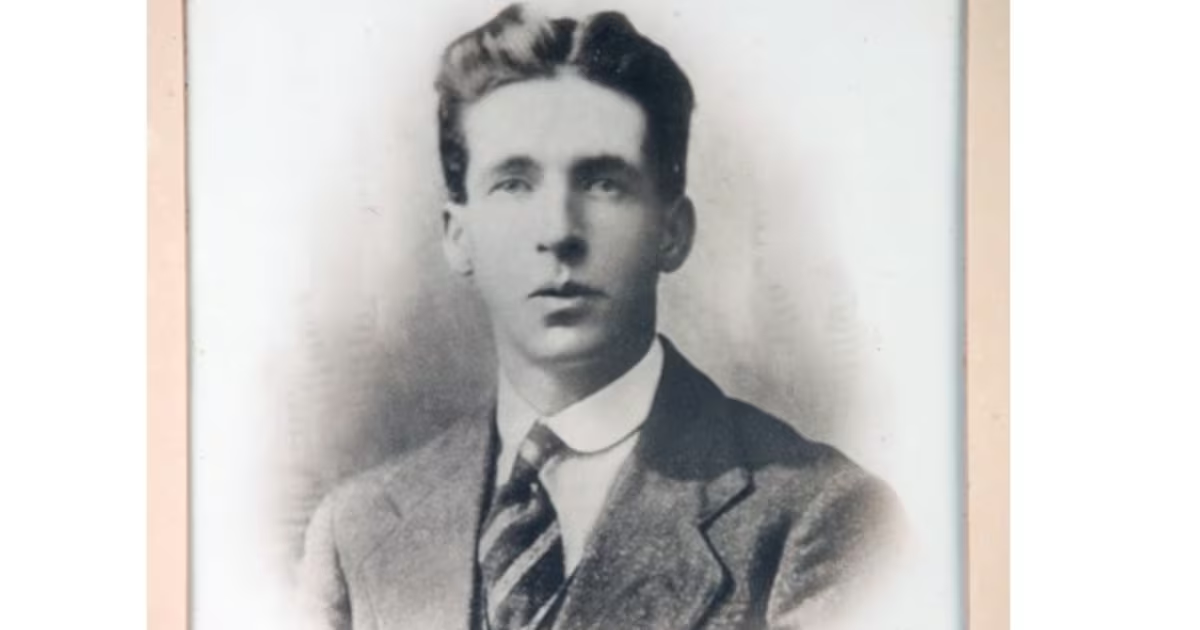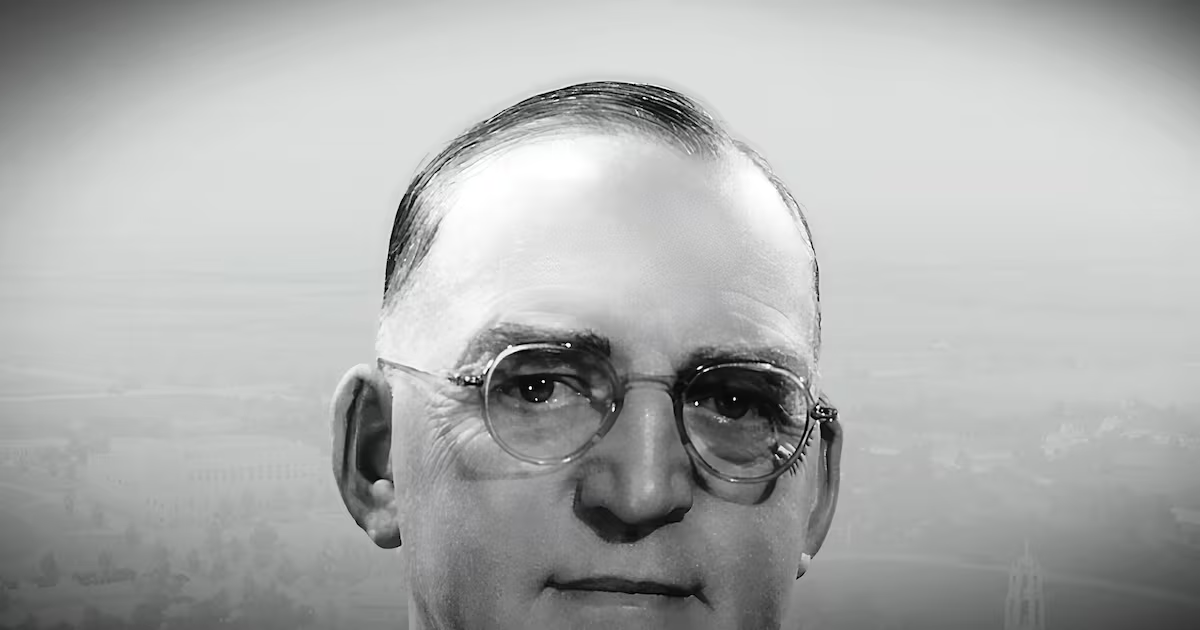
Why isn’t Edward Joseph Flanagan better known in Ireland? Born near Ballymoe, Co Galway, he trained as a priest in Rome, became a pioneering advocate for the downtrodden in the US and was depicted on screen by Spencer Tracy in the Oscar-winning 1938 film Boys Town. Just this year, he was set on the path to sainthood when Pope Leo bestowed upon him the status of “venerable” – a staging post to being named a saint. The answer as set forth in the documentary Heart of a Servant: The Father Flanagan Story (RTÉ One, Monday, 9.35pm) is that, as with many Irish people who are shunned in their own country, he had a bit too much to say for himself. Having achieved renown as a campaigner for the poor in the US, he returned to Ireland in 1946 and was aghast at the conditions of the industrial and reform Schools which had become dumping grounds for children from poor families.He called out the hypocrisy of pure, Catholic Ireland in a speech in Cork, where he said the State’s institutions “are not all noble” and branded Ireland’s gulag-like borstals a “disgrace”. And that was that: he was quietly written out of history. “A prophet,” says Bishop Kevin Doran, “is never recognised among his own people.” Flanagan’s story is fascinating and is relayed with the gusto of a practiced hype-man in Heart of a Servant: The Father Flanagan Story.The film is produced by Rob Kaczmark, a founder of Spirit Juice Studios – one of the US’s “largest and most trusted Catholic studios”. Aimed at a religious audience it has an aura of piousness and reverence that sometimes takes you out of the story. You can almost smell the incense and hear the rustle of clerical vestments. It also feels pitched largely at an American viewership and assumes we are familiar with Flanagan’s achievements – which were hugely impressive, particularly in light of where the US finds itself today. Chief among these was establishing Boys Town, a village in Nebraska dedicated to the care of abandoned and underprivileged children. Boys Town welcomed all – regardless of race or religion. This did not endear Flanagan to locals at a time when the Ku Klux Klan was resurgent in Nebraska. It took enormous personal courage to face down the US’s violent bigotry. “For white people to stand against the way things were, they themselves would be subject to the same violence and threats,” says one contributor. “Fr Flanagan gave up his whiteness to stand in solidarity with these boys.”He went to the US at the age of 18 and seems to have acquired the confidence and work ethic of his new home. And the accent – when we hear him speak – is in the booming cadences of an All-American icon. But the poor health he suffered early in childhood stayed with him and became an impediment later in life, when he would travel the US tirelessly seeking to raise funds for Boys Town. At that stage, he had already made his mark. By 1938 and the film Boys Town, he was a national celebrity in the US, as Spencer Tracy acknowledged when receiving an Oscar for playing Flanagan on screen. “I don’t think I can accept this,” Tracy said in his Oscar speech. “I accept it as a tribute to the man who inspired the picture, Fr Flanagan.” It’s a shame the documentary doesn’t give us a better sense of the private Fr Flanagan. We are told he was hard-working and driven by the fierce belief that everyone is equal and has a right to a rich and meaningful life. But we don’t feel it: he never comes to life as a person. Oddly, for an American production, some of the strongest segments are back in Ireland. In his home village of Ballymoe, locals talk passionately about Flanagan and his legacy. “He is definitely a saint for our time,” says Fidelma Croghan in a heartfelt coda. “We need him, the church needs him.” The point is well made – but Heart of a Servant too often feels like a lecture delivered from a pulpit rather than a fully-realised portrait of another Irish person heralded abroad and, until recently, forgotten at home. Heart of a Servant: The Father Flanagan Story, RTÉ One, Monday Jully 6th, 9.35pm
Heart of a Servant: The Father Flanagan Story on RTÉ One – A national celebrity in the US shunned in Ireland
Television: Fascinating story of an Irishman who became a pioneering advocate for the downtrodden in the US but was quietly written out of the history of his homeland
721 words~3 min read