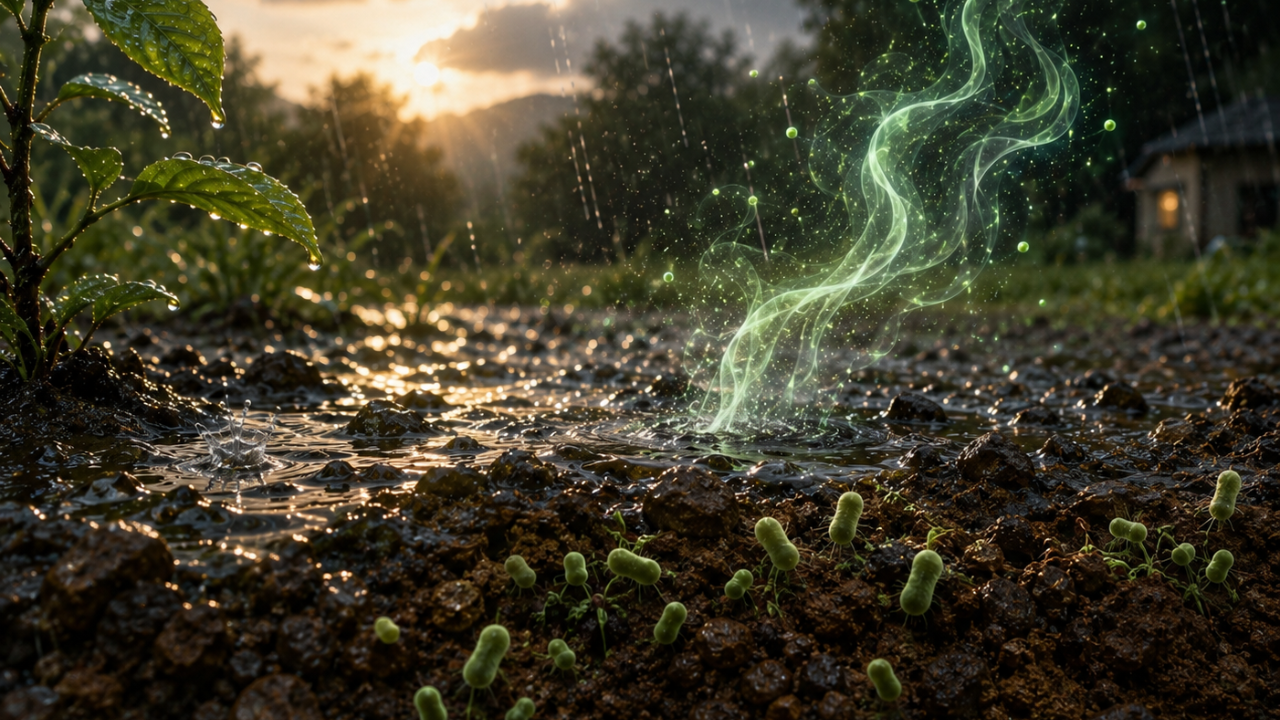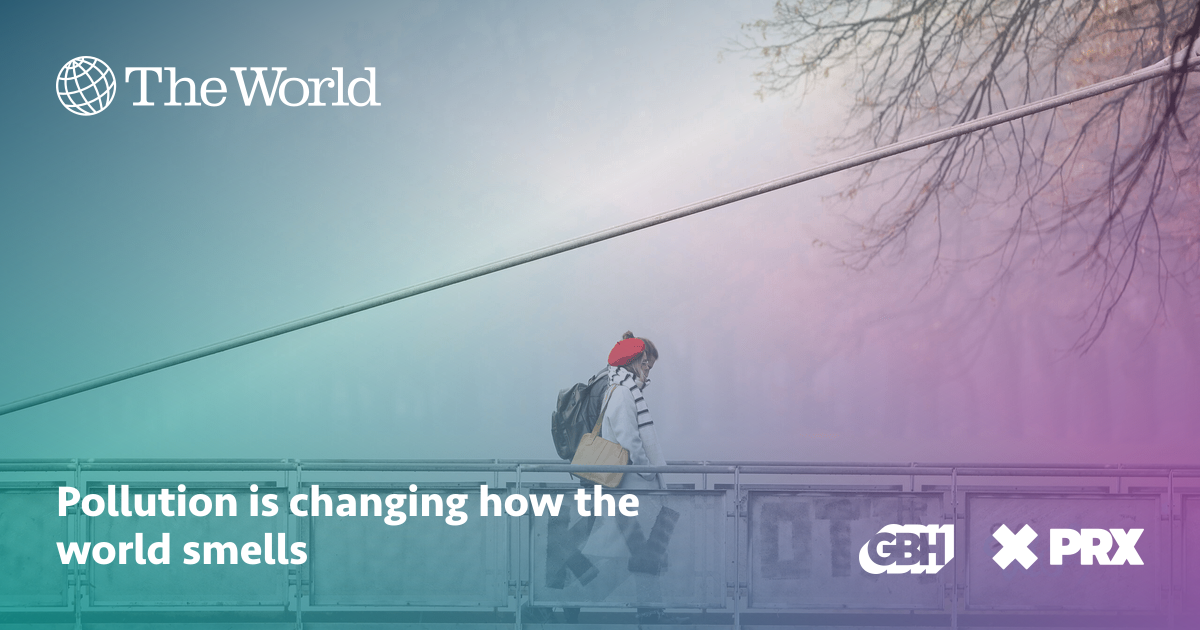
Public radio’s longest-running daily global news program.AboutContactDonateMeet the TeamPrivacyTerms of use©2026 The World from PRXPRX is a 501(c)(3) organization recognized by the IRS: #263347402.Pollution is changing how the world smellsScent is a powerful thing. In people, it’s connected to taste, memory, even cognitive health. For wildlife, smell can even dictate survival. But researchers are increasingly concerned about odor pollution, when the chemicals we add to the environment either overwhelm the existing smellscape with their own scent, or they change the existing scents at the molecular level. The World’s Host Marco Werman speaks with Stony Brook professor Jordanna Sprayberry about what this could mean for plants, pollinators and ecosystems.People cross a bridge shrouded by pollution haze as smog covers Sarajevo, Bosnia, Dec. 19, 2024.Scent is a powerful thing for many species. For humans, scent impacts taste on our tongues, and it’s even been linked to memory recall.For wildlife, smell is even more critical, essential to survival.According to Jordanna Sprayberry, a professor at Stony Brook University on Long Island in New York, people are messing with the “smellscape,” as it’s known, leading to odor pollution.She told The World’s Host Marco Werman that there are actually two kinds of odor pollution.“One is what I would call additive odor pollution. And those are things that human beings put into the world that are pretty stinky,” Sprayberry said. “Think of your diesel exhaust or chemical fertilizers and chemical fungicides. These are artificial chemicals that we make that have really strong odors that we are putting into the environment. The other kind is subtractive odor pollution. So, when we have car exhaust, your nitrous oxides, your ozone radicals, those actually can interact with the molecules that make up floral scent and turn them into a different kind of molecule and pull them out of a blend. So if, say, canola flower has eight molecules, when it gets run through the ozone, it drops down to seven and then six and then five, and suddenly it doesn’t smell like what an insect is expecting anymore.”Wetlands are seen beyond the Shell Norco refinery in Norco, La., March 8, 2018. The refinery is considered one of the largest petrochemical facilities in the United States.Gerald Herbert/APIn this Jan. 16, 2016, photo, vehicles move slowly through a traffic intersection after the end of a two-week experiment to reduce the number of cars to fight pollution in in New Delhi, India.Altaf Qadri/AP/File photoPollution covers the four towers that mark Madrid’s skyline in Madrid, Spain, Nov. 13, 2015. Street parking for non-residents has been banned in central Madrid and speed limits reduced on access highways in a bid to reduce pollution levels that have left the city covered with a murky brown cap that can be seen from afar. Daniel Ochoa de Olza/APOutside of dealing with clean air regulation, not many. One of the most important things we can do in a landscape where odor pollution is reducing the distance traveled by floral odor is to put flowers in shorter distances from each other. So, if my signal travels, say, 100 meters (328 feet) instead of 500 meters (1,640 feet), if I put plants every 100 meters, well then the animal is going to be able to find it. So, some of the same conservation initiatives that, in some sense, are just good logic can help us through these moments when maybe we don’t have all the experimental data that we want to make the perfect decision.Parts of this interview have been lightly edited for length and clarity.
Pollution is changing how the world smells - The World from PRX
Scent is a powerful thing. In people, it’s connected to taste, memory, even cognitive health. For wildlife, smell can even dictate survival. But researchers are increasingly concerned about odor pollution, when the chemicals we add to the environment either overwhelm the existing smellscape with their own scent, or they change the existing scents at the molecular level. The World’s Host Marco Werman speaks with Stony Brook professor Jordanna Sprayberry about what this could mean for plants, pollinators and ecosystems.
585 words~3 min read