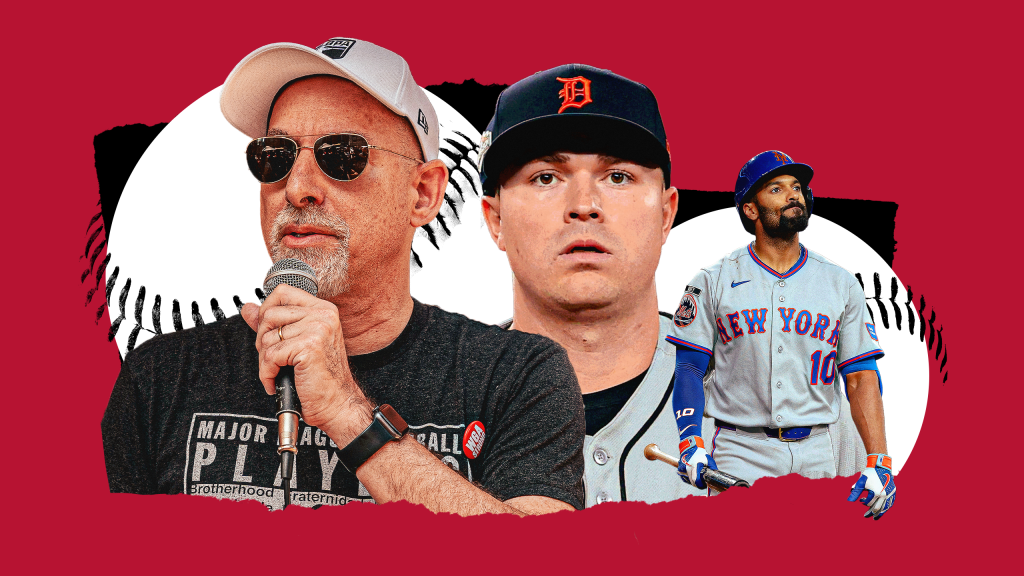
The current collective bargaining agreement between Major League Baseball and the Major League Baseball Players Association is set to expire at 11:59 p.m. ET on Dec. 1. It is expected that MLB will institute a lockout following the CBA’s expiration, and the lockout could threaten the 2027 season. Sportico’s Michael McCann, who is an attorney and a law professor, breaks down the potential legal fallout of a lockout in two parts. Part I analyzed the outlines of the labor dispute and the legal questions confronting MLB and management. Below is Part II, which looks more closely at the player and labor side of the legal question.
1. Could MLB Players Go on Strike Before the Lockout?
Yes, but that is unlikely. MLB players have gone on strike several times in the past. The most recent one, in 1994-95, lasted 232 days and led to the forfeiture of 948 games, including the 1994 World Series.
A strike is a work stoppage intended to pressure management into going along with a union’s demands. The advantage for MLB players in striking would be to disrupt MLB’s business operations by not showing up for work. That would lead to canceled games and potential contract problems with broadcast partners, sponsors, food and beverage vendors and others in contract with teams. It would inflict financial pain.