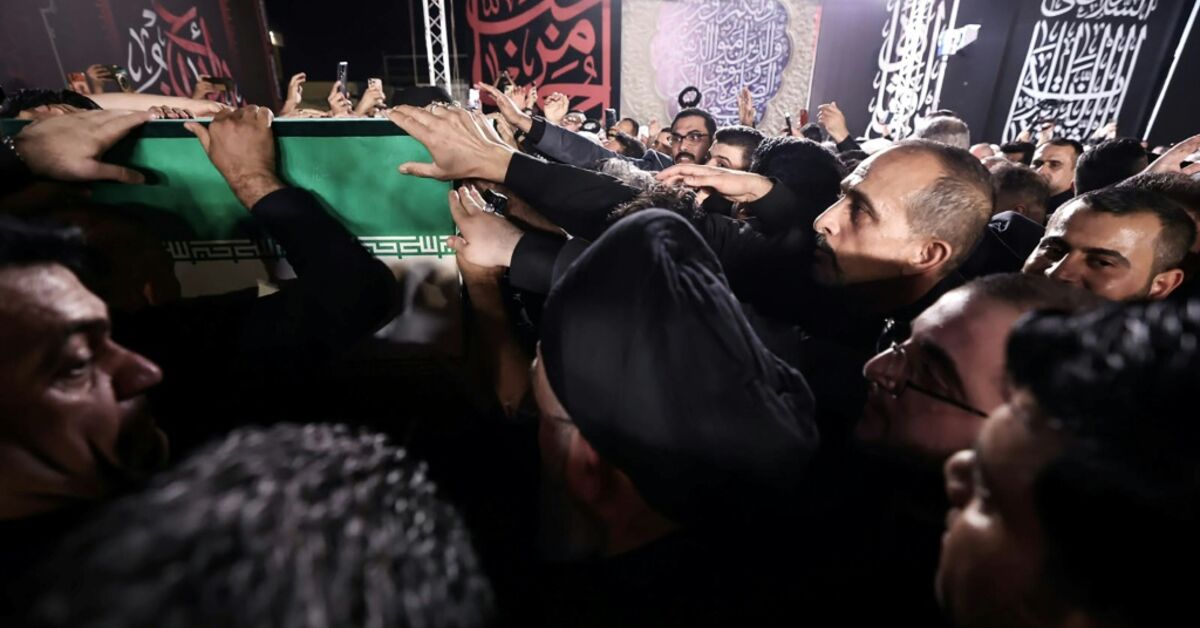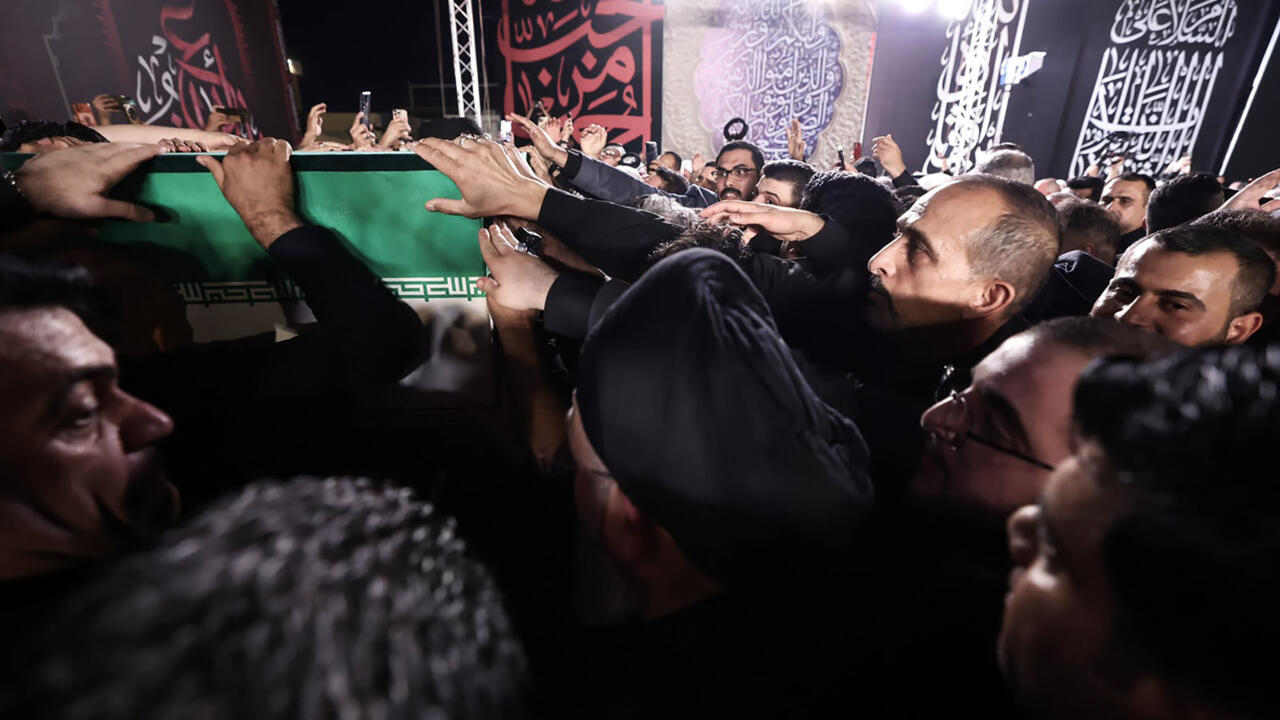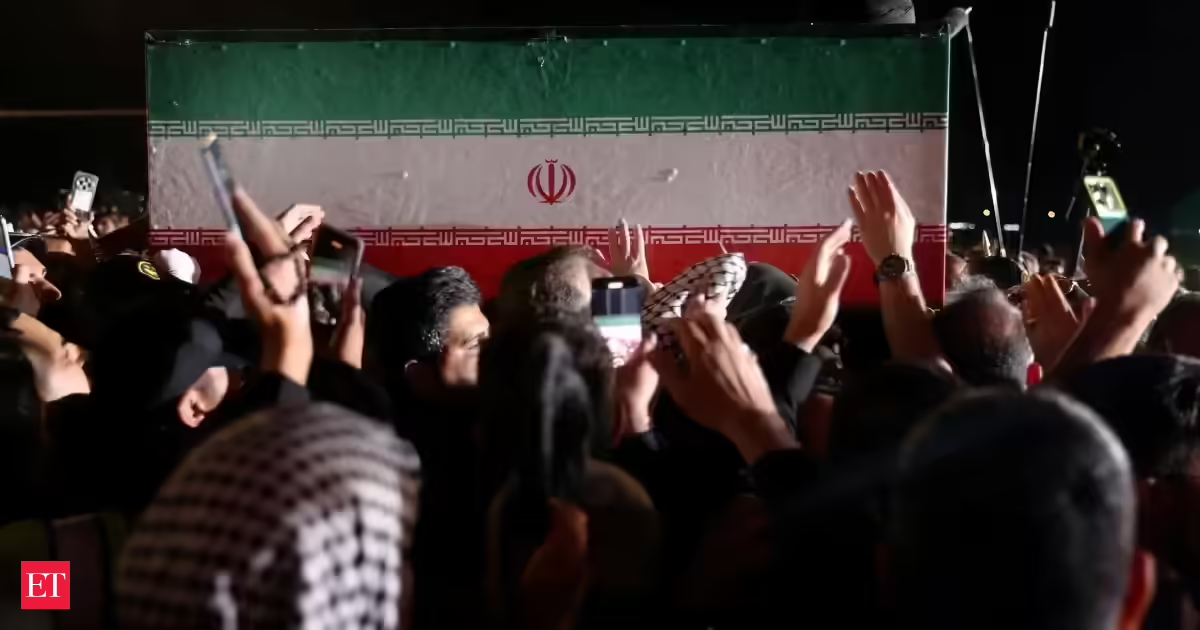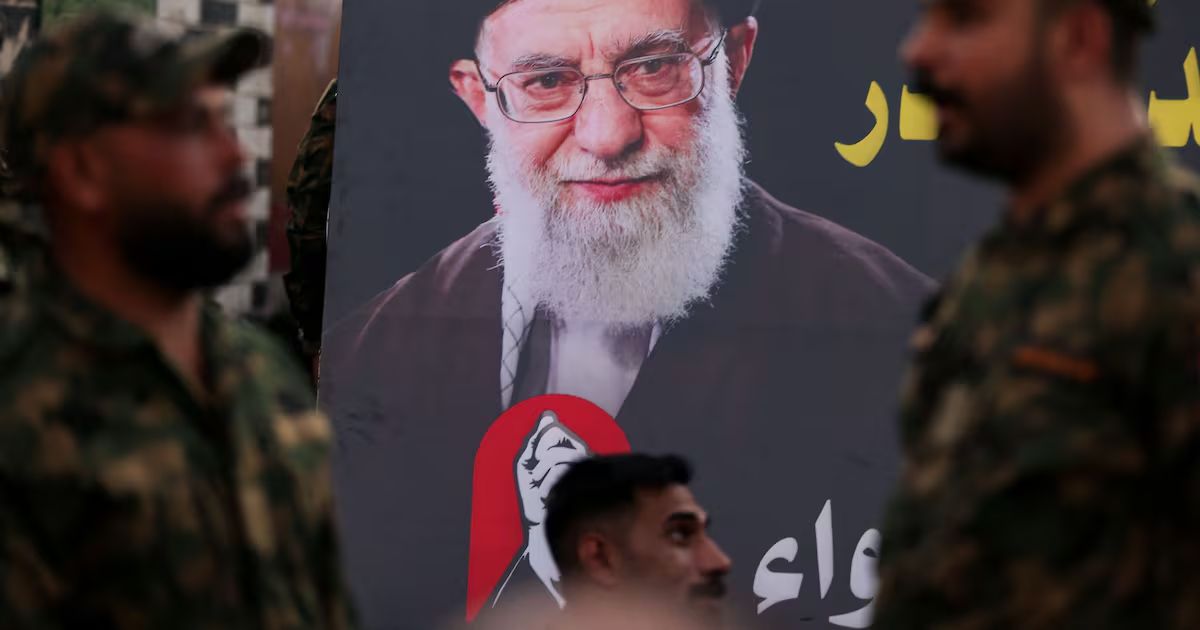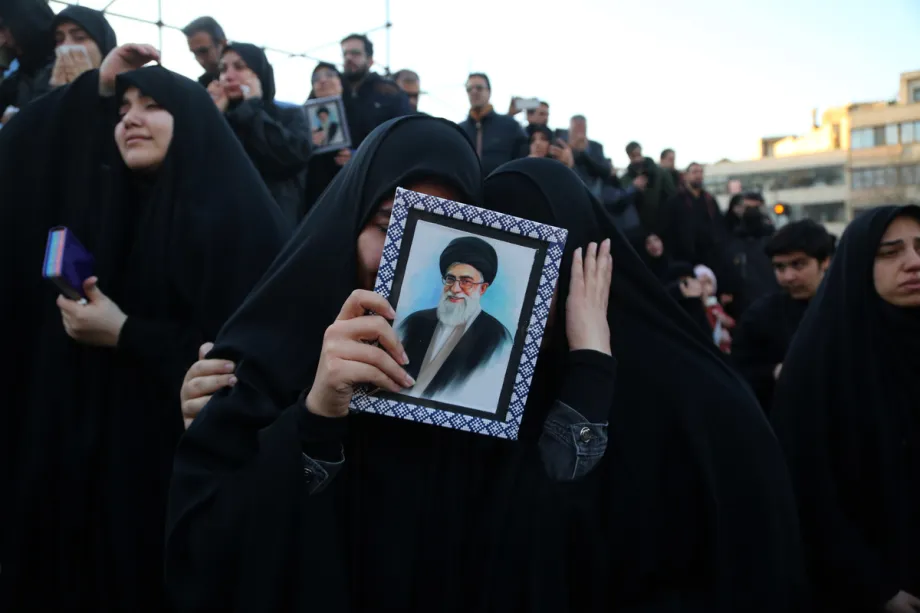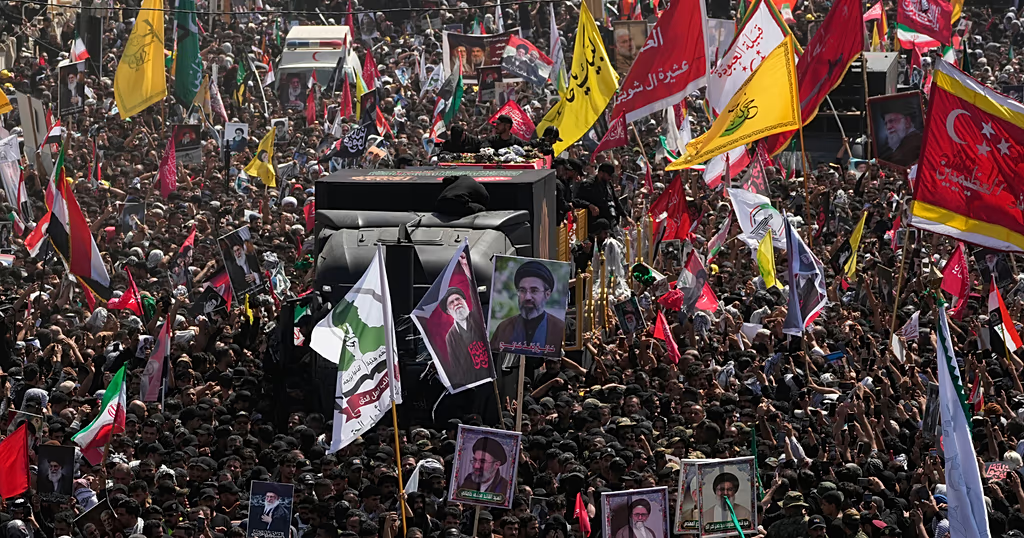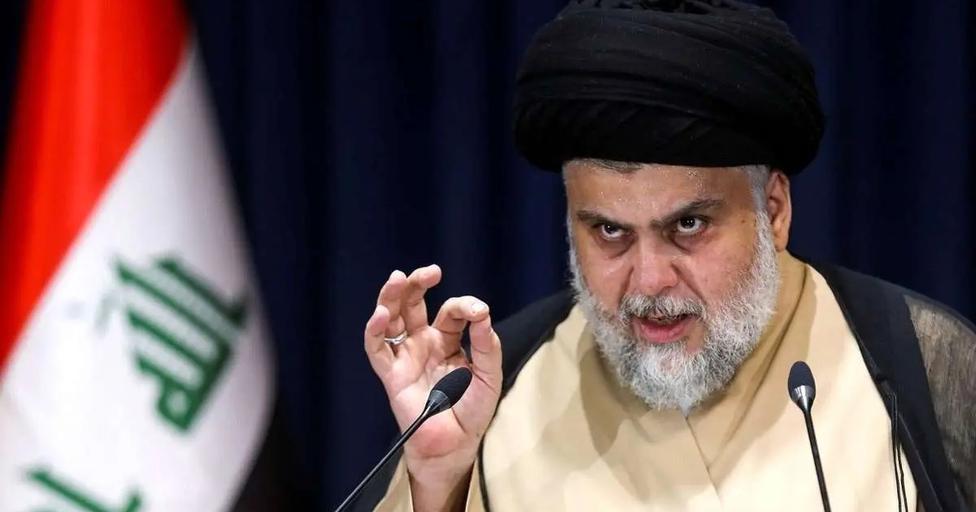
Muqtada al-Sadr, the influential leader of Iraq’s Sadrist Movement, has issued an official statement calling on Arbaeen pilgrims and the broader “Islamic Ummah” to actively participate in the multi-stage funeral procession for Ayatollah Ali Khamenei, the late Supreme Leader of the Islamic Republic.
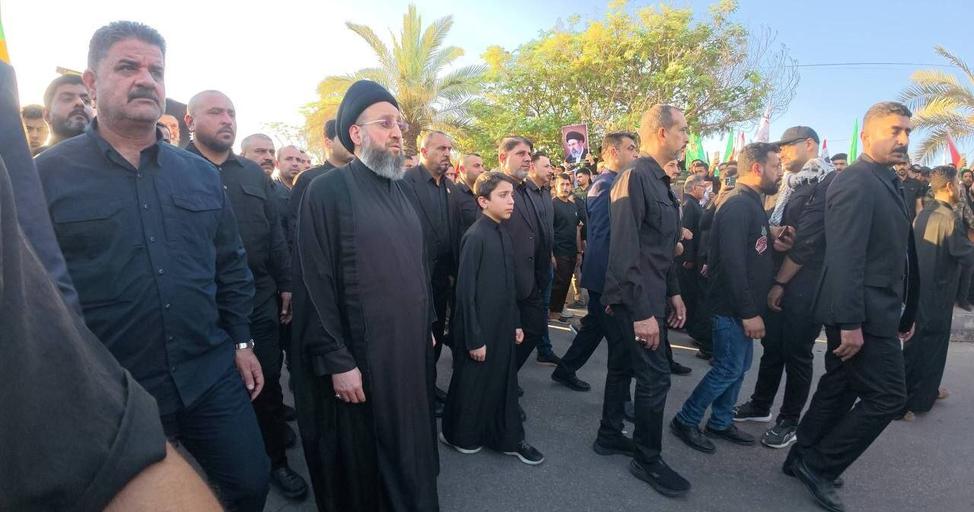
In his statement, al-Sadr referred to Khamenei as a “martyr of guardianship (Wilayah), jihad, and resistance,” urging faithful Shia observers to attend the upcoming funerary rites. The mobilization order aligns directly with the official itinerary mapped out by Tehran’s authorities, which dictates that, following the conclusion of the ceremonies in Iran, portions of Khamenei’s protracted funeral will transition onto Iraqi soil, specifically cutting through the Shia holy cities of Najaf and Karbala.
Muqtada al-Sadr, a key figure in Iraq’s religious-political landscape and the son of the late Grand Ayatollah Mohammad-Sadeq al-Sadr, rose to prominence following the 2003 overthrow of Saddam Hussein. By mobilizing the Mahdi Army militia, he cemented his role as a formidable arbiter of Iraqi state security and politics. While al-Sadr’s platform has maintained a staunchly anti-American posture, his operational relationship with the Islamic Republic has historically fluctuated between public friction and strategic alignment.