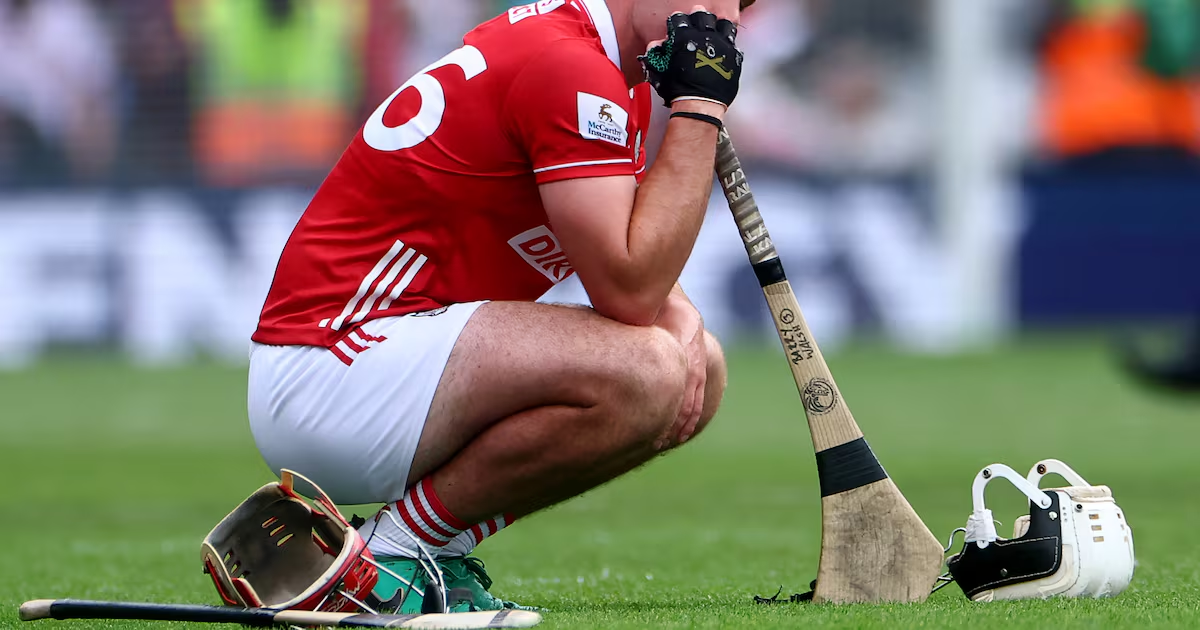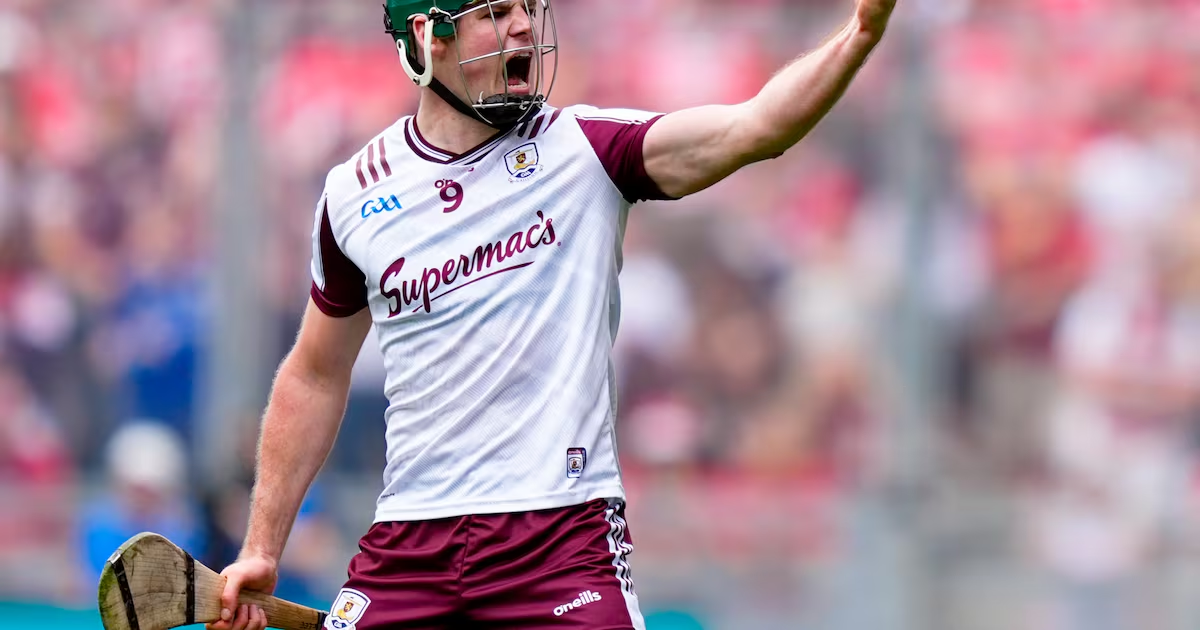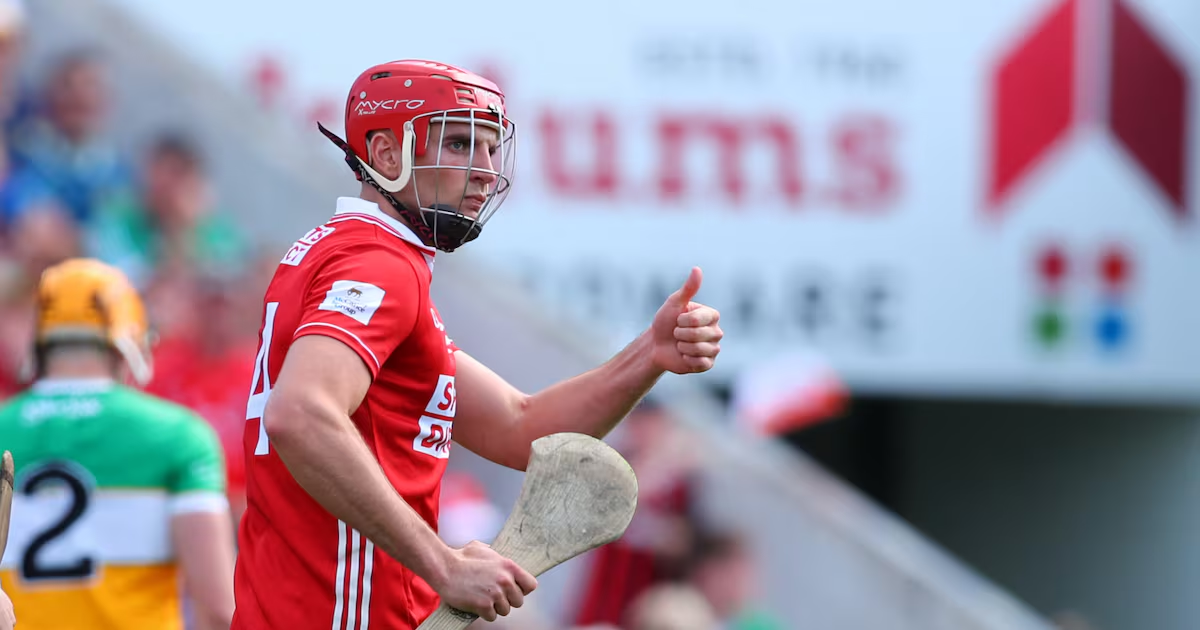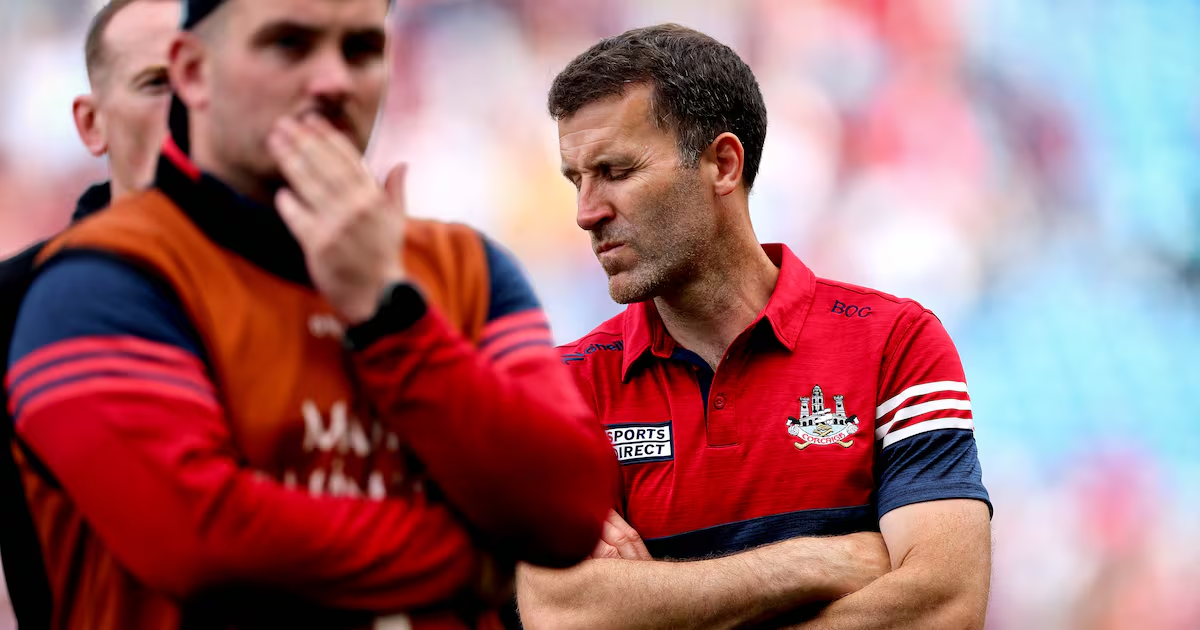
It was just short of the half-hour mark on Saturday and Cork had just taken a five-point lead. Darragh Fitzgibbon’s strike off his left put Cork 1-12 to 1-7 ahead and they were flying. They had yet to puck a wide. They had yet to drop a ball into Darach Fahy’s hand. They had scored 1-12 from 14 shots. Then it all went to pot.Afterwards, Ben O’Connor agreed that the five minutes from there to half-time were ruinous for his team. Galway scored five of the last six points to go in with a gap of just one to make up. Unprompted, O’Connor brought up the Munster final as well, when Limerick got the last four scores to cut a six-point gap to two at the break.“I won’t say we were confident going in at half-time,” O’Connor said on Saturday. “But again, those few points just before the break killed us. We had a nice cushion at that stage. And did they get the first two or three after half-time as well? It was an area that cost us, the same as the Munster final.”We’ll come to just why that period was so debilitating for Cork in a bit. But first, let’s break down those five minutes – or to be more precise, the nine minutes and 56 seconds it took to finish out the half. Because a lot happened in that short window, and not just on the scoreboard.The first was that Damien Cahalane got booked for dragging out of Jason Rabbitte. It was off the ball – referee Johnny Murphy spotted it from 40 metres away as Pádraic Mannion played the ball down in front of Rabbitte, who really hadn’t been getting much change out of Cahalane up to then. He’d been fouled for an early free and had scored one sumptuous point from out on the sideline but otherwise the veteran Cork defender had been doing well. This changed the dynamic though.For the next ball that came in a minute later, Cahalane had to be that bit less aggressive. Rabbitte got out in front of him to gather a Niland sideline cut at the second attempt and Cahalane was always second best, eventually losing his hurley in the effort to close the space. Just like that, the gap was down to four points and Cork were losing a key duel right in front of their posts.Galway’s Jason Rabbitte and Damien Cahalane of Cork. Photograph: James Crombie/Inpho Even though they got the next point, Cork were unsteady now. Patrick Collins had begun the day securing Cork possession with short puckouts but he had started going long with them and Galway were gobbling them all up. Even when he went short – once to Mark Coleman, once to Rob Downey, once to Tommy O’Connell – the subsequent long balls down the field ended up in Galway hands.It meant that Galway were getting their shots away so much easier now than at the start of the game. Tom Monaghan scored one and missed one. Darren Morrissey lost Shane Barrett to get forward for an easy one. To finish out the half, Sean O’Donoghue got a yellow card for a high hit on Rabbitte (who again had stolen a yard on Cahalane). Niland potted the free and the half was over with Galway just one point in arrears.The nuts and bolts of it are as follows. After Fitzgibbon’s score in the 30th minute, Cork conceded five points from seven scoring chances, only scored once themselves and had two of their full-back line booked. The end to the first half wasn’t why they lost but it made a damn good canary in the coalmine.The easy shorthand from here with Cork is to say that they are prone to second-half collapses. Everyone knows the numbers by now. Two points in last year’s All-Ireland final. Zero point attempts from play in the Munster final last month. Five points on Saturday. Figures like that are never going to get it done.Cork's Seán O'Donoghue is shown a yellow card by referee Johnny Murphy. Photograph: Ryan Byrne/Inpho But those totals, damning as they sound, are symptoms rather than causes. If O’Connor is going to fix them for next year, he will have to identify more precise reasons for these collapses.One obvious one is a dearth of ball-winners in their half-forward line. You can’t score if you don’t win possession and this is an old Cork failing, one that Séamus Harnedy’s steadfast career has often papered over. That he wasn’t used off the bench on Saturday was slightly mystifying. That he’s 36 in a couple of weeks and Cork haven’t produced another like him, even more so.But it wasn’t like Galway were ruling the skies either. So much of the ball Micheál Donoghue’s side won under puckouts was fought for on the floor. This wasn’t a game where high-catching featured to any great extent. It was more elemental than that. It’s abundantly clear that, not for the first time, Cork didn’t have what it took in that arena.In what arena do they have it though? That might be the biggest question O’Connor has to address now. What exactly is Cork’s identity? What are they good at? Cork's Darragh Fitzgibbon dejected after receiving a red card. Photograph: Ryan Byrne/Inpho They’ve been involved in so many brilliant games and electric occasions over the past few seasons that we can tend to take it as read that they’re littered with brilliant hurlers. But take out Fitzgibbon and is there anyone else who is a reliable lock for being the best in the country in his position?The All Stars are a matter of opinion and timing and all kinds of prejudices. But they serve as a handy guide all the same. There have been 90 All Stars given out since the start of the decade. Only nine of them have gone to Cork players, despite them having been in three All-Ireland finals. Kilkenny have been to one final fewer but they’ve picked up 12 All Stars in that time.What does that prove? Probably nothing. Except that even during one of the worst All-Ireland runs in Kilkenny’s history, they’ve still been able to hang their hat on Eoin Murphy or TJ Reid or Huw Lawlor as being best in class. Cork don’t have that.Instead, they go into 2027 unconvinced about so many positions on the pitch. Is there any competition for goalkeeper? Who is their full back? Where is the best place for either of the Downey brothers? Take out Fitzgibbon and Brian Hayes and who starts in the forward six? Does Alan Connolly? Does Shane Barrett? Everything has to be up for grabs now.One thing is for sure, this won’t be a winter to be a sacred cow in Cork. Those second-half collapses leave O’Connor no option but to dream it all up again.
Cork have an identity crisis – what exactly are they good at?
The second-half collapses in big games against Tipperary, Limerick and now Galway are symptoms rather than causes
1,142 words~5 min read