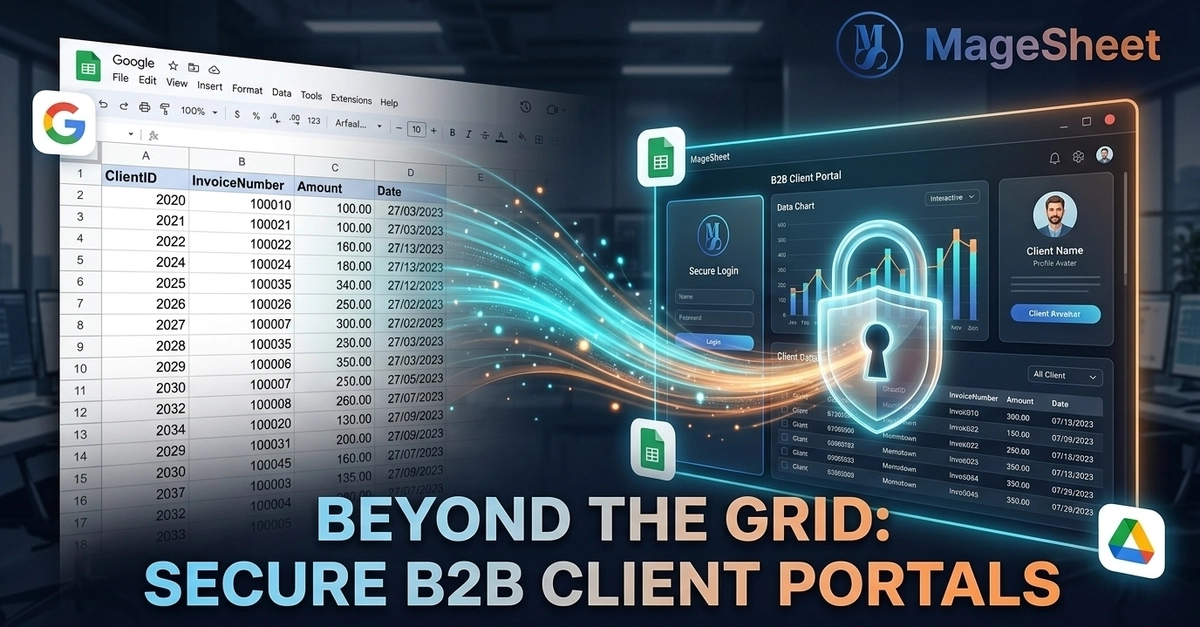
Every growing B2B organization eventually hits the same operational barrier: how do you share critical, row-level transactional data with an external client without exposing the rest of your corporate database?
If you run business operations out of Google Sheets, your instinctive reaction might be to lean on protected ranges, hidden tabs, or individual spreadsheet workbooks.
Unfortunately, in a high-stakes business ecosystem, relying on native spreadsheet access controls to separate multi-tenant data is an operational hazard. It takes just a single accidental modification by an internal team member to break structural references, leak sensitive partner pricing tiers, or expose a competitor’s active pipeline records to the wrong user.
If you want to scale your operations safely, you need to move completely away from the standard spreadsheet grid and build a dedicated user interface.
The Illusion of Frontend Filtering