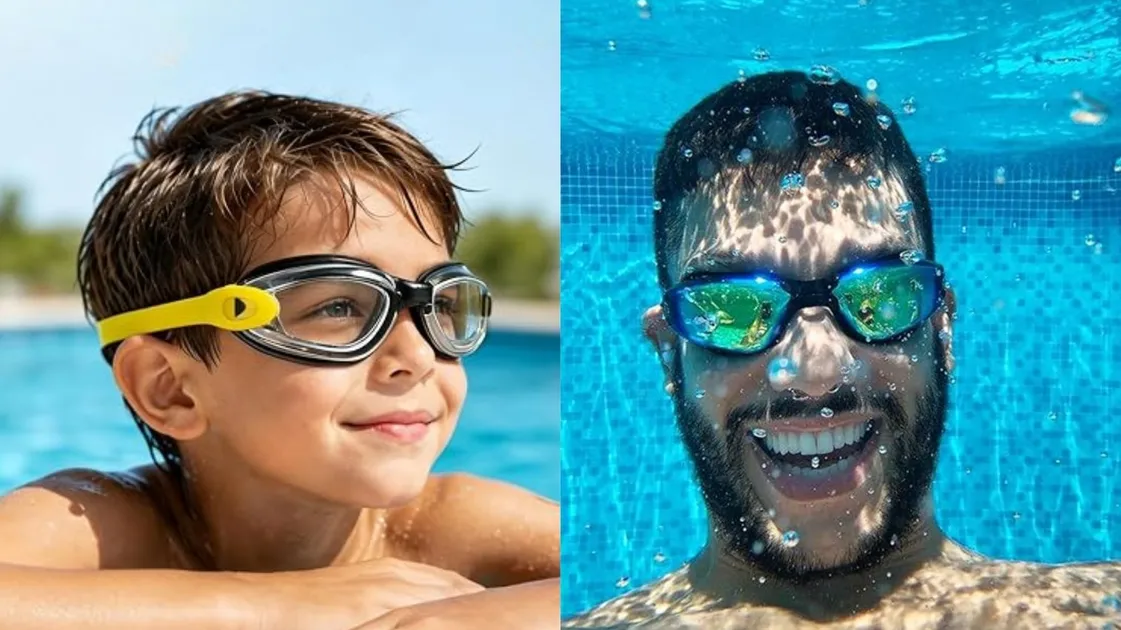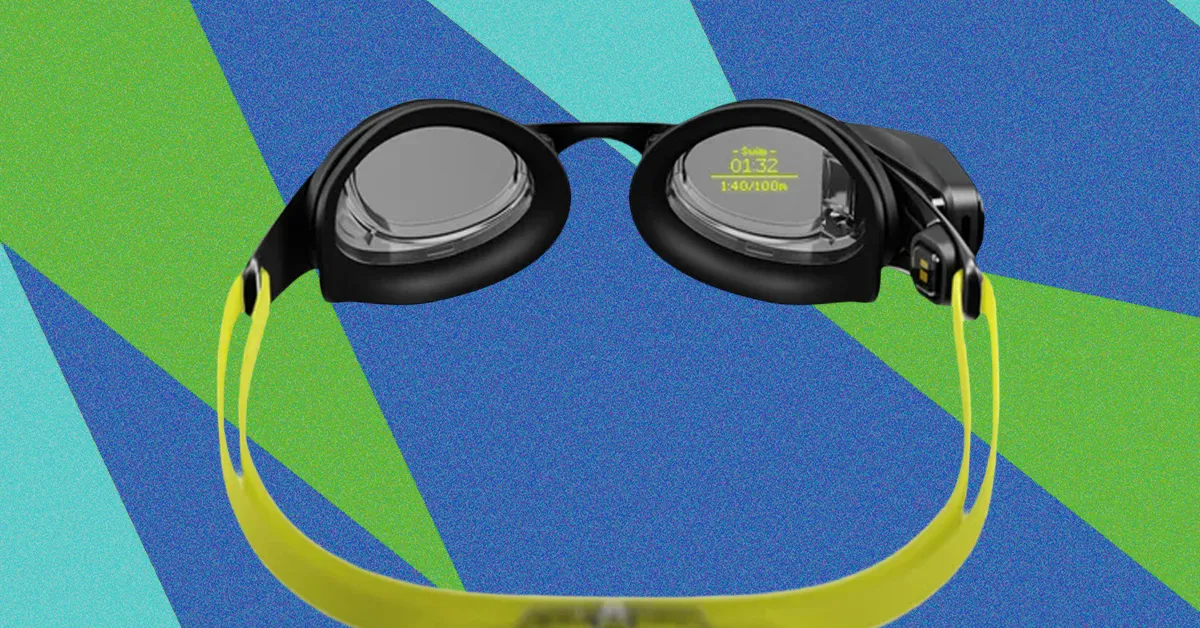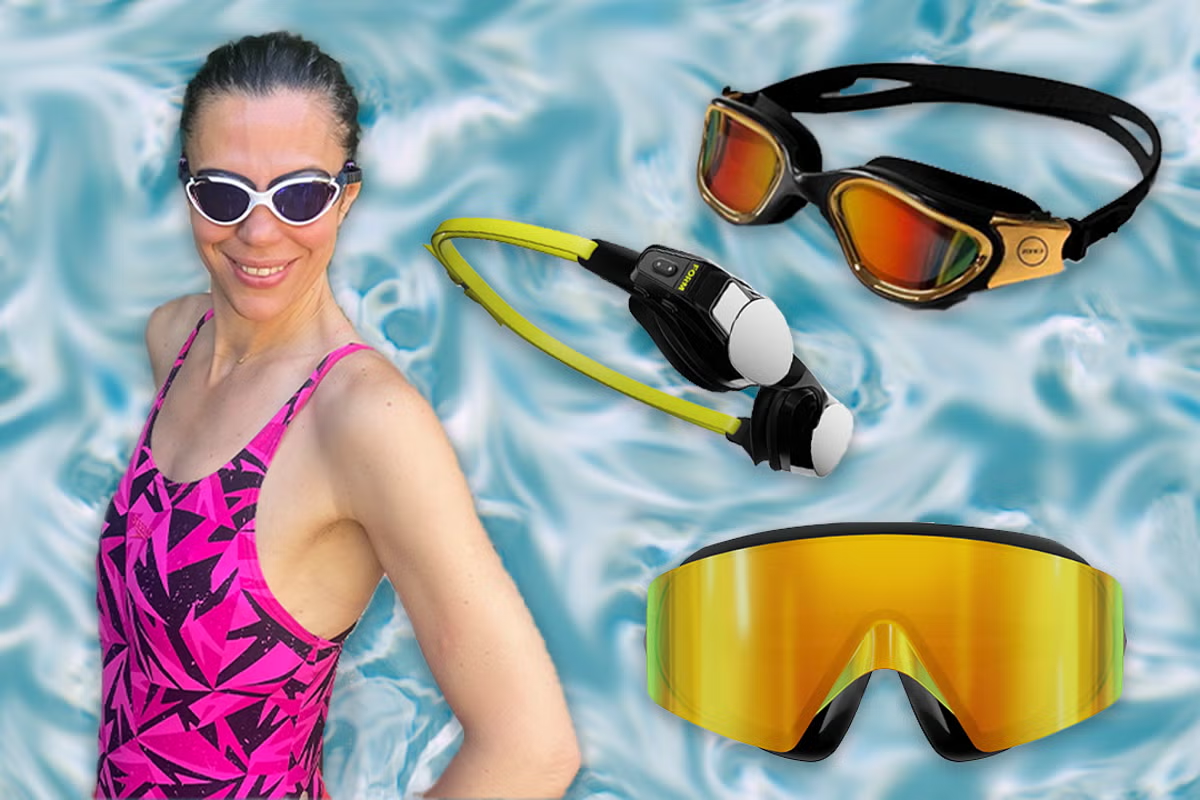
Your questions about swimming goggles answeredWhat are the best swimming goggles?If you want dependable all-round performance, the Zoggs predator flex titanium goggles stand out with their impressive 180+ degree peripheral vision and excellent glare reduction, making them ideal for both pool and open water swims. If you’re a beginner swimmer or looking for a pair for casual swimming, the Nabaiji one-size swimming goggles are quick to adjust, easy to use and have a decent watertight seal.For swimmers who want cutting-edge technology, the Form smart swim goggles 2 provide real-time metrics and adaptive photochromatic lenses, perfect for serious training and performance tracking. If you get irritated by water pooling up at the bottom of your lenses, TheMagic5 blue magic mirror gold goggles redefine leak-proof with their custom 3D-printed fit.How I tested swimming gogglesI tested each pair of swimming goggles during regular swim sessions over several weeks, focusing on how they performed in real training conditions. During testing, I considered the following criteria.Design and fit: Key factors included how well they sealed around the eyes, whether they leaked during different strokes, and how easy they were to adjust for a secure fit.Comfort: This was a major consideration, as goggles that feel fine at the start of a session can quickly become uncomfortable over time. I wore each pair for longer swims to assess pressure around the eye sockets and whether they left deep marks on the skin afterwards.Lens performance: I assessed how resistant they were to fogging and how clearly they allowed me to see underwater. This included testing in both indoor pools and outdoor settings, where light conditions can vary significantly.What makes a good fit in swimming goggles?A good fit is essential if you want to get the most out of your swim. Goggles that leak, shift or pinch can turn even a short session into a frustrating experience. According to Brian Johns, a three-time Olympian swim champion, a proper fit should achieve three key things: it should stay watertight throughout your swim, stay in place even during push-offs and dives, and remain comfortable enough to wear for a full workout.“A common mistake is not having the straps tight enough,” says Johns. “Even a slight movement in the goggles can result in a leak that will stop you during your training.” At the same time, a good pair shouldn’t feel like they’re digging into your face. Striking the right balance is key, and sometimes it takes a bit of trial and error to find the right adjustment.What to look for when buying swimming gogglesBefore buying a pair of goggles, think about where and how you plan to swim:For racing: Opt for a low-profile design that cuts through the water with minimal drag.For outdoor training: Mirrored or tinted lenses will help with glare. For open water swimming: Comfort and visibility should be your priority.Johns explains: “Typically, the most popular goggles are often ones that are the most versatile, so they will be pretty good in every scenario, though they may not be excellent in any particular area. You might have an 'everyday' pair, but then have another pair that are your 'race' goggles or your 'outdoor' goggles.“Beyond that, just like a pair of runners or a new bike, it's ok to get something that you think looks great and fits your style. Being confident and comfortable when you're training, and especially in the water, will make it easier to come back for more.”If you’re swimming frequently, look for anti-fog coatings that hold up over time, lenses that offer good peripheral vision, and strap systems that are easy to adjust without slipping mid-swim.How to optimise your swim training for health and enjoymentSwimming is a full-body, low-impact workout with huge cardiovascular benefits, but it can also be technically demanding. Unlike running or cycling, you can’t simply cruise through a 30-minute swim without thinking about form and breathing.“To get the most out of your swimming for health, you should rely on interval training,” says Johns. “Take frequent, structured breaks before your technique falls apart, and then go again.” For example, instead of swimming 1,000m non-stop, break it into 10 100m units with 20-second rests in between. This allows you to maintain good form and get more from your session overall.”Advice for beginner swimmersOne of the best ways to stay motivated as a beginner is to track your progress. Interval training helps here, too. “Maybe the first time you do a set, you need 30 seconds to catch your breath, but next time only 20 – that’s success,” says Johns.Swimming is also a sport that rewards technique as much as fitness. Johns recommends counting your strokes per length to monitor your efficiency. “Over time, you want that number to stay the same or go down,” he explains. That’s a sign you’re moving more efficiently in the water, which makes swimming more satisfying and encourages you to keep coming back.Why you can trust IndyBest reviews Zoe Griffin has been evaluating and reviewing products for IndyBest since 2021, exploring a wide range of items from home appliances to children's toys. As a triathlete, Zoe has particular expertise when it comes to sports and fitness, reviewing everything from the best waterproof headphones to the best swimming caps. When assessing swimming goggles, she takes into account choices for all budgets and her reviews are based on her genuine experiences through real-world testing.I’m a cold water swimmer – these are the best changing robes I’ve used
12 best swimming goggles for adults, tested by a triathlete
Protect your eyes and maintain your pace, with these top-rated swimming goggles
905 words~4 min read