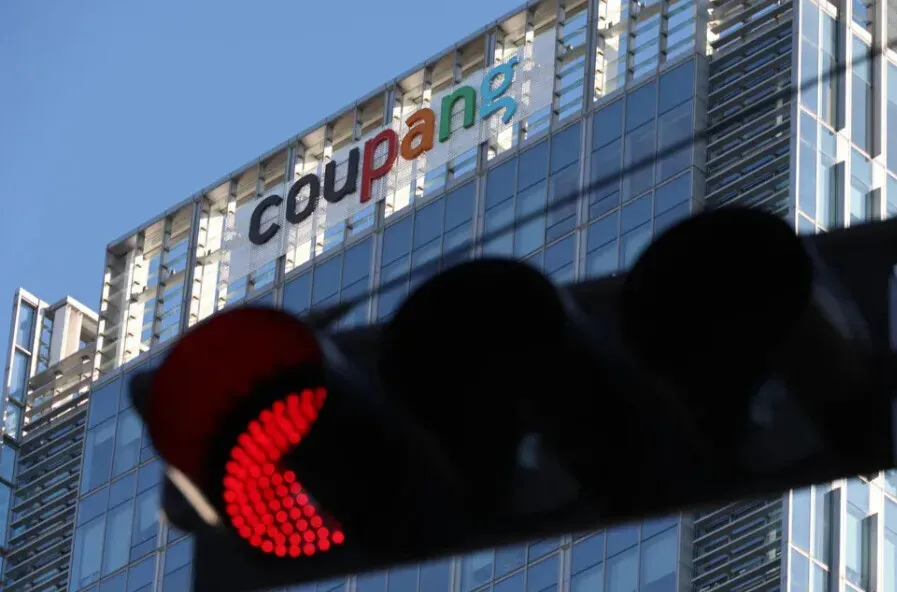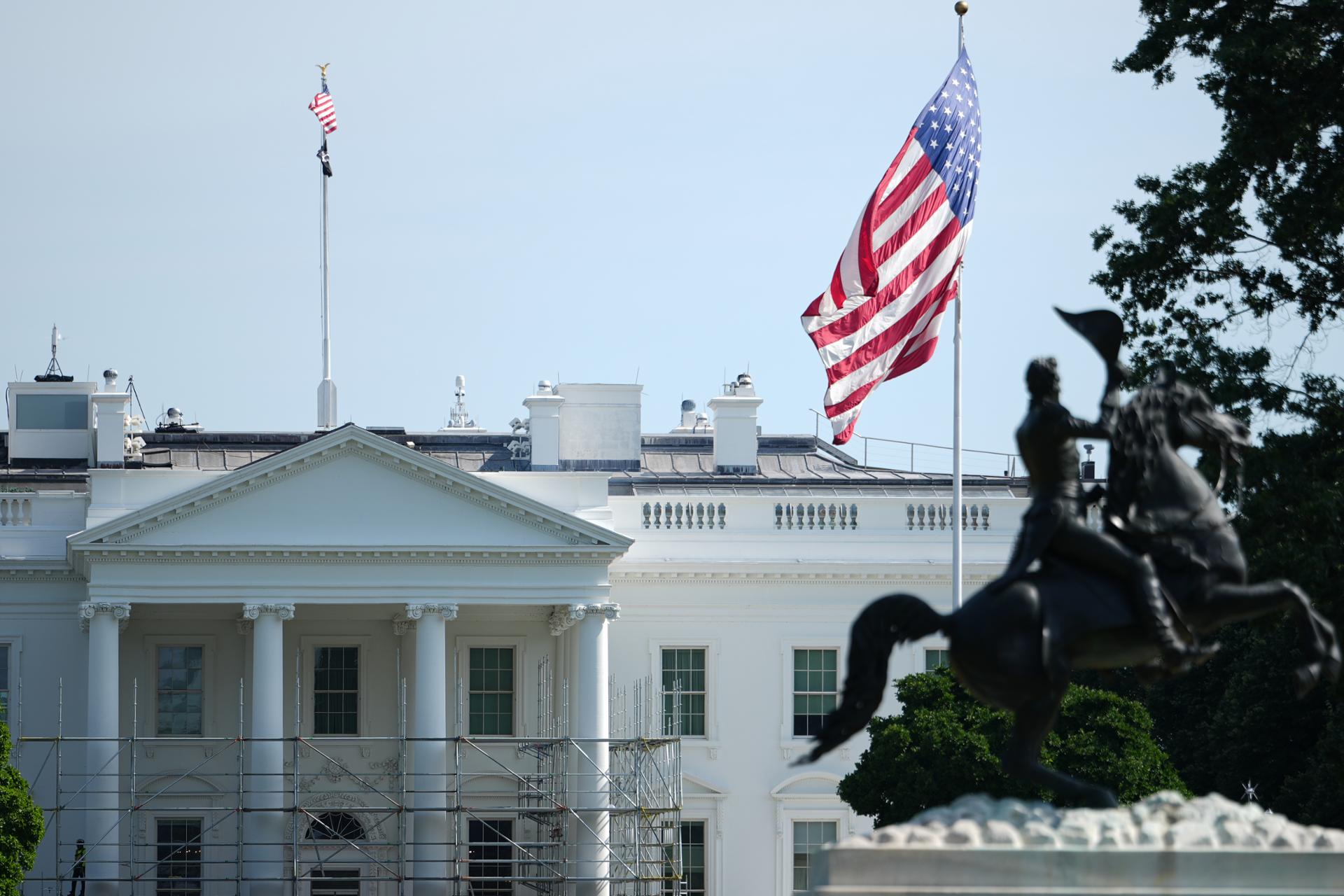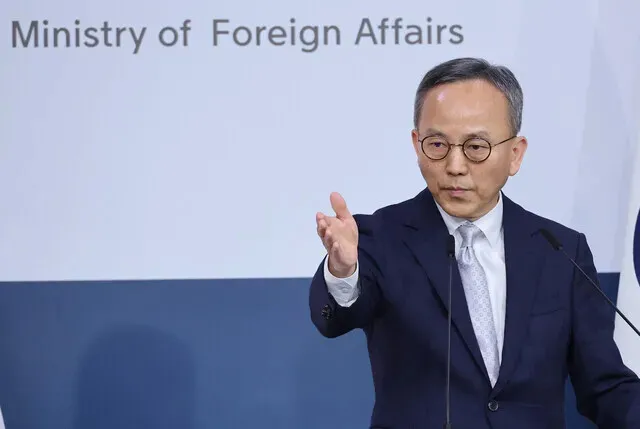
For two days running, the Korean government has pushed back against a US House report alleging discrimination against American tech firms such as Coupang, while the White House has since begun to ramp up pressure on Seoul. As the US and Korea once again butt heads over Coupang, it’s now up to Seoul to determine how it will prevent this conflict from derailing negotiations on nuclear energy and the construction of nuclear-powered submarines and undermining the bilateral relationship as a whole. “All investigations of Coupang were conducted on a non-discriminatory basis adhering to Korean legal procedure. We do not discriminate against corporate activities based on nationality, and no company has been targeted specifically,” Wi Sung-lac, the Blue House director of national security, said during a briefing on Friday. With not only US lawmakers but now even a White House official claiming that the Korean government is discriminating against US tech companies by “targeting” Coupang, the Blue House has jumped into action to refute those allegations. The statement from the Wi comes after an earlier expression of regret by the spokesperson for Korea’s Ministry of Foreign Affairs on Thursday over the report’s reliance on Coupang’s “one-sided claims.” The National Intelligence Service also published a statement calling the report inaccurate. In a report released on July 1 (local time), the US House Judiciary Committee echoed Coupang’s side of the story, attributing the data breach to a disgruntled former employee who accessed Coupang’s data systems without authorization before claiming that South Korea used the incident to “[escalate] its attacks into a ‘whole-of-government assault’ on Coupang.’” “By any reasonable measure, Coupang is being singled out by the Lee [Jae Myung] government. The Trump administration will not tolerate unfair trade practices, including those that limit market access for US digital services,” wrote a White House official in a statement sent to Korean news outlets, including the Hankyoreh, on Thursday, turning the heat up on Seoul. The problem is that Coupang’s version of events is slowly gaining traction within the US Congress and the Trump administration. In February, the House Judiciary Committee summoned Harold Rogers, the interim CEO of Coupang’s Korean subsidiary, to testify, and in April, 54 Republican members of the House of Representatives sent an open letter to Ambassador Kang Kyung-wha, Korea’s envoy to the US, to demand an immediate end to “targeted and discriminatory actions against US companies.” Seoul is concentrating its efforts on explaining Korea’s position and opinions to the US, especially to the US Embassy in Korea, but it appears to be making little headway. Coupang’s formidable lobbying power and tougher congressional scrutiny of foreign governments’ treatment of US companies operating abroad are further exacerbating the situation. Concerns are growing that Korea may find itself in a position similar to Europe after Congress held hearings regarding the EU’s Digital Services Act and even imposed visa bans for individuals involved in the legislation. There are also worries that the Coupang affair could negatively impact US-Korea security cooperation on key bilateral issues such as negotiations on Seoul’s push to build nuclear-powered submarines, enrich uranium, and reprocess spent nuclear fuel. Discussions between the US and Korea on nuclear energy were postponed and only held in Seoul from June 2 to June 3, however, the schedule for the second round of talks in the US has not yet been finalized and is still being coordinated. Given that the House Judiciary Committee’s report alleges that “South Korea’s discriminatory treatment of American-owned businesses directly violates its recent trade agreement with the United States,” some observers suggest that the US is attempting to escalate the Coupang issue. Sources in diplomatic circles indicate the US might use the Coupang controversy as a basis to once again delay nuclear consultations. “We intend to work to ensure this issue does not get blown out of proportion to the point that it affects different aspects of Korea-US relations. Efforts will be made to isolate and separate this case so that it does not impact various other issues between Korea and the US,” said Wi. A Foreign Ministry official also noted that Seoul plans to continue engaging Washington. “Our government will continue to address factual inaccuracies within the US administration and Congress and will actively explain that it is faithfully fulfilling its commitments under the bilateral trade agreement not to discriminate against US technology companies,” the official said. “We will work to prevent this issue from further burdening bilateral relations,” they added. However, seeing that the White House and Congress continue to come to Coupang’s defense despite the Korean government’s continuous attempts to explain itself, it may be necessary to consider new and more innovative measures. By Park Min-hee, senior staff writer Please direct questions or comments to [english@hani.co.kr]
Blue House pushes back against US claims about Coupang after White House says it’s ‘deeply concerned’
South Korea’s government appears to be doing everything it can to keep the dispute over the Coupang issue from derailing discussions on national security cooperation between the US and South Korea and creating tensions in the bilateral relationship as a whole
786 words~4 min read