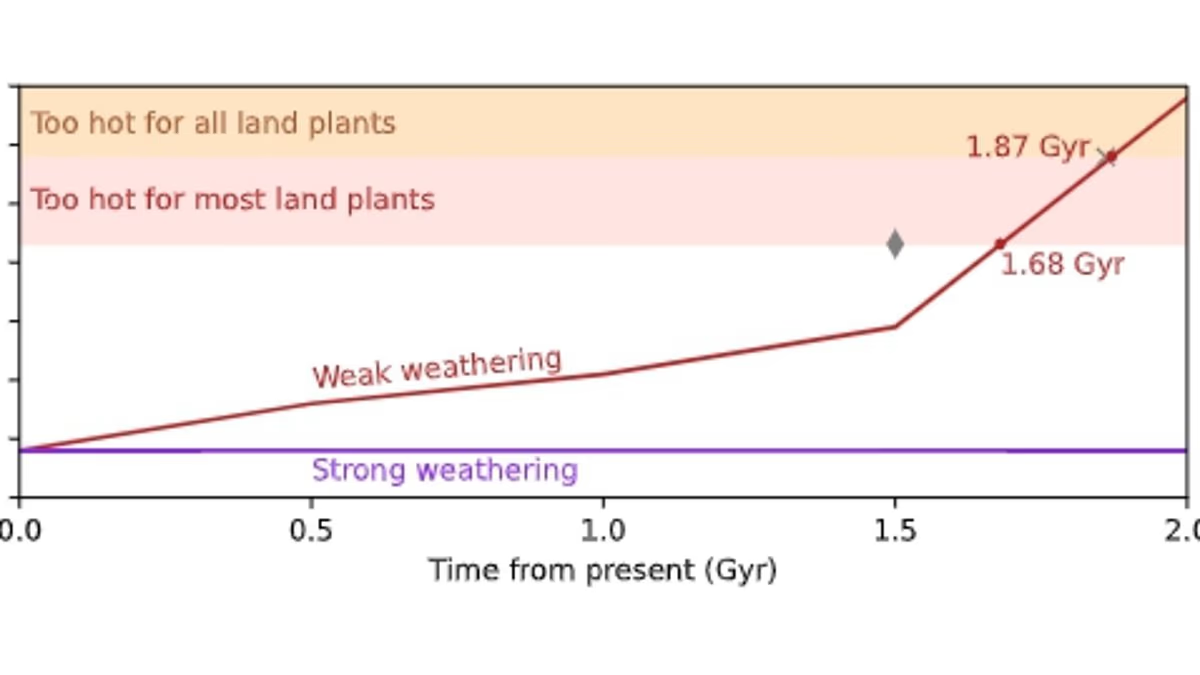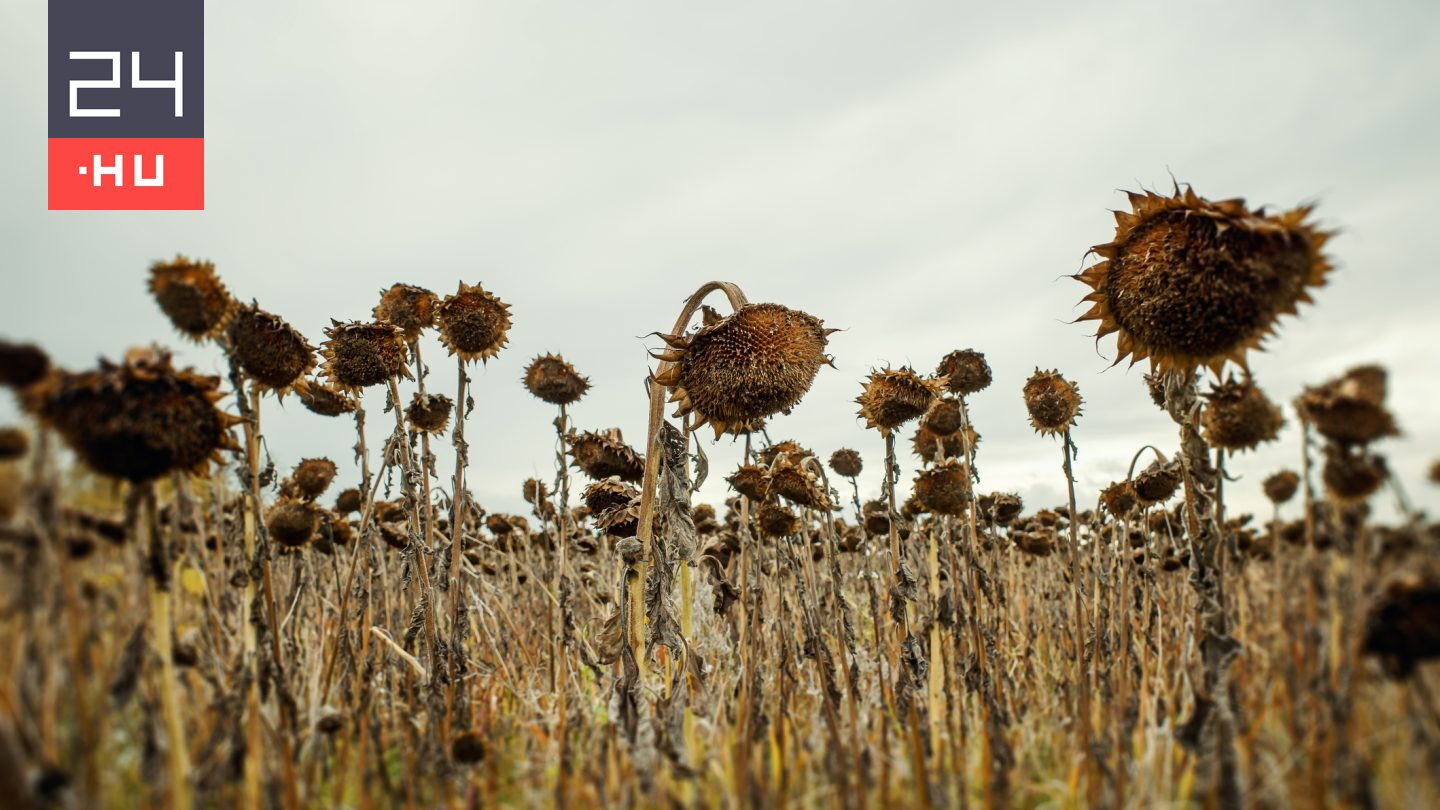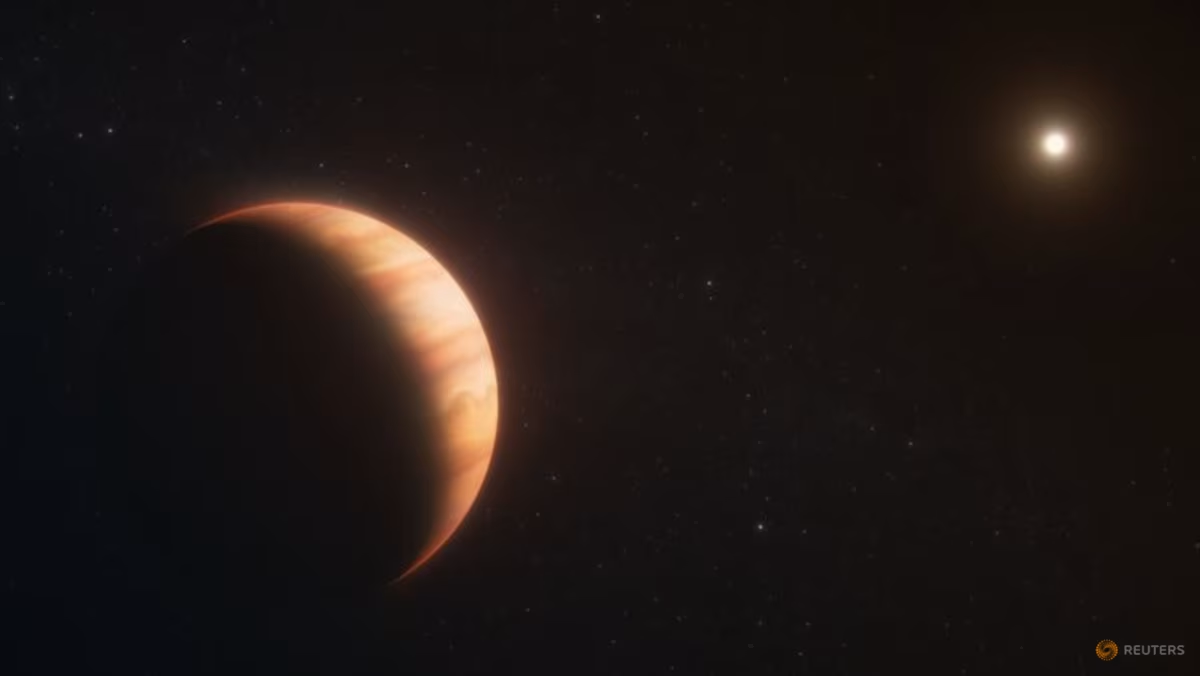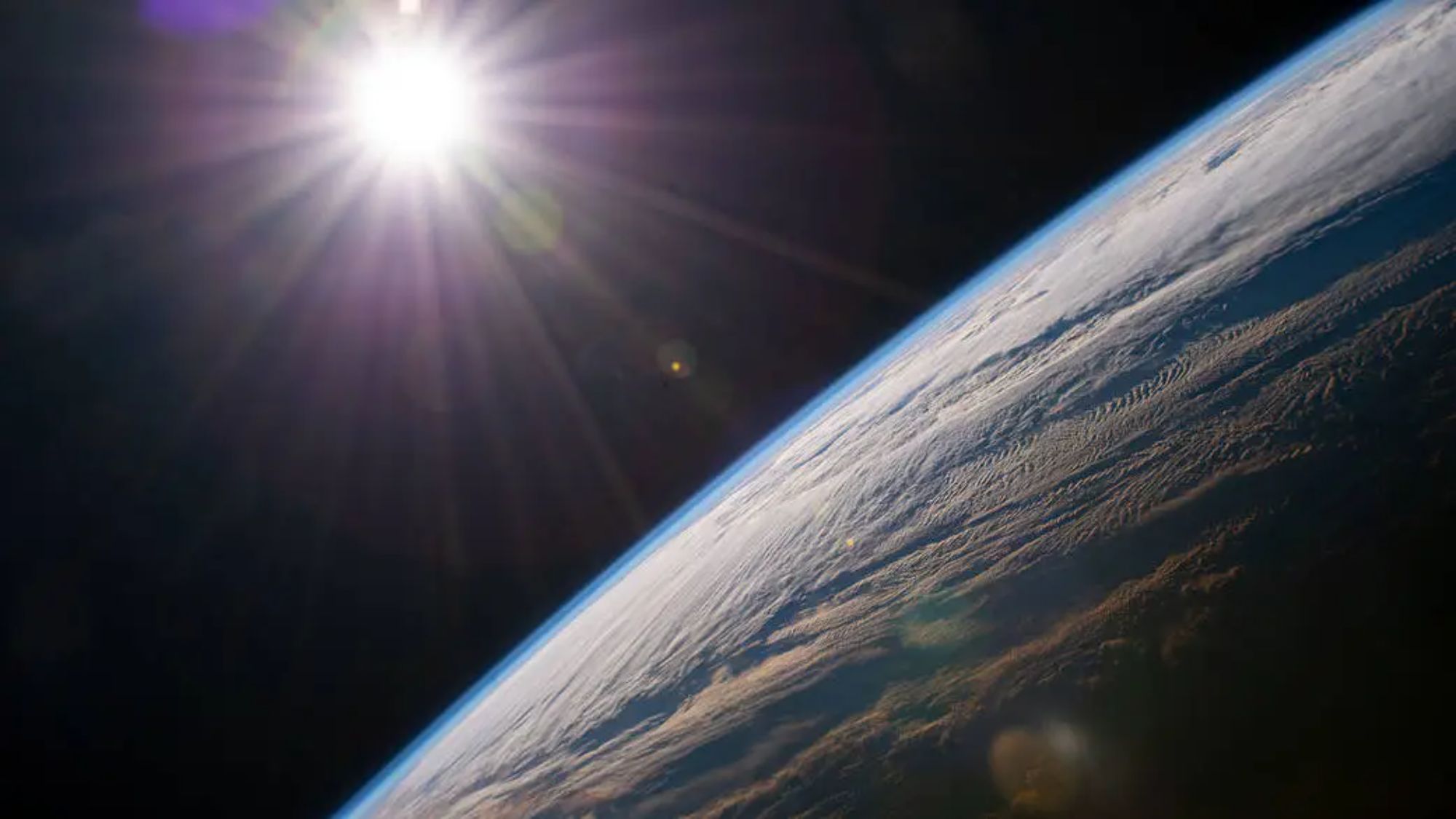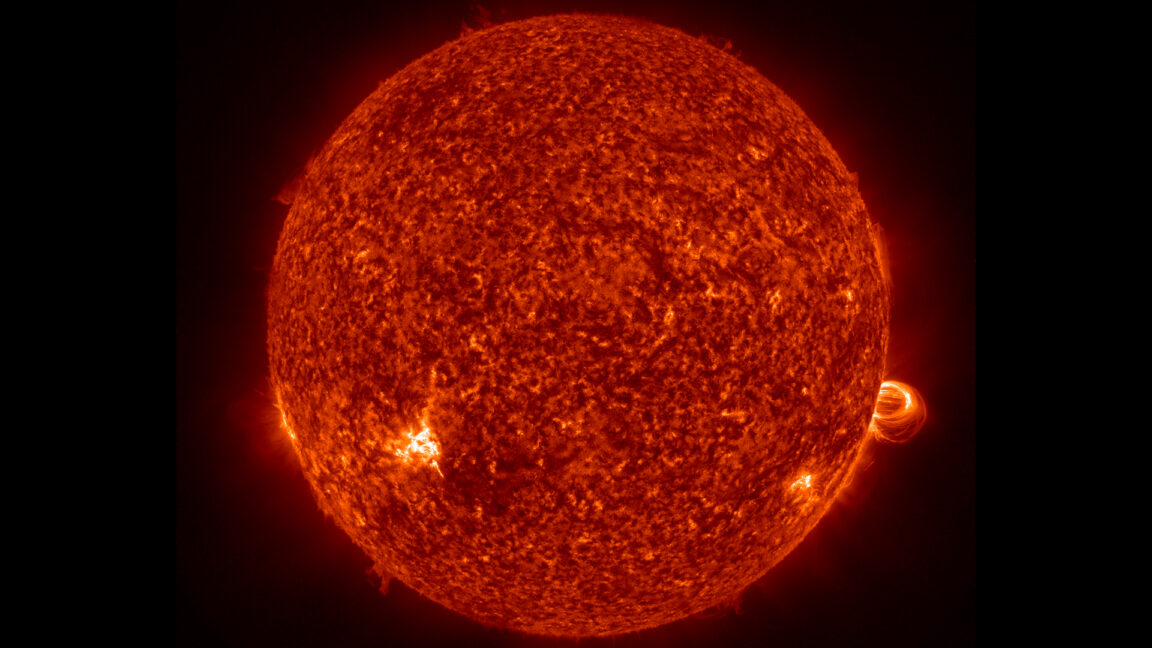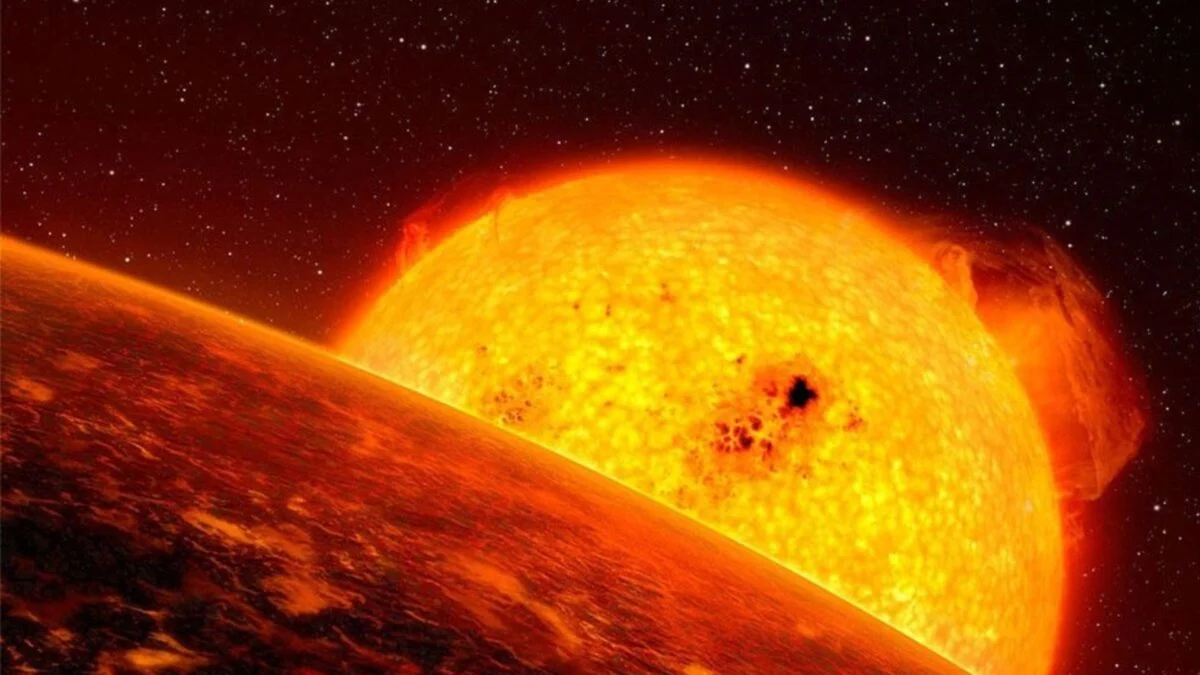
If potted plants always seem to die under your care, you can take solace in knowing that plantkind as a whole will probably survive for a very long time.In fact, they might still be around when the Sun boils the oceans off the surface of Earth.That's according to a new paper from two planetary scientists who used a series of models to estimate the maximum lifetime of Earth's vegetative biosphere – that is, its plant life.Their simulated scenarios, detailed in the Journal of Geophysical Research: Atmospheres, suggest that the last plant on Earth might not wither and die until 1.87 billion years from now.By then, the Sun will shine about 20 percent brighter, which will probably either bake or choke plant life out of existence. That said, there could be an asterisk at the end of that sentence, which potentially allows plants (and other kinds of life) to persist beyond that point.A NASA visualization of Earth's biosphere, measured using satellite data. (NASA/Goddard Space Flight Center, The SeaWiFS Project and GeoEye, SVS)Plants comprise about 80 percent of all biomass on the planet – so Earth would do well to keep providing them with abundant sunlight, water, and carbon dioxide. But how long can it reasonably do so?And how long before plants reach their limit?To find out, astrobiologist Jacob Haqq-Misra and planetary climate scientist Eric Wolf from Blue Marble Space, a nonprofit research institute based in Seattle, ran a series of simulations.The pair used a 3D model to calculate what would happen to Earth's climate over the next 2 billion years. It was designed to account for how much the Sun is predicted to brighten over that time, as well as changes in the concentration of carbon dioxide (CO2) in the atmosphere.
Scientists Calculated When The Last Plants on Earth Will Die
If potted plants always seem to die under your care, you can take solace in knowing that plantkind as a whole will probably survive for a very long time.
863 words~4 min read