There has been a flurry of statements and events pushing the issue of a possible future united Ireland closer to the centre of political debate in recent weeks. It seems likely that by the next time voters come to choose a government, all the parties will be putting forward ideas on the issue in a way that they have never had to do before.This is hardly a change for Sinn Féin, but recently the party seems to have been addressing the unity issue with renewed ardour. Sometimes this is what Sinn Féin does when it doesn’t want to talk about other stuff. And the party has yet to come up with its own plan, preferring to say it’s the responsibility of the Government to do so. But still, Mary Lou McDonald is turning up the dial a bit.This week, she insisted that the Government’s number one priority for its presidency of the European Union for the next six months should be ... a united Ireland. That would certainly surprise Ireland’s EU partners, it’s fair to say. Next week, Sinn Féin will table a private members bill in the Dáil which would compel the Government to publish a Green Paper on unity and establish a citizens’ assembly.And last weekend, in her speech to her party’s Wolfe Tone commemoration at Bodenstown, McDonald laid on thick the ol’ time religion: “History is unfolding before us. Unity referendums are coming. The day is coming when everyone will have their say in the voting booth ... Britain can no longer fix the boundary to the march of this nation. The arc of Irish history is long. It now bends towards a future that belongs to the people in a united Ireland and a new republic.”Heady stuff indeed.But it’s not just Sinn Féin. Simon Harris has said that his party will produce a “blueprint” for a unified Ireland by November. As discussed here recently, it won’t, but it will produce something, and that marks Fine Gael’s entry to territory it had previously regarded as terra nullius.In Fianna Fáil, Jim O’Callaghan, the leading (though not only) contender to succeed Michéal Martin as party leader, recently observed in an interview with the Irish News that unity referendums could come before the end of the decade. It suggests, I think, that Martin believes that in a possible future united Ireland, the North should remain a devolved entityHe walked this back a bit in an interview on RTÉ’s This Week radio programme last Sunday, but my guess is that we will see other leadership hopefuls burnish their united Ireland credentials before long.O’Callaghan also attended a recent SDLP conference where he said that the next Irish government must prepare for unity. In an oped for The Irish Times last week, SDLP leader Claire Hanna argued perceptively that “work needs to be done to convince voters south of the Border that we aren’t a liability”. She concluded that the Government in Dublin needed “to take the lead in planning for what this future might look like, as they did for the Brexit referendum outcome they didn’t even want.”(Actually I think Brexit makes unity less not more likely, at least in the short-term, as it has done in Scotland. Voters will want to know what unity means, and that will take time to work out. But that’s a different column.)However it was an intervention by Martin this week that most caught my eye. Martin has always been wary of fourth green fieldism, more so as he got older and more so again as he ascended to high office. His signature policy, the Shared Island initiative, is carefully and deliberately shorn of constitutional connotations and presented as logical neighbourliness. He has chosen to emphasise reconciliation and co-operation rather than beat the referendum drum.But Martin knows that the consideration of possible constitutional futures won’t be put off forever. Last Monday, speaking at the annual Shared Island forum he sounded a familiar note, declaring that building all-island relationships requires “a hard slog” and not “rhetoric, slogans and soundbites”.But then he said something else: the three strands of the complex relationships outlined by the Belfast Agreement – relations within Northern Ireland, between North and South and between Ireland and Britain – would have to continue after unity.“Those three strands will always be part of whatever happens in the future. There will always be a British dimension, there will always be a North-South dimension,” he said.He has said this before, but there has been little consideration of what he means by it. It suggests, I think, that Martin believes that in a possible future united Ireland, the North should remain a devolved entity – that is to say, it would remain Northern Ireland, though under the ultimate jurisdiction of Dublin, rather than London. So it would retain its own identity and institutions.This is perhaps the biggest question – of all the big questions – about a united Ireland: does Northern Ireland continue as a devolved entity within a united Ireland, or does Northern Ireland disappear into a united 32-county unitary state? And if it is the former, is that a permanent or temporary state?When The Irish Times and the Arins research project polled this issue for our North and South series back in 2022, we found that the South was much more in favour of the integrated version of unity, while the North – especially those of a Protestant/Unionist background – preferred a devolved future. Given the complexities of bringing two different systems and societies together, it is likely that at least a lengthy interim period of Northern Ireland continuing as a devolved entity is inevitable. This week’s comments by the Taoiseach – habitually so cautious when talking about the topic – suggests that he may share that view. If so, it is likely to be reflected in anything his Government does in the future.
Pat Leahy: What happens to Northern Ireland after unity? Answers are starting to emerge
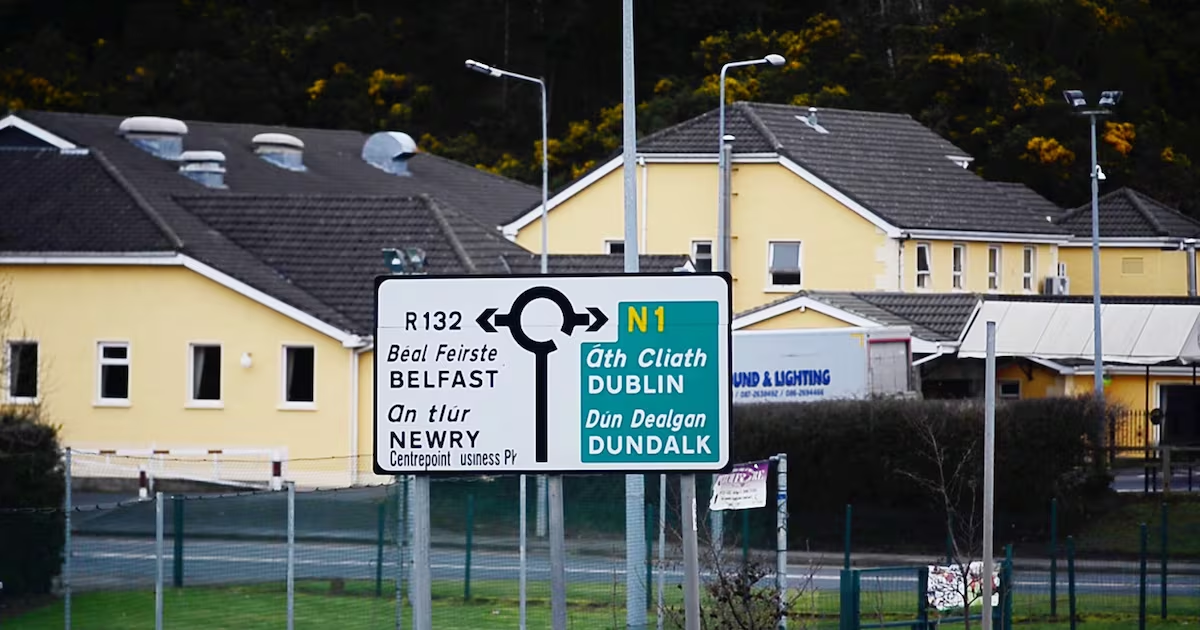
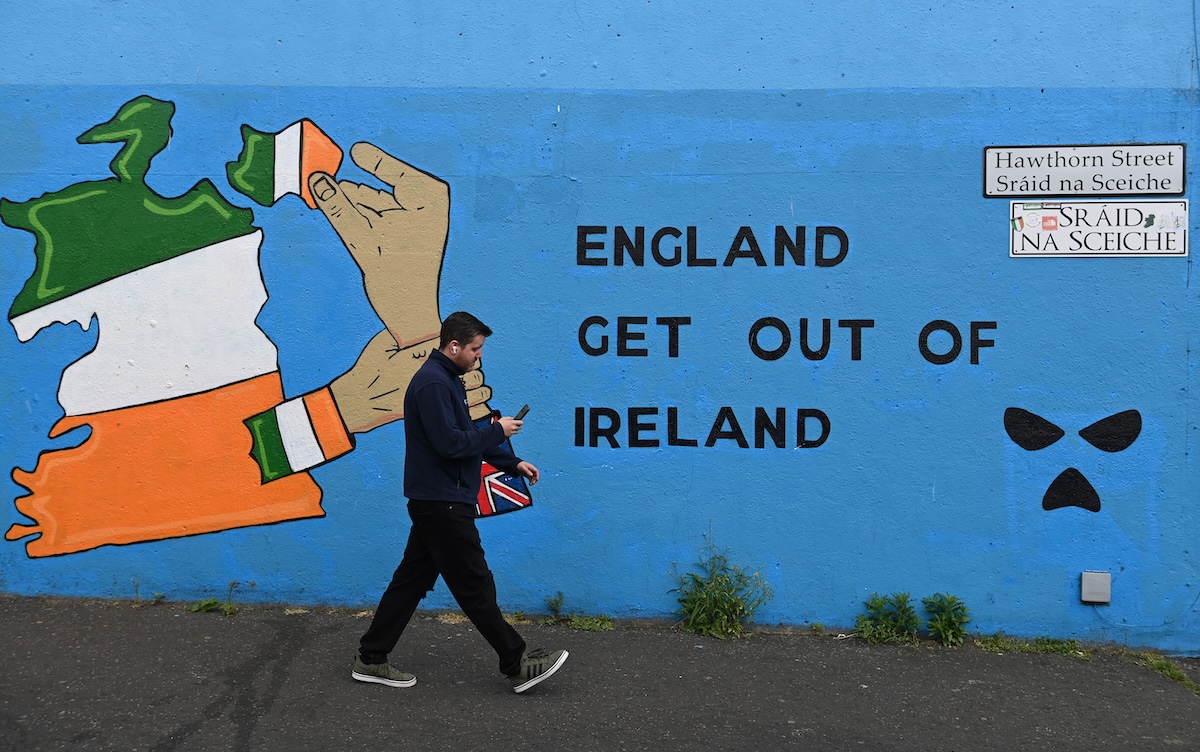
Would it remain Northern Ireland, though under the ultimate jurisdiction of Dublin, rather than London? Or would it be subsumed into a united Ireland?
977 words~4 min read