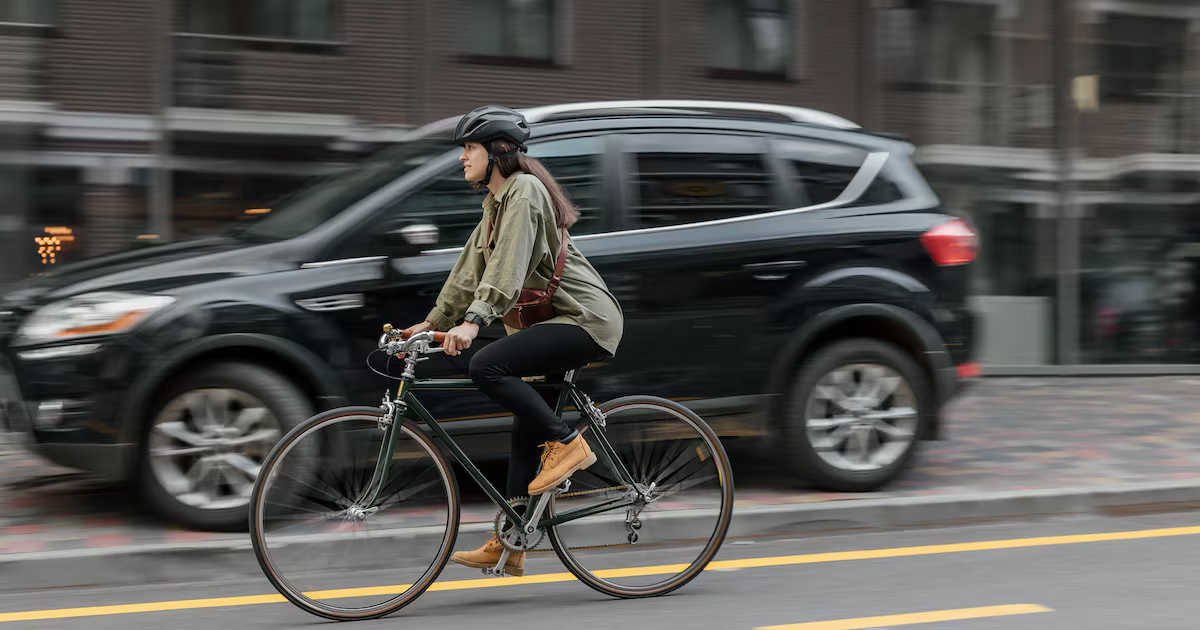
I had a near miss on my bike recently. It doesn’t happen often, much less than people who don’t cycle imagine. I cycle daily, and once or twice a year a driver’s inattention or aggression leaves me pale, shaky, blood hammering with adrenaline and deep rage.This time it was close enough that the driver stopped. Doubtless not all drivers of big shiny SUVs wearing big shiny sunglasses consider the rest of us as dust beneath their wheels, but in my experience they run taxi drivers a close second. This woman swerved into the bike lane to undertake a car turning right, without indicating, and either without checking her mirrors or, more alarmingly, deciding that my life was a price worth chancing to get where she was going a few seconds earlier. She heard my scream through her open window, or maybe – unlikely – felt her car’s contact with my foot and handlebar through all the layers of steel protecting her from the consequences of her actions. I fell off, but fairly slowly and on to the pavement, me and my bike bruised and scraped but not seriously hurt.Shock connected mind to mouth and bypassed all inhibition. I stumbled to her car, leaving the bike on the pavement. “You just nearly killed me,” I said. “We’re both lucky I’m wearing a helmet.” (A helmet will protect a cyclist’s brain in this kind of low-speed, low-impact event. You should wear one. They don’t help much when there’s direct contact between a speeding vehicle and human bone, and they do make drivers more likely to pass too close.)“I’m sorry,” she said. “I didn’t see you.”“You didn’t look,” I said, grasping her windowsill and leaning in. “You didn’t see me because you didn’t look. You swerved into the bike lane without checking or indicating, because you don’t care. You have mirrors, you have indicators, what do you think they’re for?”“I’m sorry,” she said.“You’ll be sorrier,” I was alarmed to hear myself say, “if you don’t change your ways. If you don’t start caring about other people, one of these days there’ll be bones under your wheels and blood on your windscreen and you won’t be able to say you weren’t warned. “If you don’t learn to look when you’re driving you’ll kill someone and have to live with it for the rest of your life. It’ll be bad for the person you kill and worse for their family, but if you’ve a shred of decency it will be bad for you too. You’ll remember on your deathbed that you cared more about your own convenience than another person’s life, that you couldn’t even be bothered to look, and that’s how others will remember you after you’re gone.”Horrified by what was coming out of my mouth, I managed to shut up. I pulled my bike up and pushed it in front of her car and rode away shaking. On the way home, as the shock passed and the bruising that would hamper every breath and step for the next week began to tell, I passed one of the Road Safety Authority’s signboards. Drivers, watch out for pedestrians, it said. Cyclists, be safe, be seen.I wanted to throw rocks at it. I wanted to lie on the ground and howl. There could be no more explicit statement of hierarchy: it is drivers’ responsibility to “watch out for” pedestrians, but cyclists are somehow to make ourselves seen by drivers who have no obligation to look. The signs, repeated on the hi-vis tabards we are encouraged to wear on our backs, assure drivers that they’re right to be oblivious to cyclists, that it’s our fault if they don’t see us. If that driver saw it on her way home, she’d have excused herself for not looking and blamed me for failing to “be seen”.I was wearing a hi-vis tabard, as I always do. I had a flashing light, as I always do. My bike helmet is a noticeable colour, my riding position upright and my progress stately. After a lifetime of urban cycling, I’m a defensive cyclist (and driver). There is nothing more I can do to “be seen”, and nothing I can do about drivers who don’t look.And yes, not all cyclists are well equipped, experienced and careful, and not all drivers are aggressive or careless. But the official messaging in this country contributes to our jeopardy, and hexing negligent drivers one at a time is a briefly satisfying but not structural solution.
‘You just nearly killed me and we’re both lucky I’m wearing a helmet,’ I told the SUV driver
There is nothing more I can do to ‘be seen’, and nothing I can do about drivers who don’t look
747 words~3 min read