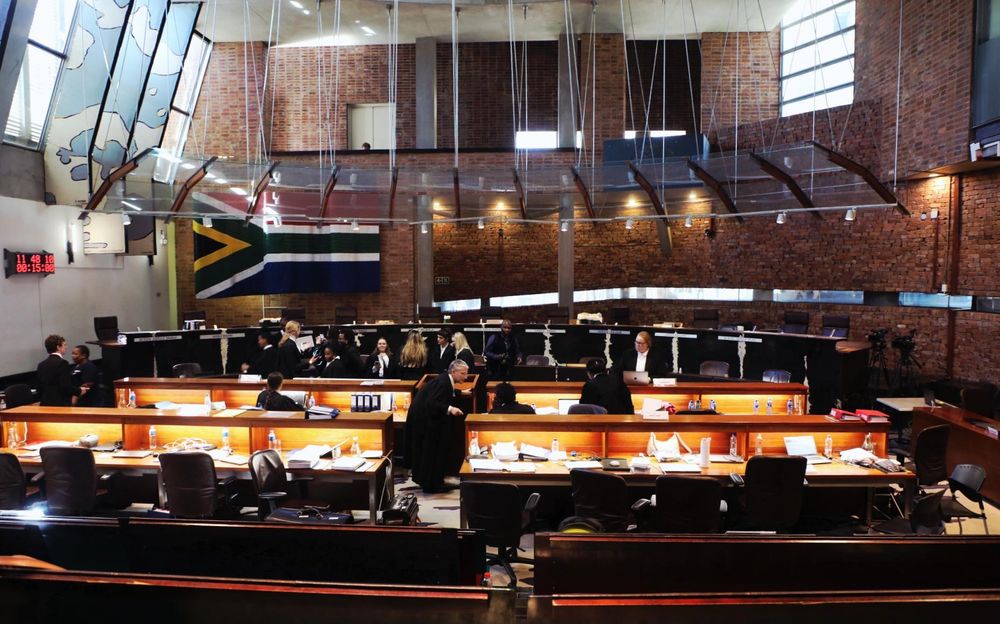
Competition watchdogs — such as the South African Competition Commission — are necessary to rein in cartels, monopolies and price-fixing. The responsibility placed on the Competition Commission demands that it conduct its business impartially and not be seen to prejudge matters.Unfortunately, the commission fell short in its pursuit of some of the country’s largest banks — Standard Bank, Nedbank and FirstRand — on allegations they conspired with international peers to manipulate the value of the rand.Despite the banks’ protestations they had nothing to do with the matter and had no case to answer to, the commission persisted for a decade to insist it had a watertight case against the lenders.The commission’s case and how it went about implicating the banks were dealt a fatal blow by the Constitutional Court last week in a judgment that should have the regulator reflect on how it does its business.In a landmark judgment delivered by the lucid pen of justice Owen Rogers, the apex court found that there was no concrete, bank-specific evidence that local institutions participated in a unified scheme or “single overarching conspiracy” to rig the rand.It matters that the judgment was unanimous. More troubling is that, in the case of Standard Bank, the court found the commission was clutching at straws.“The commission failed, before adding SBSA [Standard Bank South Africa] to the referral, to direct any enquiries to the bank. SBSA was thus deprived of the opportunity of presenting facts to the commission to show that its thesis in relation to the bank was factually flawed,” reads the judgment.This finding has to have the commission’s top brass reflecting hard on what measures to put in place to avoid such outlandish adventurism in the future.The work of the commission matters a great deal for it to accept such tardiness as the norm. The reputational damage to the banks over the past decade has been immense.Politicians, looking to deflect from the failings in governing, have used the commission’s case to cast aspersions on the banks, and by extension the private sector, as being anti-progress and essentially sacrificing economic growth at the altar of profiteering.A lot of ink has also been spilt over the past decade by commentators painting the banks as bad actors, who represent the worst of what capitalism has to offer.It is for this reason that the commission must tighten its processes and ensure entities it pursues have a case to answer — at the minimum. Nothing less suggests incompetence, which can hurt companies and the bottom line.After all is said and done, reputation is the true currency — and the commission must safeguard both its reputation and those of companies it wields so much power over.The market must have confidence that the commission conducts its work responsibly. This was clearly not the case in this regard. For example, just moments after it flagged Standard Bank as one of the conspirators in the rand manipulation, the bank’s market value shed R8.5bn.These are real-life consequences and the reach of the commission’s work, whose integrity it must shield jealously.Nedbank, for its part, has insisted the commission relied on “thumb-sucked” information to link it to the conspiracy — an observation now endorsed by the apex court.This saga is one of the lowest moments in the commission’s 25-year history but does not serve as a fatal blow to its reputation. The commission must draw serious lessons from the rebuke of the Constitutional Court and up its game to be the regulator that South Africa needs and can have full confidence in.
EDITORIAL | Rebuke should prompt Competition Commission overhaul
Apex court ruling underscores need for stronger Competition Commission investigations
586 words~3 min read