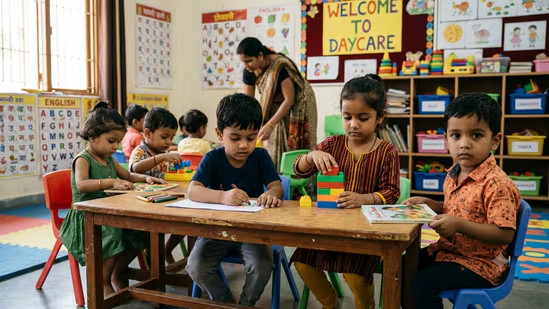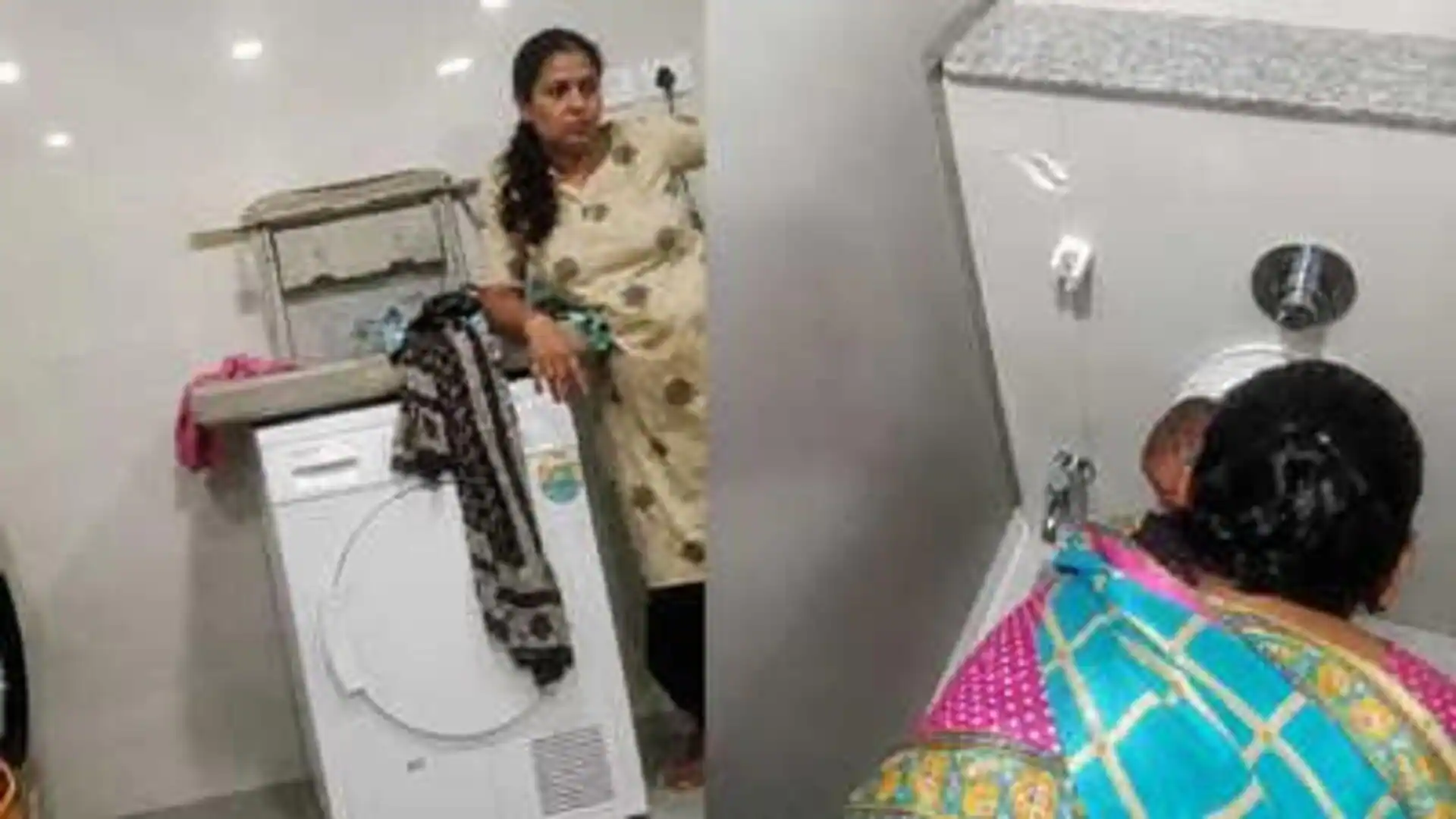
The alleged abuse of toddlers at a Bengaluru crèche exposes the fragile childcare infrastructure that millions of working mothers depend on. Five caregivers at a daycare centre inside global IT major Capgemini’s Brookfield campus in Bengaluru have been booked for subjecting toddlers in their care to physical and mental abuse.Representative pictureVideos of the alleged abuse went viral on social media and show how children as young as two-years-old were made to sit inside a front-loading washing machine, locked inside bathrooms and had water from a toilet jet sprayed into their mouths.The actions were reportedly carried out by the daycare centre employees as ‘punishment’ to the children who cried or made a noise.The videos, according to early reports, were recorded between June 21 and 23 by a whistleblower whose services were terminated last month. Some reports suggest she was sacked after she reported the abuse.Capgemini swiftly shut the on-campus daycare centre saying the move was temporary and that the health, safety and wellbeing of its employees and their families was a “foremost priority”. A company statement added that it was cooperating with the authorities to establish the facts.Countering the motherhood penaltyHaving it all? (Representative picture)The Capgemini incident could have far wider ramifications. In 2017, India’s female workforce participation rate at 24% was amongst the worst in South Asia, according to that year’s Economic Survey. It was perplexing that women were quitting paid work at a time of rising female educational attainment, declining fertility and overall economic growth. A World Bank paper suggested an answer: “Having a young child in the home depresses mothers’ employment.”Economists had a term for this: the motherhood penalty. It applied all over the world where mothers of children below the age of five had at 47.6% the lowest employment rate, far lower than the 87.9% for fathers and 54.4% for women with no children, found a 2018 International Labour Organisation study.Underlying this motherhood penalty is another stark reality that it is women who bear a disproportionate burden of unpaid care work, including raising children. This gap is also global but particularly stark in south Asia.Of course, there is no fatherhood penalty. But for many women, having a child signalled the end, or at least the slowing down, of a career. There were exceptions—having an older woman, a mother or a mother-in-law, close at hand meant that young mothers could continue in employment. But, by and large, both logistically and culturally, mothers are expected to put their children’s needs above their own career ambitions.Maternity BenefitIn March 2017, India passed the Maternity Benefit (Amendment) Act bumping paid maternity leave up from three to six months. It also stipulated that establishments with 50 or more employees would have to provide creche or daycare facilities.But the law said little about how these facilities were to be run and regulated. For instance, were they subject to inspection and, if so, how often and by whom? What were the grievance mechanisms for parents?Many corporate daycare centres, including the one at Capgemini, are run by third-party vendors. But outsourcing a service does not absolve companies of their legal and ethical obligations. What is the responsibility of the company in vetting staff, responding to complaints and ensuring childcare providers meet standards?In 2024, the Ministry of Women and Child Development issued a set of minimum standards. But questions of monitoring, oversight and quality control remain.Who pays the price?Getting women to stay is a challengeAn estimated 26-28 million working women in India have children below the age of six, finds a March 2026 study by Dalberg and UNDP. Yet, access to organised childcare remains limited, leaving most working parents to depend on the extended family, including grandparents or, if they can afford it, domestic workers.Reliable childcare is not a feel-good welfare measure but essential infrastructure that enables women to remain in the workforce. This is good not just for individual women but for the wider economy.The Capgemini daycare centre story has led to suggestions for better monitoring through CCTV access—though placing a camera near the toilets where much of the abuse allegedly took place comes with its own privacy issues. The bigger question is whether there were oversight mechanisms and audits by the company that might have detected the abuse earlier?It has also led many on social media to question a mother’s real place: Home or office? “Women will definitely be facing the heat at their homes,” one Reddit user commented. “Just another way we lower the productivity of our society, suppress women’s dreams and careers, and relegate them to childcare and culinary duties.”The Capgemini case is about more than one daycare centre and five caregivers. It is about whether parents can trust the childcare system that enables them to go to work every morning. And if that trust is broken, who bears the cost? It is not just the children, their families, and women’s careers but ultimately an economy that says it wants more women in the workforce.Namita Bhandare writes on gender and other social issues and has 35-plus years of experience in journalism. She has edited books and features in a documentary on sexual violence. She tweets as @namitabhandareRead More
Every parents’ worst nightmare
The alleged abuse of toddlers at a Bengaluru crèche exposes the fragile childcare infrastructure that millions of working mothers depend on.
855 words~4 min read