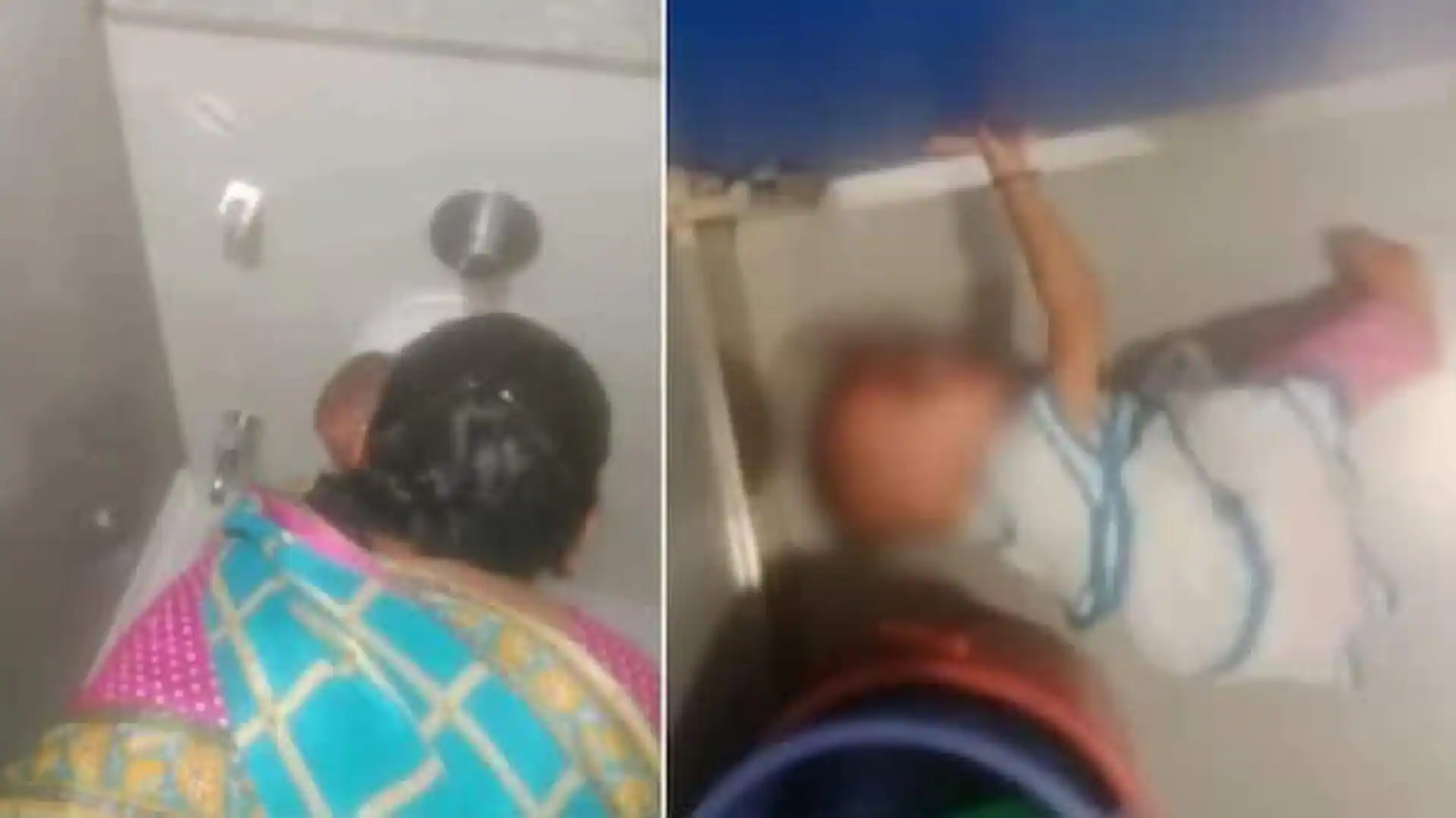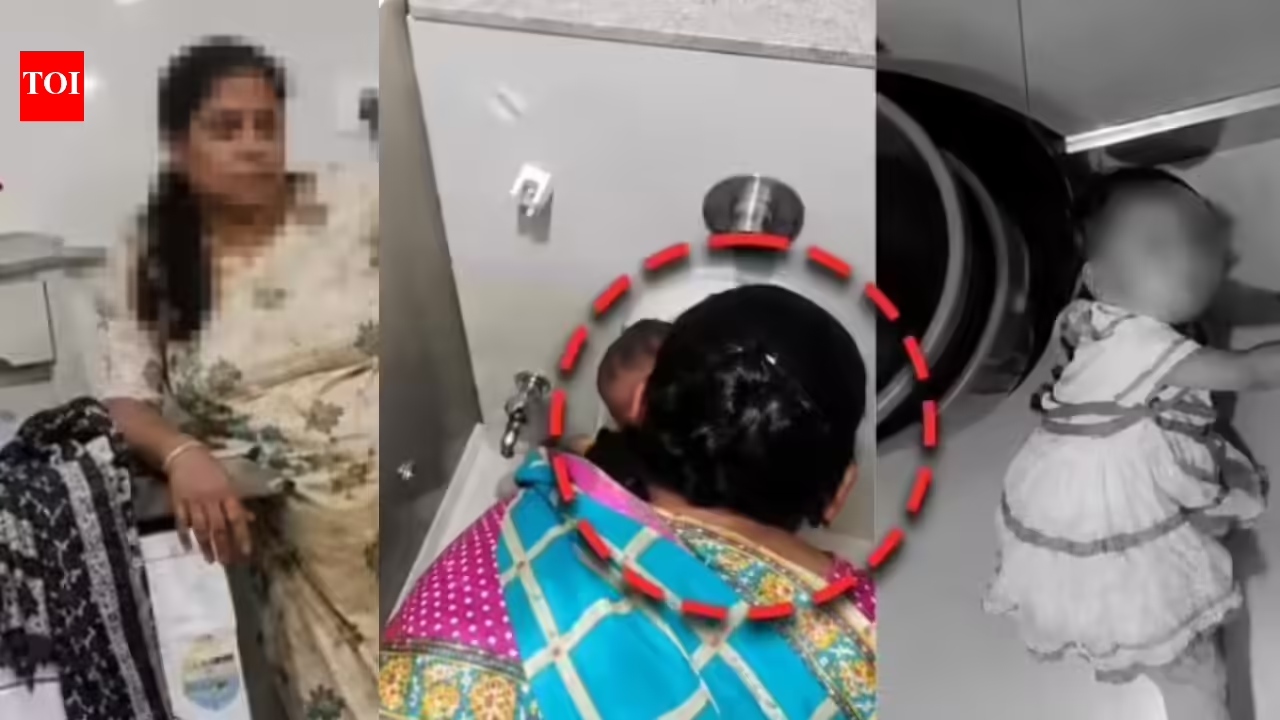
A daycare inside IT firm Capgemini Technology Services India’s Bengaluru campus has come under police investigation after five caregivers were accused of subjecting toddlers to shocking acts of physical and mental abuse. An FIR was registered by the HAL police on June 29, and multiple reports allege that the staff intimidated children by locking them inside washing machines, forcing them into water-filled pipes, spraying them with toilet jet sprays, and physically assaulting them when they cried. The case surfaced after the district child protection unit received videos purportedly showing the abuse, triggering a criminal investigation into the crèche that catered to employees’ children. The footage has since gone viral on social media, sparking widespread outrage and raising concerns about childcare safety. To understand the emotional impact of the incident and the broader questions it has raised, we spoke to parents, psychologists, and daycare operators about the trauma families are experiencing and the safety measures centres are adopting to rebuild trust.An empty day care centreA parent’s worst nightmareFor parents on the cusp of transitioning their toddlers to external care, the incident has turned an already stressful milestone into a nightmare. Sukriti Doval, 38, parent to a 2.5 year old girl said, “Watching this video was extremely scary. It has even made me reconsider if I actually want to send my daughter to daycare. While the school I am applying to has a proper structure and legacy, what frustrates me is the monetisation of safety. The center has CCTV, but they charge an extra ₹15,000 just for parents to have access to the feed.”Beyond concerns over immediate safety, many fear the incident could reinforce long-standing stigma around working mothers. Shreya Gautam, 37, parenting creator and mom to two daughters, said, “There has always been a taboo around daycare in India. While many are correctly blaming the management for this crisis, a lot of people will inevitably use this to blame working mothers, which is the fault of our society at large. Apart from checking a brand’s credibility, we must strictly vet the support staff because they handle the most intimate care, like bathing and changing clothes. Furthermore, centres boast about CCTVs, but who is checking them constantly or ensuring that video access actually reaches the parents?”For some parents, the incident has also highlighted a larger systemic issue: the lack of attention paid to the recruitment, training, and compensation of daycare support staff. Ananya Shrivastava, 39, a parent, said, “I chose to leave my government job because I could not bear to part with my child. When evaluating preschools later in his life, I always focus on the patience of the caretakers and maids over the teachers. A teacher only instructs for a brief period; it is the support staff who manage the children for most of the day. They need to be given higher salaries and proper training.”What daycare operators want parents to knowFor responsible daycare operators, ensuring children’s safety goes far beyond installing CCTV cameras. They say it requires rigorous staff vetting, continuous training, strict supervision, and transparent systems that allow parents to trust the care their children receive. Julfa Sanghvi, owner, Tots and Tales in Mumbai, says, “CCTV is vital, but the real question is who is constantly watching it. Looking at it ‘once in a blue moon’ after an incident has already occurred, is useless. Furthermore, the owner has to be actively involved in the preschool and daycare; a more personal touch is absolutely required for this specific age group. At our centre, either I am always physically present or a designated person monitors the live feed continuously. We also strictly deny parents direct access to protect the privacy and routine of all the children.”A critical and often neglected part of safety is listening to the children. If a toddler comes home and tells a parent, ‘The teacher hit me in school,’ the default parental instinct is usually to say, ‘You can’t talk like this about the teacher.’ That is a wrong way to address it. You must listen to the child, accept what they are saying, and actually look into it by questioning the school. At the two-to-three-year age bracket, 60% of children are communicating, showing actions, or coming home in discomfort. It is the parents’ responsibility to cross-check these signs, and it is the school’s responsibility to provide transparent explanations.True safety lies in staff management. “Our didis undergo 10 days of intensive training before the term starts and refreshers every six months, so their natural reflexes to an acting-out child are managed. New hires are never left alone with a class; they are paired with a veteran staff member and are only hired through verified, checked personal references.”We also spoke to Preeti Guha, Centre Director at Footprints (which has centres across the country), NFC, Delhi to understand the safety protocols followed by a large daycare chain. “Each of our teachers undergoes mandatory training before joining. The hiring process includes two rounds of interviews, and we prefer candidates with qualifications in early childhood education or B.Ed. For our support staff, guards, and drivers, we conduct fire drills and natural disaster training. They are hired through a third-party agency that carries out thorough background verification. One of our most important safeguards is that physical auditors visit every three to six months to assess every aspect of the centre from scratch. We also have AI-enabled cameras across the facility, which gives us constant access to the child. Additionally, parents can make a surprise visit whenever they want, to check on their children. And entry is only through OTP.”The psychological falloutWhen institutions violate parental trust, the psychological fallout affects both the developing child and the parents left carrying the emotional wreckage.Dr Paramjeet Singh, Consultant Psychiatrist at PSRI Hospital says, “When abuse is committed by ‘entrusted adults’ who are paid to protect, the psychological ramifications are profound. For the child, early physical and emotional abuse can alter brain development, leading to long-term insecurity, emotional instability, anxiety, depression, and PTSD.For the parents, after a situation like this the immediate reaction is shock and denial, followed by deep anger, a sense of betrayal, and heavy guilt, which traditionally hits mothers harder. This trauma can create deeply insecure, over-anxious parents, which hurts their professional lives and further impacts the child’s development.To heal, parents must acknowledge that this systemic failure was entirely beyond their control, it is not parental fault. They need to remove the child immediately, lean on parallel family support or remote work, and openly communicate with each other rather than treating the trauma like an elephant in the room. Finally, seeking professional therapy is crucial to help both the parents process the guilt and the child bypass long-term psychological ramifications.”
After the Capgemini crèche case, parents are asking: Is any daycare truly safe?
The alleged abuse of toddlers at a Capgemini daycare has shaken parents' trust in childcare centres, prompting many to question what makes a daycare truly safe
1,117 words~5 min read