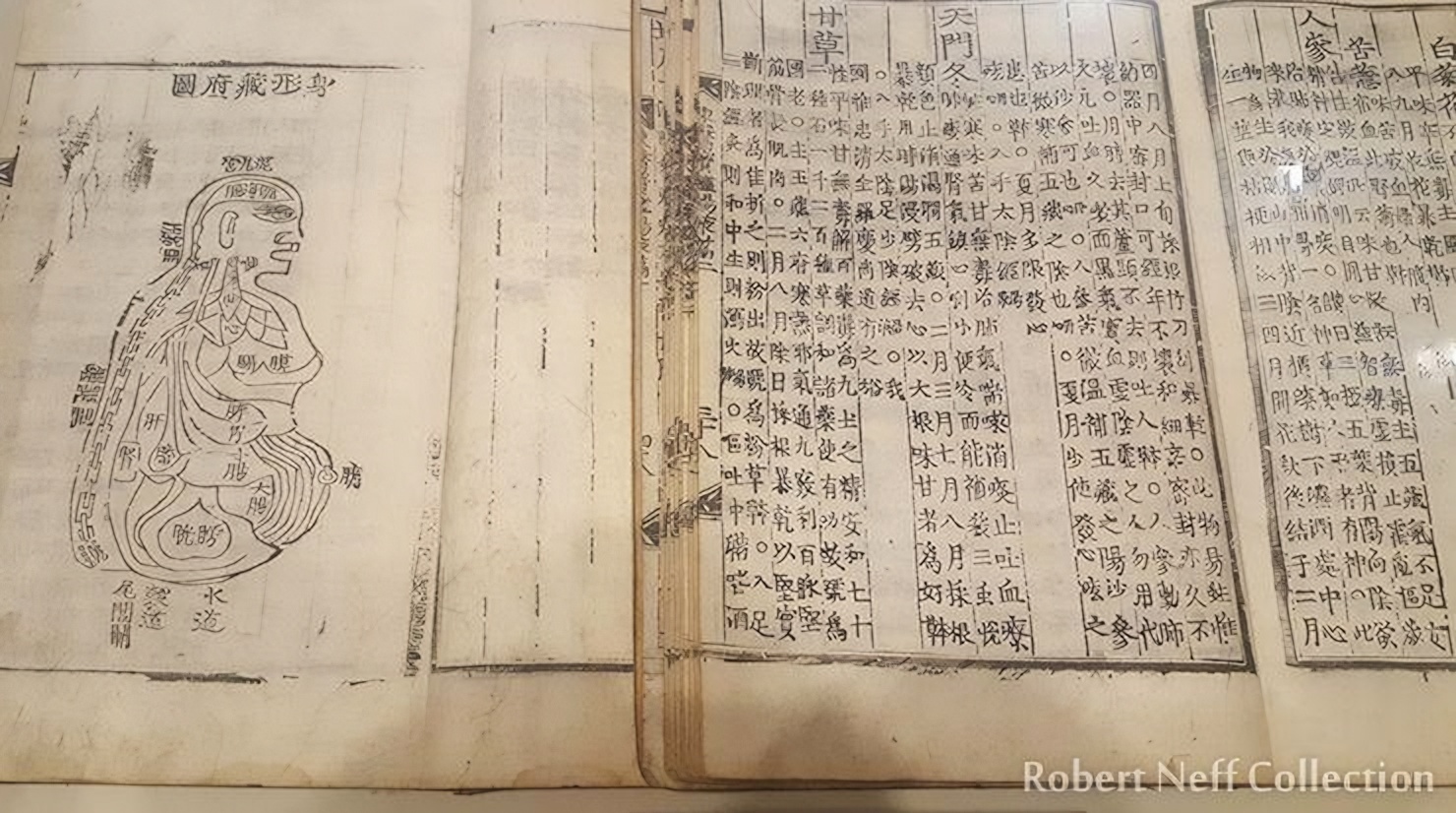
A medical journal is on display at the Heo Jun Museum in Gangseo District, Seoul, January 2020. Courtesy of Robert Neff Collection
Laughing Through History is a column that explores the roots of Korean humor through the joke book “Kkalkkal Useum,” originally published in 1916.
Today I’m translating a joke that targets a shortsighted man for his foolishness. In that way it’s similar to the last installment of this series, which translated a joke called “The Rice Cake Is Mine!” In this one, a father is so eager to treat his son’s illness that he doesn’t realize that the treatment is worse than the disease. Both these jokes fit with a superiority theory of humor. According to this view, the joke is funny because we can see how foolish the characters are being, and since we have a better understanding of the situation, we can laugh because we feel superior to them.
The joke I’m looking at today is different from the previous one, though, because this one is also about Koreans at the turn of the 20th century learning to navigate the modern world — in this case, modern medicine. The disease in question is malaria. Experts say the history of malaria can be difficult to trace because before modern germ theory was developed, words associated with malaria were used for a variety of fever-causing conditions not necessarily caused by the malaria parasite. But according to researcher Kim Jeong-ran, malaria was endemic in both Joseon-era and colonial-era Korea, mostly affecting children. It was not prioritized as a public health concern by colonial authorities, and was only brought under control by the Korean government in the 1960s.